Get a Facebook Ads mentor who has spent real budget on Meta
Vetted GrowthMentor mentors who run Meta ads for a living. Every mentor below wrote their own take on the work.
- 62,000+
- Sessions booked
- 750+
- Vetted mentors
- 4.8/5
- Avg session rating




Foti Panagiotakopoulos
5.0 · +59 more

Blaine
Founder · Permit Hound
"I don't want to walk through an uncleared minefield without someone who has walked it before."

Hamel Shah
Co-Founder · CarrotsAndCake
"GrowthMentor enables us to swiftly get a world-class expert to give us guidance on any marketing issue or…"

Lena Sesardic
Product Manager
"Knowing I can always book a call to help me clarify what I'm doing is the best feeling in the world."

Minh
Solo Founder · SEOmatic
"I like to set my own strategies and then get help from experts to improve on them and check if I'm on the…"
Nicola Rubino
Growth Marketing Consultant · nicorubino
"It gave me fast access to expert-level insights that I couldn't get from academic research or user surveys…"

Annie Chen
Head of Marketing · DOWN Dating App
"Sometimes I'm stuck at one step and all I need is someone who can share experiences of what they did when…"

Carlos Terol
Co-Founder · Bagmaya
"I enjoy having pretty much instant access to a pool of worldwide, expert mentors who are keen to share their…"

Luka Karsten Breitig
Co-Founder · The Happy Beavers
"Imagine a world where everything you read was written by a subject-matter expert."

Flora Bui
Co-Founder · Acie
"My favorite thing about GrowthMentor is how it allows me to expand my network globally in a very short time…"

Maria Ledentsova
Digital Marketing Manager · magier
"Whatever problem I have, there's a friendly and incredibly helpful mentor ready to help."
Kate Bojkov
Head of Growth · EmbedSocial
"How quick and easy I can find somebody who had my problem and is willing to talk with me and openly share…"

Supriya Agarwal
Co-founder · BiosectRx
"Being able to connect with any expert across the globe at the click of a button. No network or previous…"

Anastasia Rubleva
Head of Growth · Rapid Dev
"I love the ability to receive valuable feedback from mentors who have been in the industry for decades."

Andrew McBurney
CEO & Co-founder · Review Robin
"You should cut out 99% of the things that you're thinking about."
The mentors, in their own words.
60 mentors available
I can help early founders think through a Meta Ads test, from the audience and creative to what happens after the click. Bring your offer, landing page and results. I focus on what the test tells you about demand and conversion, with specialist paid media mentors available for advanced account work.

Kevin Veitia
Digital Ad Ninja 🥷 | Learn How to Scale Ads & Grow Your Business | Ex-Canva, Starbucks | Meta & PPC Mentor
Paid Ads: ⭐ Achieved a $0.03 CPI on behalf of Canva ⭐ Grew Canva's userbase by 250K ⭐ Average 15x ROAS for e-Commerce clients ⭐ Achieved a $0.01 CPE for Starbucks (Qualified Engagements) Organic Social Media: ⭐ Grew Iberia Airlines' Facebook page from 100,000 -> 1,000,000. ⭐ Press-recognized for delivering exceptional customer experience on behalf of Iberia Airlines.

If it's an ad format and it's on Facebook, then I've probably done it. I follow closely the newest developments on the platform and help my clients promote content, get leads, and acquire conversions through Facebook.
Zev Asch
Empathetic Listener. Strategic & Intuitive Creative Problem-Solver. Business Coach|Mentor
Compared to Google Ads, FB is more competitive and is a good option if you have a limited budget. However, it is also a channel where you must intimately know your target audience; FB users' attention span is brief and capturing and engaging with anyone is challenging. Remember that 'clicks don't pay the bills' - this is an emotionally charged platform, so content and design of ads are critical.

Tina Louise
Fractional CMO for health, wellness & fitness brands. Ex-MyFitnessPal (600% growth), Airbnb, Ogilvy
Very specific targeted audiences, coupled with good optimization and a well-defined strategy, and you have a great tool in your hands. Done a few campaigns with great results - but we'll need a designer to do the images, photos and videos ;)

Linus Antlov
Growth Marketing Consultant (Social Ads, ASO, SEO, & PPC) 📈 | Google, Facebook, Apple | App Growth Expert 📱
Facebook Advertising has been one of my key specialities since getting into performance marketing. Here I've successfully launched hundred campaigns to acquire users on both websites and mobile apps. I've tested many things to help drive better ROI on campaigns.









.png)



%20(1).png)








.jpeg)






.jpeg)
.png)


.jpeg)



54 more facebook ads mentors
Create a free account to see everyone and book a call.
Create an accountHere's how it works.
Your request
""▍
Say what you're stuck on. We line up the right person.
A session
REC
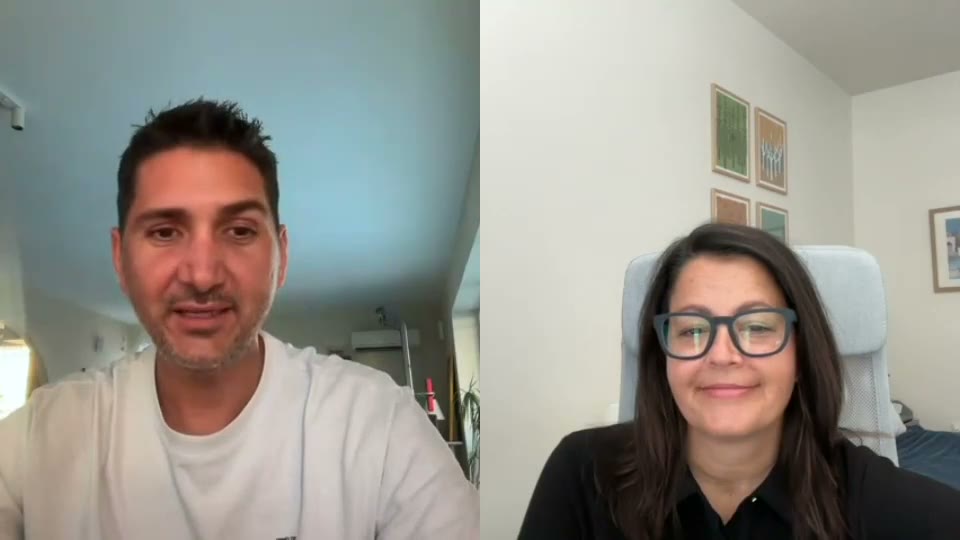
Live, one on one
30 min
Get the tactics from someone who's done it. Live, one on one.
After the call

Sam Collier
Recording
You came in with
"CPMs doubled, ROAS dropping."
You left with
"Your CPMs aren't broken. Your creative's dead."
18:46 / 30:00
Jump to the moment
Keep the recording, summary, and takeaways. Yours to implement.
What a Facebook Ads mentor does
A Facebook Ads mentor has already run the campaigns you are running right now. You get a 1:1 call with someone who has spent real budget inside Meta and knows where the money leaks.
The most useful calls rarely hand you a new hack. They rebuild how your account and your creative are set up. Most go some version of:
- Simplify the account structure. The fix is usually consolidation: too many ad sets split the budget so thin that nothing exits the learning phase. A mentor collapses them into fewer, better-fed campaigns.
- Make creative the priority. On Meta the creative is the targeting. A mentor helps you stop fiddling with audiences and start shipping more hooks and angles, because that is the lever that actually moves cost per result.
- Fix the pixel and CAPI first. Before touching a bid, a mentor checks whether your conversions are firing and deduped, so you stop optimizing toward events that are half-missing since iOS14.
- Read the attribution honestly. Meta over-reports against your other dashboards. A mentor helps you decide what to trust so you scale on real results, not the platform's version of them.
The value is direction: which two or three things to change this week, and which dials to leave alone.
You also leave with a record. After each call, the takeaways are written down for you, ready to keep or skip:
 Luis CamachoMeta account review
Fix the pixel and turn on the Conversions API before you touch a bid, half your purchases aren't making it back to Meta.
Collapse the nine ad sets into two, each one is getting three purchases a week and none of them can leave the learning phase.
KeepSkipStop testing audiences and start testing creative, on broad the algorithm finds the buyer, the hook is what's failing.
KeepSkipMeta is claiming 4x, your Shopify says 1.8x. Scale on the blended number, not the one in Ads Manager.
KeepSkipWhy your ads don't convert
"My ads get clicks but no purchases" is one of the most common things people bring to a call. The click is happening. Something after it is failing.
A mentor walks the path from ad to purchase and finds where it breaks, usually one of these:
- The landing page. the ad promises one thing and the page shows another, so the message the hook sold never lands and the visitor bounces.
- The offer. what you are asking a cold Meta audience to do is too big, so the click never turns into a purchase or a lead.
- The conversion event. the campaign is optimizing for clicks or add-to-cart instead of purchase, so Meta keeps buying you cheap actions that never become sales.
- The audience signal. you are boxing the algorithm into a tight interest stack when broad would let it find the buyer on its own.
- The tracking. it may be converting fine, and a broken pixel or missing CAPI event is just hiding the purchases from you.
Much of "my Meta ads don't work" turns out to be "my page doesn't match my ad." Fixing the promise downstream of the click is worth more than re-tuning the audience for another week.
When ads stop scaling
Your ads worked at a small budget. Then you raised it, and cost per purchase climbed while ROAS slid. The account got worse the harder you pushed it, and you cannot tell why.
This is the single biggest situation people book a Meta call about. The ceiling is almost always structural, not a missing tactic:
- You raised the budget too fast. a big jump on an ad set throws it back into the learning phase, and performance tanks for days while it re-stabilizes.
- You hit a creative ceiling. the same two winners have been running for weeks, frequency is climbing, and the account has nothing fresh to scale into.
- The account is too fragmented. spend is spread across a dozen ad sets, so no single one gets enough purchases to stabilize and pay back at higher budget.
- Duplicating instead of feeding. copying the winning ad set into five new ones splits the learning instead of letting one campaign consolidate the signal.
Mentors start diagnosing before the call. A typical first exchange after you book:
 Noor Aziz
Starting on a small budget
The other end of the curve. You are new to Meta ads, the budget is small, and you are learning live with real money moving. The fear is spending it on the wrong thing.
A mentor who has launched dozens of Meta accounts helps you start without burning the first month:
- Set a budget that can learn. a tiny budget cannot buy enough purchases to exit the learning phase, so it never stabilizes. A mentor tells you the floor for your price point and objective.
- Get the pixel and CAPI right first. set up the pixel, the Conversions API and your purchase event before you spend, so Meta can actually see the conversions it is optimizing toward.
- Start broad, not narrow. on a small budget, tight interest stacks starve the algorithm. Broad targeting with one strong creative gives it room to find the buyer.
- Pick one campaign and one objective. one sales campaign funded enough to learn beats three under-funded tests spread across objectives that never prove anything.
The goal of the first budget is a clear read, not a flood of sales. Learn what the account is doing, then scale what works.
two moves, in order
Set up the pixel and CAPI before you spend
launch first, check the events later
purchases firing and deduped before a dollar moves
Put the budget behind one broad campaign
five interest ad sets at a few dollars each
one broad sales campaign, funded enough to learn
A first budget that reads clean
You learn what the account is actually doing, then scale the part that works.
The order matters: get the tracking honest before you spend into it.
Advantage+ vs manual campaigns
"Should I run Advantage+ Shopping or build manual campaigns?" is one of the most common questions on a Meta call. The instinct is to control everything. Meta's instinct is to take the controls away from you. The right answer depends on your account, not the trend.
A good mentor looks at your data volume, your creative bank and your margins, then helps you decide where to hand control to the algorithm and where to keep it:
- Advantage+ Shopping. best when you have creative volume and enough conversions for the algorithm to learn fast. It consolidates budget and simplifies the account, but it hides a lot of what it is doing.
- Manual sales campaigns. best when you need control over audiences, exclusions or budget by segment, or when your data is too thin for ASC to stabilize.
- Running both together. many accounts run ASC as the core and manual campaigns alongside it for prospecting angles or retargeting the algorithm won't prioritize.
- Fighting the algorithm. the common mistake is over-constraining Advantage+ with narrow audiences and exclusions until it can't do the one thing it's good at.
The pixel, CAPI and signal loss
Measurement on Meta broke after iOS14. The pixel alone misses a chunk of your conversions now, and if Meta cannot see the purchases, it cannot optimize toward buyers. Everything downstream depends on getting the signal back.
A mentor who fights this daily helps you fix what Meta can see before you touch the dials:
- Turn on the Conversions API. server-side tracking sends events Meta cannot catch in the browser, so more of your real purchases make it back into the optimization.
- Deduplicate pixel and CAPI. when both fire the same event, Meta needs the event ID to avoid double counting, or your reported conversions inflate and mislead.
- Fix the event quality. a strong Event Match Quality score and clean parameters help Meta attribute more of what happened, so the algorithm learns faster.
- Verify your domain and events. domain verification and the right prioritized events in Events Manager keep iOS purchases from disappearing entirely.
If Meta cannot see the purchase, it cannot find you more buyers. Most "my ads stopped working" calls after iOS14 are really a signal problem: the pixel is half-blind and CAPI was never turned on.
Attribution and what to trust
Meta says you did 4x. Shopify says 1.8x. GA4 says something else again. Every dashboard tells a different story, and you are supposed to make budget decisions on top of that mess.
A mentor helps you decide what to believe before you scale on a number that is not real:
- Understand why Meta over-reports. the default 7-day-click 1-day-view window and modeled conversions mean Meta claims credit for sales it merely touched, so its ROAS runs high.
- Pick an attribution window and hold it. switching windows changes the story. A mentor helps you settle on one so you compare like with like across weeks.
- Anchor to blended numbers. total revenue over total spend cuts through the per-platform inflation and tells you whether the business is actually growing.
- Use a directional check. post-purchase surveys or a simple holdout tell you what Meta is really driving, so you stop trusting Ads Manager alone.
Once you know which number to trust, scaling decisions finally have something solid to stand on.
an attribution read, x-rayed
One attribution window, held steady, so weeks compare cleanly1. Blended ROAS as the source of truth, not Ads Manager alone2. Meta's number treated as directional, discounted for over-reporting3. A post-purchase survey or holdout to sanity-check what's real4.
The window
7-day-click 1-day-view inflates Meta's credit. Pick one window and hold it so the trend is honest.
The blended number
Total revenue over total spend. It ignores the per-platform story and tells you if the business grew.
Meta's report
Useful as a direction, not a verdict. It claims sales it only touched, so discount it before you scale.
The reality check
A survey or a holdout shows what Meta actually drove, so you scale on truth instead of the dashboard.
Four things a mentor checks before raising budget. The dials only work once you know which number is true.
Better buyers, not cheaper clicks
Sometimes the volume is fine and the buyers are not. The clicks are cheap, the add-to-carts pile up, and almost nobody checks out. The math stops working.
A mentor helps you fix the quality of what Meta buys, not just the cost of it:
- Optimize for purchase, not clicks. if the campaign chases cheap clicks or add-to-cart, Meta finds people who click and cart but never buy. Point it at purchase so it learns to find buyers.
- Look at the whole unit economics. if every sale makes the math worse, the fix is the offer, the AOV and the margin, not another round of audience tweaks.
- Watch the funnel drop-off. cheap traffic with terrible checkout rates points downstream, to the page, the price or the promise the ad made.
- Feed the right conversion back. send Meta the purchase event with value, so it optimizes toward higher-value buyers instead of whoever clicks the most.
Cheap clicks are not the goal. A pile of add-to-carts that never check out costs more than a handful of buyers who do. The fix is usually the event you optimize toward, not the bid.
Creative is the lever
Creative is the lever most Meta accounts pull the least. Two tired ads slowly bleed the budget while frequency climbs and you tweak audiences that were never the problem. The fix is a testing habit, not a single perfect ad.
A mentor helps you build a creative testing system that finds winners without torching the budget:
- Test hooks and angles, not just visuals. the first three seconds and the message carry the ad. Vary the promise and the opening, not only the image, so you learn what moves people.
- Lean on UGC and volume. raw, native-feeling creative usually beats polished on Meta. A mentor helps you set up a pipeline that ships enough of it to find winners.
- Spot creative fatigue early. rising frequency and falling CTR mean an ad is worn out. Know the signs so you refresh before cost per purchase slides on you.
- Run a steady testing cadence. how many new concepts to ship each week and how to read them fast, so the algorithm always has fresh winners to scale into.
Enough hook and angle variety lets you find winners fast, instead of letting a fatigued ad decide your results for you.
The lever most accounts pull the least. A mentor sets a creative cadence you can keep, not one perfect ad.
When to book a call
You do not need a giant question. Bring the account, the numbers, and the thing you are stuck on. The most useful moments to book:
- Your spend has stalled. ads worked at small scale, then more budget just raised cost per purchase and you cannot break through the ceiling.
- Your ads stopped working. performance was fine, now it is broken or declining, and you cannot tell whether it's fatigue, tracking or the account structure.
- You are deciding on Advantage+. you are weighing ASC against manual campaigns and want a second opinion before you restructure the account.
- You inherited a messy account. someone built it, left no notes, and you need to audit fast what to keep, consolidate or rebuild.
- You just took over paid social. first paid hire, or a founder who now owns the Meta spend, with no playbook to inherit.
You can also run it in reverse: post what you are stuck on as a help request, and mentors raise their hands to take it.


What people book Meta calls about
Rarely what they end up solving. The ask on the booking form is usually a symptom, and a mentor who has run real Meta budgets recognizes the pattern underneath it. Three that come up again and again:
walked in as, walked out as
Walked in as
A scaling problem
More budget, higher cost per purchase.
Walked out as
A learning problem
The account can't exit the learning phase.
Walked in as
An audience problem
We must be targeting the wrong people.
Walked out as
A creative problem
On broad, the hook is what's failing.
Walked in as
A performance drop
The ads just stopped working.
Walked out as
A signal problem
The pixel went half-blind, CAPI is off.
Three calls, one mechanic. The problem that leaves the room is never the one that walked in.
Why GrowthMentor
Every mentor on GrowthMentor is vetted before they are accepted. Fewer than 5% of applicants get in. The Facebook Ads mentors here are operators who run real Meta budgets daily, not influencers selling a course.
Because the same mentors who know Meta also carry creative strategy, conversion rate optimization and go-to-market, you get help with the ads themselves and the funnel on either side of them, which is usually where the real bottleneck hides.
Calls this month
Book the fourth call, or the fortieth. Nothing on this receipt changes.
People who were exactly where you are.
GrowthMentor enables us to swiftly get a world-class expert to give us guidance on any marketing issue or question in a matter of days.

Hamel Shah · Co-Founder
Read Hamel's storyKnowing I can always book a call to help me clarify what I'm doing is the best feeling in the world.

Lena Sesardic · Product Manager
Read Lena's storyI like to set my own strategies and then get help from experts to improve on them and check if I'm on the right track.

Minh · Solo Founder
Read Minh's storyIt gave me fast access to expert-level insights that I couldn't get from academic research or user surveys alone.
Nicola Rubino · Growth Marketing Consultant
Read Nicola's storySometimes I'm stuck at one step and all I need is someone who can share experiences of what they did when they were in my situation.

Annie Chen · Head of Marketing
Read Annie's storyI enjoy having pretty much instant access to a pool of worldwide, expert mentors who are keen to share their expertise and help others.

Carlos Terol · Co-Founder
Read Carlos's storyAsk ChatGPT
Don’t take our word for it.
Ask ChatGPT what it really knows about facebook ads mentors and GrowthMentor, then decide for yourself.
Before you join
What people ask before their first call.
The click is rarely the problem. It is usually the landing page not matching the ad, an offer that's too big for a cold audience, optimizing toward clicks instead of purchase, or broken tracking hiding the sales. A mentor can walk the path from ad to purchase with you and find the one thing worth fixing first, instead of re-tuning the audience for another week.
Enough that Meta sees enough purchases to leave the learning phase, which depends on your price point and objective. A tiny budget can't buy enough conversions to stabilize, so it never learns. A mentor who has launched a lot of accounts can give you a realistic starting number, help you set up the pixel and CAPI before you spend, and tell you what to expect from a first budget.
It depends on your creative volume, your conversion data and how much control you need. Advantage+ consolidates budget and works well when you can feed it, while manual campaigns give you control over audiences and exclusions when your data is thin. A mentor who runs both can look at your account and help you decide where to hand control to the algorithm and where to keep it.
When an account that performed goes flat, the cause is usually creative fatigue, a signal problem or the account structure, not a missing hack. A mentor can audit what changed, check whether the pixel and CAPI still read true, and tell you whether it's the creative, the tracking or the learning phase, before you keep spending into something that's broken.
Since iOS14 the pixel alone misses a meaningful chunk of your conversions, and if Meta can't see the purchase it can't optimize toward buyers. The Conversions API sends events server-side to fill that gap. A mentor can help you turn it on, deduplicate it against the pixel so you don't double count, and improve your event match quality so Meta learns faster.
Meta uses a generous attribution window and modeled conversions, so it claims credit for sales it only touched. That's why its ROAS runs high. A mentor can help you pick one attribution window and hold it, anchor your decisions to blended revenue over spend, and treat Meta's number as directional so you scale on what's actually real.
On modern Meta, broad targeting usually beats tight interest stacks because the algorithm finds the buyer better than your guess about audiences does, especially with Advantage+. The catch is you have to feed it strong creative and a clean purchase signal. A mentor can help you decide when broad makes sense for your account and when a manual audience still earns its place.
Big budget jumps throw an ad set back into the learning phase, and a fragmented account never stabilizes at higher spend. The fix is usually consolidation, raising budget in steps, and feeding the account fresh creative rather than duplicating winners. A mentor who has scaled past this wall can help you fix the structure so the next dollar still pays back.
Meta needs roughly 50 conversions a week per ad set to stabilize and leave the learning phase. If your budget is spread across too many small ad sets, none of them get there, so the whole account keeps learning and performance stays unstable. A mentor can help you consolidate spend into fewer, better-fed campaigns so they can actually exit learning.
Cheap clicks and add-to-carts that never check out usually mean the campaign is optimizing toward the wrong event, so Meta finds people who click but don't buy. A mentor can help you optimize toward purchase with value, tighten the offer, and check the funnel downstream, so Meta learns to bring you buyers instead of window shoppers.
Build a testing system instead of chasing one perfect ad. Vary the hook and angle, lean on UGC and volume, run a steady weekly cadence, and watch frequency and CTR for fatigue so you refresh before performance slides. A mentor can help you set this up so creative becomes your most reliable lever, which on Meta is where the results actually come from.
Bring Ads Manager open, your numbers, and one specific problem: the campaign that stalled, the Advantage+ decision you're weighing, the tracking you don't trust. GrowthMentor is a membership, so once you are a member calls are included. Browse the mentors above, read their reviews, and book a 30-minute video call on their calendar.
Still have questions? See all FAQs →
Related blog posts
Paid Ads
How to find a Facebook ads mentor. And why it beats another course.
What a Facebook ads mentor really does, why it beats an agency or a course for most people, how to find a good one, and the situations they get you out of fastest.
Read the postMentor Column
The Minimum Viable Creative Testing Process
Michael Taylor is sharing how he approaches creative testing when having only a small budget for ads.
Read the postMarketing
Why Your Ads Get Clicks but No Conversions
A click means the ad worked. The missing sales mean the wrong people clicked. How to rule out tracking and bots, excavate your real ICP, and rewrite one ad for one segment.
Read the postYou could keep guessing. Or ask someone who's done it.
Every face here has already solved what you're working on in facebook ads. You're one call away.