Get an AI mentor who has turned a build into a business
Vetted GrowthMentor mentors who help founders make money from what they built with AI. Every mentor below wrote their own take on the work.
- 62,000+
- Sessions booked
- 750+
- Vetted mentors
- 4.8/5
- Avg session rating



Foti Panagiotakopoulos
5.0 · +53 more

Blaine
Founder · Permit Hound
"I don't want to walk through an uncleared minefield without someone who has walked it before."

Hamel Shah
Co-Founder · CarrotsAndCake
"GrowthMentor enables us to swiftly get a world-class expert to give us guidance on any marketing issue or…"

Lena Sesardic
Product Manager
"Knowing I can always book a call to help me clarify what I'm doing is the best feeling in the world."

Minh
Solo Founder · SEOmatic
"I like to set my own strategies and then get help from experts to improve on them and check if I'm on the…"
Nicola Rubino
Growth Marketing Consultant · nicorubino
"It gave me fast access to expert-level insights that I couldn't get from academic research or user surveys…"

Annie Chen
Head of Marketing · DOWN Dating App
"Sometimes I'm stuck at one step and all I need is someone who can share experiences of what they did when…"

Carlos Terol
Co-Founder · Bagmaya
"I enjoy having pretty much instant access to a pool of worldwide, expert mentors who are keen to share their…"

Luka Karsten Breitig
Co-Founder · The Happy Beavers
"Imagine a world where everything you read was written by a subject-matter expert."

Flora Bui
Co-Founder · Acie
"My favorite thing about GrowthMentor is how it allows me to expand my network globally in a very short time…"

Maria Ledentsova
Digital Marketing Manager · magier
"Whatever problem I have, there's a friendly and incredibly helpful mentor ready to help."

Kate Bojkov
Head of Growth · EmbedSocial
"How quick and easy I can find somebody who had my problem and is willing to talk with me and openly share…"

Supriya Agarwal
Co-founder · BiosectRx
"Being able to connect with any expert across the globe at the click of a button. No network or previous…"

Anastasia Rubleva
Head of Growth · Rapid Dev
"I love the ability to receive valuable feedback from mentors who have been in the industry for decades."

Andrew McBurney
CEO & Co-founder · Review Robin
"You should cut out 99% of the things that you're thinking about."
The mentors, in their own words.
54 mentors available
I started learning Claude Code in January 2026 and now build GrowthMentor's product myself, with AI and peer review. I can help you turn a messy idea into a clear brief, keep useful context across sessions, and review what the AI produces. Bring a product idea or repetitive workflow you want to work through.

I got access to GPT-3 in 2020 and DALL-E in 2022 and have been automating my work with AI ever since! I created a Udemy course on Prompt Engineering with 50k+ students, and have written a book on Prompt Engineering for O'Reilly (June 2024). I work full time as a freelance AI engineer as well as on my own generative AI projects.

Serhat Hocazade
3x first marketing hire | Positioning, pipeline, paid ads, AI for marketing teams | ex Amazon, Facebook, LinkedIn
At Notable, the marketing team runs on AI agents built with Claude and connected through MCP to HubSpot, Notion, Fathom, and Asana: competitive intelligence daily, call themes routed to the right owner, reporting and production drafts. New-feature positioning went from months to weeks. I can show you what to automate first and what to keep human.

Will Soprano
Product, AEO, SEO, Dev & Nerdy Things | Helping build brands & products👉Writer
Everyone is "Ai powered" these days, huh? I've actually built an Ai application as the product manager and helped build two other LLM based products, and countless internal tools. In addition I was researching artificial intelligence all the way back in 2016, writing the paper on cognitive bias in tech (ai).

I help founders and SME teams move beyond experimenting with AI tools and start using AI as part of how the business actually operates. My focus is on practical AI implementation across GTM, marketing, sales and operations from AI strategy and workflow design to AI teammates, agents, knowledge systems and automation. I help businesses identify where AI can create the greatest value, reduce manual work and build systems that support real growth.

Louis Camassa
Director of Product Management @ Rithum | Expertise in 0-to-1 & Scaling Enterprise SaaS | 2 Successful Exits
Who isn't exploring AI in their business? With over a year of hands-on experience, using it all day long, and also leading an AI team to significantly cut costs and save time in our enterprise platform, I can help you drive AI innovation and enhance user experience. Let me help you discover how AI can revolutionize your operations, weaving a compelling narrative around its benefits and potential. Together, we can unlock the transformative power of AI for your business.





.jpeg)















.jpg)



%20(4).png)
















Here's how it works.
Your request
""▍
Say what you're stuck on. We line up the right person.
A session
REC
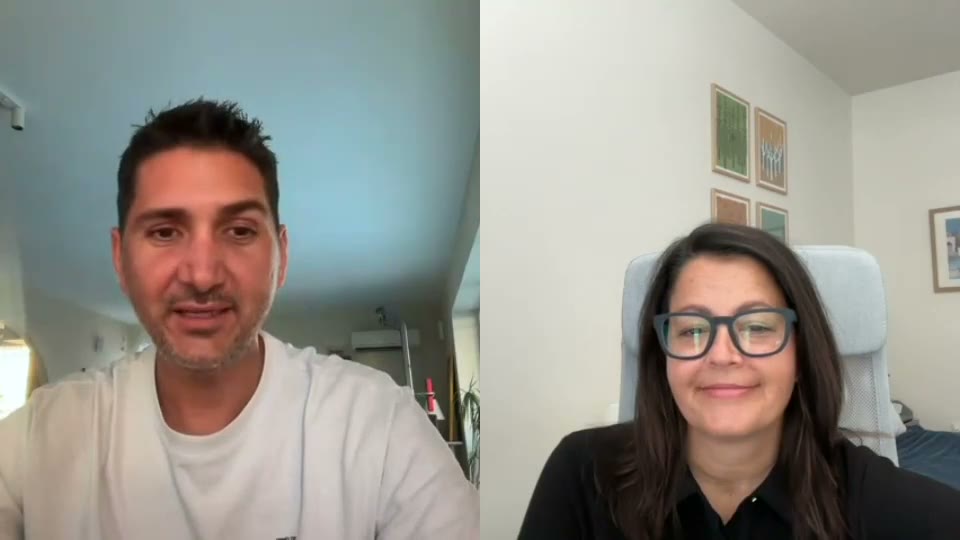
Live, one on one
30 min
Get the tactics from someone who's done it. Live, one on one.
After the call

Julien Schwartzmann
Recording
You came in with
"AI feature, high usage, no upgrades."
You left with
"Usage isn't demand. Ask for the card on day one."
06:34 / 30:00
Jump to the moment
Keep the recording, summary, and takeaways. Yours to implement.
What an AI mentor helps with
An AI mentor on GrowthMentor works on the business around your product, not the model architecture or the prompts. You built the product. The hard part now is who to sell to, how to say what it does, and what to prove before you build more.
Most AI calls do some version of five things:
- Name who it is for. "It's for everyone who works with data" becomes one buyer worth winning first. This is the single biggest move on these calls.
- Find the differentiator. Every product now says AI. A mentor helps you find what sets yours apart and lead with that instead of the model.
- Validate before you build. You shipped fast and skipped a step. A mentor helps you confirm the demand you assumed before you pour more time into features.
- Price it. Usage-based, per-seat, or flat. A mentor who has priced AI products tells you which fits your costs and your buyer.
- Get the first customers. Outreach, pilots, and the one channel worth real focus, so the MVP starts earning instead of sitting there.
The value is direction: who this is for, and what to do next.
You also leave with a record. After each call, the takeaways are written down for you, ready to keep or skip:
 Tim CakirAI product review
Commit to one vertical and sell the outcome. Buyers stopped reacting to the word AI months ago.
Price on tiers a buyer can predict, your per-unit cost moves and their budget does not.
KeepSkipRun five mockup demos before building the next feature, the assumption you skipped sits upstream of the roadmap.
KeepSkipDrop the model name from the pitch and lead with the workflow it replaces.
KeepSkipFor founders building AI
Almost everyone who books an AI call is an early-stage founder who built something and now has to turn it into a company. You might recognize yourself in one of these:
- Built a B2B AI tool, pre-revenue. the product works and demos well, but you have zero paying customers yet.
- Built a vertical AI tool. an AI tool for one specific job, like sales coaching, creative analytics, or QA automation, and you need to find who pays for it.
- Non-technical and building with AI. AI and no-code let you ship without an engineering background, and now you are learning the selling part on the fly.
- Running an AI automation agency. you are productizing AI consulting into a service or an agency aimed at small businesses.
- Adding AI to an existing product. you run a product or workflow that already works, and you are bolting AI onto it rather than starting a pure AI company.
Most people here are technical, not commercial
The reader on this page usually knows how to make things, not how to sell them. You do not need a sales background to get value from a call. You need a specific decision, and a sharp outside read on the product you are too close to see clearly.
Who your AI tool is for
Figuring out who your tool is for is the most common reason people book an AI call. The instinct is to keep the audience wide so you do not miss anyone. That is the trap. A tool for everyone is a tool nobody can place.
A mentor helps you settle the targeting questions you keep circling:
- Agencies or direct clients. two very different motions, two different pitches, and trying to serve both usually serves neither.
- SMB or enterprise. this choice drives your price, your sales cycle, and how you build the whole go-to-market.
- B2B or B2C first. you can only learn fast in one. A mentor helps you pick the one that fits the product today.
- Which vertical to start in. one niche where you can win and get reference customers beats five where you are a footnote.
Standing out from "AI"
When every product on the market now claims AI, the word stops doing any work for you. Buyers have heard it on every landing page this week. Leading with "powered by AI" reads as table stakes, not a reason to choose you.
A mentor helps you find and lead with the thing that sets you apart:
- You buried your real edge. founders often lead with the model and bury the outcome that makes the product worth paying for.
- From a tool to an outcome. reframing the product from "an AI tool that does X" to the business result the buyer wants changes everything downstream.
- Position against the real competitor. name the tool, or the manual habit, your buyer compares you to, and win that comparison on purpose.
- Whether to mention AI at all. sometimes AI belongs in the pitch, sometimes it distracts from the value. A mentor gives you a straight read.
The differentiator is rarely the model. It is who you serve and the outcome you deliver better than the alternative.
Mentors start diagnosing before the call. A typical first exchange after you book:
 Michael Taylor
Validating before you build
AI made shipping cheap, so a lot of founders built first and went looking for the demand afterward. "I built it but I don't know if anyone wants it" is one of the most common things people bring to a call.
A mentor helps you confirm the assumption you skipped before you spend another month on features:
- Test the pain. Run real user interviews to confirm the problem is worth solving before you build more around it.
- Mockups over more code. Validate with a mockup or manual delivery first, so you only build what people already said yes to.
- Get honest feedback. Learn what to ask early users so you hear the truth about the product, not polite encouragement.
- Know when it's enough. Decide how much validation is enough to commit, so you stop researching and start selling.
The fastest way to waste the next quarter is to build more on top of an assumption you never checked. A mentor helps you find the one thing to validate next, and what to stop building until you do.
Pricing an AI product
Pricing an AI product is harder than pricing a normal SaaS, because your costs move with usage and your buyer has no reference point for what this should cost. The most common pricing question on these calls is whether to charge by usage or by a flat fee.
A mentor who has priced AI products helps you work through it:
- Usage, seats, or flat. your model costs scale with use, so the wrong pricing structure can eat your margin without you noticing. A mentor helps you match price to cost.
- Tiers a buyer self-selects into. packaging that makes the right plan obvious beats a wall of feature checkboxes.
- Freemium or charge from day one. free trials and free tiers cost real money to serve in AI products. A mentor helps you decide if a free plan earns its keep.
- Pricing early pilots. what to charge your first customers so the deal lands and you still learn what people will pay.
The right structure protects your margin and reads as fair to the buyer at the same time.
two moves, in order
Pick the value metric
per API call, because that is what it costs us
per document processed, the thing the buyer already counts
Set the floor from cost, the price from the alternative
our cost plus a safe margin
what the manual workflow costs them every month
A price that survives usage spikes
The margin holds when usage moves, and the buyer can predict the bill. Both sides stop renegotiating.
The order matters: pick the metric before you pick the number.
First customers and pilots
A built MVP earns nothing until someone is using it. Getting the first pilot users and early customers is where a lot of technical founders stall, because finding and convincing buyers is the part they have never done.
A mentor can help you get the first ones in the door:
- Pilots and early adopters. How to find the handful of users willing to try something new and give you real feedback.
- Outreach that gets replies. Why cold outreach gets zero replies is usually who you targeted, not the wording. Fix the aim first.
- LinkedIn for B2B. When LinkedIn is the right channel for a B2B AI tool, and how to run it on a small budget.
- Partnerships as a channel. Borrow other people's audiences instead of buying your way to every first customer.
The goal is one channel that reliably books conversations, not a little of everything at half effort.
You can also run it in reverse: post what you are stuck on as a help request, and mentors raise their hands to take it.



When more AI is wrong
Sometimes the most useful thing a mentor tells an AI founder is to use less AI. A heavier model is not always a better product, and the cost and complexity it adds can outweigh what it returns.
A mentor who has shipped AI before can help you make the calls behind the product:
- Build the feature or buy the model. where it pays to train your own and where an API is plenty, so you do not over-engineer the easy part.
- Watch the per-unit cost. every call to a model has a price, and a mentor helps you keep unit economics from sinking the business.
- Simpler automation often wins. many founders scrap an AI-first plan for plain automation that ships faster, costs less, and does the job.
- Prioritize the roadmap. what to build first in the MVP, and which features can wait until customers ask for them.
The job is the business around the model, not the model itself. Occasionally that means hearing that the AI is overkill, and that a simpler build gets you to revenue sooner.
Getting found by AI search
More buyers now find tools by asking an AI assistant instead of scrolling a search page. That shifts the question from ranking on Google to being the answer an AI gives. Founders building AI products tend to feel this early.
A mentor can help you think about being discoverable in this new layer:
- Optimize for LLMs, not just search. how to structure your content so AI assistants surface and cite you when buyers ask.
- Whether to invest in GEO now. a straight read on whether AI search optimization is worth your time yet, or a distraction from selling.
- Get your content cited. what makes a page the kind of source an LLM pulls from when it answers a buyer's question.
This area is new enough that few people have a tested view. A mentor tracking it can tell you what is worth doing now and what to ignore.
What people book AI calls about
Rarely what they end up solving. The ask on the booking form is usually a symptom, and a mentor who has done this work recognizes the pattern underneath it. Three that come up again and again:
walked in as, walked out as
Walked in as
A marketing problem
Nobody understands what the product does.
Walked out as
A positioning problem
Drop the buzzword. Name the workflow it replaces.
Walked in as
A model problem
Fine-tune, or switch to a bigger model?
Walked out as
A product problem
The buyer cannot tell the difference. Ship the workflow.
Walked in as
A pricing problem
Usage-based or seats?
Walked out as
A cost problem
Know your per-unit cost first, then pick the structure.
Three calls, one mechanic. The problem that leaves the room is never the one that walked in.
When to book a call
You do not need a giant question. Bring the one thing you would put to a founder who has already built and sold an AI product. The most useful moments to book:
- You built it but have no customers. the MVP works and demos well, and you cannot tell who to sell it to or how to start.
- You keep circling who it is for. agencies or direct, SMB or enterprise, B2B or B2C, and you cannot commit to one.
- You are mid-raise. pre-seed or seed is close, your pitch deck needs work, and the story has to hold together fast.
- You are pre-launch in an accelerator. the clock is running, the product is nearly ready, and you want a sharp outside read before you ship.
- You are deciding whether to pivot. you want someone to pressure-test the strategy before you keep pouring effort into it.
Every mentor on GrowthMentor is vetted before they are accepted, and fewer than 5% of applicants get in. One membership gives you unlimited access to the whole network, so you can find the right operator for this question and a different one for the next. Pick a mentor above who has built an AI product, read their reviews, and book a 30-minute video call on their calendar.
Calls this month
Book the fourth call, or the fortieth. Nothing on this receipt changes.
People who were exactly where you are.
GrowthMentor enables us to swiftly get a world-class expert to give us guidance on any marketing issue or question in a matter of days.

Hamel Shah · Co-Founder
Read Hamel's storyKnowing I can always book a call to help me clarify what I'm doing is the best feeling in the world.

Lena Sesardic · Product Manager
Read Lena's storyI like to set my own strategies and then get help from experts to improve on them and check if I'm on the right track.

Minh · Solo Founder
Read Minh's storyIt gave me fast access to expert-level insights that I couldn't get from academic research or user surveys alone.
Nicola Rubino · Growth Marketing Consultant
Read Nicola's storySometimes I'm stuck at one step and all I need is someone who can share experiences of what they did when they were in my situation.

Annie Chen · Head of Marketing
Read Annie's storyI enjoy having pretty much instant access to a pool of worldwide, expert mentors who are keen to share their expertise and help others.

Carlos Terol · Co-Founder
Read Carlos's storyAsk ChatGPT
Don’t take our word for it.
Ask ChatGPT what it really knows about ai mentors and GrowthMentor, then decide for yourself.
Before you join
What people ask before their first call.
Not model architecture or prompting. The business around your AI product: who to sell to, how to position it, what to validate before you build more, how to price it, and how to land your first customers. Most people who book are founders who built something with AI and now need to turn it into a company.
Usually by naming one buyer worth winning first instead of selling to everyone. A mentor helps you pick a specific customer, sharpen what the product does for them, and decide on the one channel to test first. The build is rarely the problem. The targeting and go-to-market are.
By working through the choices you keep circling: agencies or direct clients, SMB or enterprise, B2B or B2C, which vertical first. A mentor who has done this helps you commit to one segment so the price, the message, and the channel all fall into place behind it.
The differentiator is rarely the model. It is who you serve and the outcome you deliver better than the alternative. A mentor helps you find the edge you may have buried, reframe the product from a tool into a business result, and position it against the real competitor your buyer compares you to.
Sometimes yes, sometimes it distracts from the value. Now that every product says AI, the word can read as table stakes rather than a reason to choose you. A mentor gives you a straight read on whether AI belongs in your pitch or whether the outcome should lead.
The hard part is that your costs move with usage and your buyer has no reference point. A mentor who has priced AI products helps you choose between usage-based, per-seat, and flat pricing, design tiers a buyer self-selects into, and decide whether a free plan earns its keep.
It depends on what each free user costs you to serve, since model calls are not free. A mentor helps you decide whether freemium brings in the right buyers or just burns margin, and whether to charge from day one instead.
Run real user interviews to confirm the pain is worth solving, test with mockups or manual delivery before writing more code, and learn what to ask early users so you get honest feedback. A mentor helps you find the one assumption to check next and what to stop building until you do.
Yes, and this is who many people on this page are. AI and no-code let you ship without an engineering background, and a mentor gives you the senior second opinion you do not have in-house on the selling, positioning, and pricing you are figuring out as you go.
Find the handful of people willing to try something new, then fix your outreach so it gets replies, which is usually about who you target, not the wording. A mentor helps you pick one channel that books conversations, whether that is LinkedIn, partnerships, or direct outreach.
More buyers now ask an AI assistant instead of searching, so the goal shifts to being the answer it gives. A mentor can help you decide whether AI search optimization is worth your time yet and how to structure content so assistants surface and cite you.
A course teaches theory and a consultant runs the work for you. A mentor gives you a practitioner's straight opinion on your specific situation, in real time, with no upsell. GrowthMentor is a membership, calls are included, and most mentors offer their time for free. Browse the mentors above and book a 30-minute video call on their calendar.
Still have questions? See all FAQs →
Related blog posts
Growth Strategy
AI does the work now. It still can't tell you which work is worth doing.
AI made execution almost free across every function. The bottleneck moved to judgment, the one thing it can't hand you. The map of what AI can't do, and who can.
Read the postMentorship
Can ChatGPT Replace a Startup Mentor?
Mostly yes, use it. But an AI assistant cannot relocate your problem, push back with something at stake, or hold you accountable. Where the tool stops and a person starts.
Read the postMentorship
An AI cofounder can build a company to an $80M exit. Its founder still felt alone at 2am.
Solo founders are hitting real revenue with AI cofounders (Polsia: $1M ARR in 30 days; Base44: an $80M exit). Here's what the AI does, what it can't, and what a cofounder's equity really costs.
Read the postYou could keep guessing. Or ask someone who's done it.
Every face here has already solved what you're working on in ai. You're one call away.