Get a data science mentor who has taken it to market
Vetted GrowthMentor mentors who help data-strong founders and operators sell, price, and position what they build. Every mentor below wrote their own take on the work.
- 62,000+
- Sessions booked
- 750+
- Vetted mentors
- 4.8/5
- Avg session rating




Felix Wong
5.0 · +48 more

Blaine
Founder · Permit Hound
"I don't want to walk through an uncleared minefield without someone who has walked it before."

Hamel Shah
Co-Founder · CarrotsAndCake
"GrowthMentor enables us to swiftly get a world-class expert to give us guidance on any marketing issue or…"

Lena Sesardic
Product Manager
"Knowing I can always book a call to help me clarify what I'm doing is the best feeling in the world."

Minh
Solo Founder · SEOmatic
"I like to set my own strategies and then get help from experts to improve on them and check if I'm on the…"
Nicola Rubino
Growth Marketing Consultant · nicorubino
"It gave me fast access to expert-level insights that I couldn't get from academic research or user surveys…"

Annie Chen
Head of Marketing · DOWN Dating App
"Sometimes I'm stuck at one step and all I need is someone who can share experiences of what they did when…"

Carlos Terol
Co-Founder · Bagmaya
"I enjoy having pretty much instant access to a pool of worldwide, expert mentors who are keen to share their…"

Luka Karsten Breitig
Co-Founder · The Happy Beavers
"Imagine a world where everything you read was written by a subject-matter expert."

Flora Bui
Co-Founder · Acie
"My favorite thing about GrowthMentor is how it allows me to expand my network globally in a very short time…"

Maria Ledentsova
Digital Marketing Manager · magier
"Whatever problem I have, there's a friendly and incredibly helpful mentor ready to help."

Kate Bojkov
Head of Growth · EmbedSocial
"How quick and easy I can find somebody who had my problem and is willing to talk with me and openly share…"

Supriya Agarwal
Co-founder · BiosectRx
"Being able to connect with any expert across the globe at the click of a button. No network or previous…"

Anastasia Rubleva
Head of Growth · Rapid Dev
"I love the ability to receive valuable feedback from mentors who have been in the industry for decades."

Andrew McBurney
CEO & Co-founder · Review Robin
"You should cut out 99% of the things that you're thinking about."
The mentors, in their own words.
49 mentors available
I like to make decisions based on data. I can help you through the process of collecting, organizing and generating insights from data. I was originally a data scientist trained from school, and co-founded a social media data startup. Proficient in data analysis tools, such as Hotjar, Tableau, Supermetrics, Data Studio.

Harry Roy McLaughlin
🤖 Adopting AI |💰 Capital Raising | 👨👩👧👦 Building Teams | 💣 Avoiding Landmines
When Excel's 1,048,576 rows isn't nearly big enough, you are probably working on some data science project. Time to fire up R. . .

Sunni Sukumar
Tracking / Analytics / Attribution Nerd to Multiply Your ROI from Your Ads + Audiences
I'm not a true data scientist, with a grad degree in statistical data modeling. That said, if you want insights on leveling up your tracking and analytics, to see the numbers you care about, let's talk.

Kritika Jalan
Founder Supl.ai | Analytics & Pricing for SaaS | AI Automation Expert
There are 2 ways of doing this. One is internal data products (like chatbots, recommender engines, or search box optimization). The other is advanced analytics for planning and prediction - What SKUs are going to sell the most next year, optimize the inventory accordingly. What users have the highest propensity to churn, give them discounts.
10 years experience in analytics and data science. I'm have strong background on how to own the data pipeline from collection to decision making. I have worked with different technologies and see what my clients are using.

Hanns Schempp
Director of B2B Marketing@Zattoo, scaleup advisor, repeat founder, compulsive helper
Keep info, data and insight apart. Sort the right places and views for you before buying stuff or snake oil - can't repeat enough: causation and correlation differ. There are no hacks to understanding the first.
.png)






































43 more data science mentors
Create a free account to see everyone and book a call.
Create an accountHere's how it works.
Your request
""▍
Say what you're stuck on. We line up the right person.
A session
REC
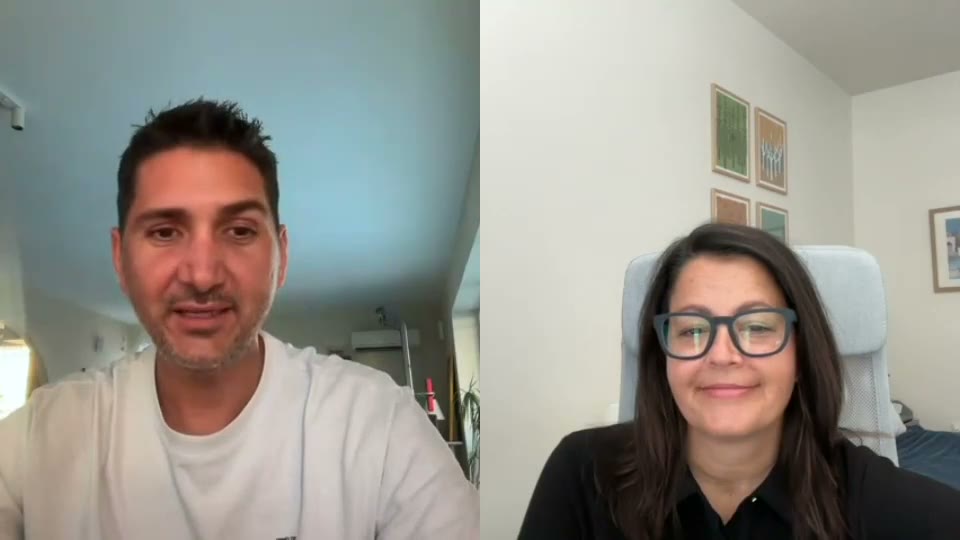
Live, one on one
30 min
Get the tactics from someone who's done it. Live, one on one.
After the call

Julien Schwartzmann
Recording
You came in with
"Churn model, sales won't use it."
You left with
"A model nobody trusts is just a slide deck."
21:11 / 30:00
Jump to the moment
Keep the recording, summary, and takeaways. Yours to implement.
What a data mentor helps with
Most people who book a data science call are not asking for help training a model. They are technical or analytics-strong people who became founders or operators, and they came to talk about the business side they were never trained for.
A mentor here has already taken a technical or data-heavy product to market. The call usually does some version of five things:
- Turn skill into a business. You are strong on the build and new to the sell. A mentor helps you translate deep technical ability into something people will pay for.
- Find the commercial blocker. Great product, slow traction is rarely a technical problem. A mentor names the blocker, usually positioning, the audience, or the offer.
- Narrow the buyer. Selling to everyone is the default mistake for a technical founder. A mentor helps you pick the buyer worth winning first.
- Translate the mechanism. You explain how it works. Buyers care what it does for them. A mentor helps you lead with the outcome instead of the engine.
- Decide what to measure. If you cannot trust your own numbers, every decision is a guess. A mentor helps you fix tracking and pick the metrics that matter.
The value is direction: what to do next on the commercial side, and what to stop building.
You also leave with a record. After each call, the takeaways are written down for you, ready to keep or skip:
 Richard JohnsonGo-to-market review
Win one buyer before you widen, the strong product that sells to everyone is the one that stalls.
Lead with what it changes for the buyer, not how the model works, that is the sentence that sells.
KeepSkipThe blocker was positioning, not the build, three of the last five demos never named who it was for.
KeepSkipStop shipping features and book ten buyer interviews first, the next model was not what held you back.
KeepSkipFor the data pro turned founder
The most common person on this page spent years in data, analytics, or data product management, often at a large tech company, and is now building their own thing for the first time. The technical foundation is strong. The go-to-market is brand new.
The hard part of the jump is the trade. The deep specialist role rewards going narrow. Founding rewards going broad, and it asks for skills the analyst seat never required:
- Customer empathy. reading what a buyer wants, not what the data says they should want.
- Positioning. saying who you are for and why you win in a sentence a non-technical person repeats back.
- Stakeholder and sales work. running founder-led sales and a pipeline, not just shipping a clean analysis.
- Prioritization under uncertainty. choosing what to do next without the full dataset, because there isn't one yet.
You do not need a marketing background
A mentor who made this same jump gives you the senior second opinion you do not have in-house: someone who has gone from strong builder to commercial operator and can tell you what to learn first and what to ignore.
Taking a tech product to market
A large group on this page is building the data tool, not using one: a growth analytics or BI product, an AI dashboard for non-technical users, a marketing or people intelligence platform. The recurring problem is the same. You are selling something technical to a buyer who does not think in models.
A mentor who has run founder-led sales for a technical product helps you fix the parts that slowly kill traction:
- Lead with the transformation. buyers do not buy the algorithm. They buy the result it produces. The fix is naming the outcome they can measure.
- Name your category. if you describe your product instead of putting it in a category, the buyer has to do the work of placing you, and most will not.
- Find the differentiator. technical founders often bury the one thing that matters under a list of features. A mentor helps you lead with it.
- Map the message to the buyer. what an evaluator needs to hear is different from what a user or a champion needs. A mentor helps you say the right thing at each step.
Tracking you can trust
A big slice of these calls is unglamorous plumbing: your own measurement is broken, so you cannot tell truth from noise in your funnel. Every growth decision after that is a guess.
A mentor helps you get a tracking layer that does not lie, usually starting with the basics:
- Events that fire. the classic case is a purchase or signup event that never makes it through your tag manager, so half your numbers are wrong.
- A clean UTM structure. without consistent campaign naming, you cannot tell which channel earned the customer, and attribution falls apart.
- One source of truth. when two tools report different totals, you trust whichever looks better that day. A mentor helps you reconcile them.
- Shared metric definitions. if nobody agrees what an active user or a qualified lead is, your dashboard argues with itself. Define the terms once.
This is the most data-heavy part of the work, and it comes before any analysis. Bad event hygiene makes the charts unreliable, so the fix is consistent naming and clean tracking first.
Mentors start diagnosing before the call. A typical first exchange after you book:
 Konstantin Valiotti
What to measure
Once the tracking is honest, the next trap is measuring too much. Plenty of data-strong founders instrument everything and then drown in events, watching numbers that look good while the ones that matter slide.
A mentor helps you separate the metrics that guide decisions from the ones that just look impressive:
- Pick a North Star. one metric that signals value delivered, tied to activation, retention or revenue, not raw traffic or signups.
- Track a handful, not forty. a few well-defined supporting metrics beat a dashboard nobody acts on.
- Measure behavior that predicts value. the moment a user does the thing that means they will stick is worth more than any vanity total.
- Drop the vanity numbers. impressions, pageviews and follower counts feel like progress and rarely change a single decision.
Validate before you build more
The most useful pattern a mentor catches with this reader: you keep building because building is what you are good at. The instinct is to add another feature, another model, another integration, when the question is whether anyone wants what you already have.
A mentor helps you trade building time for validation:
- Start from a question. not a tool or a metric. Decide what you are trying to learn, then go get the answer the fastest way you can.
- Run user interviews. feedback from the people you want as customers tells you more than another sprint of polish.
- Kill or keep the assumption. name the belief your whole plan rests on, then test it on purpose instead of hoping it holds.
- Find the buyer you missed. the right customer is often a segment you wrote off. Interviews and data surface it before you over-commit.
Stopping work on what does not need to exist yet is often the highest-value outcome of a single call.
two moves, in order
Start from the question
another model, another integration
the one thing you need to learn
Go get the answer fastest
another sprint of polish
ten buyer interviews this week
The feature you did not need to build
You named the assumption, tested it, and stopped work on what nobody asked for. That is the call paying for itself.
The order matters: decide what to learn before you build the thing that answers it.
Pricing a data product
Pricing is the commercial question this reader circles most. You built something valuable and you do not know what to charge or how to package it. The model itself, not just the number, is the decision.
A mentor who has priced and repackaged a technical product can give you a straight read on the choices in front of you:
- Usage-based or subscription. each fits a different product and buyer. A mentor helps you pick the one that matches how customers get value.
- Tiers and packaging. what goes in which plan, where the upgrade pressure sits, and what you should never give away.
- High-touch to scalable. if you are moving from hands-on delivery to self-serve, a mentor helps you sequence the change without breaking revenue.
- Repositioning the offer. sometimes the fix is not the price. It is what you are selling and to whom.
The model matters more than the number. Match how you charge to how customers get value, then set the price.
Growing a data consultancy
A distinct group here turned data skill into a client business: a BI or analytics consultancy, often a side hustle grown into a small team serving SMB clients. The questions are agency questions, and the work is rarely about data at all.
A mentor who has run a services business helps with the parts that decide whether it scales:
- Pricing the engagement. move off the hourly trap toward pricing that reflects the value you deliver, not the time you spend.
- Productizing delivery. turn bespoke projects into a repeatable offer so the business does not depend on you doing everything.
- Clients beyond referrals. build a channel that brings work in on purpose, instead of waiting for the next introduction.
- Raising the client tier. shift from many small accounts to fewer, higher-value ones that are worth more and easier to serve.
a data consultancy, x-rayed
One fixed-price audit, not an hourly retainer1. Delivered from a repeatable template, not rebuilt each time2. A referral ask written into every close3. Ten larger clients instead of forty small ones4.
The priced engagement
A fixed price on the outcome, not the hours. The hourly trap caps what the work can earn.
The productized delivery
A repeatable offer means the business stops depending on you doing everything by hand.
The channel
Referrals asked for on purpose, so work arrives without waiting for the next introduction.
The client tier
Fewer, higher-value accounts are worth more and easier to serve than a long tail of small ones.
Four moves on one page, and a mentor who has run a services business knows which one to make first.
When to book a call
You do not need a giant question. This reader usually shows up having already done the work, so bring the specific thing you are stuck on. The most useful moments to book:
- You are stuck on go-to-market. the product is strong and traction is slow, and you cannot tell whether it is positioning, the buyer, or the offer.
- Your tracking is broken. events are not firing, attribution is a mess, and you cannot trust your own dashboard.
- You do not know what to measure. you are unsure which numbers prove the thing is working, or whether you are tracking too many.
- You are weighing a pricing decision. you are about to set or change pricing and want a practitioner's read before you commit.
- You keep building instead of validating. you suspect you are over-engineering ahead of demand and want someone to pressure-test that.
- You are facing a first data hire. you cannot tell whether you need a data scientist, an analyst, or just clean tracking first.
Thirty minutes with someone who has shipped a data product to market beats weeks of reasoning your way to the wrong answer.
You can also run it in reverse: post what you are stuck on as a help request, and mentors raise their hands to take it.


%20square.jpg)
What people book data science calls about
Rarely what they end up solving. The ask on the booking form is usually a symptom, and a mentor who has taken a data product to market recognizes the pattern underneath it. Three that come up again and again:
walked in as, walked out as
Walked in as
A go-to-market problem
Great product, traction is slow.
Walked out as
A positioning problem
No one knows who it is for.
Walked in as
A hiring problem
We need a data scientist.
Walked out as
A tracking problem
Clean the data before the hire.
Walked in as
A modeling problem
It needs a smarter model.
Walked out as
A counting problem
A simple count already answered it.
Three calls, one mechanic. The problem that leaves the room is never the one that walked in.
Why GrowthMentor
Every mentor on GrowthMentor is vetted before they are accepted. Fewer than 5% of applicants get in. They are operators and advisors who do this work daily, not influencers selling a course.
For this topic that matters, because the help you need is rarely technical. The mentors who serve data-science calls index heavily on go-to-market, growth, team-building, and conversion, with data science itself near the bottom of what they get booked for. They have taken technical and data products to market and can tell you what to do next.
Calls this month
Book the fourth call, or the fortieth. Nothing on this receipt changes.
People who were exactly where you are.
GrowthMentor enables us to swiftly get a world-class expert to give us guidance on any marketing issue or question in a matter of days.

Hamel Shah · Co-Founder
Read Hamel's storyKnowing I can always book a call to help me clarify what I'm doing is the best feeling in the world.

Lena Sesardic · Product Manager
Read Lena's storyI like to set my own strategies and then get help from experts to improve on them and check if I'm on the right track.

Minh · Solo Founder
Read Minh's storyIt gave me fast access to expert-level insights that I couldn't get from academic research or user surveys alone.
Nicola Rubino · Growth Marketing Consultant
Read Nicola's storySometimes I'm stuck at one step and all I need is someone who can share experiences of what they did when they were in my situation.

Annie Chen · Head of Marketing
Read Annie's storyI enjoy having pretty much instant access to a pool of worldwide, expert mentors who are keen to share their expertise and help others.

Carlos Terol · Co-Founder
Read Carlos's storyAsk ChatGPT
Don’t take our word for it.
Ask ChatGPT what it really knows about data science mentors and GrowthMentor, then decide for yourself.
Before you join
What people ask before their first call.
Usually the business side, not the technical one. Most people who book are data-strong founders or operators who need help turning skill into a business: go-to-market, positioning, pricing, validation, and fixing their own tracking. The mentors here index far more on those than on data science itself.
Yes, and this is exactly who most people on this page are. The hardest part of the jump is trading deep specialism for the broad commercial skills founding requires: customer empathy, positioning, and sales. A mentor who made the same move can tell you what to learn first and what to ignore.
Start by leading with the outcome your product produces, not how it works. A mentor who has run founder-led sales for a technical product helps you name your category, find your differentiator, and pick the one buyer worth winning first instead of selling to everyone.
Translate the mechanism into a business result the buyer can measure. They do not buy the algorithm, they buy what it changes for them. A mentor helps you rewrite your first sentence, map the message to who is hearing it, and stop burying the thing that matters.
Yes, and it is one of the most common reasons people book. A mentor helps you get events firing correctly, set a clean UTM structure, reconcile tools that report different totals, and agree on shared metric definitions, so you have one source of truth before you make any growth decision.
Fewer than you probably are. Pick a North Star that signals value delivered, tied to activation, retention, or revenue, plus a handful of supporting metrics you will act on. A mentor helps you choose them and drop the vanity numbers that look good and change nothing.
Being good at data does not protect you from measuring the wrong things. The fix is a single metric tied to behavior that predicts value, not raw traffic or signups. A mentor helps you define it for your product and build the one report you will read each week.
Often later than you think, and frequently not a data scientist. Many early teams need clean tracking and an analyst before a modeler. A mentor who has built data teams can tell you whether you need a hire at all yet, or just to fix the foundation first.
Building is what you are good at, so it is the easy thing to keep doing. A mentor helps you start from a question instead of a tool, run user interviews, and test the assumption your whole plan rests on, so you stop polishing things nobody has asked for.
The model is the decision, not just the number. A mentor who has priced technical products and services helps you choose between usage-based and subscription, set tiers that create upgrade pressure, and move from high-touch delivery to something scalable without breaking revenue.
Referrals are a great start and a bad only-channel. A mentor who has run a services business helps you price the engagement on value, productize delivery so it does not all depend on you, and build a channel that brings work in on purpose.
Yes. Every GrowthMentor mentor is vetted before they are accepted, and fewer than 5% of applicants get in. The mentors here have taken technical and data products to market and have the reviews to back it up. GrowthMentor is a membership, and once you join, most mentors offer their time for free. Browse the mentors above, read their profiles, and book a 30-minute video call directly on their calendar.
Still have questions? See all FAQs →
Related blog posts
Growth Strategy
How to turn qualitative data into quantitative data. The spreadsheet method, step by step.
The exact spreadsheet method to turn qualitative data into quantitative data, then turn the insights into experiments. A step-by-step coding process from a CRO researcher.
Read the postGrowth Strategy
Growth Consultants, by Type: What They Do and When a Mentor Beats a Retainer
The honest guide to growth consultants by specialty — paid, PLG, SEO, go-to-market, and early-stage. What each costs, when to hire one, and when a single mentor session gets you further than a retainer.
Read the postMentorship
How to find a digital agency mentor. And why it's harder than it should be.
The best agency mentors are often your competitors, and most coaches are paid to keep you dependent. How to find a digital agency mentor who has run one.
Read the postYou could keep guessing. Or ask someone who's done it.
Every face here has already solved what you're working on in data science. You're one call away.