Get a bootstrapping mentor who has built it without funding
Vetted GrowthMentor mentors who have grown companies on their own money. Every mentor below wrote their own take on the work.
- 62,000+
- Sessions booked
- 750+
- Vetted mentors
- 4.8/5
- Avg session rating

.jpg)


Foti Panagiotakopoulos
5.0 · +59 more

Blaine
Founder · Permit Hound
"I don't want to walk through an uncleared minefield without someone who has walked it before."

Hamel Shah
Co-Founder · CarrotsAndCake
"GrowthMentor enables us to swiftly get a world-class expert to give us guidance on any marketing issue or…"

Lena Sesardic
Product Manager
"Knowing I can always book a call to help me clarify what I'm doing is the best feeling in the world."

Minh
Solo Founder · SEOmatic
"I like to set my own strategies and then get help from experts to improve on them and check if I'm on the…"
Nicola Rubino
Growth Marketing Consultant · nicorubino
"It gave me fast access to expert-level insights that I couldn't get from academic research or user surveys…"

Annie Chen
Head of Marketing · DOWN Dating App
"Sometimes I'm stuck at one step and all I need is someone who can share experiences of what they did when…"

Carlos Terol
Co-Founder · Bagmaya
"I enjoy having pretty much instant access to a pool of worldwide, expert mentors who are keen to share their…"

Luka Karsten Breitig
Co-Founder · The Happy Beavers
"Imagine a world where everything you read was written by a subject-matter expert."

Flora Bui
Co-Founder · Acie
"My favorite thing about GrowthMentor is how it allows me to expand my network globally in a very short time…"

Maria Ledentsova
Digital Marketing Manager · magier
"Whatever problem I have, there's a friendly and incredibly helpful mentor ready to help."

Kate Bojkov
Head of Growth · EmbedSocial
"How quick and easy I can find somebody who had my problem and is willing to talk with me and openly share…"

Supriya Agarwal
Co-founder · BiosectRx
"Being able to connect with any expert across the globe at the click of a button. No network or previous…"

Anastasia Rubleva
Head of Growth · Rapid Dev
"I love the ability to receive valuable feedback from mentors who have been in the industry for decades."

Andrew McBurney
CEO & Co-founder · Review Robin
"You should cut out 99% of the things that you're thinking about."
The mentors, in their own words.
60 mentors available
I've been bootstrapping GrowthMentor since 2018. I know what it's like to choose between paying for development, doing something manually and leaving an idea alone. AI has changed those decisions for me. Bring the thing you're trying to build or grow, and we can work through where your money and attention should go.

Peter Murphy Lewis
🕸️Fractional Chief Marketing Officer | 📺 TV Host | 🎧 Podcaster |🐒 CSO Zoo | Founder 🚲 | 👠Ultra-Marathoner
Bootstrapped 3 travel companies in South America. I can tell you what not to do (because I did it) and what to repeat (because I got lucky or someone taught me well). I love to mentor, pivot, critique, encourage, help.

I have bootstrapped my startup from 0 to 1.2M in yearly revenue in less than a year. I learned many different techniques, found some interesting tools, and created my own systems to do a lot with little, and I would love to share it. If you are at the beginning of your journey, I highly recommend starting bootstrapping.

I have bootstrapped several startups and advised on tens of others on how to successfully bootstrap when it comes to acquiring customers, building teams and product development.

Craig Zingerline
Six-time founder helping companies grow with strategies that advance product adoption & revenue.
I've bootstrapped 3 companies to profitability and love looking at sustainable, organic growth strategies. If you need help thinking through ways to drive growth, I'm always happy to dig in.

David Kelly
I built a multi-million dollar SaaS business. Now I help founders and execs do the same.
My FAVORITE way to build a business is from $0. Having no marketing or growth budget might seem like a problem... but it really just requires more creative solutions to grow. And here's a secret: Many of these "secret" free marketing channels are more sustainable than paid platforms, which is subject to the paid platform's latest whim (looking at you, Facebook Ads).



.png)




.jpg)




.jpeg)

.jpg)








.jpeg)














.JPG)










54 more bootstrapping mentors
Create a free account to see everyone and book a call.
Create an accountHere's how it works.
Your request
""▍
Say what you're stuck on. We line up the right person.
A session
REC
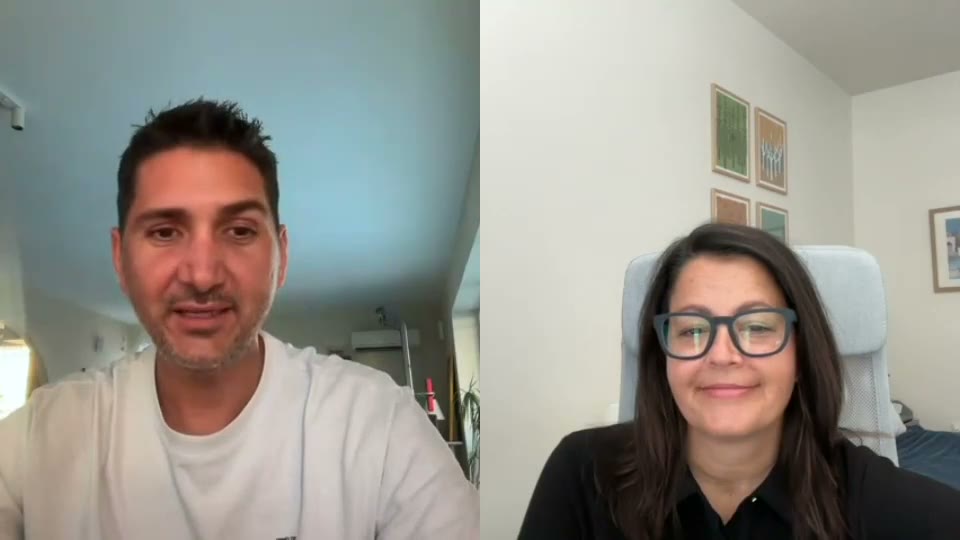
Live, one on one
30 min
Get the tactics from someone who's done it. Live, one on one.
After the call

Spyros Tsoukalas
Recording
You came in with
"3 months left, no idea what to cut."
You left with
"Cut everything except what gets you paid."
21:45 / 30:00
Jump to the moment
Keep the recording, summary, and takeaways. Yours to implement.
What a mentor does
A bootstrapping mentor has already built a business on their own money, so they know which scarce resource to spend next when you have little of any of them. You get a 1:1 call with an operator who has made the calls you are facing, with their own runway on the line.
Most calls do some version of five things:
- Validate before you build. The most expensive habit a bootstrapper has is building before checking that anyone wants it. A mentor slows you down enough to talk to a real user first.
- Find your real customer. When you cannot afford to waste a dollar, marketing to everyone is the costliest mistake. A mentor helps you pick the one customer worth winning.
- Decide the first hire. Which role unblocks you, when to make the move, and how to structure it. The first hire is the scariest spend a solo founder makes.
- Get the price right. Too low and you starve, too high and you stall. A mentor who has priced products tells you straight where your number should sit.
- Pick one bet. With limited time and money, doing a little of everything compounds nothing. A mentor helps you commit to the one thing that matters.
The value is direction: which scarce resource to spend, and what to ignore until later.
You also leave with a record. After each call, the takeaways are written down for you, ready to keep or skip:
 Kosta PanagouliasWhere to spend next
Talk to five customers who already paid you before you build anything new, the churned ones tell you the most.
Pick one customer to win first, a zero budget spread across everyone is why nothing compounds.
KeepSkipYour price is a third too low, raise it on new signups next week and read the objections.
KeepSkipHand off the task you do most that a customer already pays for, that is your real first hire.
KeepSkipWhere founders get stuck
Most people book a bootstrapping call carrying a specific version of the same pressure:
- Zero funding, tight runway. no outside money, your own savings on the clock, and every decision weighed against how many weeks you have left.
- Solo and wearing every hat. one person doing product, marketing, sales and support, with no one senior to sanity-check the plan.
- Early traction, no engine. there is a signal, people are buying, but nothing repeatable yet and no money to buy a growth machine.
- A services founder productizing. you came from freelance or agency work, you want to sell a product instead of your hours, and the move is harder than it looked.
- The cash crunch. burn is high relative to revenue, the runway is short, and you need a clear next move while you still have weeks to make it.
This reader is almost always a solo founder
Most people on this page are early founders doing the work themselves, not titled marketers. You do not need a growth team or a polished deck to get value from a call. You need a specific decision and an experienced outsider to think it through with you.
Validate before you spend
The single most common thing a bootstrapping mentor fixes is the instinct to build before talking to anyone. You ship product because building feels like progress, and you find out too late whether the demand was ever there.
There are two versions of the same trap, and they look opposite. Some founders launch fast without checking the assumption. Some polish forever and never put it in front of a customer. Both are avoiding the conversation with a user. A mentor helps you have it:
- Run customer interviews. what to ask so people tell you the truth about their problem, not a polite version that sends you building the wrong thing.
- Know how many is enough. you do not need a hundred interviews before you build. A mentor helps you read the signal and decide when you have heard enough.
- Talk to users before ads. spending on channels before you know who buys and why is how a tight budget disappears. Discovery comes first.
- Mine the customers you have. the people who already bought, and the ones who churned, hold the answers. A mentor pushes you to call the ones you have been avoiding.
Mentors start diagnosing before the call. A typical first exchange after you book:
 Ryan Wardell
Pick one customer
Bootstrapped founders keep defaulting back to everyone. The product could help a lot of people, so narrowing feels like leaving money on the table. With no budget to waste, the inability to pick one customer is the most expensive habit you have.
A mentor helps you commit to a wedge, then watch the rest of the plan fall into place:
- Niche down or stay broad. A straight read on whether your market is crowded enough that you have to narrow, and which slice to own first.
- SMB or enterprise. The choice that drives your price, your sales cycle, and your whole motion. Pick one so you stop building for neither.
- B2B or B2C. Who you sell to, and what that means for how you reach them and what you charge.
- Your real differentiator. What makes you the obvious choice for that one customer, said in language a buyer recognizes.
Once the customer is specific, the channel, the message, and the price all get easier to decide.
The narrower the customer, the easier it gets to pick the channel, the message, and the price.
First users, no budget
Getting your first users with no audience and no ad budget is a different problem from scaling, and most advice you read is written for companies that can pay to acquire. A mentor who launched on nothing helps you find the moves that do not need money:
- Launch and get the first users. where the first ten customers come from when you are starting cold, and how to manufacture a launch moment with no list.
- Network before cold outreach. the people you already know are usually a warmer first channel than strangers. A mentor helps you decide which to lean on first.
- Fix outreach that gets no replies. most cold outreach fails because it is aimed at the wrong person, not because the message is bad. A mentor helps you find the real buyer.
- Build a community from scratch. turning early goodwill into something repeatable instead of accidental, so word of mouth becomes a channel you can rely on.
The goal is one channel that works, not five that you run at half effort.
two moves, in order
Pick one channel you can work by hand
five channels at half effort
the one you can run yourself this week
Make the first ten bring the next ten
waiting on word of mouth
asking each early user for one intro
One channel that repeats
A single move you can do again next week beats five you cannot sustain. It compounds.
The order matters: get one channel working before you add a second.
Pricing with no room for error
When you have early revenue and a thin margin, pricing is one of the few levers that moves the business without costing you anything to pull. Set it wrong and you either starve or scare away the buyers you need.
A mentor who has priced and repriced products helps you decide:
- How to structure your tiers. what to put in each plan so a buyer self-selects into the right one instead of stalling on the choice.
- What your number should be. a straight read on whether your price is too low to survive on or too high for the market you picked.
- How to package it. what you bundle and what you charge extra for, so the offer is easy to say yes to.
- What to do about churn. when early traction comes with people leaving, a pricing or packaging change is often part of the fix.
Most bootstrappers underprice out of fear. The move is a raise toward a number that covers the burn.
Your first hire
The first hire is the scariest spend a solo founder makes. You are alone, you know you are the bottleneck, and committing money to a person feels like a different kind of risk than any tool or channel.
A mentor who has built a team from one helps you get it right:
- Which role first. the one hire that unblocks growth, instead of the one that just feels overdue.
- When to make the move. reading whether you are ready to hire or whether you should buy more runway with a contractor first.
- Structuring equity. how to think about equity for early team and advisors without giving away the company.
- Finding technical help. where to find product and engineering help, and how to lead it once it arrives.
Getting the first hire right is worth more than any single tactic, because it changes what you are able to do for the next year.
a first hire, x-rayed
Ten hours a week of client delivery off your plate first1. A contractor for two months before any full-time offer2. They own the recurring work, you keep the one thing only you can do3. The goal: two clear days a week back for product4.
The role
Not the work you hate. The billable task you do most, handed off.
The trial
A contractor proves the role before you commit a salary.
The trade
They take the recurring work, your time goes to the one thing only you can do.
The test
Two days a week back, or the hire was the wrong one.
The hard part is naming which role unblocks you, and that is what the call is for.
Bootstrap or raise
At some point most bootstrapped founders hit the question of whether to keep going alone or take outside money. There is no default right answer, and it depends on your margins, your growth, and how much control you are willing to trade.
A mentor who has been on both sides of this call helps you decide:
- Bootstrap versus raise. a straight read on whether your business is a fit for venture money, or whether you grow faster and keep more by staying the course.
- The first-raise decision. if you have early traction and are weighing your first round, what investors will want to see before you start.
- Approaching investors cold. how a first-time founder with no track record builds the conversation, and what to fix before the first pitch.
The point of this call is not to talk you into raising or out of it. It is to make the decision with someone who has lived both outcomes, so you are not choosing in the dark.
When to book a call
You do not need a giant question. Bring the thing you would ask a founder friend who happens to have bootstrapped before. The most useful moments to book:
- Runway is getting tight. the money is real, the clock is loud, and you want a clear next move before the next burn cycle eats into it.
- You are about to build something big. before you sink weeks into a feature or a product, you want someone to push you to validate it first.
- You cannot pick a customer. you keep defaulting to everyone and you know it is costing you, but you cannot decide which one to commit to.
- You are weighing your first hire. you know you are the bottleneck and you want help deciding which role unblocks you and whether now is the time.
- You just need a sanity check. sometimes the most useful call is an experienced outsider confirming you are not crazy and the plan holds up.
A focused 30 minutes with someone who has done it beats weeks of carrying the same decision alone.
What a mentor helps with
Bootstrapping touches the whole business, and so does the network. You are not limited to one specialist. You can find someone who has done the specific thing you are stuck on:
- Idea validation. Customer interviews, product feedback and proving demand before you spend.
- Go-to-market. Sequencing your launch and getting the first users with no budget.
- Product market fit. Finding the customer and problem where the product finally clicks.
- Pricing and packaging. Tiers, your number, and turning early revenue into something durable.
- Building a team. The first hire, equity for early people, and leading product and engineering.
- Funding decision. Whether to bootstrap or raise, and how to approach your first round.
- Positioning. What you do, your differentiator, and a site that carries it.
- The founder's head. An experienced outsider to think with when the weight gets heavy.
If your stuck point is validation, find a mentor who shipped on nothing; if it is the raise, find one who has sat on both sides of the table.
You can also run it in reverse: post what you are stuck on as a help request, and mentors raise their hands to take it.


What people book bootstrapping calls about
Rarely what they end up solving. The ask on the booking form is usually a symptom, and a mentor who has bootstrapped before recognizes the pattern underneath it. Three that come up again and again:
walked in as, walked out as
Walked in as
A runway problem
We're burning faster than we earn.
Walked out as
A pricing problem
You never charged enough to survive.
Walked in as
A time problem
No hours left in the week.
Walked out as
A first-hire problem
You still do the billable work.
Walked in as
A budget problem
We can't grow with no ad spend.
Walked out as
A network problem
The warm list was never asked.
Three calls, one mechanic. The problem that leaves the room is never the one that walked in.
Why GrowthMentor
Every mentor on GrowthMentor is vetted before they are accepted. Fewer than 5% of applicants get in. They are founders and operators who have built real businesses, many of them bootstrapped, not influencers selling a course.
Because the network is broad, you are not stuck with one specialist when your question spans validation, pricing, the first hire and the raise decision all at once. You can find the right person for this call, then a different person for the next one.
Calls this month
Book the fourth call, or the fortieth. Nothing on this receipt changes.
People who were exactly where you are.
GrowthMentor enables us to swiftly get a world-class expert to give us guidance on any marketing issue or question in a matter of days.

Hamel Shah · Co-Founder
Read Hamel's storyKnowing I can always book a call to help me clarify what I'm doing is the best feeling in the world.

Lena Sesardic · Product Manager
Read Lena's storyI like to set my own strategies and then get help from experts to improve on them and check if I'm on the right track.

Minh · Solo Founder
Read Minh's storyIt gave me fast access to expert-level insights that I couldn't get from academic research or user surveys alone.
Nicola Rubino · Growth Marketing Consultant
Read Nicola's storySometimes I'm stuck at one step and all I need is someone who can share experiences of what they did when they were in my situation.

Annie Chen · Head of Marketing
Read Annie's storyI enjoy having pretty much instant access to a pool of worldwide, expert mentors who are keen to share their expertise and help others.

Carlos Terol · Co-Founder
Read Carlos's storyAsk ChatGPT
Don’t take our word for it.
Ask ChatGPT what it really knows about bootstrapping mentors and GrowthMentor, then decide for yourself.
Before you join
What people ask before their first call.
Talk to users before you build. The most expensive habit a bootstrapped founder has is building first and finding out later whether anyone wanted it. A mentor who has done this helps you run interviews that surface the real problem, read the signal, and decide what to test next so your build time goes into the thing that matters.
Fewer than you think, and more than zero. You do not need a hundred interviews, but you do need enough to hear the same problem described back to you in the customer's own words. A mentor can help you read when the signal is clear enough to act on, so you stop researching and start building the right thing.
This is exactly who most people on this page are. A mentor gives you the senior second opinion you do not have in-house: someone who has bootstrapped before to sanity-check your plan, sequence your week, and tell you which scarce resource to spend next.
Start with the people you already know and the corners of the internet where your customer already gathers, not paid ads. A mentor who launched on nothing helps you find where your first ten customers come from, fix outreach that gets no replies, and turn early goodwill into a channel you can repeat.
With a thin margin, price is one of the few levers that moves the business for free, so it is worth getting right. A mentor who has priced products helps you structure tiers a buyer self-selects into, decide whether your number is too low to survive on or too high for your market, and adjust packaging when churn is part of the problem.
Hire the role that unblocks growth, not the one that just feels overdue, and only once you are sure a contractor will not do. A mentor who has built a team from one helps you decide which role first, whether now is the time, and how to structure equity for early people without giving away the company.
It depends on your margins, your growth, and how much control you are willing to trade. For many businesses, staying bootstrapped means growing slower but keeping more. A mentor who has been on both sides gives you a straight read on whether your business fits venture money, and what investors will want to see if you decide to raise.
The product could help a lot of people, which is exactly why narrowing feels like leaving money behind. But with no budget to waste, marketing to everyone is the costliest habit you have. A mentor helps you commit to one wedge, then the channel, message and price all get easier to decide.
Early traction with no repeatable engine is one of the most common reasons people book a bootstrapping call. A mentor helps you find which part of the business to systematize first, whether that is the channel that brought your early customers, your pricing, or the sequencing of your go-to-market, so the next dollar of effort compounds instead of scattering.
An agency runs the work and a course teaches the theory. A mentor gives you a practitioner's straight opinion on your specific situation, in real time, with no upsell. When you are spending your own money, that is the fastest way to get unstuck on one decision.
One specific problem and any context that helps: your runway, your numbers, the decision you are weighing. The more concrete the question, the more useful the 30 minutes. You do not need a polished deck or a finished product, just the thing that is keeping you stuck.
Yes. Every GrowthMentor mentor is vetted before they are accepted, and fewer than 5% of applicants get in. Many of the mentors on this page have built and grown their own businesses without funding, and they have the reviews to back it up.
GrowthMentor is a membership. Once you are a member, calls are included and most mentors offer their time for free. Browse the mentors above, read their profiles and reviews, and book a 30-minute video call directly on their calendar.
Still have questions? See all FAQs →
Related blog posts
Bootstrapping
"Lifestyle business" started as a VC insult. In 2026 it's just the sane default.
Indie hacker and lifestyle business both started as labels for founders not chasing a billion. Where the terms came from, why the VC insult stopped landing, and the case for building something small you own.
Read the postGrowth Strategy
How a Solo Founder Achieved 400% Growth in 6 Months
Minh Pham shares how he grew SEOmatic 400% in 6 months, with lessons on positioning, scaling, and solo founder resilience.
Read the postGrowth Strategy
How to Get Your First Customers After Launching a Startup
The playbook 3,000+ founders used to land their first paying customers, distilled from real mentorship sessions, not recycled blog advice.
Read the postYou could keep guessing. Or ask someone who's done it.
Every face here has already solved what you're working on in bootstrapping. You're one call away.