Founders get stuck because they have too many good options, not too few. When every path could plausibly work, there is nothing obvious to cut, so you keep all of them half-open and commit to none. More analysis will not break the tie, a constraint will. One bet you can run cheaply, and usually one person outside your own head who has no stake in the others and will help you make the cut.
I know the pull from the inside. I run GrowthMentor, and I am wired to see five adjacent ideas at once, a new vertical, a new feature, a new market, with a real case for every one of them. None of them is a bad idea. That is exactly why they are so hard to put down.
There is a rough equation under all of this. What you ship is some mix of how fast you can move, how good the work is, and whether it is pointed at the right thing. Two of those three just fell off a cliff in price.
The growth equation
Output = Speed × Quality × Direction
Speed
Cheap nowA working prototype is a weekend.
Quality
Cheap nowPolish that used to take a craft is a prompt away.
Direction
Still expensiveKnowing which of the five to build. The price never dropped.
Multiply the three and your output is capped by the scarcest one. The price of the first two has fallen toward zero, so the term that decides what you ship now is the one nobody can hand you.
Speed got cheap, building got cheap, a working prototype is a weekend now and a polished one is barely longer. The one part that never got cheaper is knowing which of the five to build. That is where founders get stuck, on the choice, long after the work stopped being the hard part.
Too many good options is the actual trap
Scarcity is easy to act on. When you have one move, you make it.
The paralysis starts at five, when every one of them is defensible. Run the list in your head. Each option has a real upside, a believable story, someone you respect who would tell you to go for it.
Nothing on that list is the obvious thing to drop, so nothing gets dropped. Here is what that looks like from the inside.
Every door looks open
Looks viable
Raise a seed round
Looks viable
Land three enterprise logos
Looks viable
Build the self-serve funnel
Looks viable
Double down on the one channel that works
Looks viable
Hire a head of sales
Every one of them earns a yes, and not one of them is the obvious no. That is what being stuck feels like.
So you do the reasonable thing. You keep all five within reach, you put a little into each, and the company stops moving even though you have never worked harder.
Carlos Terol, who co-founded the sustainable accessories brand Bagmaya, described the standstill plainly.

He had no shortage of effort or ideas. What he was missing was a read on where to point them, and one conversation gave him that.
It gets worse the more capable you are
Here is the part that catches strong founders off guard. The more capable you are, the worse this gets.
The more you have shipped, the more paths you can see working. You have the pattern-matching to build a real case for any of the five, so you can argue yourself into and out of each one all afternoon.
It is the same wiring that sits under founder impostor syndrome. The more clearly you can see how each path might go wrong, the less certain any single move feels, and the longer you wait for a certainty that never comes.
What founders really book a call for
I have an unusual view of this. GrowthMentor has put more than 750 mentors in front of founders for around 60,000 sessions, and I get to see the patterns that run under all of them.
The one that surprised me most is the simplest. Founders almost never book a call to get another idea, they are already drowning in ideas. What they book for is help putting the pile down to one.
Across those sessions, some form of being stuck is one of the most common things founders bring, and almost none of it is a shortage of direction, it is a surplus of it. Roughly one in ten of everything that comes up is a version of this, and barely one founder in a hundred and fifty ever names the cause out loud as too many options.
Most of them file it under stuck, or overwhelmed, or a quarter that felt busy and produced nothing they can point to. The cause and the symptom almost never use the same word.
Morgan Schofield, who heads growth at Akord and mentors founders on the side, sees the same thing from the other side of the call.
%20square.jpg)
That is the move you are paying for. Someone half a step outside the problem who can look at the five things you swear are all urgent and point at the one that is the real lever.
The cost of keeping every door open is easy to miss, because from the inside it never looks like failure.
What it costs
From the inside, holding all five open looks like a full calendar and a busy quarter, and at the end of it there is nothing you can point to.
Every one of those bets was reasonable. The damage came from the months spent refusing to let four of them go.
That is the part worth sitting with. A wrong bet you can recover from in a month. The months you spend refusing to choose are the ones you never get back.

Why you can't think your way out
The instinct, when you are stuck between options, is to gather more. One more spreadsheet, one more competitor teardown, one more week of research, and surely the winner will separate itself out.
It will not. More data on five good options just gives you five well-documented good options. The tie does not break from the inside, because the part of you weighing it is the same part that wants all five. Breaking it takes a second opinion you trust, from someone with no stake in any of the five.
And the longer you sit there, the more the busyness starts to pass for progress. You are doing things every single day, and none of them is the one thing. When that tips fully into noise it shows up as overwhelm, and the root under the overwhelm is usually the same one, you still have not cut.
What helps
None of this resolves with a motivational quote, so here is what I have watched move it for real.
Pick a constraint on purpose and put a hard date on the decision so it cannot drift. Shrink the question from which idea is best in theory down to which one you can test cheapest in the next two weeks. Reach for a prioritization framework not for the number it spits out but for the argument it forces you to have out loud. And remember the cheapest way to cut four options to one is to let real users do the cutting for you, which is the whole point of market validation.
If you are right at the very start, five directions and nothing built yet, I wrote a separate piece on what to do first. And when the five are not just options but genuinely good ideas pulling against each other, that is its own particular bind, the paralysis of too many good ideas.
But the move that breaks the stall most reliably is the one founders avoid the longest. You stop adding to the list and you start crossing things off.
The cut
Raise a seed round
Land three enterprise logos
Build the self-serve funnel
Double down on the one channel that works
KeepHire a head of sales
Every one of those was a good idea, and keeping all of them within reach was the thing holding you in place.
The relief does not come from a sixth option that beats the other five, it comes from giving yourself permission to lose four good ones on purpose and aiming everything you have left at the one that survived.





You probably know which four to kill. You just want someone in the room when you do it.
Talk to a founder who has stood in front of the same five options and lived with the cut. Most mentors are free, and one membership is unlimited calls, every mentor included.
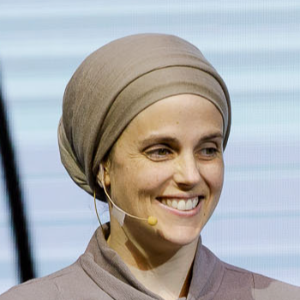
Most founders cannot make that cut alone, and they should not have to. A peer a step ahead, a mentor who has stood at the same fork, anyone with no stake in your sunk costs can say the thing you cannot say to yourself. Arash Ghaemi, a growth marketer, came to GrowthMentor carrying exactly this surplus.

That is the thing I was trying to build. A place where the founder buried in good options can find someone who has already chosen and lived with the consequences. Most of the mentors are free, and some set a rate once they have earned a few reviews, which you see before you book, so there is never a surprise. The pitch is just access, talk to as many of them as you need.
Somewhere a founder is awake right now with twelve good options and a real case for every one of them. By morning the list will still be twelve, unless someone helps them cross off eleven. One call, one person who has made the same cut, and the twelve becomes one. Book that one.
Too many directions, the honest answers



Founders who have made the cut
You have the options. What you want is the nerve to drop four.
Borrow it from someone who already has.
Browse vetted founders and operators who have stood in front of the same fork and chosen, and book a 1:1. Most are free, and membership is unlimited calls, every mentor included.
Talk to a mentorKeep reading
More from the GrowthMentor blog
Mentorship · Aug 24, 2026
Why being a founder is the loneliest job you’ll ever love
Foti Panagiotakopoulos
Mentorship · Apr 27, 2026
Founder impostor syndrome: why the most capable people feel the least qualified
Foti Panagiotakopoulos
Product Management · May 15, 2026
ICE, RICE, Kano: the score is theater. The argument it forces is the real output.
Foti Panagiotakopoulos
Idea Validation · Aug 03, 2026
Most founders don't validate. They fish for a yes.
Foti Panagiotakopoulos
Leadership · Jul 23, 2022
Overwhelmed Startup Founder: Coping With Stress and Burnout
Foti Panagiotakopoulos