Founders feel like impostors because competence raises your standards faster than it raises your confidence. The more you learn, the more you can see what you still do not know, so the gap between how qualified you feel and how qualified you think you should be keeps widening. It hits capable people hardest, because they are the ones who can see the gap clearly.
I read every mentor application that comes into GrowthMentor, personally. Thousands of accomplished people, and I am the one deciding who is good enough to get in. I am also building again in 2026, and some mornings I still feel like the kid who is about to be found out.
This is the cousin of founder loneliness. Loneliness is being alone with the weight. This is doubting you should be the one holding it at all. The strange part is who feels it worst.
Why the capable feel it most
The people you would expect to feel most sure are often the least sure. The better you get, the more you can see the distance left to cover.
Competence does a cruel thing. It raises your standards faster than it raises your confidence. Every skill you pick up shows you three more you are missing, so the more capable you get, the larger the gap you can see, and the gap is what you feel.
It does not help that you are comparing the inside of your own head to the outside of everyone else's. You see your own doubt in high definition. You see their highlight reel.
The record
The feeling
Like you’re about to be found out.
Everything on the left feels like it belongs to someone else.
Look at the two columns. The left one is true. The right one is louder. Almost every founder I talk to is carrying some version of that mismatch.
1 in 9
Count every shade of it, not feeling qualified, feeling like a fraud, not belonging, out of your depth, and roughly one in nine of everything founders bring to a mentor call is some form of doubting they are good enough.
Patterns across thousands of GrowthMentor sessions
It rarely waits for you to fail. It shows up at the exact moment you are stepping up. Lena Sesardic was signing on as a co-founder, taking equity, betting on herself, and that is when it hit hardest.

The doubt arrived with the responsibility, not after a failure. That is the tell. It tracks ambition, not ability.
Competence doesn't cure it
You would think this fades once you have proof. You raise the round, you hire the team, the thing works, and surely the feeling packs up and leaves.
The opposite shows up in what founders bring to a call. It does not leave, it resets, each new altitude handing you a new version of the same question.
Every rung resets the question.
Here is the part that should help more than it does. The people you are sure have it figured out felt this too. Nicolas Moulin mentors other marketers on GrowthMentor now, and he still remembers how the first calls felt.

A mentor, scared he would be found out, giving advice anyway and turning out to be good at it. If the feeling were a reliable signal of being a fraud, the most qualified people would be the calmest in the room. They are not.
What founders book a call to admit
I get a strange view of this. Across more than 750 mentors and around 60,000 sessions, I see what founders bring to the table once the door is closed.
Of everything they say in those rooms, the most common painful note is the same one, that they do not feel qualified to be doing the job they are already doing. More common than fear. More common than money.
It almost never announces itself. It leaks out as an apology. Founders open the call saying sorry, sorry the deck is rough, sorry I have not figured out my numbers, sorry to take your time. The sorry is the symptom.
And it costs them real money. The same doubt makes selling feel like fraud, so they underprice the work, hedge the pitch, and give away things they should charge for, all to avoid feeling like they are overstating who they are.
Left alone, the doubt has nothing to check itself against, so it grows. You cannot tell a real gap from an imagined one without an outside read. Which is why the fix is rarely getting better. You are already good. The fix is hearing it from someone who would actually know.
The part nobody tells you
The gap never closes. The most capable founders you know did not make the feeling go away, they learned to act anyway, and let the work answer it.
Feeling unqualified at the edge of what you can do is the receipt for standing somewhere new.
That does not make the feeling disappear. It just stops being a verdict. You start treating it as the price of standing somewhere new, and you keep moving.
What helps
So here is what I have watched work, past waiting to feel ready, which never quite arrives.
Keep a record of what you have already shipped, because impostor syndrome is mostly bad accounting of your own track record, and the feeling loses to a written list more reliably than to a pep talk. When the doubt has tipped into something heavier than a founder mood, talk to a therapist who works with founders. When it shows up as drowning in the work, that is its own thing. And find a few people a step ahead, in a founder community or on a call, who will give you the outside read you cannot give yourself.





The feeling shrinks when someone who has been there says it too.
Talk to a founder who is already past the milestone you are white-knuckling. Most mentors are free, and one membership is unlimited calls, every mentor included.
The most accomplished people I know did not beat this. They built a way to keep it in its place. Barbara Stewart has run her own consultancy for years, and she is honest about why she started mentoring.

That is what I was trying to build. A place where the founder privately sure they are a fraud can say it out loud to someone who has felt the identical thing and is clearly not one. Most of the mentors are free, and a few set a rate once they have earned some reviews, which you see before you book. The pitch is access, not advice you could have found anyway.
Somewhere a founder is reading their own bio before a pitch, not recognizing the person it describes. The thing that helps is smaller than a mindset shift. It is hearing someone two steps ahead read the same doubt back to you in their own voice, and then watching them go run a company anyway.
Founder impostor syndrome, the honest answers
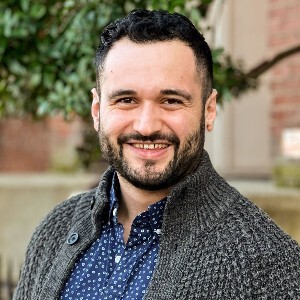

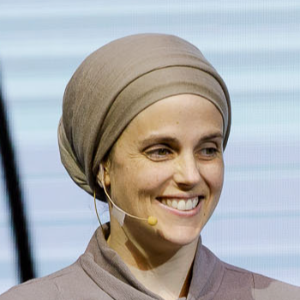
Founders who felt exactly this
Everyone qualified once felt unqualified too.
Go talk to a few of them.
Browse vetted founders and operators who have stood where you are standing and felt the same thing, and book a 1:1. Most are free, and membership is unlimited calls, every mentor included.
Talk to a mentorKeep reading
More from the GrowthMentor blog
Mentorship · Aug 24, 2026
Why being a founder is the loneliest job you’ll ever love
Foti Panagiotakopoulos
Leadership · Jul 23, 2022
Overwhelmed Startup Founder: Coping With Stress and Burnout
Foti Panagiotakopoulos
Leadership · Jul 23, 2022
Therapy for startup founders. And the loneliness underneath the business problem.
Foti Panagiotakopoulos
Mentorship · Feb 18, 2026
The best founder communities in 2026. And the one room none of them can be.
Foti Panagiotakopoulos
Mentorship · May 05, 2026
Scared of being seen, and you built the thing yourself
Foti Panagiotakopoulos