The fastest way to tell impostor syndrome from a real skill gap is to try to name the missing skill. Impostor syndrome is a feeling that you are a fraud while the work keeps shipping and nobody has flagged a problem but you. A real skill gap is one specific thing you genuinely cannot do yet, and you can usually say its name out loud.
I spend a strange amount of my life judging whether people are good enough. I read every mentor application that comes into GrowthMentor myself, thousands of accomplished operators, and I decide who is the real thing and who is not ready yet.
I also still feel unqualified plenty of mornings. I am a non-technical founder shipping production code in 2026, on a finance degree from 2007 I never used. So I have had to get good at telling my own feelings from my own gaps, and at hearing the difference when a founder brings me theirs.
Getting this wrong is expensive in both directions. Call a real gap impostor syndrome and you talk yourself out of learning something you could have closed in an afternoon. Call impostor syndrome a real gap and you go collect more credentials to fix a feeling that was never about competence.
This is the practical companion to founder impostor syndrome, the piece on why the most capable people feel the least qualified. That one sits with the feeling. This one is about telling the feeling apart from a gap you can close.
Same sentence, two different problems
The reason these two get confused is that they say the exact same thing on the way in. Both of them sound like I am not good enough at this.
From inside your own head you cannot tell which one is talking. You are comparing how it feels in here to how everyone else looks out there, and the comparison is rigged. They are showing you their finished work, not their 2am doubts.
Which one is it
So you check it against the tells instead. The two problems feel identical, and they leave different fingerprints.
Which one is it
Both start as the same sentence, I feel unqualified, and only one of them is asking you to go learn something.
The left column is a feeling to check against the evidence. The right column is a task to put on the calendar. One needs reassurance and a record of what you have already done, the other needs a plan.
Here is what the feeling sounds like from the inside. Hollie Youlden runs marketing at EmailOctopus, the first and only marketing hire there, and she is plainly good at it.

She joined from a different industry and carries the whole function alone, and the doubt she names has no specific missing skill attached to it. That is the feeling, running underneath while the work gets done.
They need opposite responses
Here is why the difference matters more than it looks. The same symptom needs opposite treatments, so a wrong read sends you in exactly the wrong direction.
If it is the feeling, getting better will not touch it. You can stack another credential, ship another launch, and the fraud feeling will be right there waiting, because it was never tracking your competence in the first place. What moves it is an outside read, a record of what you have already shipped, and then doing the scary thing anyway.
If it is a real gap, the move is the opposite. You name the capability out loud, then you pick the cheapest way to close it, learn it if you will use it often, hire or delegate it if you will not, or buy an hour with someone who already has it. A lot of the early gaps are predictable, I pulled the common ones together in the skills a new bootstrapped founder needs.
A real gap, named plainly, is almost a relief, because it comes with a to-do list. Peter Murphy Lewis came to GrowthMentor as a mentee right after a big step up, with a gap he could name to the inch.

The very next thing he said was that he needed to skill up, and fast. That is what a real gap sounds like, specific and nameable, and followed by a plan rather than a verdict on whether he belonged in the job.
What 60,000 sessions show
I get an unusual read on this from where I sit. More than 750 mentors have sat across from founders for around 60,000 sessions, and I see what I am not good enough turns out to be once someone with experience hears the whole thing.
Most of the time it is the feeling. The work is fine and the founder just cannot see it from the inside. The named, fixable gap is real but far rarer. For every founder who can point to the exact skill they are missing, close to nine more are sitting in a feeling that no amount of competence has touched.
And the two travel together. One genuine gap, say a founder who has never run paid acquisition, can convince you that the doubt about everything else you are already good at is true too. Close the one you can name, and treat the rest as the feeling it is.
This is the one thing that is genuinely hard to do alone, because the instrument you would use to judge yourself is the same one that is miscalibrated. A mentor who has done the job can hear which one it is faster than you can, because they have felt the fraud and closed the same gap. If you do not have someone like that yet, here is how to find a startup mentor who has run the exact job you are doubting yourself on.
Daniel Johnson, who has mentored a lot of founders through exactly this, put the mentor side of it well.
That is the read you cannot give yourself. So before you go fix the wrong thing, run the simplest test there is.
The whole test in one line
Name the skill you think you are missing. If you can say it out loud, it is a gap you can close. If you cannot, the feeling has been lying to you.
Both have an answer, and neither one is a verdict on whether you belong here.
Both answers are workable. A gap closes when you learn the thing. A feeling loosens when you say it to someone who has stood where you are standing and did not turn out to be a fraud either.

What to do
So the order of operations is small. Try to name the missing skill. If a name comes, treat it as a thing to learn and pick the cheapest way to learn it. If no name comes, or you can name ten and have already closed three and still feel behind, that is the feeling, and the answer is a witness and a record, not a course.
Two side roads worth naming. When the doubt has tipped past a founder mood into something that follows you home and does not lift, that is a different conversation, and a therapist who works with founders is the right call. And when I feel unqualified is really just too much landing at once, that is closer to plain overwhelm, which has its own fix.





A mentor can hear which one it is faster than you can.
Say the doubt out loud to someone who has done the job, and they will tell you whether it is a gap to close or a feeling to walk through. Most mentors are free, and one membership is unlimited calls, every mentor included.
The outside read is the part I built GrowthMentor to make easy. Most of the mentors are free, and some set a rate once they have earned a few reviews, which you see before you book, so there is never a surprise. The point is just access, to someone who has felt the same doubt and can tell you which kind it is.
Somewhere a founder is rewriting the same pitch slide for the fourth time tonight, certain they are not qualified to raise. Usually the slide is fine and they cannot see it. Once in a while there is one number on it they genuinely do not understand yet, and an hour with someone who does would close it for good. From inside your own head, those two look exactly the same. That is the part worth handing to someone else.
Impostor syndrome or a skill gap, the honest answers



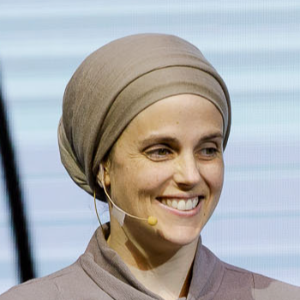
Founders who have felt the same doubt
You don’t have to call it from inside your own head.
Borrow the outside read.
Browse vetted founders and operators who have stood exactly where you are, felt the same doubt, and learned to tell the feeling from the gap. Book a 1:1. Most are free, and membership is unlimited calls, every mentor included.
Talk to a mentorKeep reading
More from the GrowthMentor blog
Mentorship · Apr 27, 2026
Founder impostor syndrome: why the most capable people feel the least qualified
Foti Panagiotakopoulos
Growth Strategy · Aug 06, 2024
8 Skills Every New Bootstrapped Founder Needs to Know
Micah McGuire
Mentorship · Feb 07, 2024
How to Find a Mentor For Your Startup (Message Templates Included)
Micah McGuire
Leadership · Jul 23, 2022
Therapy for startup founders. And the loneliness underneath the business problem.
Foti Panagiotakopoulos
Leadership · Jul 23, 2022
Overwhelmed Startup Founder: Coping With Stress and Burnout
Foti Panagiotakopoulos