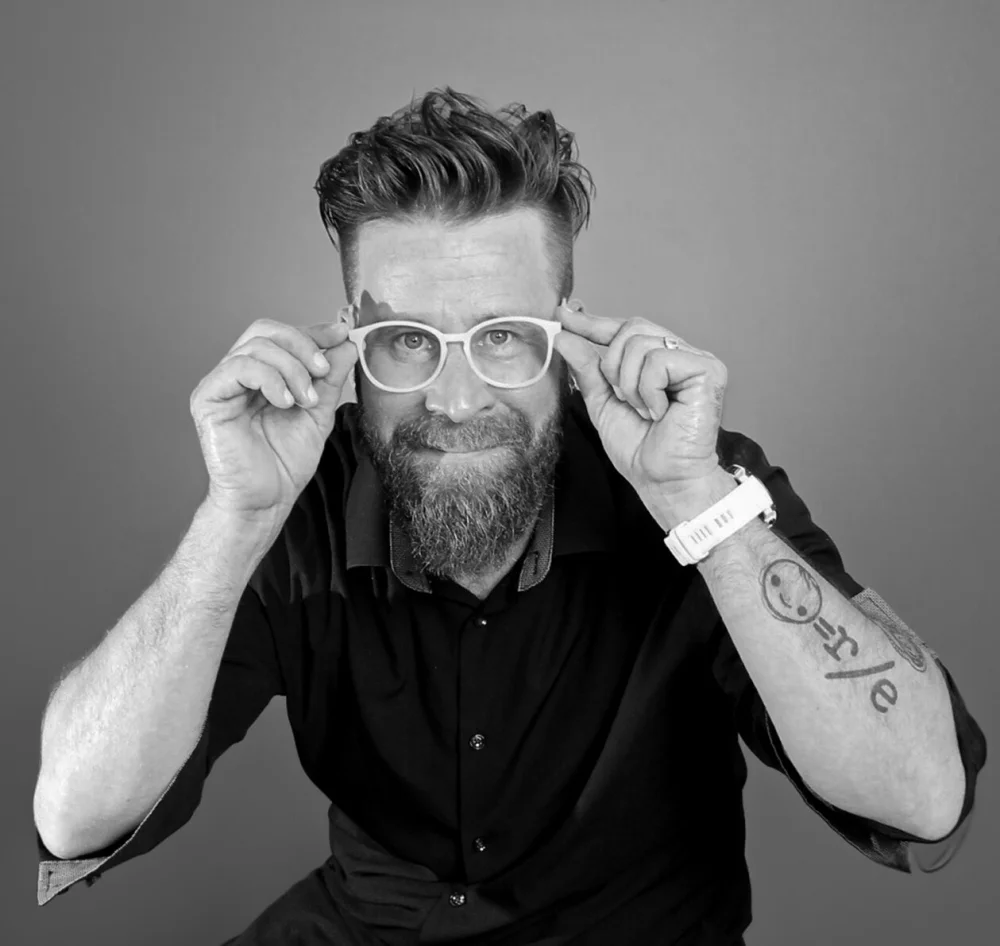
Mentor story
·Midas · 179 sessions
“I came in as a mentee, skilled up fast, then told the founder I wanted to pay back everything I got. Mentoring is how I do that.”
Peter Murphy Lewis
Fractional CMO · Strategic Pete Consulting
United States · strategicpete.com ↗ · Jun 2026
View Peter Murphy’s profileThe Work
Tell us about what you do and how you got here.
People would probably describe me as someone with a diverse set of interests, and that is fair. I started off in Kansas, went to high school in Missouri, college in Boston, then moved to Chile for my master's and PhD. I started my first company there when I was 27, a travel business, and it really took off and grew to four different cities. Along the way I ended up hosting a TV show in South America too. I moved back to the US in 2019, and now I work in long-term care: as a fractional CMO, a consultant, a board member at a couple of institutions, and the host of a podcast called LTC Heroes.
The through line is that I spent the first 39 years of my life in the B2C world, selling things directly to a person without a bunch of decision-makers involved. Bicycle tours, walking tours, a TV show. Then I jumped into healthcare software, which meant selling enterprise software priced somewhere between $50,000 and $150,000 a year to five different decision-makers at once. That was a completely different game, and I had to re-skill very fast. So much of who I am professionally is a person who keeps walking into new industries and figuring out how to get good at them quickly.
Why Mentor
What made you join GrowthMentor in the first place?
I honestly do not remember how I first found it, but I came in as a mentee. When I first reached out to the founder, I thought it was a scam. The amount of value he was promising from this well-vetted community of coaches seemed too good to be true, and far too inexpensive. Then once I actually met him, I thought, no, this guy is just building, and there is a lot of altruism in it. I signed up the very next day.
The reason I came in was simple. I had just become VP of marketing at a healthcare software company, and I had never sold software, never sold enterprise software, and never sold to five decision-makers. Selling that is nothing like selling bicycle tours or a TV show. So I needed to skill up, and fast. I treated it like training for a marathon. I booked five to ten calls a month for about two and a half months, and I think I met nearly all of the founding mentors. That incubator phase as a student is exactly what got me up to speed in a space I knew nothing about.
Who They Help
You went from mentee to mentor pretty quickly. What was the moment you knew you could give back?
Once I knew where I stood in the healthcare space, I reached out to the founder and said I wanted to become a mentor, because I wanted to pay back everything I had been given. My phase as a student was only about two and a half to three months, and then I moved over. These days I play both roles. I still book a couple of calls a month as a mentee, and I do six to ten a month as a mentor.
Honestly, I knew right away that I would be a good mentor, maybe even a great one. Before any of this, I had probably 100 to 150 international interns come through my travel company in South America, entry-level liberal arts students learning Spanish, and I taught them to become very good marketers within three to five months by engaging them, empowering them, setting up SOPs, and building systems. So I knew I could do the mentor side. I just needed that same kind of help for myself when I first landed in healthcare, and once I had it, giving it back felt natural.
A Standout Session
You built LTC Heroes inside an industry that had nothing like it. How did that come about?
LTC stands for long-term care, which is basically anything that is not a primary care doctor or a hospital. Most people picture a nursing home, but it is a bit broader than that. I got into the space right in the middle of COVID, so I literally could not walk into a facility. The best way I could help our customers and prospects was to interview smart people about what they were doing and turn it into evergreen material the rest of the industry could learn from.
The format came straight from my TV show in South America. The premise there was never about me, it was about the people I interviewed and their stories. So I took that exact approach and applied it to a podcast, just without the video. I interview nursing home owners, certified nursing aides, dieticians, maintenance people, anyone trying to make a difference in America's senior living, and I turn them into heroes. It took off within about three months. I got press credentials to one of the biggest healthcare technology conventions, and over time I have had the CEO of the American Health Care Association, the head of LeadingAge, and most of the top faces in long-term care on the show.
Inside the Platform
What actually makes your interviews land differently?
I attribute it to my parents. They taught me from a very young age, and I have this same conversation with my own son about once a month, that the person you are with needs to feel they are the most important person in the room. There is almost never a good reason to say I know, I know. If someone tells you something smart, you do not need to say yeah, I did that already. You say, wow, that is interesting. That person needs to feel they are teaching you and that you are genuinely learning from them.
So as long as I am not pretending to be the expert in the room just because I happen to be holding the microphone, the format works. People at conventions tell me LTC Heroes feels more authentic and more human than other shows. If I were interviewing a nursing home operator, instead of talking about the 50 facilities they just acquired, we would end up talking about how long-term care shaped them personally, or the guitar in the background that a senior gave them years ago. I think that approach is replicable by almost anyone, in almost any industry. It is much less about expertise than people assume.
What They Got Back
When you took the VP of marketing role with no software background, what did you focus on first?
We were re-skilling the marketing and revenue teams, rebranding, basically starting over with a brand-new team. I was clear from day one that I did not want to spend my brainwidth on production, or even on the prospecting and pitching side. I wanted to point my energy at understanding the real industry and business problems we were solving.
So one of the first things I did was hire a podcast agency. Some people questioned it, asking why I would pay a few thousand dollars to handle the pitching, editing, post-production, and social, when I could do it myself and save money. The thing is, I knew I could learn all of that and bring it in-house in three or six months. But for those first six months I needed to focus on showing up and understanding problems, not on whether my audio was set right or my green screen was positioned correctly. I outsourced the mechanics so I could spend my attention where it actually mattered, and that is a tradeoff I would make again.
The Filter
If a young person asked you how to break into an industry, what would you tell them?
I have a strong opinion on this. If I were starting over, or if my son came to me at 22 and said he did not know what to do, I would tell him to find a founder running a team of somewhere between two and 15 people that is already making money, so you are not worried about getting paid at the end of the month. Then reach out and say something like, I will work on the cheap, half my tasks can be following SOPs and doing the mundane work, but I want to be mentored and coached up, and when you make your next big hire, I want to apply for it.
The idea is to move from a $500-a-month intern to being the sales manager or the project manager at their next hire. Young founders at that size are go-getters, and they do not really care about your resume. So I would also say, do not stress about going to an expensive college, just go to the cheapest one and finish it. Learn to write, learn to think, read philosophy and sociology, get mentored by your teachers. Then go find a founder who already has a product that works and ask to be their intern. Ask to sit in their strategic planning meeting, learn their email copy, work a few hours under their ads person. I think nine out of ten smart founders will take that person under their wing.
The Verdict
Three adjectives for GrowthMentor.
More mentor stories
View all →“GrowthMentor is exercise for the brain. A session feels like a chore at nine at…”
Barbara Stewart · Customer Experience & Marketing Consultant @ Hiya Marketing
Read Barbara's story“The most rewarding part is helping a founder, then seeing a review about how it…”

Daniel Johnson · GTM & Growth Operator @ We Scale Startups
Read Daniel's storyYour turn
The next story could be yours.
Fewer than 5% of applicants get in. If you've solved these problems, help the next founder.