You budget for runway. You budget for the first hire, the tools, the legal. Nobody hands you a line item for the isolation, so it never makes the spreadsheet, and it shows up as a surprise. A solo founder wears every hat with no one to split the weight, so every decision, every doubt, and every win lands on one person. The loneliness is not a mood, it is structural, the cost nobody told you to plan for.
I know the particular version of this, because I started GrowthMentor on my own.
For about the first year it was just me. Every hat, every decision, every Tuesday where something broke and there was no one across the table to say is this normal.
The tell, looking back, is what I did about it. I hired freelancers off Upwork partly for the work, and partly just to have another person to talk a problem through with. I was paying for company. That is how much I needed someone in it with me.
Then about a year in my wife joined me as a co-founder, and what changed was not the workload, it was that someone else in the room finally lost what I lost when a month came in bad.
I never put a number on the year before that. Nobody does. This post is about that cost, where it hides, and what you can do about it without giving away half your company.
Solo founder, solo everything
Going solo is not only deciding alone. It is being every department at once, the product owner, the salesperson, the support desk, the one who chases the invoice, and the only person who sees the whole picture well enough to connect any of it.
This is the solo version of a problem every founder carries. Being a founder is the loneliest job you will ever love, and going solo removes the one person who could have shared the weight of it with you.
Tamir Levy runs a valuation platform called Equitest on his own. He put the core of it in three lines.

That is the part that catches people off guard. Not the hours, the not having anyone to check your thinking against before you commit the company to it.
The cost nobody budgets for
You model runway to the month. You cost tools to the dollar and headcount to the quarter. Every line in the plan has a number against it, except the one that ends up mattering most.
Because the isolation never gets a number, it never gets managed. It compounds out of sight until it is bending your judgment, wrecking your sleep, and showing up in the decisions you make at 11pm with nobody to talk you down.
The startup budget, honestly
You would never run the company with an unwatched cost that size anywhere else on this list. The isolation line is the one you have been carrying without ever pricing it.
Every hat, one head
The work can be spread across a week. It cannot be spread across people, because there are no other people. You move the tasks around the calendar, and every one of them still routes back to the same head at the end of the day.
Every hat. One head.
Every one of these routes to the same person.
You can split the calendar. You cannot split the head it all lands in.
You can outsource the tasks. You cannot outsource the carrying. And under the workload there is a layer the org chart never shows.
What you carry alone
Every founder carries the work. Going solo means you carry the downside by yourself, and no one else in the room loses what you lose.
That is what a co-founder really splits with you, the weight of the stake on the night the month comes in low.
What thousands of sessions show
I have an odd vantage on this now. GrowthMentor has put more than 750 mentors in front of founders for around 60,000 sessions, and I get to see the patterns that run under all of them.
The solo founders rarely open with a tactical question. They open with some version of I just need to say this out loud to someone who gets it. The tactic is the ticket in, the real reason for the call is the company of another person who has been there.
And it almost never arrives as I am lonely. It arrives as overwhelm, as I am drowning in this, as I have no one to bounce this off. The most common heavy feeling founders bring is being overwhelmed, and underneath a lot of it is one person carrying a job built for several. Joshua Blount named it plainly.

A normal company setup. That is the thing a solo founder is missing without ever naming it, a room of people who are in it with you.

What you build instead of a co-founder
Here is the good news a solo founder does not always see. You do not have to find a co-founder to fix the isolation. You can assemble the parts a co-founder would have given you, a witness, a gut-check, a room that remembers your context, one at a time.
Some founders read this and decide the answer is a partner. If that is you, there is a right way to find a co-founder, and it is worth doing slowly, because the wrong one makes the isolation worse and you cannot undo it cheaply. A co-founder is one fix, not the only one.
The lighter version is a room of people in the same seat. A founder community gives you somewhere to bring the decision you have been chewing on alone. A step up is a small group that meets on a schedule and remembers your context, which is the whole idea behind a mastermind group, the recurring witness a co-founder would have been.
And since carrying every function alone is also how you tip into overwhelm, fixing the isolation tends to take pressure off the workload at the same time.





You budgeted for everything except this.
Talk to a founder who built solo and knows the isolation tax firsthand, before it starts steering your decisions. Most mentors are free, and one membership is unlimited calls, every mentor included.
You can run it solo without being alone in it
The mentors who take solo-founder calls are not doing it for the fee. Most of them are free, and some set a rate once they have earned a few reviews, which you see before you book, so there is never a surprise. They take the call because someone took theirs back when they were the only one carrying it.
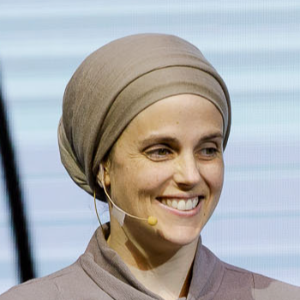
Vassia Sarantopoulou builds a company called AntiLoneliness, on her own. She described the change better than I could.

I am not alone anymore. That line is the whole thing. Not a co-founder, not a hire, just one person who is in it with you on the night the month comes in low.
I paid Upwork freelancers for a thin version of that in year one, before I understood what I was really buying. You can get the real thing now without the workaround, and without giving away half of what you are building. Find one person who has run the whole thing alone too, and start there.
Solo founder isolation, the honest answers



Founders who built it solo too
You can run every part of the company alone.
The carrying it alone is the part to fix.
Browse vetted founders and operators who built without a co-founder and book a 1:1. Most mentors are free, and one membership is unlimited calls, every mentor included.
Find a mentorKeep reading
More from the GrowthMentor blog
Mentorship · Aug 24, 2026
Why being a founder is the loneliest job you’ll ever love
Foti Panagiotakopoulos
Startups · Apr 09, 2026
The best place to meet a co-founder isn't a co-founder dating app.
Foti Panagiotakopoulos
Mentorship · Feb 18, 2026
The best founder communities in 2026. And the one room none of them can be.
Foti Panagiotakopoulos
Mentorship · Feb 15, 2026
18 best mastermind groups for entrepreneurs. What they cost, who they're for, and how to choose.
Foti Panagiotakopoulos
Leadership · Jul 23, 2022
Overwhelmed Startup Founder: Coping With Stress and Burnout
Foti Panagiotakopoulos