Here’s a bold thought for you to chew on – most Product-Led Growth (PLG) strategies fail, not because of the product, but due to one major, often overlooked issue: misalignment across teams. Everyone in the organization, from marketing to sales to product, has slightly different definitions of PLG and their roles in achieving it. And that misalignment? It’s costing you revenue, efficiency, and future growth.
I’ve seen it firsthand. Over the past six years, I’ve worked with multiple companies transitioning from sales-led strategies to introducing PLG elements. The outcomes? Mixed. The difference between those who thrived and those who floundered all came down to how well teams defined their goals, cultivated cross-functional collaboration, and embraced iterative learning.
But here’s the kicker. PLG is not just signing up for trendy buzzwords like “free trial” or “self-serve.” It’s a strategic paradigm that demands an entirely new way of thinking. And the companies getting it wrong? They’re making the same avoidable mistakes over and over again.
The Most Common PLG Missteps
Mistake #1: Treating Free Trials as Lead Magnets
It’s tempting, right? You launch a free trial hoping it will pack your pipeline with “hot” leads for sales. But this perspective fundamentally misunderstands what free trials are supposed to do.
Here’s the truth:
A free trial is not PLG. Companies sometimes slap on a free trial or freemium model, thinking they’ve become “product-led.” Newsflash – this is where many stumble. A free trial can drive signups, yes. But without a clear customer activation and retention strategy, all you’ve done is collect email addresses and dilute your brand.
A free trial is not a replacement for sales. PLG doesn’t mean waving goodbye to your sales team. Instead, it means creating a product pathway that works alongside your existing sales-led funnel. Think of them as complementary forces pulling in the same direction.
Not all free-trial users are PQLs. Signing up for a free trial doesn’t mean someone is high-intent or ready to buy. At this stage, you’ve likely captured a PAL, a Product Acquired Lead. Converting them to a PQL or even a Product Qualified Account (PQA) requires creating a tailored product experience that helps them see the value quickly and repeatedly.
Instead, free trials should be seen as a gateway to user discovery. They allow potential customers to explore the product on their own terms, identify its value, and move closer to becoming qualified users.
The same free trial, two readings
The mistake
Free trial as lead magnet
Every signup lands in the pipeline as a hot lead, and sales burns its week chasing all of them.
What it actually is
Free trial as user discovery
Users explore on their own terms and the product qualifies them before sales ever calls.
A signup packs the pipeline, it does not qualify it. Let the product sort intent first, then send sales in.
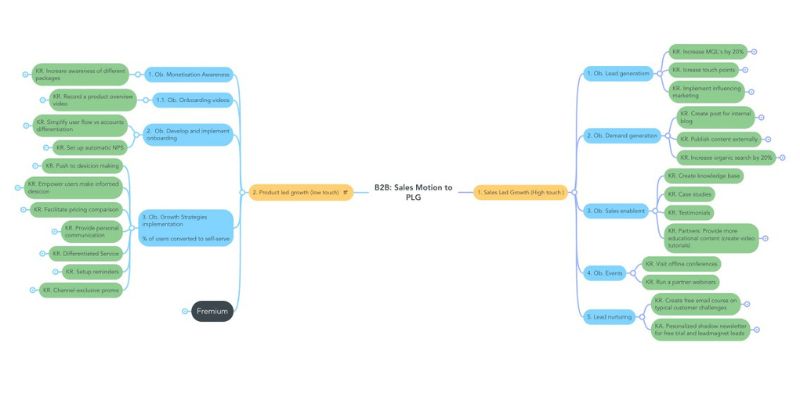
Pro tip? Don’t abandon your traditional sales-led funnel (MQL → SQL). Instead, build a parallel product-led funnel (PAL → Subscriber). Manage both and align them to amplify results.
Mistake #2: Mislabeling Free Trial Signups as Product-Qualified Leads (PQLs)
Just because someone signs up for a free trial doesn’t mean they’ve crossed the holy grail of becoming a Product-Qualified Lead (PQL). At best, they’re a PAL (Product-Acquired Lead).
To transform that PAL into a PQL, or better yet a PQA (Product-Qualified Account), you need to take them on a curated customer journey within your product. Here’s how:
- Guide them to an “aha” moment when they realize the core value of your product.
- Leverage in-app messaging to educate and engage them at just the right times.
- Track real-time usage data to identify active, engaged users.
From signup to sales-ready, three rungs
Product-Acquired Lead
PAL
They signed up. That is all a trial signup proves, interest, not intent.
Product-Qualified Lead
PQL
Usage shows real intent. They hit the aha moment and keep coming back.
Product-Qualified Account
PQA
A whole account sees the value, several users deep. Now sales has a real conversation.
A free-trial signup buys you the first rung only. The product does the qualifying from there.
Without a robust PLG flow to differentiate trial users from serious prospects, you’re stuck guessing. And guessing doesn’t close deals.
Mistake #3: Operating Without a Real PLG Definition
Most PLG efforts fail because sales, marketing, product, and BI teams are misaligned. Everyone has a slightly different take on what PLG is supposed to achieve. Some treat it as a tactical play; others see it through only their departmental lens.
But PLG is not tactical – it’s strategic. Your entire organization needs to understand that PLG touches everything:
- Sales needs data to upsell and expand accounts.
- Marketing needs clarity to drive lifecycle campaigns for engaged users.
- Product needs signals to improve UX and grow user retention.
One motion, three different asks
Sales
Needs data
To upsell and expand the accounts already using the product.
Marketing
Needs clarity
To run lifecycle campaigns aimed at engaged users, not cold lists.
Product
Needs signals
To improve the experience and keep users coming back.
Three teams pulling on the same motion. Misalignment here is why most PLG efforts fail.
Alignment isn’t optional; it’s mandatory.
Fixing the Disconnect
To execute PLG effectively, here’s what I recommend based on years of trial, error, and measurable successes:
1. Invest in Activation and Retention
Stellar PLG companies obsess over user activation. They don’t just get users to sign up, they get them to stick around, engage deeply, and recommend the product to others. Map out your onboarding flow with clear milestones to guide users to that “aha” moment.
2. Align Teams with Clear Metrics
Define shared success metrics across product, sales, marketing, and BI. Consider the following goals:
- Activation Rate: Aim to achieve an activation rate of 50% within the first 14 days for free trial users. This metric indicates how effectively users are experiencing the core value of your product early on.
- Retention Rate: Track the percentage of users who continue to use the product after the initial activation period. A high retention rate signifies sustained user engagement and satisfaction.
- Engagement Signals: Monitor team-level engagement signals such as feature usage frequency, session duration, and user feedback. These indicators help identify areas for improvement and opportunities for deeper user engagement.
- Conversion Rate: Measure the conversion rate from free trial or freemium users to paid subscribers. Understanding this metric helps optimize the transition from trial to subscription.
- Churn Rate: Keep an eye on the churn rate to identify how many users are leaving the platform. Reducing churn is essential for maintaining a stable user base and ensuring long-term growth.
Everyone should work toward these metrics as one cohesive unit.
3. Experiment with Growth Loops
PLG isn’t a one-and-done deal; it’s iterative. Dedicate resources, even if it’s just one person, to experiment with product growth loops. Test what works to acquire users organically – word of mouth, viral sharing, etc. – and refine those loops over time.
4. Clarify Free Trial vs. Freemium Models
If you’re offering free trials or freemium options, understand the nuances in optimizing each:
- For free trials, focus on creating urgency. Make the user’s time spent with your product feel deliberate and goal-oriented.
- For freemium, identify the optimal conversion window. For many products, 50% of free-to-paid conversions happen within the first 7 days. After 30 days, priority fades dramatically.
5. Simplify the Decision Process
Whether you’re selling to individuals or enterprises, make buying simple. Remove unnecessary steps, enabling users to glide from activation to subscription.
Suggested mentors
Want a second pair of eyes on your PLG motion? These mentors have run hybrid product-led and sales-led growth, and can pressure-test yours.



Why PLG is an Investment Worth Making
Many companies hesitate when committing to PLG. It feels daunting, uncertain, or too experimental. But here’s the good news: PLG is not a bet, it’s an investment.
When done correctly, PLG delivers:
- Effortless user acquisition
- Sustainable growth via virality and network effects
- A defensible competitive edge
True PLG companies don’t just chase trends; they create processes that scale.
Are You Ready to Lead the Charge?
The path to PLG is challenging, but it’s essential in today’s business landscape. Companies that stay stagnant, relying solely on outdated sales-led methods, risk being left behind. On the other hand, those that bridge the gap between sales-led and product-led strategies will thrive.
Feel free to contact me directly – I’m here to help you get the full value from growth and implement actionable frameworks to help you launch and scale your PLG efforts while maintaining alignment across teams.





Mentors who've built PLG funnels
Aligning PLG with a sales team is hard.
Talk to someone who's done both.
Get a growth or product operator who's run hybrid PLG and sales motions on a 1:1 call. Membership is unlimited calls, every mentor included.
Talk to a mentorKeep reading
More from the GrowthMentor blog
Growth Strategy · Apr 26, 2020
Your First 90 Days as a Growth Marketer: What You Need to Know
Daniel Johnson
Growth Strategy · Aug 20, 2024
The 12 Skills You Need to Learn as a New Head of Growth
Micah McGuire
Mentorship · Jan 23, 2026
Top SaaS mentors. And what one is really for in 2026.
Foti Panagiotakopoulos
Growth Strategy · Jun 17, 2022
SaaS Marketing Team Structure: Org Charts by Company Size
Spyros Tsoukalas
Growth Strategy · Jan 28, 2025
How Truely is Positioned for Rapid Growth in Its First Year
Elisavet Maniou