TL;DR
- Updated for 2026. The reason founders book a SaaS mentor changed, because AI changed what is hard about SaaS.
- Building got cheap. The questions that decide whether your SaaS survives (what is the wedge, is the category about to get eaten, what do you charge now) got harder.
- A good mentor gives you the blunt outside read on your real situation. That is the one thing a forum and ChatGPT cannot do.
- Below: what a SaaS mentor is for now, a few who are bookable this week, and where to browse every SaaS mentor on the platform.
For about a decade, the pitch for building SaaS was the same three lines. Low barriers to entry. Recurring revenue. Almost infinite scalability. It was a great space to be in, and a lot of people got rich believing it.
Then AI rewrote all three. Building software got close to free, so the low barrier that used to protect you now lets everyone into your lane. Your cleverest feature can get cloned over a weekend. And buyers are starting to ask why they pay per seat when an agent can do the seat's job. None of this means SaaS is dead. It means easy SaaS is dead, and the questions that decide whether yours makes it are harder than they have ever been.
The 2021 SaaS gospel
What 2026 does to it
If you are building SaaS right now, you already feel this. The fog is not about whether you can ship. Of course you can ship. The fog is about whether the thing you are shipping is worth building at all, and who it is even for.
What a SaaS mentor is for now
A SaaS mentor is a founder or operator who has built or scaled software and gets on a call to help you with yours. A few years ago, founders booked one to learn how to build and grow the thing. Pick a stack, set up a funnel, find the first hundred users. You can get most of that from a model now, and it will give you a decent answer in ten seconds.
So the question changed. The one that comes up first on calls now, in some form almost every time, is this: how is this different from just asking ChatGPT? Founders ask it about their own product, half hoping the answer is obvious and half terrified it is not. A good mentor asks it right back, on purpose, because it is the fastest way to find out whether you have a company or a feature. That is the new job. Not how do I build it. Where is the wedge that survives once anyone can build it, and is the category you picked about to get eaten by the platform you are sitting on.
Positioning mentors, bookable this week
For the moat half of the problem: who this is for, the one thing it does, and how to say it so it does not sound like every other 'AI for X' tool.


.png)
Positioning is the most common place a SaaS founder freezes right now, because AI made the build easy and left the hard part exposed. Minh is a good example. He is a developer who built SEOmatic into a working product, then hit the wall every technical founder hits.

Mentors helped him close that gap, and he grew SEOmatic 400% from there. If that is where you are stuck, this is the call to have before you build the wrong thing for another six months.
Building got free. Direction didn't.
Here is the math that broke the old playbook. The expensive, slow part of SaaS used to be making the software. That is the part AI took. The MVP that needed a founding engineer and most of a year now takes a capable founder a weekend and pocket change.
Cost to ship a SaaS MVP
Back in 2021
That same MVP in 2026
A weekend
and about $0
Illustrative numbers, but the direction is real, and you have felt it. When building is the cheap part, building is no longer the moat. So where did the moat go? It moved to the parts AI cannot hand you: a named wedge you have earned the right to win, and a distribution channel you own.
Where the moat went
Illustrative. Directional, not measured.
Direction is the part a model cannot hand you. A founder named Spyros, who books a couple of mentor calls a week, put it best.
“In 30 minutes you can grow from knowing nothing to knowing what to do next.”
This is why the founders winning right now look a little boring. They are not shipping more features. They picked a narrow, painful problem for one specific kind of customer, and they got embedded in that customer's workflow before anyone else could. That is a positioning and distribution job, and it is exactly the kind of thing you cannot see clearly from inside your own head.
The goal is always the same here: one channel you understand cold, not ten you are guessing at.
The real failure mode: motion without a hypothesis
The most common pattern we see is not laziness. It is the opposite. You are doing a huge amount. You have run fifteen ad campaigns in fifty days, tried cold email and an AI SDR and a newsletter sponsorship and three subreddits, and you still could not tell anyone which one worked. AI made doing things nearly free, which means the trap is no longer that you are not trying. It is that you are trying everything at once with no hypothesis underneath, and you cannot read the result of any of it.
What you walk in with
- A dozen channels half-tried, no clear winner
- A customer segment you keep redefining
- More ideas per day than you can ship
- A nagging sense the whole bet might be wrong
What you walk out with
- One channel worth going deep on
- One customer you are building for
- One problem, named and worth solving
- The freedom to drop the other eleven things
That second column is the deliverable. Not more advice. A reframe: the fog turned into one concrete problem and one named customer. Founders tell us this is the moment the call paid for itself, and it is the single most common breakthrough we see across thousands of sessions.
Is your SaaS AI-proof?
Quick gut check. Run your product through these five. They are the questions a good SaaS mentor would ask you in the first ten minutes anyway.
Is your SaaS AI-proof?
- You can name the one vertical you have earned the right to win in
- Your core feature is something a user could do in ChatGPT today
- You own a distribution channel, not just a product
- You validated the problem before building the next thing
- Your pricing survives one operator running ten agents
If a couple of those stung, good. That is the conversation a SaaS mentor has with you, and here is what their answer usually sounds like.
What the SaaS mentors keep coming back to
When we look across how the SaaS mentors on the platform coach, the same three moves come up again and again. They are not exciting. They work.
The pattern, three moves
Pick one channel and prove it before you add another
The instinct is to run every acquisition channel at once. The mentors keep pulling founders back to one: go deep on a single channel until you understand who it brings and why, then expand. Stacking channels you do not understand yet just spreads you thin.
Niche down until you have earned the right to win
Drop the horizontal 'anyone who emails' positioning. Find the one vertical where you have a real, defensible advantage and rebuild the product around that one painful use case. A wedge AI cannot trivially copy is almost always narrow.
Fix the leak before you pour in more
If customers churn after trying it, more traffic just fills a leaky bucket faster. Diagnose retention at the activation layer first: which actions make people stick, and where do the ones who leave fall off. Then go get more.
You can see the through-line. Validate the problem before building, and reframe what you are really solving. It is the opposite of motion without a hypothesis, and it is hard to do alone because it means killing most of what you are excited about.
What a mentor gives that ChatGPT, your forum, and your co-founder can't
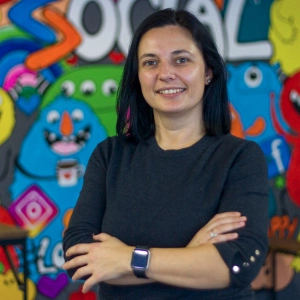
ChatGPT will tell you what is generally true. Your founder Slack will give you ten opinions from people also figuring it out. Your co-founder is too far inside the same fog as you. None of them will look at your exact situation and give you the blunt read with something on the line. A mentor who has crossed it will tell you the thing nobody else will, including that the feature you are most proud of is something a user could already do in ChatGPT. That sentence stings, and it is worth more than a month of encouragement. Kate Bojkov, who leads growth at the SaaS platform EmbedSocial, has leaned on exactly that kind of outside read.
That is also why most founders end up keeping more than one mentor on call rather than hunting for a single guru. Different problems, different people who have already solved them. We wrote more about that in why one mentor is rarely enough.
Which is why finding the right one matters more than finding a famous one. That is what the matching is for: you say what you are actually stuck on, and it points you at the SaaS operators who have already solved it.
Take a look at these mentor profiles and edit & tune your challenge accordingly if you want to see different suggestions.
I want to scale paid acquisition but I don’t know what a healthy CAC looks like for my space
Edit & Tune Results
John runs paid acquisition for e-commerce and SaaS brands on Google and Meta ads, and scaling spend without letting CAC run away is the exact problem he takes calls on.

Daniel is a GTM and growth operator for AI and B2B SaaS companies. PPC strategy is one of his core specialties, and he has pressure-tested growth plans across 395 sessions.

Peter has run demand generation and brand for bootstrapped companies where every acquisition dollar has to defend itself. He will push on whether the channel or the positioning is what makes CAC high.
One more thing, because people ask how the mentors get on the platform. We vet for a track record, and we vet for whether they are genuinely good to talk to. Under 5% of applicants get in, and we read every application. We do not do preachy gurus. We do people who have built the thing, are kind enough to hop on a call about your messy version of it, and humble enough to say when they do not know. That mix is the whole point, and it is rarer than it sounds.
Frequently asked questions
Wrapping it up
SaaS got harder in the one way that matters. Anyone can build now, so the edge moved to judgment: what to build, who for, and how to get it in front of them before the next person ships the same thing. That is hard to see from inside your own head, and it is exactly what a good mentor is for. Come find one who has already crossed it.
Mentors who've shipped SaaS in the AI era
You already know the question you keep circling.
Talk it through with someone who's crossed it.
Bring the thing you can't tell your team or your investors. One call with a SaaS founder who's already navigating this market tells you whether to push, pivot, or rethink.
Find a SaaS mentorKeep reading
More from the GrowthMentor blog
Mentorship · Feb 07, 2024
How to Find a Mentor For Your Startup (Message Templates Included)
Micah McGuire
Mentorship · Jul 23, 2026
How Many Mentors Should a Founder Have? (More Than One)
Foti Panagiotakopoulos
Leadership · Jul 23, 2022
Overwhelmed Startup Founder: Coping With Stress and Burnout
Foti Panagiotakopoulos
Growth Strategy · Jun 17, 2022
SaaS Marketing Team Structure: Org Charts by Company Size
Spyros Tsoukalas
Growth Strategy · Mar 06, 2025
Mastering Product-Led Growth with a Hybrid Sales Strategy
Yuliya Andreyuk