TL;DR
- A startup advisor brings industry experience and a network, usually for equity (0.25 to 1%) or a monthly retainer that starts around $2,000.
- Most early founders do not need that. They need a mentor: the same been-there guidance, no equity, no contract, on demand.
- In 2026, building is cheap. Knowing what to build is the hard part, and that judgment is the real job of a good advisor.
- Look for deep expertise, a strong reputation, and genuine interest in your business. Walk away from anyone in it for the prestige.
- On GrowthMentor, a flat membership gets you unlimited calls with vetted advisors, no equity required.
When you start a company, the hardest part is rarely the work. It is making the big calls alone, late at night, with nobody to check them against.
That is the real reason founders go looking for a startup advisor. What they are after is a person who has been there, someone who can look at their situation and tell them which of their ten worries is the one that matters.
It matters more in 2026 than it used to. You can get a product built over a weekend now. The expensive mistake is building the wrong thing well, and no tool tells you whether you are. That judgment is the whole job of a good advisor, and it is the one thing that has not gotten cheaper.
This guide covers what a startup advisor is, what they cost, where to find one, how to work with them, and how to tell when what you really need is a mentor.
What is a startup advisor?
A startup advisor has industry experience that helps a young company get on the right track. They are often founders themselves who have built and sold before, and many are investors too.
They share knowledge, open up their network, and give recommendations so you make fewer expensive mistakes. You can find one for almost any area, but the most common are growth, marketing, and product. It is rare to find one person who covers everything, which is why founders sometimes build a small board of advisors.
How involved they get is up to you. Some give top-level input a few times a quarter. Others get into the weeds with you every week, which starts to look a lot like mentorship.
Advisor or mentor: which do you need?
The words get used interchangeably, so here is the difference that matters. An advisor helps with specific challenges, opens their network, and usually takes equity or a fee. A mentor has been in your shoes, helps in a more informal way, and is mostly in it to see you succeed. A coach is something else again: structure and accountability, usually paid by the hour.
Advisor vs mentor vs coach
| Advisor | Mentor | Coach | |
|---|---|---|---|
| What you get | Specific advice and their network | Been-there perspective and judgment | Structure and accountability |
| Motivation | Equity or a fee | Mostly giving back | A paid engagement |
| Typical cost | 0.25 to 1% equity or $2,000+/mo | Free to low cost | Hourly or a package |
| Commitment | Formal, often a contract | Informal, as needed | A fixed program |
| Best when | You are scaling and need a name + network | You are early and want a sounding board | You want to change a specific habit |
- Advisor
- Specific advice and their network
- Mentor
- Been-there perspective and judgment
- Coach
- Structure and accountability
- Advisor
- Equity or a fee
- Mentor
- Mostly giving back
- Coach
- A paid engagement
- Advisor
- 0.25 to 1% equity or $2,000+/mo
- Mentor
- Free to low cost
- Coach
- Hourly or a package
- Advisor
- Formal, often a contract
- Mentor
- Informal, as needed
- Coach
- A fixed program
- Advisor
- You are scaling and need a name + network
- Mentor
- You are early and want a sounding board
- Coach
- You want to change a specific habit
For most pre-seed and seed founders, the answer is a mentor. You get the perspective without giving up equity or signing anything, and you can change who you talk to as your problems change.

.jpg)



Talk to a startup advisor without giving up equity
Book a 1:1 call with a vetted advisor on GrowthMentor. One membership, unlimited calls, every advisor included.
What a formal advisor really costs
Before you offer anyone equity, it helps to see the full price of a formal advisor next to the alternative.
The cost, side by side
What a formal advisor asks for, and what the same guidance costs on a membership.
Same guidance. None of the lock-in.
What to look for in an advisor
Whoever you choose, advisor or mentor, the traits that matter are the same. Here is what to look for, and what to walk away from.
Look for
- Deep, real expertise in the area you need help with
- A strong reputation you can check with references
- A genuine communicator who opens doors for you
- Real interest in what you are building
- A bias toward solving problems, not just naming them
Walk away from
- Little or no startup experience behind the claims
- Poor communication, however good the resume
- No real time, just 20 minutes a quarter
- In it for the prestige or the equity, not the mission
Where to find startup advisors
Good advisors are not usually sitting on a job board. Here is where founders actually find them.
On-demand platforms. On GrowthMentor you'll find vetted startup advisors who keep their rates low for one reason: they would rather help a startup grow than maximize an hourly rate.
Suggested mentors
A few worth talking to, all available to book this month:

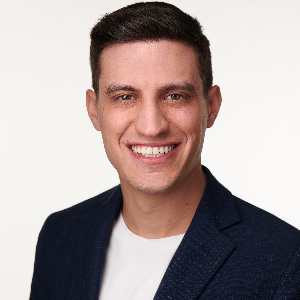
Maciej Galkiewicz
Founder and CEO at Ragnarson. Invested in 11 startups.
.jpg)
Sam Eisenberg
Co-founder at Design For Decks. Decks that raised $4b+.

Felix Wong
Full-stack marketer, data analyst, and angel investor.

Satwik Govindarajula
Co-founder and CEO of Uptiq. Growth advisor.

Marcos Bravo C.
Branding, content, and messaging for early startups.
Other platforms. MentorCruise leans technical, coding, machine learning, and UX, and is built more for career upskilling than founder advice. Clarity.fm has strong operators, but the pay-per-minute model tends to attract people optimizing for income more than impact.
Accelerators and VCs. Programs like Y Combinator and Techstars assign you a mentor, but only about 1% of applicants get in, and the support often ends when the program does. Finding your own advisor who genuinely cares about your company tends to go further.
How to ask: the cold email
If you want a specific person who is not on a platform, reach out directly. A warm intro is best, and at GrowthMentor we can often make one for you, but a good cold email works too. Keep it short, specific, and flattering without grovelling.
Quick question from a founder who admires your work
Hey [NAME],
I have been following your work for a while, and [SPECIFIC THING THEY MADE] really stuck with me. I am building [STARTUP], and I am looking for an advisor who has been where I am headed.
Could I grab 20 minutes on a call to talk it through? No pressure either way, and thanks for the work you put out.
Do you need an advisory board?
A board of advisors is a small group you consult across disciplines: maybe a finance person, a product person, a growth person. Having a few respected names attached to your company can open doors and reassure investors.
But more is not always better. A board adds coordination overhead, and everyone wants a different level of involvement. Most early founders get more from one advisor who stays close than from five who check in occasionally.
Sometimes you don't need multiple advisors. You think you might for diversity reasons, but there's a point of diminishing returns that creeps up on you really quickly. You need to be aware of what that point is.
Fotis Panagiotakopoulos, Founder of GrowthMentor
How to pay an advisor
If you do bring on a formal advisor, you will pay them in equity, cash, or both. Here is the trade-off.
Equity vs a monthly retainer
| Equity | Monthly retainer | |
|---|---|---|
| What it costs | 0.25 to 1% of the company | Around $2,000/mo |
| Alignment | Long term, shares your upside | Transactional, month to month |
| Flexibility | Locked in through vesting | Pause or switch anytime |
| Best when | You want them around for years | You are still testing the fit |
- Equity
- 0.25 to 1% of the company
- Monthly retainer
- Around $2,000/mo
- Equity
- Long term, shares your upside
- Monthly retainer
- Transactional, month to month
- Equity
- Locked in through vesting
- Monthly retainer
- Pause or switch anytime
- Equity
- You want them around for years
- Monthly retainer
- You are still testing the fit
If you go the equity route, you will hear about vesting and cliffs. The short version: advisors earn their equity over time, not all at once.
Or you skip the equity question entirely. On GrowthMentor, a single flat membership gets you unlimited calls with any advisor in the network, far below the $2,000+ retainer one advisor alone would cost, and you give up no equity at all.
What unlimited looks like in a month, with $0 added per call:
Maciej Galkiewicz
Fundraising · Tue 10:00
Felix Wong
Investor intros · Tue 2:00
Satwik Govindarajula
Go-to-market · Wed 11:30
Sam Eisenberg
Pitch deck · Thu 9:00
Marcos Bravo
Positioning · Fri 1:00
Getting the most from an advisor
However you find them, an advisor is only as useful as the way you work with them. A few habits separate the founders who get real value from the ones who waste everyone's time.
How-to guide
How to get the most from a startup advisor
Five habits that turn an advisor relationship into real progress.
Come prepared
Bring the specific decision you are stuck on, not a vague 'tell me about sales.' Know what outcome you want from the call.
Know your numbers
If they ask about your metrics, have them ready. If the figures are ugly, say so. Burying them helps no one.
Be honest about failures
The fastest way to lose an advisor is to hide what went wrong. They are there to help you fix it, not to judge.
Do what you said you would
Advice that falls on deaf ears dries up fast. Act on it, then report back at the next call.
Make meeting easy
Send exact times, be clear about the format, and keep communication smooth. The lower the friction, the more you get.
"It can be frustrating when founders ignore advice and go back to their old ways very quickly. If they aren't brutally honest about their situation and challenges, it can be difficult to advise them."
Johannes Radig, Startup Advisor for 500 Global
60,000+
mentorship sessions booked
Under 5%
of mentor applicants accepted
700+
vetted advisors and mentors
Find someone who fits
Whoever you bring on, the value comes from fit. You want someone who gets your vision, has done the thing you are trying to do, and genuinely wants you to win.
For most founders, that person is a mentor before it is a formal advisor. You get the perspective and the network without the equity or the contract, and you can start tomorrow.




Advisors who've built and sold
Need someone in your corner who has done this before?
Talk to a startup advisor who's been there.
Browse vetted startup advisors and book a 1:1 call. Membership is unlimited calls with any advisor, no equity, every one included.
Find an advisorKeep reading
More from the GrowthMentor blog
Fundraising · Jan 12, 2026
Startup Advisor Compensation: Equity & Pay Guide (2026)
Foti Panagiotakopoulos
Mentorship · Feb 07, 2024
How to Find a Mentor For Your Startup (Message Templates Included)
Micah McGuire
Mentorship · Jul 25, 2022
Entrepreneur mentorship, minus the fluff. What a mentor does, and where to find one.
Foti Panagiotakopoulos
Mentorship · May 03, 2020
How to Be a Good Mentee (What the Best Ones Do)
Foti Panagiotakopoulos
Mentorship · Mar 27, 2026
The best expert network companies in 2026. And which one you actually need.
Foti Panagiotakopoulos