TL;DR
- Building a marketplace is basically free now. That's not good news — it's a warning. The barrier that used to filter out doomed ideas is gone.
- "I can build it in a weekend" is not a reason to build it. It's the reason the graveyard is about to get crowded.
- The real decision isn't marketplace vs. nothing. It's marketplace now vs. building the single-player product first and letting it become one later.
- AI made the easy parts easier (build, onboarding, discovery) and the hard parts harder (liquidity, trust, defensibility). It did not solve chicken-and-egg.
- Start one only if you can hand-seed a single niche to liquidity by hand, and say out loud why people come back. If you can't, build something else.
Right now, thousands of people are about to start a marketplace for the worst possible reason: they finally can. AI collapsed the build cost from $40,000 and six months to a weekend and an API key, and a lot of them are reading that as permission. It isn't. It's a trap with better production values.
I've earned the right to be blunt about this. I built GrowthMentor as a marketplace, and I've spent the years since on 100+ calls with other marketplace founders. I've watched the ones who made it and the much larger pile who didn't. Almost none of them died because they couldn't build the thing. Building was never the hard part. It just used to be the part that scared people off.
“I can build it” is not “I should build it”
For a decade, that $40k-and-six-months price tag did something useful by accident: it filtered. If you couldn't raise the money or write the code, you never got to find out your idea was doomed. You were protected from your own bad marketplace idea by the cost of testing it.
AI removed the filter. So now everyone gets to find out the expensive way, except the expense isn't a check anymore. It's a year of your life, poured into a two-sided ghost town, before the market bothers to tell you no. Cheap to start has never meant easy to run, and marketplaces are the sharpest version of that gap there is.
the math on building one
The price tag was doing a second job all along, it was the filter. The check is gone, and so is the protection.
What AI changed, and what it made worse
Give AI its due. It genuinely fixed the easy parts. The build is trivial now. Supply onboarding, the listing-writing and categorizing and verifying that used to keep the scarce side away, an agent handles most of it. And discovery is shifting to ChatGPT and Perplexity, which rewards whoever shows up first and clearest.
Now the part nobody selling you an AI marketplace builder will mention. AI made the three things that actually kill marketplaces worse, not better:
- Liquidity and chicken-and-egg: untouched. Still the wall. AI can generate a thousand listings; it cannot manufacture the two-sided demand that makes a single one of them worth anything.
- Trust and curation: harder. AI-generated supply means more noise, more fakes, more slop to police. The more the tools flood your marketplace with fill, the more your whole job becomes filtering it back out.
- Defensibility: gutted. If anyone can clone your build in a weekend, "I built it" is worth nothing. And if AI agents start transacting directly on behalf of both sides, the middle layer you're building might not survive the decade at all.
The SQD test: do you have direction, or just a build?
Here's the frame I keep coming back to. Speed and quality are free now, handed to everyone by the same tools. Direction is the only scarce input left. And most marketplace ideas in 2026 are a build plus a fantasy, network effects and a valuation screenshot from 2021, with no actual direction underneath.
So ask yourself the uncomfortable version: is there one specific, broken pocket of a market that you understand and can own? Or are you building a marketplace because the word sounds bigger than "app"? One of those is a business. The other is a weekend project with delusions of an IPO.
So, should you? Three questions.
Forget the business plan. Forget the TAM slide. Three questions decide this, and you have to answer them honestly, which is the hard part.
The three-question gut-check
- 1
Is there a real chicken-and-egg problem?
Or could one side just… not need the other? If one side is fine alone, you don’t have a marketplace. You have a product with delusions.
- 2
Can you hand-seed one niche to liquidity, by hand?
No scale, no ad budget, one narrow pocket. If it only works at scale, you’ll die long before you get there.
- 3
Why do people come back to yours?
When anyone can clone your build in a weekend, what’s left? Trust, curation, the liquidity itself, brand. “Nothing” is a real answer, and it means don’t.
Fewer than two clean yeses? It’s a no. Not a rewrite-the-pitch no. A build-something-else no.
The move almost nobody makes: single-player first
Even if you clear the gut-check, going straight to a two-sided marketplace is usually the wrong first move. The best ones didn't start as marketplaces at all. OpenTable sold restaurants booking software before a single diner existed. The single-player tool created real, standalone value for one side, and the network arrived later, once there was something worth networking around.
Go straight to a marketplace when
- There's a genuine two-sided mismatch, and neither side works without the other.
- You can hand-seed the scarce side to liquidity in one narrow niche, by hand.
- Transactions are high-frequency or high-trust, so the platform earns its cut.
- It compounds through a real network effect, not just aggregation.
Build the single-player product first when
- You can make one side successful on its own, before the other even exists.
- Transactions are rare or low-stakes, so liquidity never gets hot.
- There's no real trust gap for a platform to solve.
- Your only edge is that you shipped it fast — which everyone else can now do too.
If you're a no, build this instead
A no on marketplace is not a no on your idea. It's usually a better business hiding inside a worse one. Same insight, different container:
- A single-player tool for the side you understand best. Charge them. Ignore the other side entirely for now. If it works, you've earned the right to add a marketplace later.
- An AI agent that just does the thing the marketplace would have matched people for. If software can deliver the outcome, you don't need to convene two crowds to trade it.
- A media or community property that owns the audience first and adds transactions once you've got attention and trust to spend.
Every one of those is faster to revenue, easier to defend, and doesn't ask you to solve chicken-and-egg on day one. That's not a consolation prize. In 2026, it's often the smarter shot.
If you're a yes, only three things matter now
If you cleared the gut-check and you still can't stop thinking about a specific broken market, good. You might be one of the few who should. Ignore the 34-step playbooks. In 2026 only three things matter: pick one absurdly narrow pocket, hand-seed the scarce side until there's enough there to pull the other in, and earn the one thing AI can't fake for you, a reason people trust yours over the ten clones that'll launch next month. The mechanics of how are the easy part now. The judgment about whether and where is the whole game.
The honest truth is that most people reading this shouldn't start a marketplace, and the few who should already can't stop thinking about one specific market that's broken. If that's you, the build was never your problem. The year you're about to spend is. Spend a little of it, first, talking to someone who's already lost that year.
Suggested mentors
Founders who've built and scaled marketplaces, worth a call before you commit a year:

Maciej Galkiewicz
Founder and CEO at Ragnarson. Invested in 11 startups.

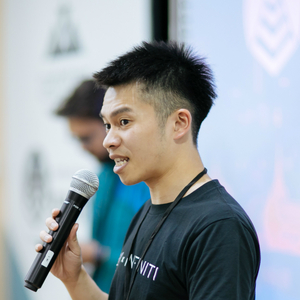
Felix Wong
Full-stack marketer, data analyst, and angel investor.

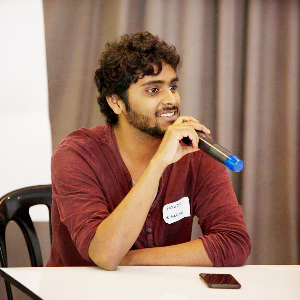
Satwik Govindarajula
Co-founder and CEO of Uptiq. Growth advisor.

Marcos Bravo C.
Branding, content, and messaging for early startups.
.jpg)
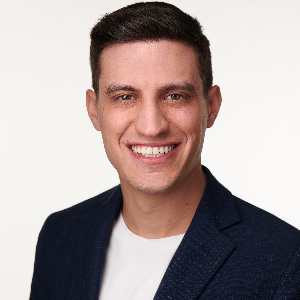
Sam Eisenberg
Co-founder at Design For Decks. Decks that raised $4b+.

.jpg)

Founders who’ve built marketplaces
Before you spend a year on it,
pressure-test it with someone who already lost that year.
Book a 1:1 with a founder who’s built and scaled a marketplace. One membership, unlimited calls, every mentor included.
Talk it through firstKeep reading
More from the GrowthMentor blog
Product · Aug 14, 2018
Building a Platform to Scratch My Own Itch
Foti Panagiotakopoulos
Startups · Apr 22, 2020
How to validate a startup idea using a pre-launch landing page and less than $500 in PPC spend
Foti Panagiotakopoulos
Mentorship · Nov 30, 2024
The Difference Between Advice and Mentorship (And Why Most People Give Bad Advice)
Foti Panagiotakopoulos
Mentorship · Feb 07, 2024
How to Find a Mentor For Your Startup (Message Templates Included)
Micah McGuire