TL;DR
- Forrester says 15% of US agency jobs vanish in 2026. The reason: AI now does the execution (content, ads, email, reporting) for a few hundred dollars. It still can't do the strategy.
- The math: a $6,000 to $20,000/month agency becomes a few hundred dollars of AI tools plus a human for the strategic hours. Most founders cut 70 to 80%.
- The trap is going AI-only. Fast execution with no direction means you run the wrong experiments faster and call it progress.
- The move is to unbundle: AI for the doing, a human operator for the deciding.
- A mentorship membership is the cheapest version of that human layer: unlimited calls with growth operators, no retainer.
Forrester originally forecast that AI would automate 7.5% of US agency jobs by 2030. Late in 2025 it tore that up: 15%, in 2026 alone, eight years of disruption compressed into one, on top of the 8% already gone in 2025. And this is not only analyst theater: one small-agency CEO told Business Insider that AI pressure pushed him from three employees plus freelancers to being the only full-time employee. So the real question isn't "can AI replace a marketing agency." It's whether yours is in that 15%, and whether you've been paying retainer rates for the work its own owner is now handing to a model.
Here's the honest split. AI replaces the execution, which is most of what an agency bills for. It cannot do the direction, the part that decides whether any of the execution was worth doing. Fire the agency that only sold you execution, and keep a human for the judgment. Done right, you cut most of the retainer and end up with sharper direction, not weaker.
One thing up front: we run a mentorship marketplace, so we have a horse in this race. But we don't sell agency services or AI tools, and nobody here earns a referral fee. GrowthMentor vets growth marketers for a living, so this is the split we'd recommend to a friend.
What AI can already do (and you should let it)
This is the part the agency was quietly marking up. In 2026, a founder with the right stack covers most of an agency's execution alone. If you are still figuring out where AI belongs in the workflow, talk to someone who understands artificial intelligence in a startup context, not just someone selling prompts:
- Content production. Blog drafts, ad copy, landing-page variants, social, turning one asset into ten. Not award-winning, but the volume an agency billed you for.
- Ad creative and media buying. Agentic tools generate creative and reallocate budget toward the winners in real time. Two-thirds of brand and agency buyers already use AI for ad buying (IAB, 2026).
- Email and lifecycle. Segmentation, personalization, send-time, flows. This was always more rules than art, and AI runs rules well.
- SEO and AEO drafts. Keyword clustering, briefs, first-draft pages, and the new game of getting cited inside AI answers. Drafts need an editor, not a retainer.
- Reporting. Pulling the numbers, flagging the obvious moves, building the dashboard. The weekly deck an agency used to bill three hours for.
If most of your retainer bought that list, AI already replaced it. A few hundred dollars a month in tools instead of six thousand to an agency, and you lose almost nothing on execution.
2 in 3
brand and agency ad buyers now use agentic AI for media buying and campaign execution (IAB 2026 Outlook). The execution layer isn't only cheap to replace. It's automating itself.
The AI stack that replaces the retainer
Here's what the unbundled execution layer looks like in 2026. None of it is exotic, and the whole thing costs less than a single day of agency time:
A founder's AI marketing stack
| The job | A tool that does it | ~Cost/mo |
|---|---|---|
| Copy and content | Claude or Jasper | $20–70 |
| SEO and on-page | Surfer or Semrush AI | $99–139 |
| Ad creative and buying | Meta Advantage+, AdCreative.ai | $0–39 |
| Email and lifecycle | Klaviyo or HubSpot Starter | $20–45 |
| Design and social | Canva Pro | $15 |
| The whole team | One person running all of it | ~$250–400 |
- A tool that does it
- Claude or Jasper
- ~Cost/mo
- $20–70
- A tool that does it
- Surfer or Semrush AI
- ~Cost/mo
- $99–139
- A tool that does it
- Meta Advantage+, AdCreative.ai
- ~Cost/mo
- $0–39
- A tool that does it
- Klaviyo or HubSpot Starter
- ~Cost/mo
- $20–45
- A tool that does it
- Canva Pro
- ~Cost/mo
- $15
- A tool that does it
- One person running all of it
- ~Cost/mo
- ~$250–400
That's the slice of a $6,000 to $20,000 retainer you can now run yourself for the price of a couple of lunches. One agency owner cut their team 60% this year once clients realized they could buy that execution direct. The work didn't vanish, the markup did. What the stack still can't tell you is which of these tools to point where, which is the next section.





Before you renew that retainer
Talk to a growth operator who'll tell you which half of your agency's work AI can now do for free. One membership, unlimited calls, every mentor included.
What AI still can't do (the 20% that decides everything)
Here's where the cheap-and-fast story breaks. AI is brilliant at doing the work and useless at deciding which work is worth doing. The expensive part of marketing was never the execution. It was the judgment in front of it. That same split is why AI still can't do the most important parts of your startup, even when it can produce a shocking amount of the work.
- Choosing the bet. AI will run any experiment you point it at, with total confidence, including the ten that don't matter. It can't tell you which one channel will actually move your business this quarter.
- Positioning. The sentence that makes a stranger get it in five seconds comes from taste and reps across real markets, not from a model averaging the internet.
- Reading your situation. A model hands you the generic best practice. It has never seen your numbers, your runway, or the specific reason your last launch flopped.
- The creative leap. AI remixes what exists. The campaign that breaks out is usually the one that wasn't in the training data.
- Taste. AI hands you the average of every marketing playbook ever written, with total confidence. Knowing which version is good, and rejecting the generic until what's left sounds like your brand and not a press release, is the entire job. Human-written content still earns 5.44x the organic traffic of AI-generated, and 71% of marketers say AI copy reads generic. The model writes a thousand headlines; it can't tell you which one is yours.
- Accountability. AI agrees with you. It won't tell you the plan is wrong, push back on your pricing, or make you do the uncomfortable thing. A human who's been there will.
Skip this 20% and AI doesn't save you money. It helps you execute the wrong plan more efficiently, which is the most expensive mistake on the list.
The unbundle: AI for execution, a human for direction
The sharpest founders aren't choosing between an agency and AI. They're unbundling the two jobs an agency used to sell as one, and paying the right price for each.
So before you cancel anything, run your own agency through five checks. The answer is genuinely different for a $2,000 boutique than a $15,000 full-funnel shop:
the 2026 diagnostic, five checks
Run your own agency through this · tap every line that's true
0/52 or fewer
Keep the agency. You are buying coordination and risk-cover AI cannot do yet.
3 or more
Cut it to an AI stack. The retainer was mostly buying pattern work. Keep the strategy, book it separately.
Even one or two describe most agency retainers today. Three or more, and the execution AI now does was most of what you were paying for.
AI replaces agencies that sell execution, struggles with the ones that sell diagnosis, and cannot touch the ones that sell ownership. In the murky middle, that diagnosis is the call worth booking a mentor for.
Put a real number on it. One founder was paying a $15,000-a-month retainer for lead magnets nobody downloaded. He cut it, rebuilt the production on AI, and kept the budget. The catch he hit on day one: AI happily made more lead magnets, but it couldn't tell him lead magnets were the wrong bet. That was the agency's job all along, and the part it was failing at.
The swap, in numbers
A founder paying a mid-tier agency for content and paid social, against running the unbundle.
Same execution. Sharper direction. Roughly 90% less.
How to make the switch in a week
Audit the retainer
List what your agency delivers each month. Most of it (the posts, the ad changes, the report) is execution AI can now do.
Stand up the stack
Set up the tools above for that execution. Budget a weekend to wire it together and a week to learn to trust it.
Book the strategy, don't hire it
Instead of a retainer for direction, book a call with an operator who's run the play. Bring your funnel and your numbers, leave with the two bets worth making.
Cancel and reinvest
Give notice, redirect the saved spend into product or ad budget, and keep one mentor on call for the next decision.
The human layer
AI can run the campaigns. These growth operators tell you which campaigns to run, look at your funnel, and call the bet. They take 1:1 calls.



GrowthMentor: the cheapest version of the human layer
This is why GrowthMentor fits the unbundle. You keep your AI stack for execution, and instead of a $6,000 agency retainer for strategy, you book 1:1 calls with growth operators who have done it. Browse 600+ vetted marketers and founders and talk to whoever has already solved the thing in front of you. The bar to get in as a mentor is high (under 5% of applicants are accepted, and I read every application), which is why a stranger's read here is worth booking.
It's a flat membership, not a retainer, and it costs less than a couple of hours of agency time. Unlimited calls with any growth mentor in the network. Use AI for the 80%, use them for the 20% that decides whether the 80% was pointed at the right target. If you're weighing the spend, we broke down what a mentor costs against the alternatives.
It's not a one-off. Membership is unlimited calls with any mentor in the network, every one included.
Vassilena Valchanova
Which channel first · Tue 10:00
Michael Taylor
Positioning · Tue 1:00
Kosta Panagoulias
Paid vs organic · Wed 9:30
Tina Louise
Pricing · Thu 11:00
Daniel Johnson
What to test next · Fri 2:00
So no, you probably don't need to renew the agency. Build the AI stack, keep one operator close who'll tell you which experiments are worth running, and put the six grand a month back into the business.
Frequently asked questions



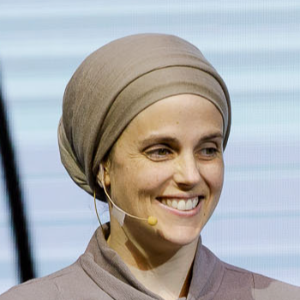
Growth operators who've grown real companies
AI can run the campaigns.
A mentor tells you which ones to run.
Bring the plan you're not sure about. One call with an operator who's grown real companies tells you which bets are worth running, and which half your agency was overcharging for.
Talk to a growth mentorKeep reading
More from the GrowthMentor blog
Growth Strategy · Mar 04, 2026
Growth Marketing Agencies in 2026: 5 Tiers, 19 Picks
Foti Panagiotakopoulos
Mentorship · Feb 06, 2026
How Much Does a Business Mentor Cost? A 2026 Guide
Micah McGuire
Mentorship · Jan 09, 2026
Everyone has the tactics now. A digital marketing mentor tells you which ones are yours.
Foti Panagiotakopoulos
Growth Strategy · Jun 17, 2022
When Should You Make the First Marketing Hire For Your Startup?
Sarah Wisbey