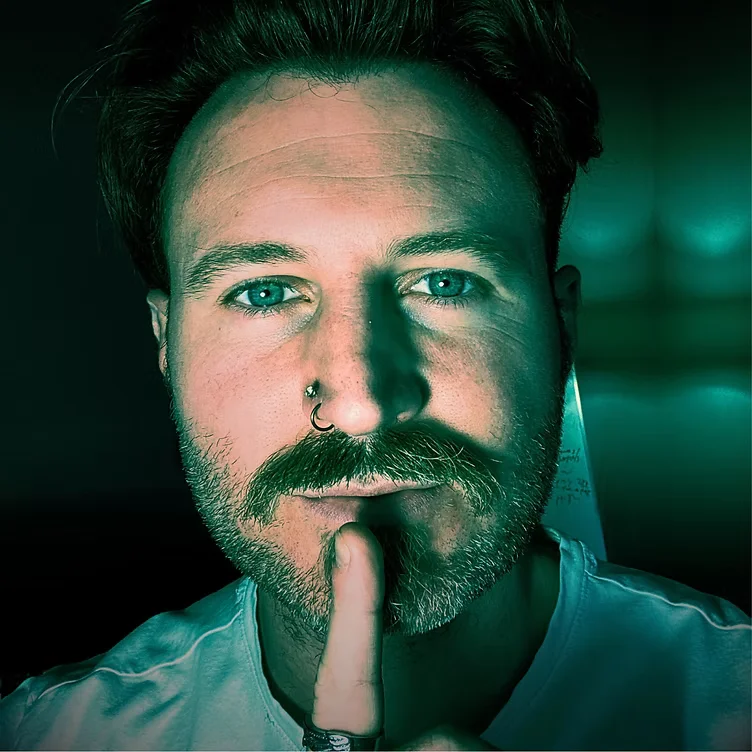
Mentor story
·Nebuchadnezzar · 114 sessions
“What I love most is hearing people's ideas. I get to be a sounding board for someone in the thick of it, then add value and walk away.”
The Work
Tell us about what you do and how you got here.
I never really wanted to be a technology guy. I'm a 90s kid and a writer, and growing up you were going to have to rip the pen and paper out of my cold dead hands. The only piece of tech I adopted as a kid was the word processor. So I fell into tech completely by accident, by way of writing, and then I caught the bug. Honestly I didn't fall in love with software so much as I fell in love with software engineers. I love how salt-of-the-earth developers are, and once you work in startups you're not just in your own startup, you know everybody, you're in all of them, and all of it was fascinating to me.
I cut my teeth working with founders to start, build and grow their products, then parlayed that into roles with Fortune 500 companies. Now I'm building for myself, in product, web and SEO, brand and content. I've experienced the highest highs and the lowest lows, professionally, personally and emotionally, and I found a solution to life and life's problems on both sides. My work today is grounded in a bedrock of principles that hold up regardless of the platform or the model. The tools change, the principles don't.
Why Mentor
What made you join GrowthMentor in the first place?
I only share my experiences, and GrowthMentor is a place where I get to do exactly that with real founders, one at a time. I don't go on about playbooks or secret sauces, because no playbook is rock solid, most of them are just somebody trying, testing and failing and then making a PDF out of it. What I can offer is what I've actually lived through, the highs and the lows, and an honest read on what's really going on with somebody's product or their brand.
What I love most is hearing people's ideas. There's so much creativity walking through the door, and being a sounding board for somebody who's in the thick of it is a different kind of good feeling than the consulting and advisory work I do elsewhere. I get to add value to a person's life and walk away, no strings, no pitch.
Who They Help
You talk about AI wiping out market cap in SaaS, but you don't pin it all on AI. What's your actual read?
When I first got into tech I told my uncle this stuff was going to change everything, and he'd spent his career as a sales executive at a cable company. He asked me, do you know what the hardest thing about selling software is, and I said no. He told me: you don't need it. I couldn't even fathom what he meant. Of course you need email, you need word processors. And he said no, think about it objectively. If you don't have a word processor you have pen and paper, if you don't have email you have snail mail. Everything we build in software, we already have a solution for in the real world. What you're actually selling is a time savings, a better life, an outcome. That blew my absolute mind, and years later I finally understood it.
It's never been more true than today, because now we have Claude Code. If you have a need, you can just build it. Who needs Salesforce when you can have Claude Code build you a CRM that actually works, and who needs to pay for all the little add-on apps when you can build those too. So AI isn't the root cause, AI is the lever. The root is that we didn't really need this stuff in the first place. And it isn't only coming for the blue chips, it's coming for all the marketplaces and add-ons those SaaS companies thought were their moat. The moat now is some combination of data, brand, attention and product. Time to market was never a moat, and with AI everybody can come to market fast.
A Standout Session
You're skeptical that AI usage has reached the everyday person. Why?
There's a select group of people building with it and screaming at the top of their lungs, and they assume that because their industry and their peers are obsessed with it, that must extrapolate to the whole market. It just doesn't. The general consumer is using it a little and doesn't really trust it yet. Those Super Bowl ads everyone in our world thought were brilliant, the average person was just confused by them, because they don't inherently know how these tools talk.
The AI bubble reminds me a lot of QR codes from about twelve years ago. To marketers, QR codes were going to change everything, all these QR builder apps sprang up overnight, and they all failed because the general consumer rejected them. The only reason most people know what a QR code is today is that COVID revived them, because suddenly there was a real need to scan a menu. We've been saying everyone will be using AI next year for five years running, and the general consumer is still nowhere near using it the way we do. I'm not anti-AI, I use Claude every day. I just don't speak from opinions, I speak from experience, and my experience tells me to be more bearish on the timeline than everyone else is.
Inside the Platform
Where do you draw the line on offloading your own thinking to AI?
The mind is a muscle. If you offload your thinking, you stop exercising it, and my real concern is that more usage isn't going to bring the bottom up, it might just hollow out the great thinkers we could have had. People say you can have AI question you and challenge you, and you can, I actually do that. I'm a writer, and I've had this writer's block ever since I got into tech. Recently I opened up Claude and said, have a conversation with me, challenge everything I say, but I don't want you writing anything, your job is just to document what I write and give it back. But how many people are telling it don't do any work, only challenge me? Nobody is doing that.
For anything else, I check it, because Claude cannot replicate my brain. What makes me good at what I do is me, my soul, my intention to serve, my morals and values and principles, my mission and my drive. There's no AI that replicates that, so if I offload all my thinking to it, I can't deliver maximum value to the people I serve, and I want to deliver maximum value.
What They Got Back
You said something earlier that surfaces in how you mentor: you only share experiences, never advice. Where does that come from?
It's the core of how I show up, and I learned it in recovery. Getting sober taught me two things that turned out to work professionally just as well as they work in life. The first is action: you come off the street and we put you to work, go make the coffee, immediately. The second is the format, where everybody only shares by experience. Nobody says here's my opinion of your situation and here's my advice. They just share what they lived through on the thing that was said. That's it.
So I don't give advice anymore, I share my experience. Action first, and nobody gives advice, everybody shares from what they've actually been through. It turns out that's exactly what serves a founder on a call. I sit with someone in the thick of it, tell them what I went through on the thing they're facing, and let them take what's useful.
The Filter
How do you tell real expertise from someone just performing it?
Show me the receipts where you actually did the thing. There's so much of this online, people with a course or a framework who aren't applying any of it themselves, and the tell is always the same: they can't point to where they did it. So that's what I ask for, the receipts.
You see people selling seventy-page decks, and I won't even write a seventy-page deck because I won't read my own seventy-page deck. You want me to believe you personally sat down and wrote all seventy pages, or that you edited all seventy pages the AI spit out? Come on. In marketing especially, people can feel when something isn't authentic. Even people who don't know how these tools sound definitely know when something doesn't feel real. They're not really pushing against AI, they're pushing against the lack of authenticity, and I think that's deeply human.
The Verdict
Three adjectives for GrowthMentor.
More mentor stories
View all →“GrowthMentor is exercise for the brain. A session feels like a chore at nine at…”
Barbara Stewart · Customer Experience & Marketing Consultant @ Hiya Marketing
Read Barbara's story“The most rewarding part is helping a founder, then seeing a review about how it…”

Daniel Johnson · GTM & Growth Operator @ We Scale Startups
Read Daniel's storyYour turn
The next story could be yours.
Fewer than 5% of applicants get in. If you've solved these problems, help the next founder.