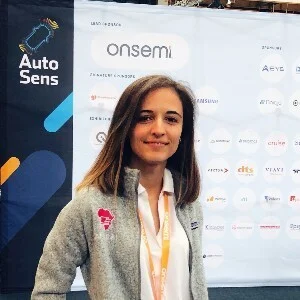
Mentor story
·Magnum · 13 sessions
“A mentor I met by chance is the entire reason I became a founder. Getting to be on the giving end of that now is a real privilege.”
The Work
Tell us about what you do and how you got here.
Some personalities are just well suited for early-stage chaos, and mine is one of them. I love taking a thousand different paths nobody has organized yet and turning them into a ladder you can actually climb. Bringing order to the chaos is one of the best feelings there is, and it's high impact, because you get to shape something at the stage where anything can still happen.
I knew I wanted to be an entrepreneur from the moment I graduated, I just wasn't sure how to get there. So I started by chasing a valuable skill set, and finance stood out. I began in investment banking, then made a slightly crazy jump to a small investment advisory firm in emerging markets, a six-month fellowship in Kenya. What I was really doing was steering my finance career closer and closer to the startup side. Once I was advising founders all day, it just reiterated what I already knew: I wanted to be on the building side, not the financing side.
From there I joined an early-stage startup on the operations side, and honestly that is the best training there is, better than consulting, better than anything, for running your own company. You look around at the pure chaos and think, wait, nobody has their act together, I could do this. Everything suddenly feels achievable. Then I went and did it myself.
Why Mentor
What made you join GrowthMentor in the first place?
My entire journey into entrepreneurship came from a mentor, so being on the other side of that now means a lot to me.
Mentorship completely changed my trajectory, and I want to be that person for someone else. There's so much a founder doesn't know yet, and you can see how much their journey would accelerate if they just had someone a few steps ahead to talk it through with. GrowthMentor is where I get to do exactly that, sit with founders one at a time and help them move faster than I did. That feedback loop, on a regular basis, can genuinely be the difference between a company making it and not.
Who They Help
You took Africa.ai from zero to a million in ARR. What was the hardest part, and what got you through it?
Zero to one is the most challenging phase, always, and that was absolutely true at Africa.ai. We were a data-labeling startup with an impact mission, and getting that very first paid client took something like six months of going after the right introductions and the right random connections. Then, to my surprise, getting from that first client to retaining a second and third was just as hard. That first one was such a unique fit that the next ones exposed everything we still had to refine.
The trait that got me through it was resilience. When you have a single client for the better part of a year, you wake up every day knowing that if they pause their contract, the whole business is at risk. It wears on you mentally. You start thinking, I don't really have a business yet, I have one client and I'm not profitable. That's the zero-to-one grind, and you have to stay optimistic and keep at it, doing founder-led sales before you have any repeatable engine and before you even know how to build one.
What finally cracked it was bringing on a co-founder with real go-to-market experience. I learned the founder-led sales process directly from him. Reaching out and getting help to do the thing you don't yet know how to do, that was the unlock. And once you learn it, you carry it into every company after.
A Standout Session
A lot of first-time founders freeze on things they've never done before. How do you push past that?
Even when you have the playbook in front of you and everyone is telling you it's great, there's often this resistance, this who am I to do this voice. I think almost everyone feels it the first time they attempt something. You just have to have the gumption to push through the discomfort and do it anyway, even when you're not sure it'll work.
The belief underneath it is simple: if someone can do it, you can do it. You might not know how in that exact moment, but that's not a reason to give up. Sometimes you need an almost unrealistic, overconfident belief in yourself, so that even if you've never done it and you've been trying for a year without cracking it, you keep going. That's something I see in a lot of the strongest founders. They genuinely believe they're better positioned than anyone else to get this thing done, and that conviction carries them.
Inside the Platform
You've built and managed a lot of teams. How do you think about the first hires?
I started as a solo founder, so my first hire was really just basic operations, someone to take the ops off my plate so I could focus on fundraising and selling. At a low run rate you're looking for someone who's a great culture fit and motivated by equity and the mission, because you can't compete on cash. Those early employees are the most important ones you'll ever bring on. They shape your culture and they're in the trenches with you during the times when there isn't much money or many resources.
When I really hit blocks, that's when I had to build in a higher-leverage way. Going from my first client to my fourth was brutal because I didn't understand go-to-market, and I couldn't afford a senior expert at the time, so that's when you consider a co-founder who complements your skill set, or mentors and advisors who are genuinely invested in your success.
The thing I learned the hard way is about that early team's makeup. The people who weathered the first year or two with me had so much more grit and resilience, and we didn't even realize at the time that we were attracting that kind of person. Later, when things were going well and we were poaching people at matching salaries, the culture became noticeably less in-this-together. So keep it small, lean, agile, and truly aligned on mission. You have to be that intentional when you design it.
What They Got Back
You've said you became a founder because of a mentor. What happened?
It's a wild story. I literally sat next to someone on a plane before I'd even quit my job, and we got talking about how interested I was in social entrepreneurship. We exchanged numbers and then didn't speak for a year or two. Meanwhile I moved to Kenya, left banking, started volunteering with an orphanage, and shared bits of what I was doing in my free time.
He saw one of those pieces and called me out of nowhere. He said, I'll support you if you can find a sustainable business model for this. So we kept that conversation going, and he became a founding mentor and advisor: he introduced me to networks, taught me how to fundraise, and we started a nonprofit together that we eventually pivoted into a social enterprise startup. My whole path into entrepreneurship traces back to that one person reaching out, and then just chatting with me once a quarter.
That's the thing people underestimate. You'd be surprised what even a one-hour conversation, once a month or once every couple of months, with someone who really knows can do for you. Mentorship is that important, and getting to be on the giving end of it now is a privilege.
The Filter
If a founder takes one thing away from a call with you, what do you hope it is?
The one thing I always find myself hoping is that this person hops on another call next month, and the month after, and keeps it going, with me or with anyone good.
What I see constantly is founders doing the exact same thing for three or six months straight, especially early on. Then they get one piece of really good advice and it lands like a refreshing wave. It informs a whole direction shift and gets them real traction. There's just so much they don't know yet, and you can see how accelerated their journey would be if they reached out more often, on a consistent basis.
That's exactly what cracked it for me. My mentor would tell me how to fundraise, I'd go try it, come back and say here's what worked and what didn't, and he'd tell me how to do it better. That feedback iteration curve with someone on a regular basis is what accelerates your learning curve and your growth curve. It can be the difference between success and failure, and even a difference of three or six months matters enormously when you're trying to reach your goals.
The Verdict
Three adjectives for GrowthMentor.
More mentor stories
View all →“GrowthMentor is exercise for the brain. A session feels like a chore at nine at…”
Barbara Stewart · Customer Experience & Marketing Consultant @ Hiya Marketing
Read Barbara's story“The most rewarding part is helping a founder, then seeing a review about how it…”

Daniel Johnson · GTM & Growth Operator @ We Scale Startups
Read Daniel's storyYour turn
The next story could be yours.
Fewer than 5% of applicants get in. If you've solved these problems, help the next founder.