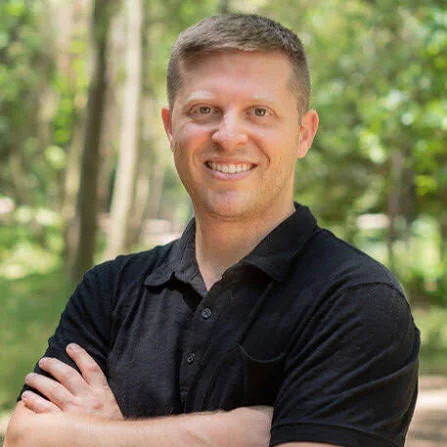
Mentor story
·Magnum · 26 sessions
“What I love is being the connection point, understanding two sides well enough to send people back and forth so everyone ends up better off. That's what mentoring gives me.”
Sean Weisbrot
Founder & Fundraising Agent
Portugal · Jun 2026
The Work
Tell us about what you do and how you got here.
I've built a number of businesses over the years and sold some of them, and I learned different things from each one because each one was different and attracted different kinds of people. The most profound experience for me was my tech company. We were building a competitor to Slack, very tech heavy, very dense on the product side. We started in 2018 and really picked up steam in 2020 when COVID hit. It was my first fully remote business, which back then was a genuinely new thing, so we attracted really great developers in the Philippines who had been commuting two hours each way to office jobs and were thankful for the chance to work remotely.
These days I'm really focused on AI and on helping companies raise money. A lot of the money is going into AI right now, and I split my time between vibe coding my own things and interviewing business owners and investors, raising for AI startups, and helping VC funds raise their next fund. I want to be deep in what people are thinking about in AI, how they're using it in their personal and professional lives, and then partner with great people so that everyone can help each other and everyone can make money.
Why Mentor
What made you join GrowthMentor in the first place?
A big part of what drives me now is getting in front of founders and investors and understanding what they're actually working on. I spend my days interviewing business owners, talking to people raising money, figuring out how they think, so a place where I can sit down with founders one on one fits right into that.
The other half of it is the partnering instinct. I'm always looking for the synergy between people, the lead one person can't close that the next person can, the implementation one team can't do that another can. I like being the connection point in those situations, and a lot of the value I add is just understanding two sides well enough to send people back and forth so everyone ends up better off.
Who They Help
You ran a fully remote team before it was normal. What did that teach you about people?
When you can't see people in person, it's really easy to forget they're even there, and they start to wonder whether you notice they exist. So I worked hard at the FaceTime. We had about 16 people, which was small enough that I could do one on one calls with each of them once a quarter where they could ask me anything, business or otherwise, just so we could get to know each other. I also set up virtual reality nights where a few of us with headsets, and everyone else on a web or desktop app, would get together to play games with one rule: do not talk about work.
The thing I kept coming back to is that these people are putting their time, their energy, and their skills into building my vision and my future. Of course they learn new skills along the way, but it's really my future they're building. So I want to know who they are, what drives them, what makes them happy or sad, and how I can make their career more enjoyable. A lot of founders fail to do that because they're so focused on building the product or the sales that they forget about the people doing those jobs day in and day out.
A Standout Session
You think a lot about caring for the people who build your vision. How does that actually show up?
The honest mechanics are simple: people do a job because you give them money, and when you stop, they stop wanting to do the job. Founders love to say they're hiring the best people they can find, but no, you're hiring the people you can afford, and then you're hoping that they care. The chances of someone working for you for ten, fifteen, twenty years are very low. People don't have job security anymore, so they don't have loyalty to brands anymore, and that's fine.
What I learned is that the more you show you care about them, the more they're willing to care about you and your vision, assuming the work is interesting and they're learning skills that take them to the next point in their career. So I look at it as: you and I are here in this moment building something together, my job is to give you money and skills you can use later in your journey, and in return you build my vision and make me more money. Hopefully we keep working together over the years in different companies. But if we don't, my job was to give you the opportunity to grow yourself.
Inside the Platform
You put your own money in before raising a cent. What would you tell a founder tempted to do the same?
I'd put over half a million of my own money in before I raised a cent from anyone else, because I thought I could seed strap the business. The idea is you fund yourself past the pre-seed stage so your first real raise is at the seed stage, at a higher valuation, where you give away less equity. On paper you're securing your value by putting your money in now instead of later.
For a first tech company, that was probably a bad idea, and that's the honest lesson. I underestimated how much things would cost and how long they would take, by a wide margin. I'd planned to bootstrap on around a hundred and twenty-five thousand, and by the time I was six hundred and fifty thousand in I wasn't anywhere close to where I needed to be, which is when I knew I had to start raising. If I were doing it again as a first-time founder, I'd be a lot less ambitious about it. Be much more efficient with the capital, get to launch faster, get to revenue faster, and don't bet the whole thing on a vision you haven't pressure-tested with the market yet.
What They Got Back
You've vibe coded a real product yourself. Where does that actually work, and where does it fall apart?
I started with Lovable and quickly moved to Cursor using Claude's models, and that's what I still use. I vibe coded a B2B SaaS by myself for about a hundred bucks. It took four months only because there were complicated financial APIs involved and I'm not a technical person, so I taught myself as I went, and I had four businesses ready to pay. Compare that to the first company, where we spent over a million. With AI now you can bootstrap to profitability very fast with very little money, which is just a different world from the one I started in.
The reason I can take something to production is that I spent five years working with front end, back end, product, design, and marketing teams, with a COO, a CTO, a CMO. I carry all of that knowledge, so I know what I can do and what I can't, and once there's revenue I'd hire a developer to make sure it scales. The problem for first time non-technical founders is they don't know what they don't know. When I started in tech I didn't even know what wireframes or user stories or feature specs were until a developer begged me for structure. That gap is what makes vibe coding impossible to be production ready for most people who start things.
The Filter
Everyone's chasing white space in AI right now. What's your take on that?
I don't think there needs to be a blue ocean. We're in the early phase of a massive transition in the global economy, which means a massive opportunity for people to make their existing service offerings intelligent, to productize their services, or to automate them. It doesn't matter that a thousand people are doing the same business, because some serve a certain region, some serve a certain industry or business type, and there'll be a lot of niching down before the wider players consolidate through mergers and acquisitions. What matters is: can you do something that's good, and can you convince people to pay you for it.
The part a lot of people miss is the automation middle layer. Everyone jumps straight to AI, but to actually use AI in an existing business you first have to automate aspects of it so that data is being generated, flowing correctly, and labeled correctly. Only then can you turn it into something intelligent. So the real questions to work through are what can I automate, what should I automate, where do I genuinely need a human in the loop, and where can it be fully automated. Get the automation foundation right first, because if the data underneath isn't clean and flowing, the intelligent layer on top has nothing solid to stand on.
The Verdict
Three adjectives for GrowthMentor.
More mentor stories
View all →“GrowthMentor is exercise for the brain. A session feels like a chore at nine at…”
Barbara Stewart · Customer Experience & Marketing Consultant @ Hiya Marketing
Read Barbara's story“The most rewarding part is helping a founder, then seeing a review about how it…”

Daniel Johnson · GTM & Growth Operator @ We Scale Startups
Read Daniel's storyYour turn
The next story could be yours.
Fewer than 5% of applicants get in. If you've solved these problems, help the next founder.