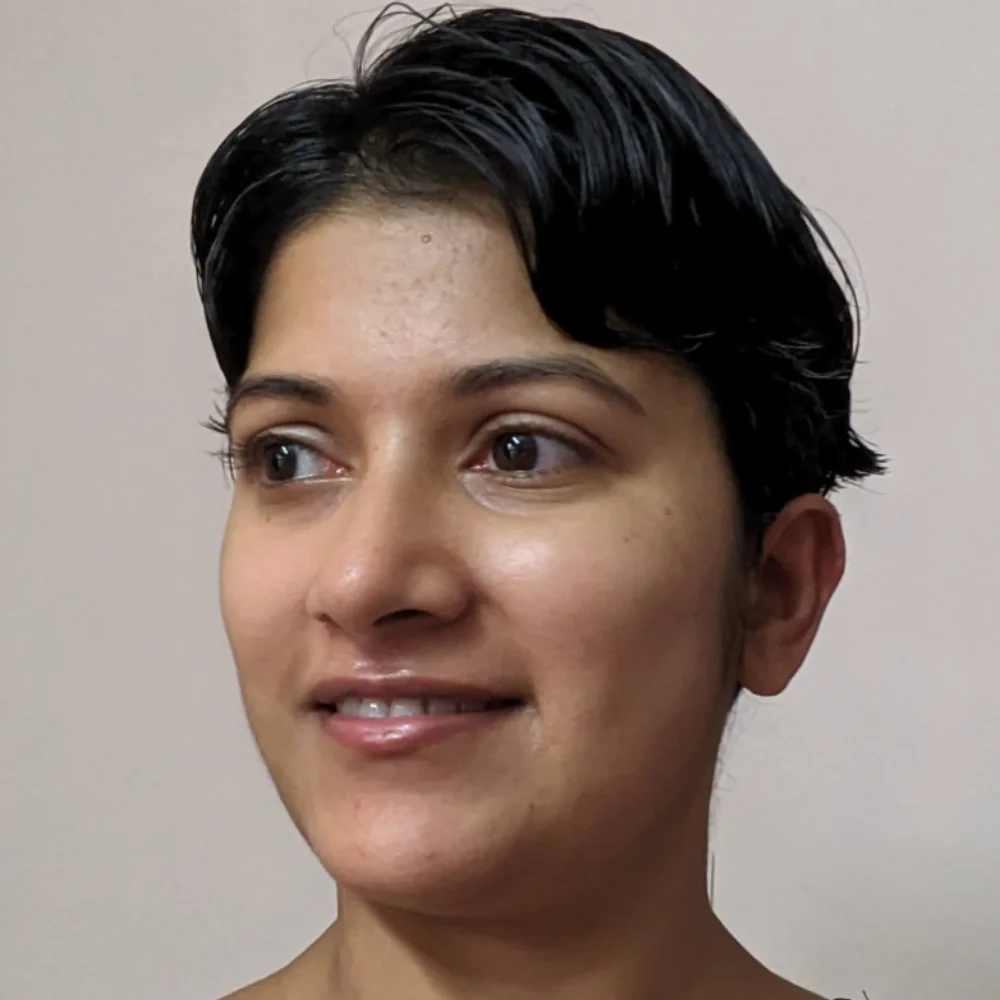
Mentor story
·Magnum · 20 sessions
“In 2020 I decided mentoring was my purpose, my ikigai. It stopped feeling like work. I live for the light bulb moment, when someone sees it's not just them struggling.”
Div Manickam
Product Marketing Leader, Author & Mentor
USA · divmanickam.substack.com ↗ · Jun 2026
View Div’s profileThe Work
Tell us about what you do and how you got here.
I'm a product marketing leader, a mentor, and an author. I decided back in 2020 that mentoring was my purpose, my ikigai, and I wanted to give back to the community. GrowthMentor, among the other platforms I found, really helped shape who I am.
Since I last updated this, I've written books. I started with my own journey through stress and anxiety, then published Mastering the Art and Science of Product Marketing. I write on Substack about everything I'm learning around career growth and product marketing. I also teach product marketing monthly and lead mindfulness practices.
The other half of me is wellbeing. A few years ago I took a full pivot and came full circle on taking care of my health, and now I'm a mindfulness practitioner too. All of it feeds what I can give back: helping founders and teams think about product market fit, who their audience really is, and how to position themselves in the market.
Why Mentor
What made you join GrowthMentor in the first place?
It came out of that 2020 decision that mentoring was my purpose. I went looking across the mentoring platforms, found GrowthMentor, and it just fit. I remember an early call where we geeked out about what product marketing actually means, because everyone has their own interpretation of it.
I never found a reason to leave. I'm still here years later, supporting startup founders and teams, and I'm genuinely excited about what's been built. It's one of the communities I keep coming back to.
Who They Help
What do founders most often get wrong about positioning?
They start from the product instead of the customer. So much of what I do is pulling people back to who the audience really is, the persona they actually want to target, and how they're positioning themselves in the market, before we ever touch the pitch deck or the presentation. If you don't understand your customer and become the voice of the customer, it doesn't matter what solution you have. It's just another thing out there in the market that isn't connecting with anyone.
The other thing founders lean on too hard is data. You and I both know how important data is, but data is only facts unless you bring the emotion into it. It's all storytelling at the end of the day. So I push people to really empathize, with their customer, with their team, and with themselves, and then build the positioning out from there. That empathy is also why I bring a short mindfulness practice into the rooms I teach, because grounding the people first tends to make the work better.
A Standout Session
Founders keep asking whether AI is going to swallow product marketing. What do you tell them?
I don't think an AI marketing tool can take what product marketing does, because so much of it is creative thinking. People say AI can write poetry and call that creative, but for me creativity doesn't only come from the work. It comes from a walk, from a botanical garden, from a museum, where I see something and it sparks an idea I bring back into my work. That serendipity is still too far out for a tool to replicate.
What I do think is that the role adapts. A lot of what we used to do was monotonous and admin-like, the stuff we never wanted to spend nights and weekends on, and I've offloaded all of that. Now I get to do the creative thinking and flex the confidence of asking how I can do my work better. I use Gemini to leverage what I can do, whether I'm teaching a class or building a workshop. But two people can give it the same prompt and get two different answers, and that's intentional. Give me the tools to do plumbing and I wouldn't know what to do with them. Give them to a plumber and they would. The expertise you bring is the difference.
Inside the Platform
You're not convinced by AI running customer interviews on a marketer's behalf. Why not?
If all you want is data, then sure, automate it. But for us it's also customer relationships. My best customers are now genuinely good friends. Business is a relationship, not just a transaction. The minute you have AI do the interviews and hand you the data, yes, you've saved a lot of time, but you've missed the chance to foster that relationship, and I'm not convinced that's something you'd want to give away.
I tell my mentees the same thing about their own work: data is only facts unless you bring the emotion into it. Really empathize with your customer, your team, and yourself. There might be a middle ground, maybe a shorter conversation plus some synthesis, but I won't hand the whole relationship to a bot.
What They Got Back
What's changed in you because of mentoring here?
Teaching and mentoring stopped feeling like work. I didn't realize how much I'd love teaching until I stumbled into it, and now I get to do it every month. I love the sparks of connection, the light bulb moments where someone goes wait, it's not just me struggling with this, everyone has the same problem. We crowdsource, we brainstorm together, and I truly enjoy it.
It also keeps me close to the thing I most believe in. I worry about the early career mentees who've been handed these AI tools but don't yet know how to sharpen the axe. I keep encouraging them to learn from the experiences they hear from others, because that's still where the real value is. Staying in those conversations, on GrowthMentor and in my classes, is what keeps me sharp on my own craft. That's also where my joy is.
The Filter
Who should and shouldn't apply to be a mentor?
Apply if mentoring genuinely feels like your purpose rather than a side line. For me it really is the ikigai, and you can tell pretty quickly whether someone is here to give back or to perform.
The thing I'd ask of anyone, mentor or mentee, is to actually listen. So much of what people carry is self doubt, the voices telling them their achievements are nothing, and as long as someone is there to listen, that's most of the work. If a stranger's problem genuinely lights you up and you can sit with them in it, you'll get back far more than you give. I always have.
The Verdict
Three adjectives for GrowthMentor.
More mentor stories
View all →“GrowthMentor is exercise for the brain. A session feels like a chore at nine at…”
Barbara Stewart · Customer Experience & Marketing Consultant @ Hiya Marketing
Read Barbara's story“The most rewarding part is helping a founder, then seeing a review about how it…”

Daniel Johnson · GTM & Growth Operator @ We Scale Startups
Read Daniel's storyYour turn
The next story could be yours.
Fewer than 5% of applicants get in. If you've solved these problems, help the next founder.