TL;DR
- A one-liner that won't come is a positioning gap in a copy costume. The sentence stays fuzzy exactly as long as the who does.
- Draft from a moment a customer lived through, the last time they hit the pain, never from the feature list.
- Pick the segment first, then fill the template: [segment] uses [product] to [job] so they can [outcome]. Add one number a buyer could act on.
- Your sentence has a second reader now. AI assistants repeat a line about your startup to buyers, and 67% of ChatGPT's citations flow to about 30 domains.
- The only test that counts: say it to three outsiders and have them repeat it back in their own words. Every clarifying question is a rewrite.
It's clear in your head. It comes out as mush.
Here is the scene. Someone at dinner asks what your company does. You start, hit the second sentence, watch their eyes drift, and add a third sentence to rescue the second. By the fourth you are describing features to a person who stopped listening at the first.
The written version is harsher. A visitor gives your homepage about five seconds to say what you do, and roughly 61% leave when it doesn't. Five seconds is one sentence, read once.
A hundred people land on the hero. When it does not say what you do, sixty-one are out before the second sentence gets read.
The dinner guest at least pretends to follow.
And since last year, your sentence has a second reader, and it never blinks. When a buyer asks ChatGPT or Perplexity what your company does, the model answers in one line whether you ever wrote one. Citations concentrate hard, 67% of ChatGPT's citations flow to about 30 domains, so that answer gets assembled from a surprisingly small pile of sources. If your own sentence is not in the pile, the model writes your positioning for you.
That reader has one more habit worth knowing about, and it ruins the most tempting way to test your line. We will get there.
The sentence is fuzzy because the audience is
Watch a good positioning mentor open a teardown and the first question is never about words. It is some version of, what problem does a specific person have on the morning they come looking for you? Founders answer with what the product does. The distance between those two answers is the fog.
A product description has nobody in it. A sentence with nobody in it has nobody to be for, and a line written for everyone lands on no one, which is why the wide audience feels safe and reads as mush.
That is a positioning problem, not a wording problem, and no thesaurus survives contact with it.
There is a strict order underneath, differentiation first, then positioning and messaging, then go-to-market, then pricing. Founders jump the queue constantly, agonizing over pricing tiers for a product they cannot yet explain. Skip the positioning decision and it resurfaces downstream with an invoice attached, usually as ads that get clicks and no conversions.
Narrowing feels like turning customers away, which is why founders resist it for quarters at a time. But one specific reader can see themselves in a specific line, and the reader who sees themselves is the one who pays.
walked in saying, walked out saying
Walked in as
A tagline problem
One more editing pass will fix it.
Walked out as
An audience decision
Pick the reader before the words.
Walked in as
What the product does
A feature list wearing adjectives.
Walked out as
What it solves, for whom
One person’s Tuesday, made easier.
Walked in as
A line for everyone
Broad enough to keep every door open.
Walked out as
A line one reader repeats
Narrow enough to be said back.
Same product in every row. The sentence stops being hard to write the moment it stops being for everyone and starts being for one reader.
The sentence is hiding in a moment that already happened
Stop drafting from the spec sheet. One IndieHackers writer, after a month of reading fifty builder posts a day, put it plainly, you can always tell when a founder is describing their product from a spreadsheet versus from an actual moment that happened to them. Buyers can tell too.
So go find the moment. Write down the last time a real customer was stuck in the exact situation you fix, before they knew you existed. Where they were, what they had just tried, what that week cost them. Mentors call this selling the hole instead of the drill. The drill is your feature list. The hole is the Tuesday afternoon somebody stood in front of a wall.
Watch it on one consulting line. "I help founders with technology decisions" is a spreadsheet sentence. "I take the anxiety out of watching your product get built when you can't build it yourself" describes a moment, the 11pm one where a founder stares at a contractor's invoice and cannot tell if it is fair. Same person, same service.
Only one of them gets repeated at dinner.
Decide who it's for, and the line falls out
Run the whole move on an invented company. Say you have built a companionship app for seniors, daily check-in calls, gentle reminders, a friendly voice. The homepage says "staying connected, at any age." Warm, grammatical, aimed at everyone. Now make the one decision. The seniors use the app, but the person lying awake is their adult child, 45 to 65, living in another city, scanning every phone call for early signs that something is off.
Write for her and the sentence assembles itself. "CompanionCall checks in with your mom every day and flags the changes you would want to know about." The product didn't change. The reader did.
Same app, one decision, and the fog is gone.
The template underneath is "[segment] uses [product] to [job] so they can [outcome]," and it has an older cousin, Founder Institute's Startup Madlibs, "my company is developing [offering] to help [audience] [solve a problem] with [secret sauce]." Both work, and both carry the same warning label. Filled in before the who is decided, they produce a grammatical sentence that is still fog. The template is the last step, never the first.
Deciding the who properly is its own playbook, and it's shorter than you fear.
How-to guide
From fog to one sentence, in an afternoon
The order matters more than the words. Each step feeds the next, and the last one is the only proof that counts.
Pick one segment
Choose the single group whose pain is most acute and easiest for you to reach. Everyone else waits. If picking one feels like a loss, that feeling is the positioning decision you have been avoiding.
Find their moment
Write down the last real scene a customer lived through before finding you. Where they were, what they had tried, what it cost them that week. The sentence's raw material is in that scene, in their vocabulary.
Fill the template
[segment] uses [product] to [job] so they can [outcome]. Use the customer's words for the job, yours will be jargon. Read it out loud once and cut anything you would never say to a person.
Add one number
One figure a buyer could act on or repeat in a meeting. Hours saved per week, reviews added per month, basket value up by a percentage. If the product gives someone 40% of their week back, price that against the salary of everyone doing the task.
Say it to three outsiders
People outside your field, out loud, and ask each one to say it back in their own words. Every clarifying question marks a rewrite. Mangled repeats mean the audience is still too wide.
Their words, then one number
The vocabulary is a sourcing problem. The sentence is sitting in your customer reviews, support tickets, and sales-call notes, in the phrasing a buyer used when nobody was marketing at them. Pull it from there. Your own head is where the jargon lives.
YC gives applicants the bluntest version of the bar, make it sound dumber than you think it should, and reports that most rejected applications fail because the founders cannot plainly say what the company does. Meanwhile half the one-liner listicles still push power verbs, transform and its inflatable cousins. Side with YC. A line that sounds almost boring and lands beats a clever one that needs a paragraph of support.
Almost boring is the bar.
The number does work adjectives can't. "Get more Google reviews" beats "build trust with better leads" because a shop owner can count reviews. "I help e-commerce stores raise average basket value" beats "growth strategy and CRO" because a CEO can approve buying a bigger basket. One number, chosen for the person who signs.
The harder the tech, the plainer the sentence
If your product is genuinely complex, AI infrastructure, dev tooling, anything explained with a pipeline diagram, the temptation is to put the impressive machinery in the line. Resist it. The buyer is paying for what stops hurting, and the machinery is just how. Pitch the business, the problem, the customer, the outcome. Bolting "AI-powered" onto the front of the sentence buries the outcome under the one word every competitor is also using this year.
I have watched a founder need eleven minutes of live explanation before an experienced marketer could say what the product did. A sentence that needs a lecture is a paragraph you haven't finished cutting.
Complex products also usually have two readers. The end user buys relief inside their workflow. The economic buyer pays for security, compliance, and an ROI they can defend. One sentence cannot serve both, so write two clean ones and give each surface an owner, the homepage speaks to the user, the sales one-pager speaks to whoever signs.
.png)


Bring your line to someone who'll score it to your face
One membership, unlimited 1:1 calls. Book a positioning mentor, share the sentence you have, and leave with the one a stranger can repeat.
The only honest test is a stranger's face
You cannot proofread your own clarity. The sentence is already clear inside your head, which is exactly what disqualifies you from judging it. Clarity happens on the listener's side or it does not happen at all.
Which brings back the second reader. The tempting shortcut in 2026 is to paste your line into ChatGPT and ask if it is clear, and the model will tell you it is compelling, sharp, ready to go. It says that to everyone, agreeable answers keep you in the chat. The reader that never blinks never flinches either, and the flinch is the data.
Only a human face gives you the blank stare.
So run the human version. Say the sentence out loud to three people outside your field and ask each one to repeat it back in their own words. YC's variant is emailing it to a smart friend and counting the clarifying questions, each one marks a rewrite. And when the repeats come back mangled, resist the adjective swap. Cut audiences, not words.
the bill for polishing it alone
Fixing the line alone · itemized
Not on any invoice
Every paid line is a way to avoid the free one. The receipt stops growing the day someone says the sentence back to your face.
Get someone to say it back to you in one line
The slow version of that test is a survey nobody answers. The fast version is twenty minutes with someone who has torn down a hundred of these lines and has no stake in being nice to you. A good positioning mentor does two things in a single call. They score the sentence you brought, sometimes brutally. Then they say your value prop back to you in one clean sentence, in your customer's words, and you feel the difference land in real time. That mentor is one membership away on GrowthMentor, unlimited 1:1 calls included, and it often starts in the chat before you even book. Here is what that looks like.
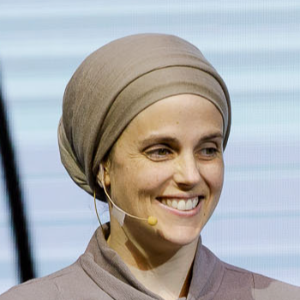
 Dani Whitestone
It is the same species of relief as hearing a mentor rename the problem you booked the call about. You walk in asking for a tagline polish and walk out knowing who your customer is.
The next time someone at dinner asks what your company does, the target is one sentence, a beat of silence, and a follow-up question about the business instead of the product. I am about to run version 52 of mine through exactly that test.
The mentors below run that teardown for a living, live, on whatever line you bring.
Suggested mentors
Mentors who run live one-liner teardowns, on the roster now:
.png)



One-sentence pitch FAQ
Vetted mentors, every one included
Say what you do in one sentence.
Then hear it said back, clean.
Browse vetted positioning and messaging mentors, book a 1:1 call on-demand, and bring the line you have. Membership is unlimited calls, every mentor included.
Talk to a mentorKeep reading
More from the GrowthMentor blog
Marketing · Jun 07, 2026
How to Define an ICP You Can Actually Use
Foti Panagiotakopoulos
Marketing · May 29, 2026
Why Your Ads Get Clicks but No Conversions
Foti Panagiotakopoulos
Mentorship · Jul 01, 2026
The Best Thing a Mentor Does Is Tell You You're Solving the Wrong Problem
Foti Panagiotakopoulos
Marketing · Jun 14, 2026
How to Find Your First Customers When You're the Only Marketer
Foti Panagiotakopoulos