Get a product analytics mentor who makes your numbers trustworthy
Vetted GrowthMentor mentors who fix broken tracking, read the funnel, and tell you which number to trust. Every mentor below wrote their own take on the work.
- 62,000+
- Sessions booked
- 750+
- Vetted mentors
- 4.8/5
- Avg session rating




Nick Schwinghamer
5.0 · +59 more

Blaine
Founder · Permit Hound
"I don't want to walk through an uncleared minefield without someone who has walked it before."

Hamel Shah
Co-Founder · CarrotsAndCake
"GrowthMentor enables us to swiftly get a world-class expert to give us guidance on any marketing issue or…"

Lena Sesardic
Product Manager
"Knowing I can always book a call to help me clarify what I'm doing is the best feeling in the world."

Minh
Solo Founder · SEOmatic
"I like to set my own strategies and then get help from experts to improve on them and check if I'm on the…"

Nicola Rubino
Growth Marketing Consultant · nicorubino
"It gave me fast access to expert-level insights that I couldn't get from academic research or user surveys…"

Annie Chen
Head of Marketing · DOWN Dating App
"Sometimes I'm stuck at one step and all I need is someone who can share experiences of what they did when…"

Carlos Terol
Co-Founder · Bagmaya
"I enjoy having pretty much instant access to a pool of worldwide, expert mentors who are keen to share their…"

Luka Karsten Breitig
Co-Founder · The Happy Beavers
"Imagine a world where everything you read was written by a subject-matter expert."

Flora Bui
Co-Founder · Acie
"My favorite thing about GrowthMentor is how it allows me to expand my network globally in a very short time…"

Maria Ledentsova
Digital Marketing Manager · magier
"Whatever problem I have, there's a friendly and incredibly helpful mentor ready to help."

Kate Bojkov
Head of Growth · EmbedSocial
"How quick and easy I can find somebody who had my problem and is willing to talk with me and openly share…"

Supriya Agarwal
Co-founder · BiosectRx
"Being able to connect with any expert across the globe at the click of a button. No network or previous…"

Anastasia Rubleva
Head of Growth · Rapid Dev
"I love the ability to receive valuable feedback from mentors who have been in the industry for decades."

Andrew McBurney
CEO & Co-founder · Review Robin
"You should cut out 99% of the things that you're thinking about."
The mentors, in their own words.
60 mentors available
I LOVE data. In all my roles, I've always been keenly interested in understanding things from a quantitate perspective and have learned a ton. I have lots of experience talking about KPIs, how to measure success, analyzing product analytics to look for opportunities and building data into team culture.

"What do I measure?", "Why do I measure?", "What tools do I use?", etc - you've questions, I've answers. Whether you are a B2B or B2C or simply struggling to implement analytics in a legacy org - see how you can use product analytics to up your activation, retention, and monetization.

I believe that any analytics setup may be simple and easy to implement if you really understand what you want to measure and why. Start by defining questions that when answered can help you generate actionable insights. Then create a tracking plan that will include all metrics that you need to answer these questions. The final step is to make your team trust the data and actually use it. I will be happy to help you build this system for your company

Ekaterina Gamsriegler
App Growth advisor. Product 50's Top Growth Product Leader 2024. Reforge practitioner
As a Product Manager, I work a lot with data and combine data from multiple sources for discovering points for growth in the product and designing experiments for improvements.

Deep experience in selecting product analytics tools based on platforms and specific needs at hand, laying out a tracking plan, and implementing proper tracking of key product metrics along with a plan to report on their progress and activity over time.

Kritika Jalan
Founder Supl.ai | Analytics & Pricing for SaaS | AI Automation Expert
That has been primarily my job since I started my career. Customer analytics is another term for product analytics. How should your onboarding flow look like, what should the user journey from acquisition to activation look like; what kind of content speaks to our users, what pricing strategy, what feature set, what works, what doesn't




.png)









%20-%20Aug2024.jpeg)
.jpeg)



































54 more product analytics mentors
Create a free account to see everyone and book a call.
Create an accountHere's how it works.
Your request
""▍
Say what you're stuck on. We line up the right person.
A session
REC
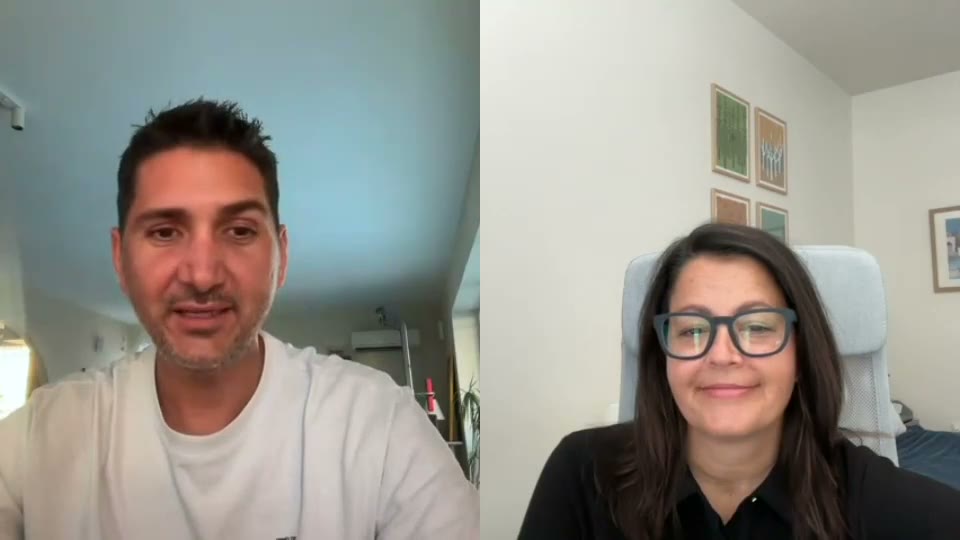
Live, one on one
30 min
Get the tactics from someone who's done it. Live, one on one.
After the call

Kevin Manley
Recording
You came in with
"Two dashboards, different numbers."
You left with
"The lower number's usually the honest one."
22:02 / 30:00
Jump to the moment
Keep the recording, summary, and takeaways. Yours to implement.
What this mentor does
A product analytics mentor has already untangled the tracking, the funnel, and the metrics you are staring at right now. You get a 1:1 call with someone who can read your numbers, tell you which one to trust, and point at the single thing to fix before you spend another dollar.
The work is diagnostic. Most calls do some version of these four things:
- Find the leak. "Nothing converts" becomes a named cause: a broken pixel, a leaky funnel step, the wrong objective. You leave knowing which one it is.
- Fix the broken signal. If the number you are reading is wrong, every decision built on it is wrong. A mentor finds where the tracking lies before you optimize anything.
- Pick the metric that matters. One conversion event worth optimizing toward beats a dashboard of forty you never act on. A mentor helps you choose it.
- Tell you what to ignore. Which metrics are vanity, which campaigns to stop, which part of the funnel to leave alone for now.
You also leave with a record. After each call, the takeaways are written down for you, ready to keep or skip:
 Konstantin ValiottiActivation funnel review
Name one activation event first, every number downstream is only as honest as that definition.
The leak was signup to activation, not the ad, 40 activated out of 900 signups told the whole story.
KeepSkipOne pixel was double-firing, it inflated reported conversions by a third before we caught it.
KeepSkipCut the vanity metrics before adding any tracking, most of that dashboard was never going to change a decision.
KeepSkipWhen tracking is broken
This is the most common thing people bring to a product analytics call. The plumbing exists or half-exists, and you cannot trust what it tells you. You are spending money you cannot account for, and the tracking is why you cannot tell what is working.
A mentor walks your setup with you and finds where it breaks, usually one of these:
- The pixel is not firing. your Meta or Google conversion tracking is misconfigured, so the events you care about never make it back to the platform.
- Attribution is a mess. you cannot tell which channel earned a conversion, so every budget decision is a guess across Google, Meta, and the rest.
- Two systems are fighting. Google Analytics and Google Ads disagree, and you trust whichever one looks better that day.
- There is no proper infrastructure. tracking was bolted on as you went, nothing is consistent, and the dashboard cannot be trusted at all.
- The data is present but misread. the numbers are there. The reading of them is not, so you are acting on a signal that means something different than you think.
Mentors start diagnosing before the call. A typical first exchange after you book:
 Richard Johnson
Traffic in, nothing converts
"We get traffic but nothing converts" is a frequent opener. The top of the funnel works. People show up. Then almost nobody signs up or buys, and you cannot see where they go.
The traffic is rarely the problem. A mentor walks the funnel with you and finds the bottleneck, usually one of these:
- The landing page. paid traffic lands on a generic page that does not match the one audience and action it was promised.
- The ads, not the page. or it is the reverse, and the real fix is the landing page rather than the campaign you keep tweaking.
- The activation step. people sign up and never reach the moment the product clicks, so they leave before you ever see value.
- The wrong objective. the campaign is optimizing toward a signal that does not lead to revenue, so it gets you the wrong users.
- The tracking. it might be converting fine, and your measurement is just hiding it from you.
Fixing the right one is worth more than optimizing all of them at once.
two moves, in order
Find the one leak
five suspects, optimized at once
the activation step, isolated
Fix that step first
a full-funnel teardown
the one screen people never get past
The signups you were already earning
The traffic never changed. The step swallowing it did, and conversion moved without a single new visitor.
Optimizing all five costs more than finding the one. The leak is a single step, cheaper to name than to rebuild around.
Which metric matters
Many people arrive unsure what they should even be measuring, let alone whether it is working. That uncertainty leads to either freezing or thrashing across a dashboard nobody acts on.
A mentor helps you separate the numbers that matter from the ones that just look good:
- Pick the conversion event to optimize toward. this is the single most asked question on these calls, and getting it wrong wastes every campaign downstream.
- Measure outcomes, not activity. signups, activation, and revenue tell you more than impressions, clicks, and raw traffic.
- Choose one number to move. a single focus metric for this quarter beats forty you never touch.
- Know which number was lying. the most useful outcome is often learning that the metric you trusted was the wrong one all along.
Setting up tracking right
If you are building or fixing the plumbing itself, a mentor who has done it can save you weeks of guesswork. This is the keyword surface of product analytics: pixels, tags, UTMs, and attribution that agrees with itself.
A good call covers the parts that usually go wrong:
- Conversion tracking. Get the pixel and the events firing correctly so the conversions you care about make it back to the platform.
- UTM and attribution. Set up consistent UTM tracking and a model that tells you which channel earned the result.
- Multi-touch across platforms. Reconcile Google, Meta, and TikTok so your numbers stop contradicting each other.
- Offline and CRM data. Feed real conversion and CRM data back into the ad platforms so they optimize toward revenue, not proxies.
You do not need perfect tracking. You need it good enough to know which channel deserves more, and consistent enough to trust on Monday.
Reading your funnel
Once traffic is arriving, the next question is where it falls out. Onboarding leaks, activation gaps, and free-to-paid drop-off are where a lot of these calls land, because the numbers rarely say why on their own.
A mentor helps you read the path from first visit to paying user:
- Find the drop-off step. see exactly where in the funnel users leave, then fix that one stage first instead of reworking the whole thing.
- Fix activation before acquisition. if users never reach the moment the product proves its worth, more traffic just leaks faster.
- Diagnose free-to-paid. trial users not converting is almost always an activation problem mistaken for a pricing one.
- Tighten onboarding. the most common silent killer is people dropping off before they ever see what the product does.
a funnel readout, x-rayed
12,000 visits land this month1, 900 of them sign up2, 40 reach the activation moment3, and 8 become paying customers4.
The traffic
12,000 visits says the top of the funnel works. This is rarely where the problem is.
The signup step
900 out of 12,000 is the first filter, and a normal one. Not the leak here.
The activation cliff
900 down to 40 is the drop that matters. Most never reach the moment the product proves itself.
The paid trickle
8 paying sits downstream of the cliff. Fix activation and this number moves on its own.
Four stages, and only one is a cliff. The drop from 900 to 40 is where this funnel leaks.
Fixing retention and churn
If you are past launch with paying customers, the hard question moves from acquisition to whether they stay. Users arrive and then leave, and the data does not say why on its own.
A mentor who has run retention work can help you read the churn instead of guessing at it:
- Read why users leave. separate the churn that comes from the wrong fit from the churn you can fix with the product.
- Fix retention before scaling. pouring acquisition into a leaky bucket makes the numbers worse, not better.
- Watch the right cohort signal. early retention and activation tell you more about the future than a single month's revenue.
- Tie it back to unit economics. retention and LTV decide whether your acquisition math works at all, so fix them in that order.
Choosing your stack
"Which analytics tool should I use" comes up a lot, and it is rarely the real question. The bigger risk is over-instrumenting: tracking everything, drowning in events, and trusting none of it.
A mentor helps you pick a stack that fits your stage and track only what you will act on:
- Product analytics tool. Pick the one that matches your stage and motion, not the one with the most features you will never use.
- CRM and marketing platform. Choose where your customer data lives so attribution and lifecycle work off one source of truth.
- The events that matter. Instrument the handful of events tied to activation and revenue, and skip the ones that just add noise.
- Reporting you will read. Build the report you check every week, not a dashboard of forty charts nobody opens.
The goal is a stack you trust and use, not the most complete one you can assemble.
The teams that trust their data track less of it. Instrument the events tied to activation and revenue, and delete the rest.
When to book a call
You do not need a giant question. Bring the one decision you are stuck on and the account to look at it in. The most useful moments to book:
- Before you scale ad spend. you are about to put real budget behind campaigns you cannot fully measure, and you want the tracking right first.
- Conversion dropped and you cannot tell why. the funnel slowed, and you cannot see whether it is the page, the traffic, or the tracking.
- The dashboard and the bank account disagree. your numbers say one thing, your revenue says another, and you do not know which to believe.
- Before a pricing or paywall change. you are about to move the paywall or the price and want to know how to read whether it worked.
- You have a hypothesis to pressure-test. you came with a doc and a theory, and you want a second set of eyes before you act on it.
A focused 30 minutes on your account beats weeks of reading the dashboard alone.
You can also run it in reverse: post what you are stuck on as a help request, and mentors raise their hands to take it.

%20square.jpg)
What people book product analytics calls about
Rarely what they end up solving. The ask on the booking form is usually a symptom, and a mentor who has read these numbers before recognizes the pattern underneath it. Three that come up again and again:
walked in as, walked out as
Walked in as
A tracking problem
The pixel is broken again.
Walked out as
A definition problem
No one agreed what converts.
Walked in as
A traffic problem
We need more people upstream.
Walked out as
An activation problem
They arrive and never reach value.
Walked in as
A dashboard problem
Forty charts, no clear answer.
Walked out as
A trust problem
Not one number can be trusted.
Three calls, one mechanic. The problem that leaves the room is never the one that walked in.
Why GrowthMentor
Every mentor on GrowthMentor is vetted before they are accepted. Fewer than 5% of applicants get in. They are operators and advisors who do this work daily, not influencers selling a course.
Most people who book a product analytics call are not buying a pure dashboard technician. They are buying a growth or conversion diagnosis that happens to require fixing the measurement first. The mentors here read the whole funnel, so the fix does not stop at the tracking setup.
Calls this month
Book the fourth call, or the fortieth. Nothing on this receipt changes.
People who were exactly where you are.
GrowthMentor enables us to swiftly get a world-class expert to give us guidance on any marketing issue or question in a matter of days.

Hamel Shah · Co-Founder
Read Hamel's storyKnowing I can always book a call to help me clarify what I'm doing is the best feeling in the world.

Lena Sesardic · Product Manager
Read Lena's storyI like to set my own strategies and then get help from experts to improve on them and check if I'm on the right track.

Minh · Solo Founder
Read Minh's storyIt gave me fast access to expert-level insights that I couldn't get from academic research or user surveys alone.

Nicola Rubino · Growth Marketing Consultant
Read Nicola's storySometimes I'm stuck at one step and all I need is someone who can share experiences of what they did when they were in my situation.

Annie Chen · Head of Marketing
Read Annie's storyI enjoy having pretty much instant access to a pool of worldwide, expert mentors who are keen to share their expertise and help others.

Carlos Terol · Co-Founder
Read Carlos's storyAsk ChatGPT
Don’t take our word for it.
Ask ChatGPT what it really knows about product analytics mentors and GrowthMentor, then decide for yourself.
Before you join
What people ask before their first call.
Yes, this is the single most common reason people book a product analytics call. A mentor can walk through your pixel, tag, and attribution setup with you, find where it breaks, and tell you which number to trust again. Most setups already half-exist, so the work is usually correction rather than starting over.
Picking the right conversion event is the most asked question on these calls, and getting it wrong wastes every campaign built on top of it. A mentor helps you choose one outcome metric tied to revenue, set it as your focus for the quarter, and tells you which numbers are vanity you can ignore.
The traffic is rarely the problem. It is usually the landing page, the activation step, the campaign objective, or the tracking hiding a conversion that is already happening. A mentor walks your funnel with you and finds the one bottleneck worth fixing first, instead of changing everything at once.
A mentor who has built this can cover the parts that usually go wrong: getting the pixel and events firing, setting up consistent UTM tracking, reconciling Google and Meta so they stop disagreeing, and feeding CRM or offline data back into the platforms. You do not need perfect tracking, just enough to trust which channel deserves more.
Start by checking whether you are even measuring the right thing, because broken tracking or the wrong conversion event makes good ads look bad and bad ads look fine. A mentor helps you separate the campaign that earns revenue from the one that just earns clicks, and tells you when to stop trusting the platform's own numbers.
Free-to-paid conversion is usually an activation problem, not a pricing one. If users never reach the moment your product proves its worth, the paywall will not work no matter where you set it. A mentor who has run trials and freemium can read your funnel and tell you whether to fix onboarding, the trial structure, or the offer.
Churn rarely explains itself in a single chart. A mentor helps you separate the churn that comes from the wrong fit from the churn you can fix, read the cohort and activation signals that predict it, and decide whether to fix retention before you spend more on acquisition.
The tool matters less than what you track with it. The bigger risk is over-instrumenting and drowning in events you never act on. A mentor helps you pick a tool that fits your stage, instrument the handful of events tied to activation and revenue, and build the one report you will read each week.
No. Many people on this page are data and analytics professionals who are strong in their lane and surprised by what is one lane over. The call is a second set of eyes on the part you cannot see, not a remedial tutorial. Bring your hypothesis and the account, and a mentor will pressure-test it with you.
An analyst or agency runs the work for you over weeks. A mentor gives you a practitioner's straight opinion on your specific situation in real time, with no upsell, so you know what to fix before you hire anyone. It is the fastest way to get unstuck on one decision.
Bring the account, the dashboard, and the specific question. The people who get the most from these calls show up with a hypothesis and the numbers in front of them, not just an intention. The more concrete the question, the more useful the 30 minutes, and you do not need a polished brief.
GrowthMentor is a membership. Once you are a member, calls are included and most mentors offer their time for free. Pick a mentor whose background fits the number you are stuck on and book a 30-minute video call directly on their calendar.
Still have questions? See all FAQs →
Related blog posts
Marketing
Why Your Ads Get Clicks but No Conversions
A click means the ad worked. The missing sales mean the wrong people clicked. How to rule out tracking and bots, excavate your real ICP, and rewrite one ad for one segment.
Read the postGrowth Strategy
How to turn qualitative data into quantitative data. The spreadsheet method, step by step.
The exact spreadsheet method to turn qualitative data into quantitative data, then turn the insights into experiments. A step-by-step coding process from a CRO researcher.
Read the postPaid Ads
How to Audit Your Own Ad Account Before You Pay Anyone To
About to hand an agency your ad account login? Run the buyer's-side inspection first, the 10-minute teardown that shows whether your budget is leaking, in what, and if you even need to hire.
Read the postYou could keep guessing. Or ask someone who's done it.
Every face here has already solved what you're working on in product analytics. You're one call away.