There are more places to find a mentor online than there have ever been, and most of the lists ranking them are written by the platforms themselves. So let me be straight about where I sit. I run GrowthMentor, one of the platforms below. I have also spent years watching founders pick the wrong kind of platform for the problem in front of them, which is the real reason this list exists.
A mentoring platform is any service that connects you with someone more experienced for one-to-one guidance. That sounds like one category. It is four. A marketplace where you book a stranger by the call is a completely different thing from software a company buys to run an internal program, and signing up for the wrong one is the most common mistake I see.
Below are 25 platforms worth knowing in 2026, grouped by what each one is for, with the free-or-paid call made for you. I have cut the ones that shut down or drifted off-topic since the first version of this post, added the ones that matter now, and stayed honest about where each one runs out of road, including mine.
TL;DR
- Pick by category, not by ranking. A 1:1 marketplace, a free community, internal program software, and a career bootcamp solve different problems.
- If you want to book a vetted expert for a specific question, you want a marketplace (GrowthMentor, MentorCruise, Topmate, Clarity, Codementor).
- If you are running mentoring inside a company, you want program software (Together, MentorcliQ, Chronus), not a marketplace.
- Free is real here. ADPList, MicroMentor, SCORE, and UStrive give away genuine 1:1 mentorship.
- The thing none of the rankings tell you: the platform matters far less than whether you can talk to enough mentors to find the right one.
How to pick the right kind of platform
Start with what you are trying to do, not with whichever site ranks first. Most of the regret I hear comes from someone buying the wrong category. A founder signs up for enterprise program software when they wanted a single call. An HR lead tries to run a 200-person program on a marketplace built for one-off bookings. The tool was fine. It was the wrong tool for the job.
The second question is free versus paid. Free platforms (ADPList, MicroMentor, SCORE) are genuinely good and run on volunteers, so availability and depth vary. Paid marketplaces cost money precisely because the mentors are vetted and on the hook to show up prepared. For a quick gut check, free is plenty. For a decision that keeps you up at night, paid usually earns its price in one call.
The 30-second sort: Do you want to talk to a specific person about your specific problem? You want a marketplace. Do you want to run a structured program for a group inside an organization? You want mentoring software. Almost every wrong choice is someone reaching across those two.
Part 1
1:1 mentor marketplaces
GrowthMentor
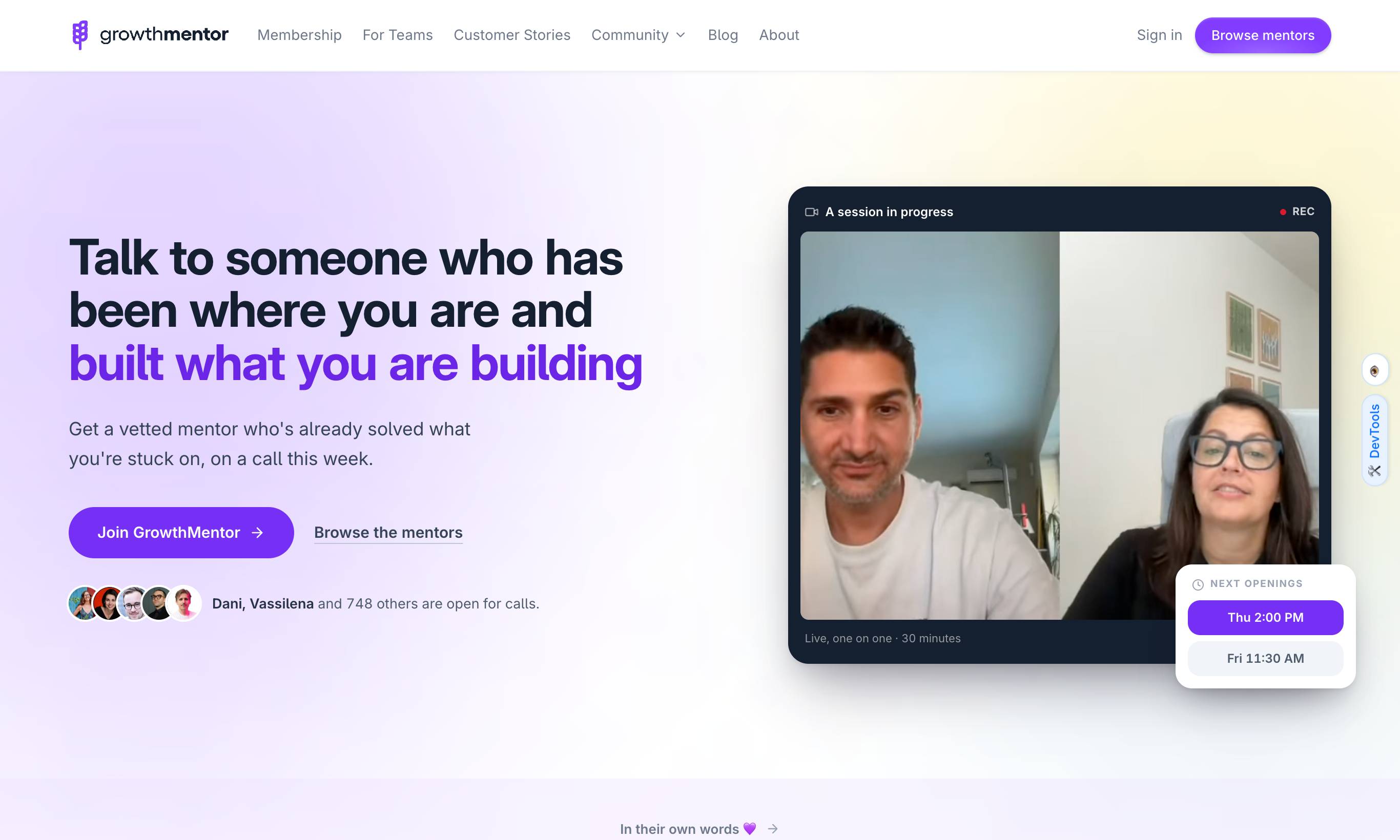
GrowthMentor is the platform I started in 2018, after a stretch as head of growth at a hosting company in Athens where I was professionally alone and hiring freelancers off Upwork just to have someone to think a decision through with. It is a membership: you browse 750+ vetted founders and operators, filter by your goal, and book unlimited 1:1 calls with whoever has already solved the thing in front of you. The bar to get in as a mentor is under 5% of applicants, and I read every application, which is why a stranger's read here carries weight.
- Best for
- Founders and marketers who want unlimited 1:1 access, not one assigned match
- Pricing
- Membership, every mentor included
- Type
- 1:1 marketplace, membership model
Here is the product itself, screen by screen, starting with the part that matters most in any marketplace, how fast you get from a problem to a booked call.
From a problem in your head to a booked call in three screens
The thing that makes or breaks a 1:1 marketplace is how fast you get from a problem to a person on your calendar. On GrowthMentor you search by the problem, not the job title. Type “paid acquisition” and the results are people who have run paid acquisition, each card carrying the numbers I would want to see before trusting a stranger, sessions given, reviews, response time. Pick someone, write a few honest lines about where you are stuck, choose a slot. Notice what is missing at the end, a payment step. Under our Give First model most mentors take calls at no extra charge, so the total bill on a session request genuinely reads Free.

That is the whole transaction. The mentor walks in already knowing what you want to work on, because the request you wrote is the brief.
Unlimited calls change how you use mentors
Most marketplaces charge by the call, and the meter changes your behavior. At $200 a session you save the mentor for emergencies, you cram three problems into one hour, you skip the follow-up call you know you need. Membership removes the meter. One call this week or three, the price is identical, so the natural pattern becomes one problem per call, and a second opinion whenever the decision is heavy enough to deserve one. Here is what a normal week looks like, three calls with three different operators, and the empty slot on the dashboard nudging you toward a fourth.



Every call is recorded and turned into next steps
Calls run on Zoom, Google Meet, or in the product itself, and the in-app room records. I used to finish mentor calls with four pages of notes I never opened again. Now the transcript does that work instead.

After the call, the session page comes back with takeaways pulled from the transcript, one line each, and you keep or skip them. The ones you keep build into a searchable library, so the advice from March is still findable when the same problem returns in September.
Daniel JohnsonPPC budget sanity checkHold paid spend flat until CAC payback is under six months, then scale in 20 percent steps.
Track paid CAC per channel, blended CAC was hiding that Meta pays back twice as fast as Google.
KeepSkipKill broad match keywords before adding budget, they took most of last quarter’s spend without converting.
KeepSkipA workable CAC ceiling is a third of first-year revenue per customer, revisit it every quarter.
KeepSkipThree ways to find the right person
The obvious way is the roster. 750+ mentors, sub-5% of applicants get in, and I still read every application personally. Filters for skill, software, industry and price sit in the open, and every card shows the session count, which is the closest thing this industry has to an honest review.
The full roster
If browsing 750 profiles is not how you want to spend an afternoon, describe the problem in your own words and let the matching read the roster for you. You get three picks with the reasoning written out for each, so you can disagree with it.
John runs paid acquisition for e-commerce and SaaS brands on Google and Meta ads, and scaling spend without letting CAC run away is the exact problem he takes calls on.
Daniel is a GTM and growth operator for AI and B2B SaaS companies. PPC strategy is one of his core specialties, and he has pressure-tested growth plans across 395 sessions.
The third way inverts the flow entirely. Post the problem as a Help Request and mentors apply to help you, each application saying specifically why they fit. Instead of you finding the mentor, you pick from the people who already raised a hand.

Nobody executes for you, and with a roster this size you do some of the picking. If you want one committed mentor for a year, MentorCruise below is built for that, and if you are running a program inside a company, skip to the software section. GrowthMentor is for the operator with a different problem every week and nobody across the desk to talk it through with.
Explore GrowthMentorMentorCruise
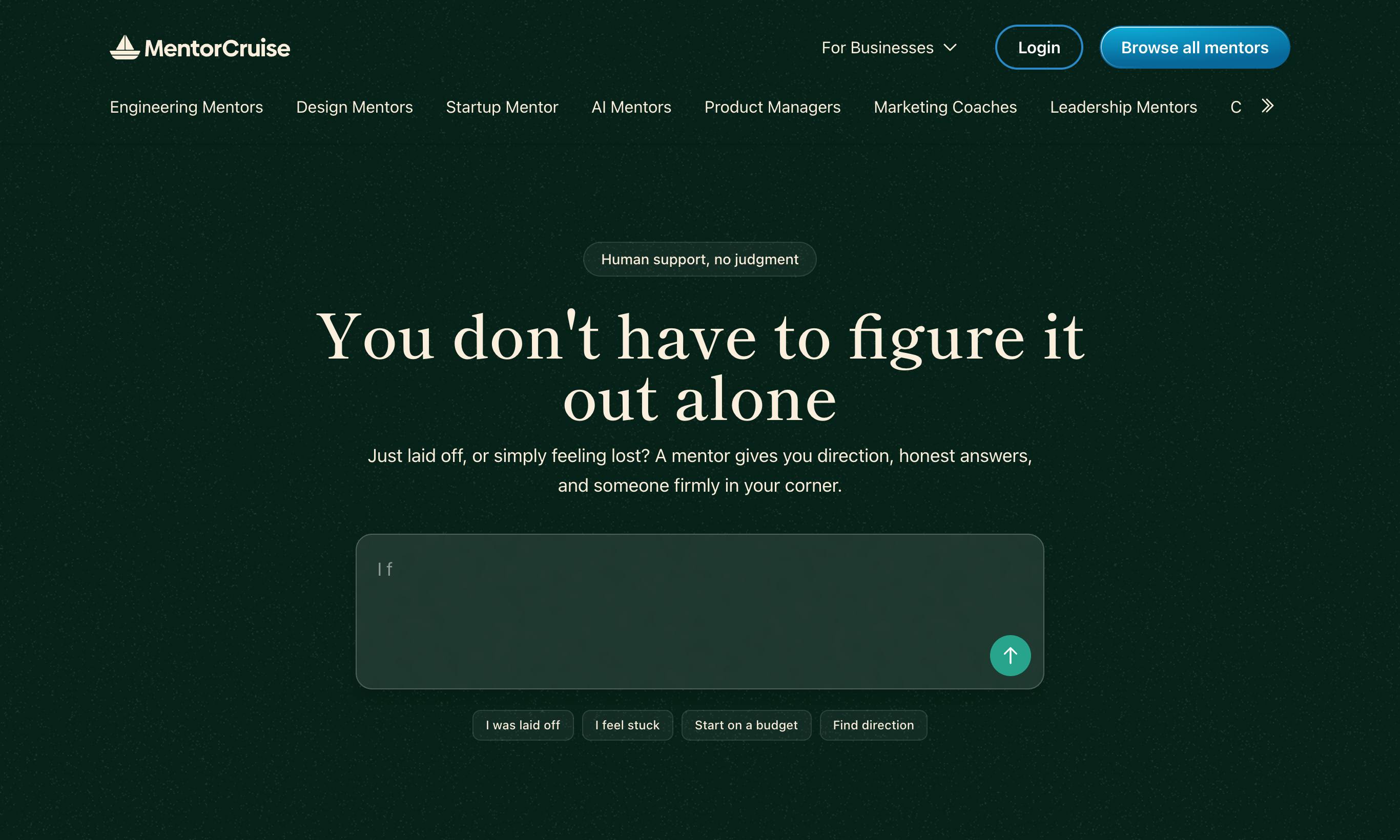
MentorCruise is the other serious individual marketplace, built around long-term relationships rather than one-off calls. You pick a mentor from tech, product, design, or career, and pay them a monthly fee for ongoing access plus calls. It fits when you want one consistent person in your corner for months, and works less well when you want to talk to several people before you commit.
- Best for
- A long-term mentor relationship in tech or career
- Pricing
- Monthly per mentor, often from around $60
- Type
- 1:1 marketplace, subscription per mentor
Topmate
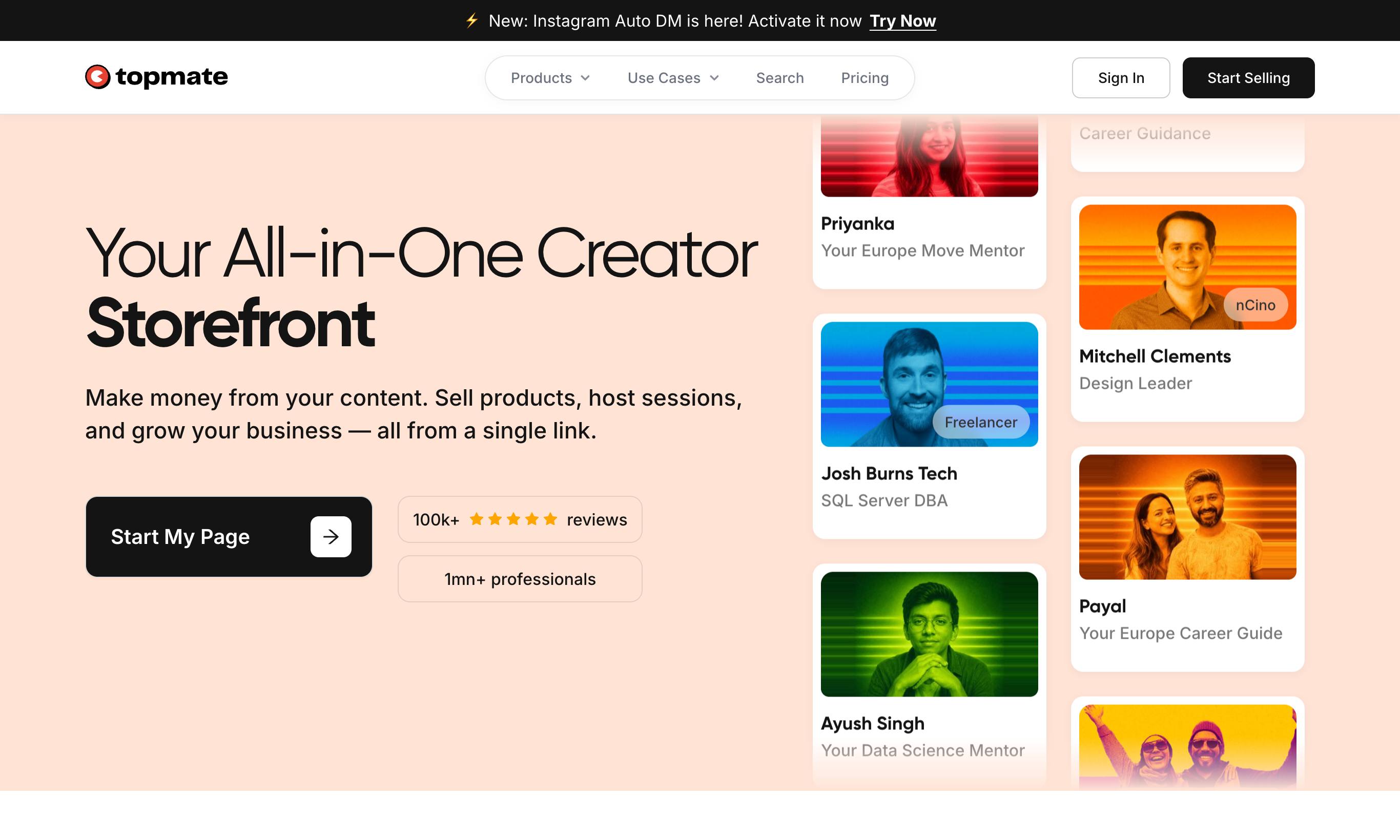
Topmate came out of the creator economy and is now where a lot of operators, creators, and niche experts sell their time directly. You find a specific person, see exactly what they offer (a call, a review, a priority DM), and pay for that one thing. It is excellent when you already know whose brain you want to rent for half an hour. It does less for you when you do not yet know who that person should be.
- Best for
- Booking a specific creator or expert you already follow
- Pricing
- Free to join, each expert sets their own price
- Type
- 1:1 marketplace, pay per booking
Intro
Intro is the premium end of the marketplace: paid 1:1 video calls with brand-name founders, investors, and operators you would not otherwise get a meeting with. Backed by a16z, it leans on recognizable names, and the prices match. It is worth it when access to one specific person is the whole point, and overkill when a vetted-but-not-famous operator would tell you the same thing for a fraction of the price.
- Best for
- A call with a specific high-profile founder or investor
- Pricing
- Pay per call, set by each expert (premium)
- Type
- 1:1 marketplace, expert calls
Clarity.fm
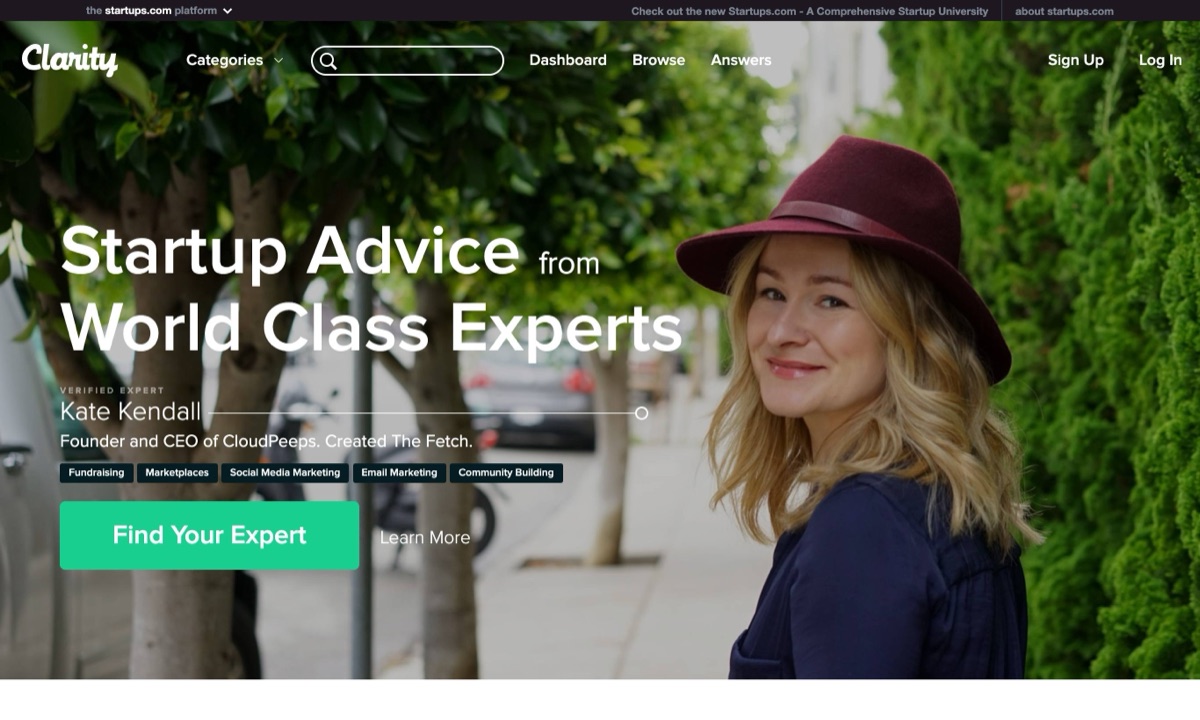
Clarity.fm is the old guard of paid advice, built by Dan Martell back in 2012 and still running on the same idea: find an expert, get on the phone, pay by the minute. The pay-per-minute model keeps calls short and focused, which is the point. It is a good fit for one sharp question you need answered by someone who has clearly done it, and a poor fit for anything that needs a second or third conversation.
- Best for
- A fast, paid answer to one specific question
- Pricing
- Pay per minute, set by each expert
- Type
- 1:1 marketplace, on-demand calls
Mentorpass
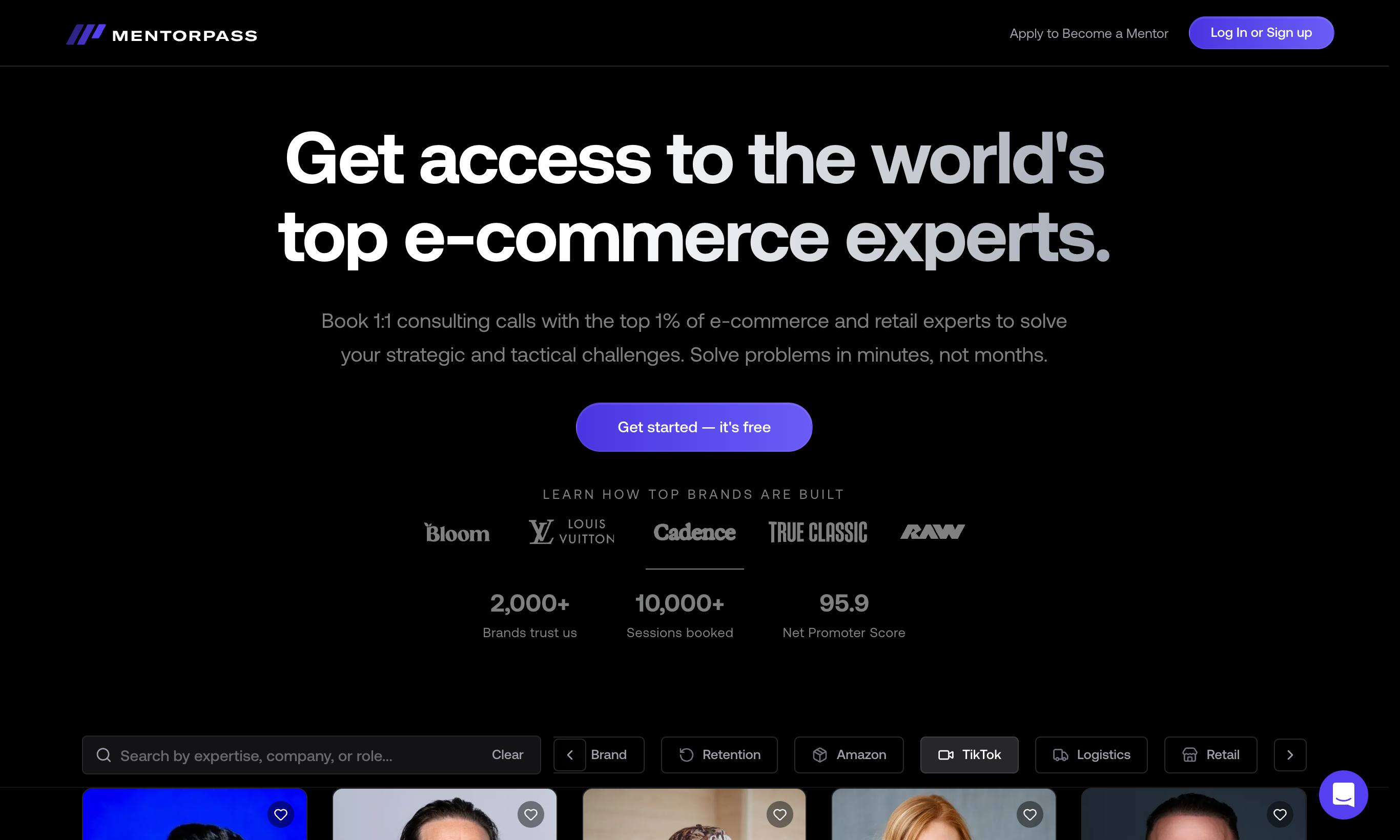
Mentorpass curates its roster by invitation, leaning into direct-to-consumer and startup operators rather than career coaches. You buy credits and spend them on calls with vetted founders and growth people. The vetting is real and the bench is strong, and the credit pricing means it makes most sense once you have a budget and a steady stream of operating questions, not a single one.
- Best for
- Ongoing access to vetted D2C and startup operators
- Pricing
- Credit packs, typically from $300/month
- Type
- 1:1 marketplace, credit model
Codementor
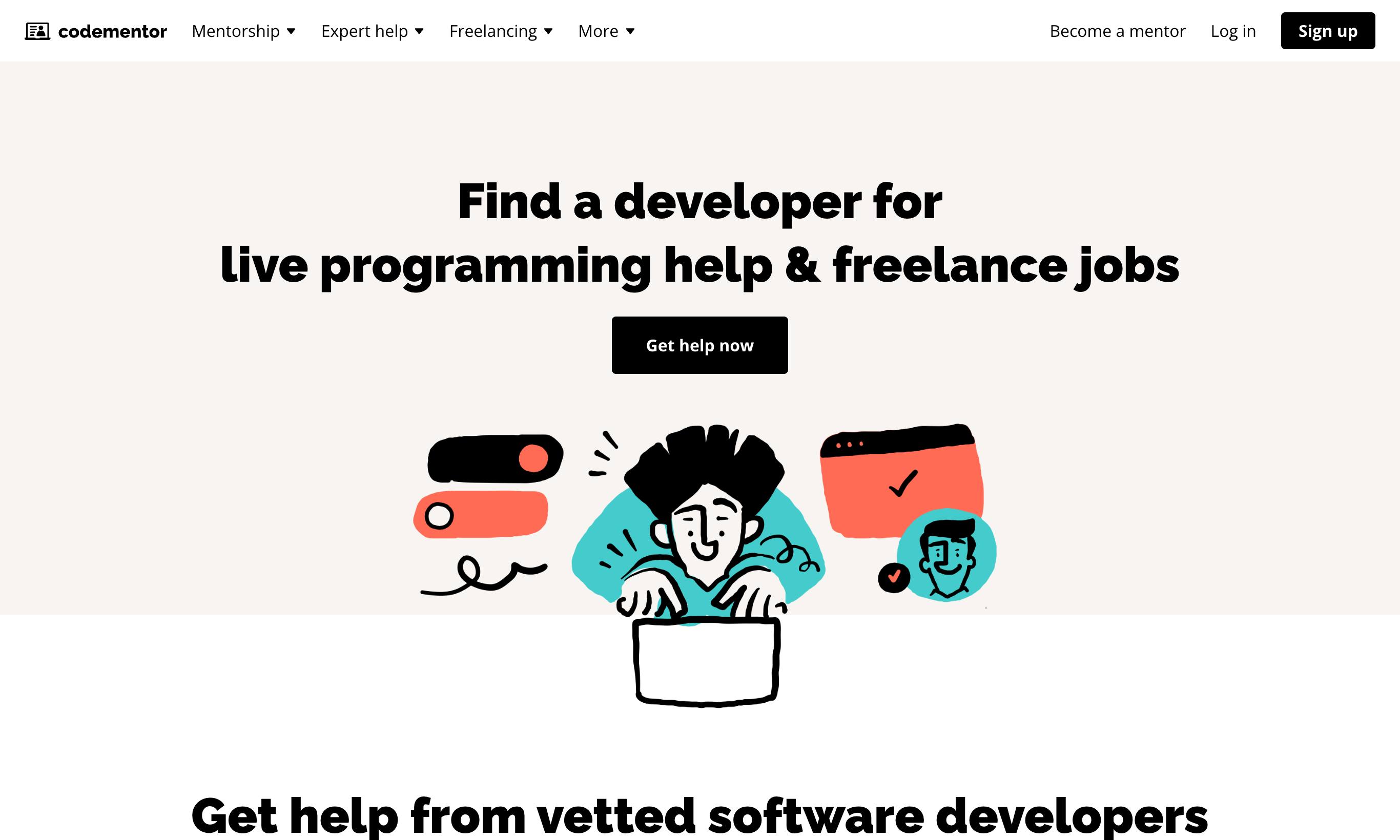
Codementor is the marketplace for getting unstuck in code, in real time. You post what you are wrestling with, get matched to an expert developer, and they pair with you live to debug, review, or build. Developers set their own rates per session, so it can get expensive for long work, but for being genuinely blocked at 11pm it is hard to beat the speed.
- Best for
- Live, on-demand help with a real coding problem
- Pricing
- Developers set rates, often from ~$15 per 15 minutes
- Type
- 1:1 marketplace, on-demand sessions





Talk to a mentor who's already done it
Book a 1:1 call with a vetted founder or operator on GrowthMentor. One membership, unlimited calls, every mentor included.
Part 2
Free and community-driven mentoring
ADPList
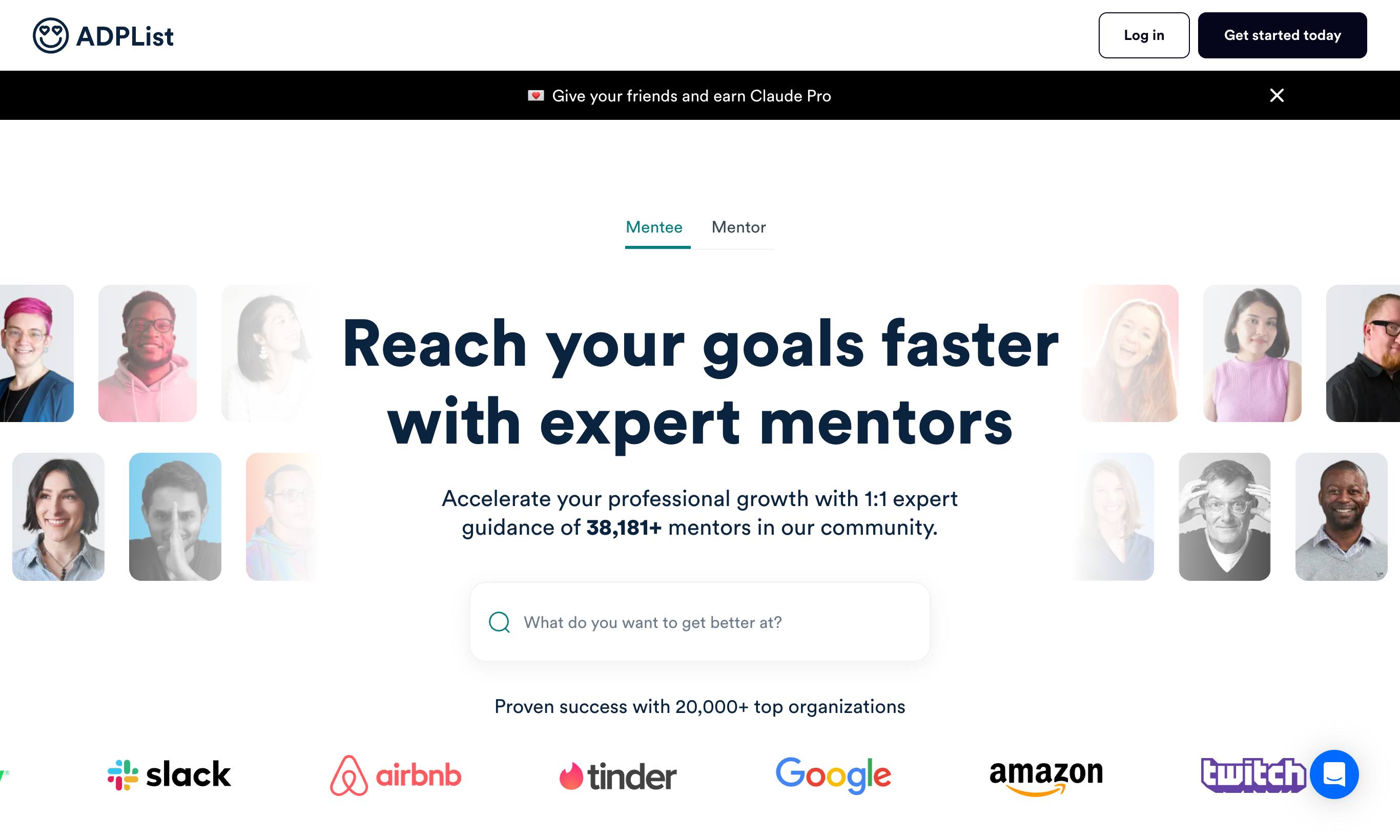
ADPList is the largest free mentoring community for designers and, increasingly, product and engineering people. Thousands of mentors from companies like Microsoft and Netflix give away 1:1 sessions, and you book straight into open calendar slots. The catch is the catch of anything free and popular: the best mentors fill up fast, and depth depends on who you draw. For getting started in design or product, nothing else this good is free.
- Best for
- Free design and product mentorship to get started
- Pricing
- Free
- Type
- Free community, volunteer mentors
MicroMentor
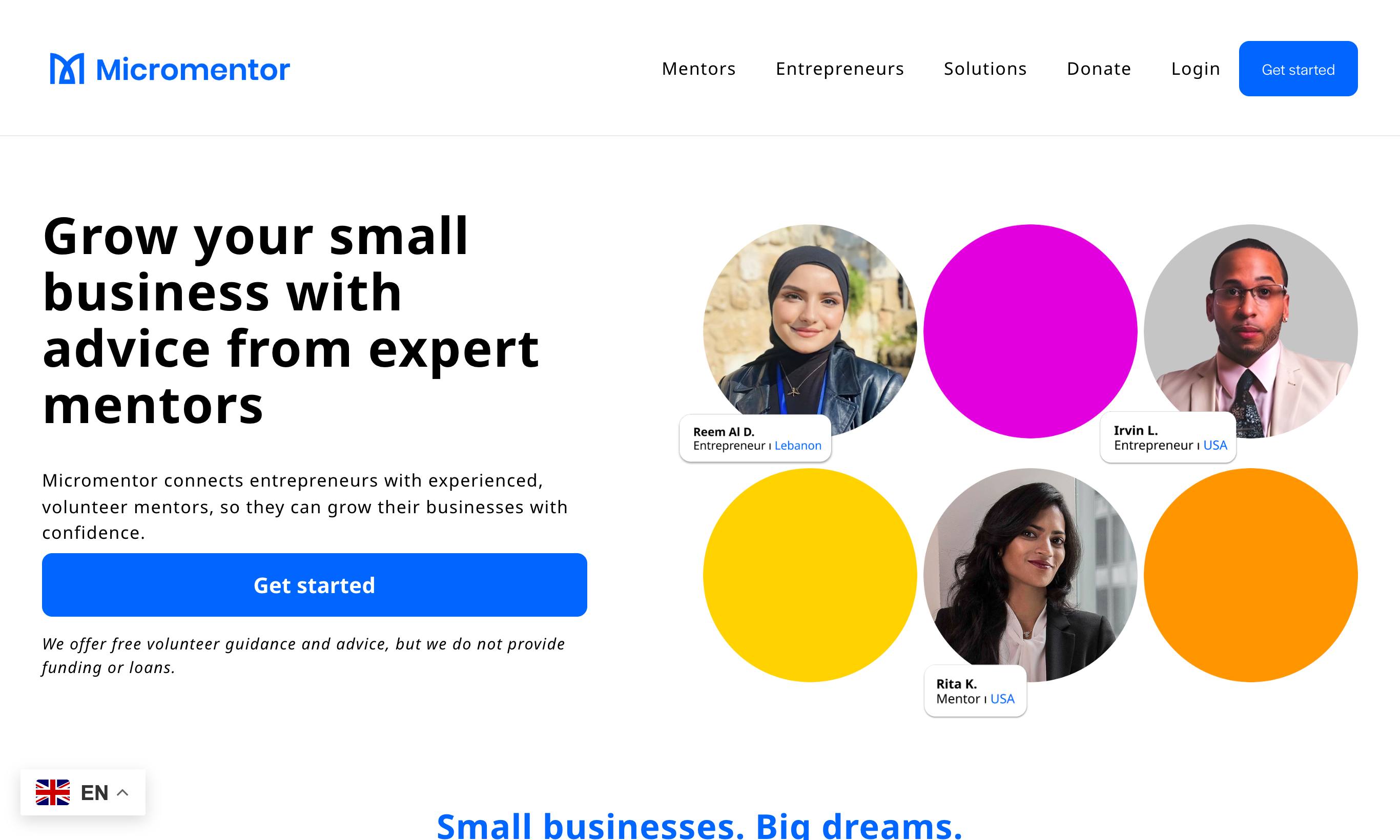
MicroMentor is a nonprofit that connects entrepreneurs, especially small-business owners, with volunteer business mentors worldwide, at no cost. It has been doing this since 2001, long before mentorship was a category, and the mission focus shows in who shows up. For a small-business owner who cannot justify paid coaching, it is a genuinely useful, well-run option.
- Best for
- Small-business owners who want free, ongoing guidance
- Pricing
- Free
- Type
- Free nonprofit, volunteer mentors
SCORE
SCORE is the largest network of volunteer business mentors in the United States, a nonprofit partner of the Small Business Administration that has been around since 1964. Mentoring is free to any US entrepreneur, and the volunteers are often retired executives with decades behind them. It is local, practical, and unglamorous, which is exactly why it works for early small-business questions.
- Best for
- US small-business owners wanting seasoned, free mentoring
- Pricing
- Free
- Type
- Free nonprofit, US-focused
UStrive
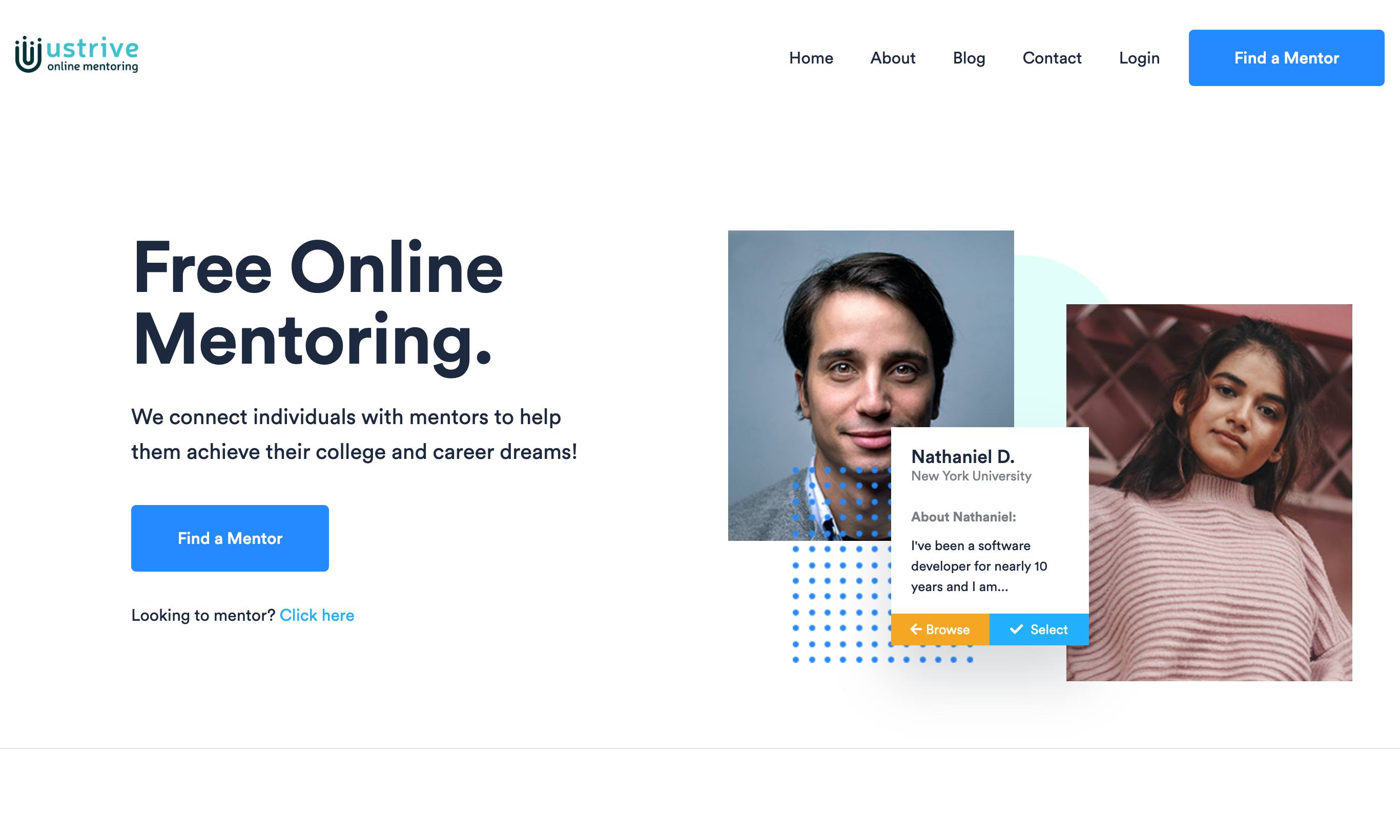
UStrive (formerly Strive) matches high school and college students, especially first-generation and lower-income students, with volunteer mentors from leading companies. The mentoring is free and aimed squarely at navigating college, financial aid, and the start of a career. If you are a student or mentoring one, this is the platform built for that exact moment.
- Best for
- Students and first-generation mentees navigating college and early career
- Pricing
- Free
- Type
- Free nonprofit, student-focused
Part 3
Internal mentoring program software
Together
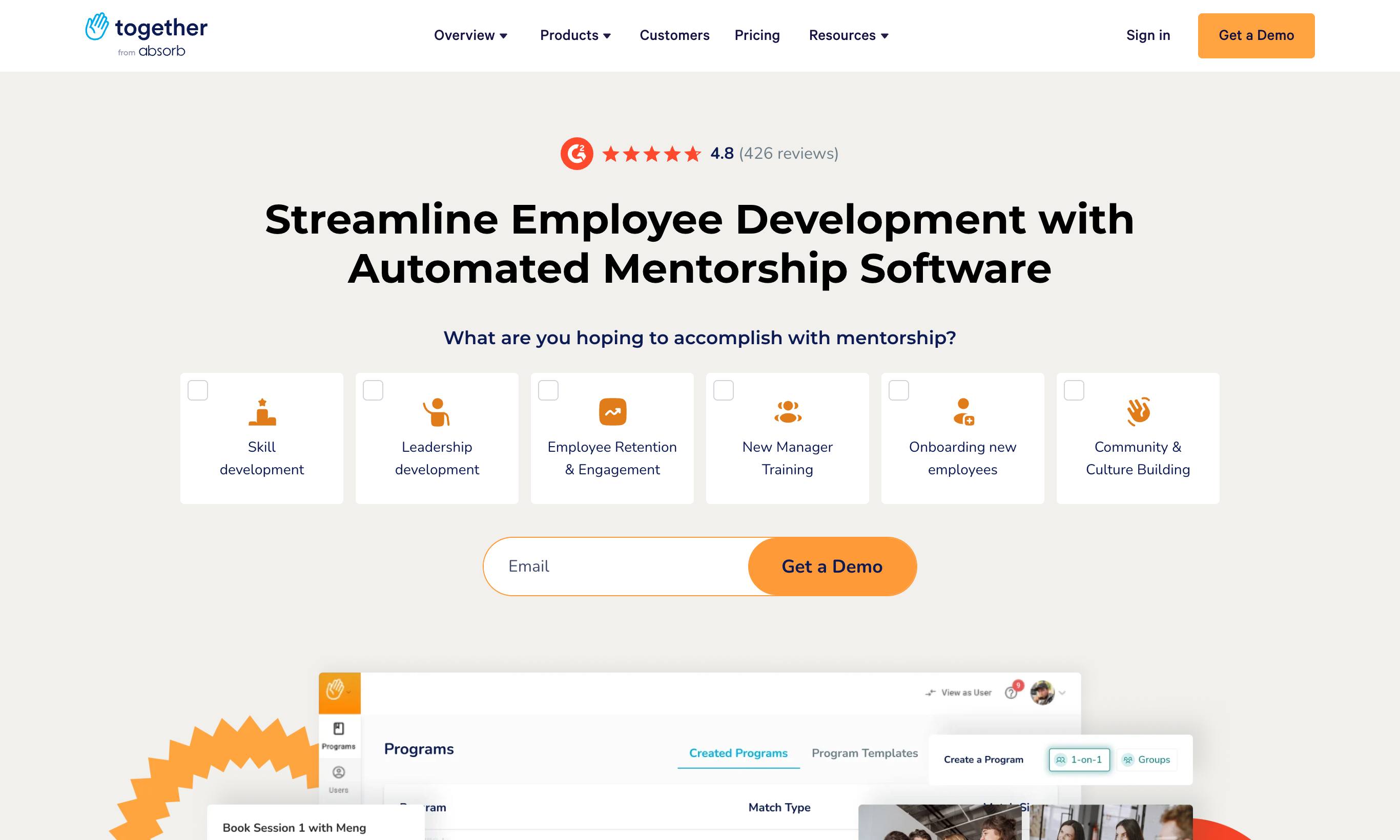
Together is one of the better-known platforms for running a structured mentoring program inside a company. It handles the unglamorous parts: matching employees by skills and goals, scheduling, nudges, and reporting for the program owner. If your job is to launch and prove a mentoring program to leadership, this is built for you. If you are an individual looking for a mentor, this is not your tool.
- Best for
- L&D and people teams running an internal program
- Pricing
- Custom, by organization size
- Type
- Program software, enterprise
MentorcliQ
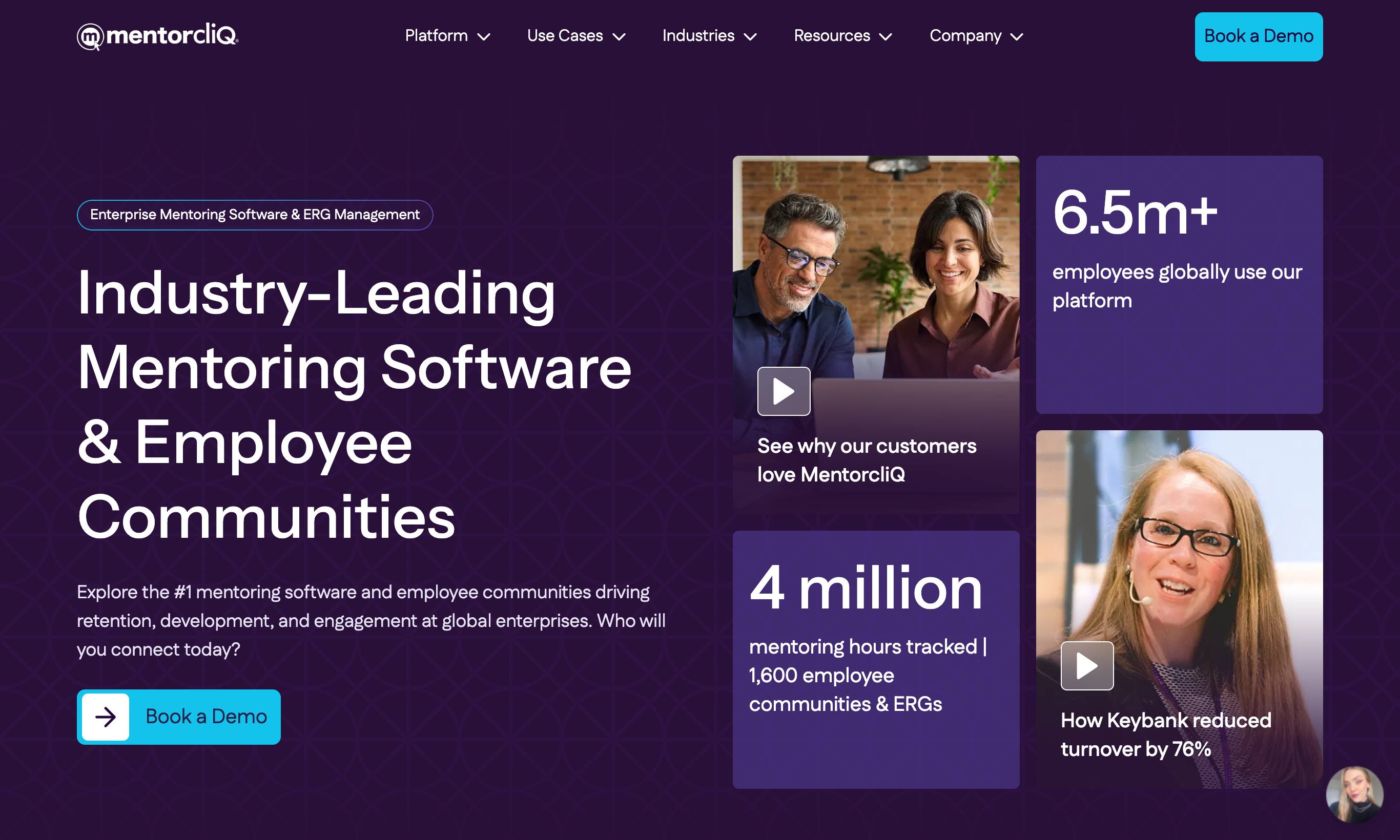
MentorcliQ is enterprise mentoring software with a long track record and a client list that runs to large, regulated companies. It automates matching, scheduling, and progress tracking, and leans hard on measurement, because its buyers need to report engagement and retention numbers upward. It is heavier than a startup needs and exactly right for a big organization that has to prove impact.
- Best for
- Large enterprises that need to measure program impact
- Pricing
- Custom
- Type
- Program software, enterprise
Chronus
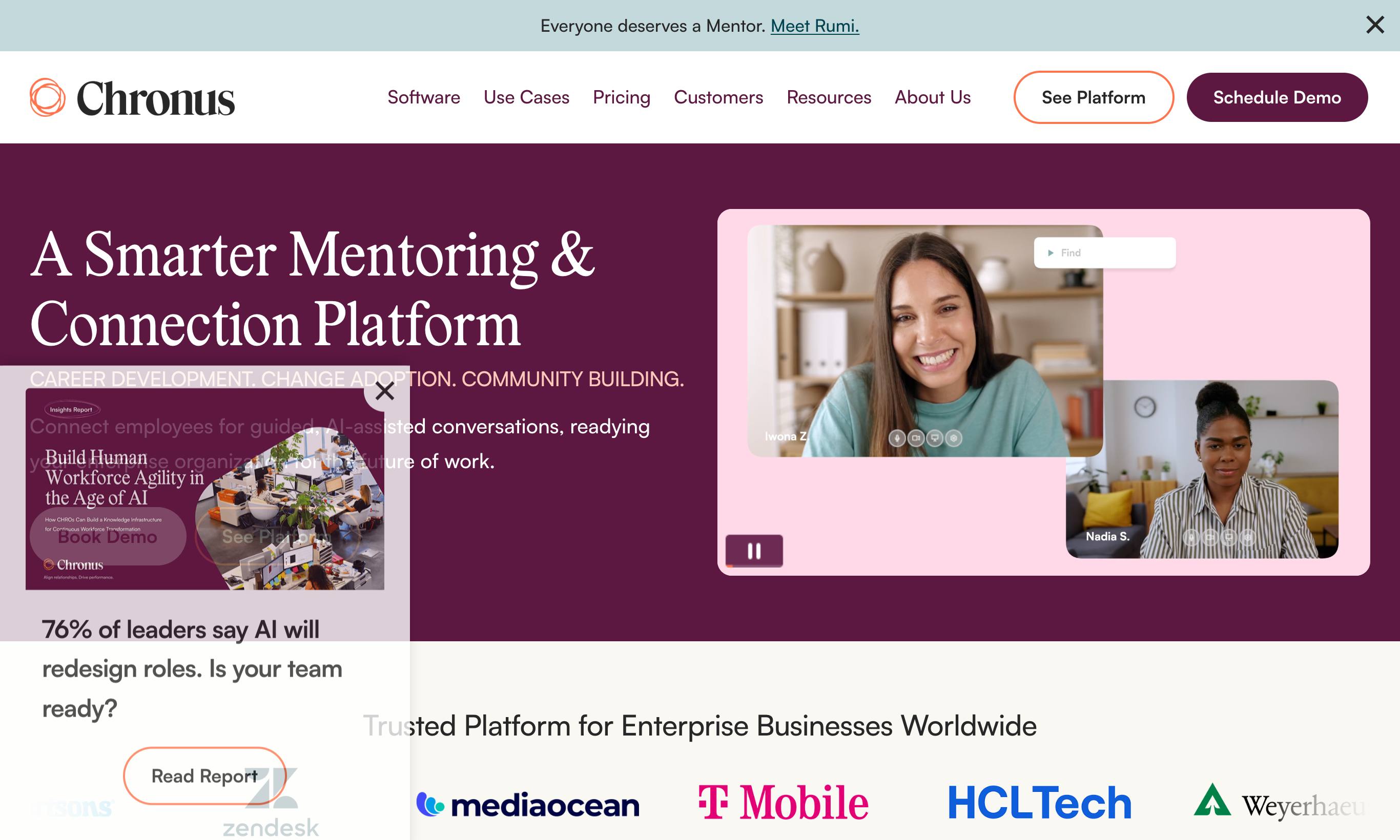
Chronus is the other heavyweight in enterprise mentoring software, often shortlisted alongside MentorcliQ and Together. Its pitch in 2026 is AI across the whole program: matching, conversation prompts, engagement alerts, and analytics. For a big company designing a serious, measurable program (mentoring, DEI, onboarding), it belongs on the shortlist. For anything smaller it is overkill.
- Best for
- Large organizations wanting AI-assisted, measurable programs
- Pricing
- Custom
- Type
- Program software, enterprise
Qooper
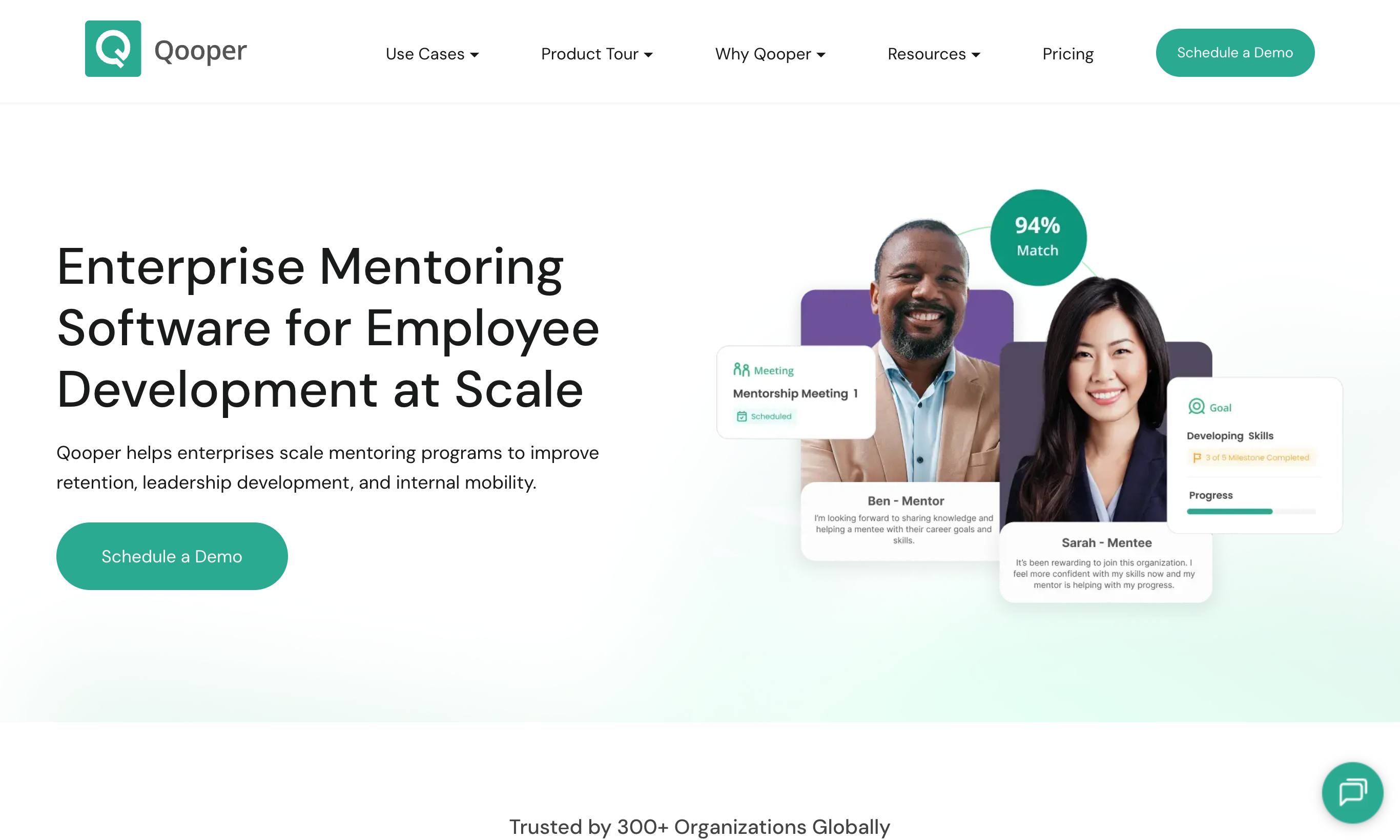
Qooper shows up at the top of almost every 2026 enterprise-mentoring roundup, and the reason is range: it handles matching, scheduling, goals, and reporting, and it plugs into the HR systems a company already runs. It scales from a small pilot to a company-wide program without changing tools. If you are standing up a structured program and want one platform for the whole lifecycle, it belongs on the shortlist next to Together and MentorcliQ.
- Best for
- A full-lifecycle program with HR-system integrations
- Pricing
- Custom
- Type
- Program software, enterprise
Mentorloop
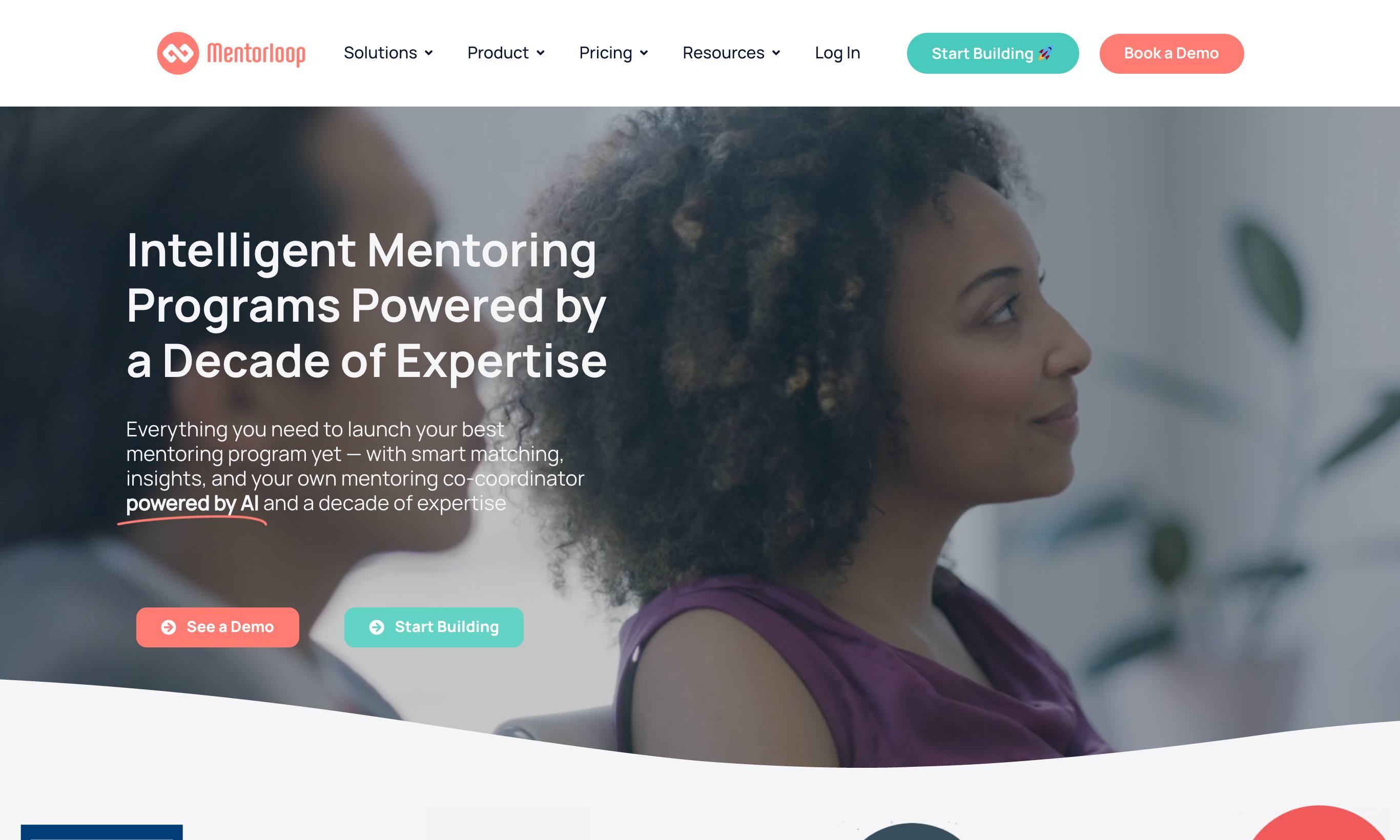
Mentorloop is the well-known mid-market option, built in Melbourne and used by everything from professional associations to large employers. It focuses on matching people and keeping the relationship alive with reminders and light-touch nudges, without the heaviest enterprise overhead. A sensible pick when you want a real program but are not a Fortune 500 buying the most expensive thing on the market.
- Best for
- Mid-sized orgs running a program without enterprise overhead
- Pricing
- Subscription or custom
- Type
- Program software
Ten Thousand Coffees
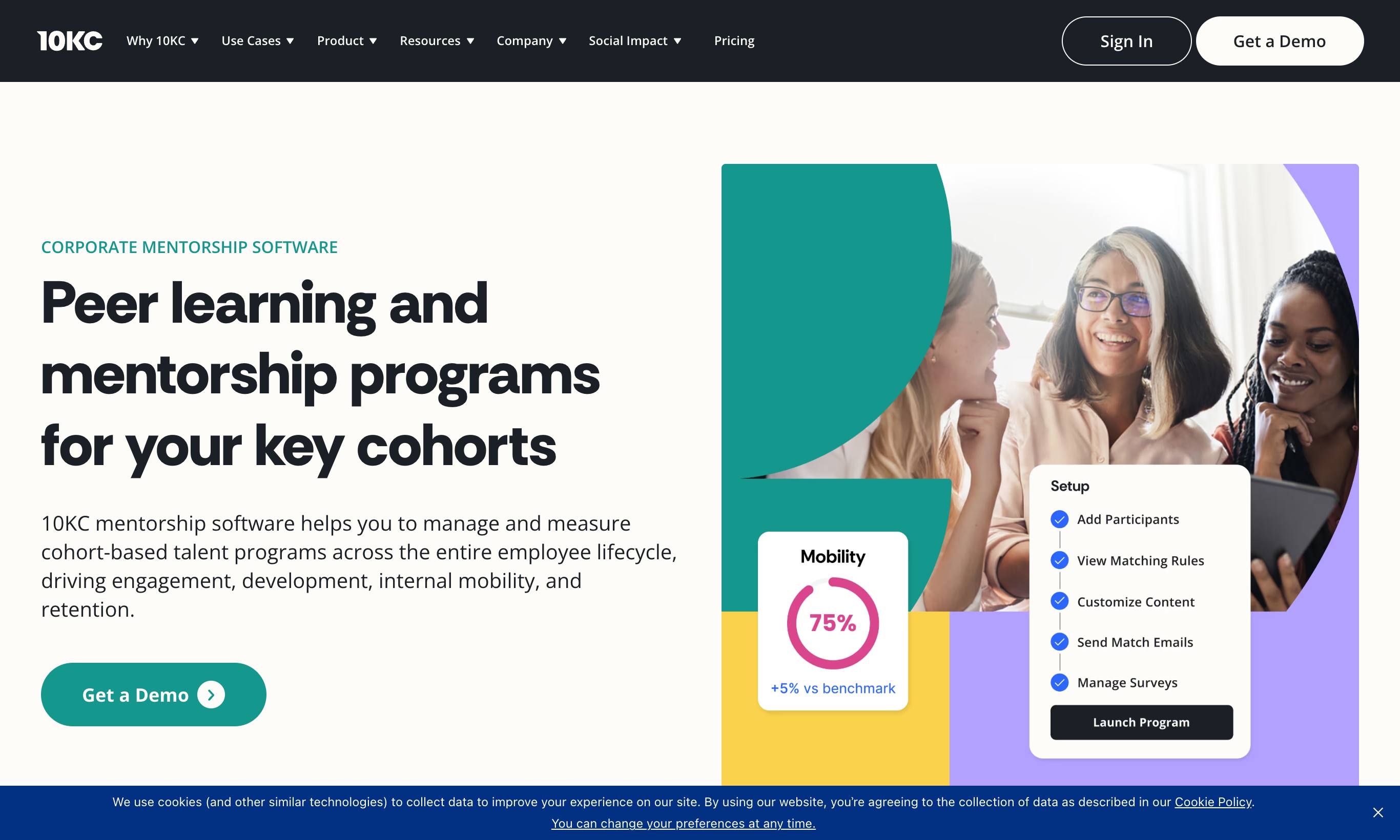
Ten Thousand Coffees (10KC) blends mentoring with broader employee connection: it nudges people across an organization to meet, learn, and build relationships rather than sit in one formal pairing. Companies lean on it for inclusion and early-career programs. It is the right tool when the goal is connection and belonging at scale, and a looser fit if you want strictly structured one-to-one mentorship.
- Best for
- Connection, inclusion, and early-career programs at scale
- Pricing
- Custom
- Type
- Program software, enterprise
PUSHfar
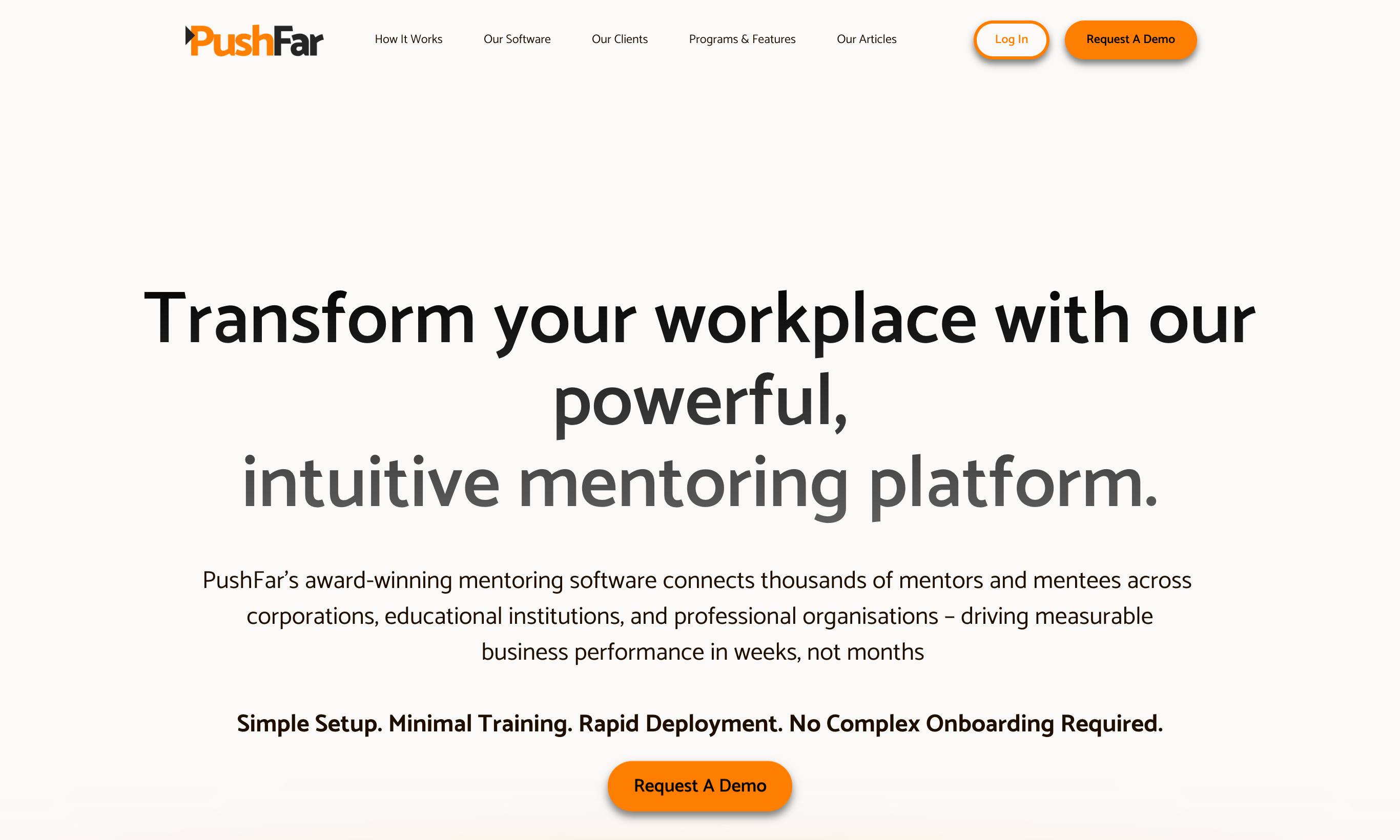
PUSHfar sits between the individual and the enterprise. It offers mentor matching, goal tracking, and scheduling, and is free for individuals while charging organizations for managed programs. That free individual tier makes it worth a look if you want program-style structure without an enterprise contract, though the network is broader than it is deep in any one niche.
- Best for
- Individuals and orgs wanting structured mentoring tools
- Pricing
- Free for individuals, paid for organizations
- Type
- Program software with a free tier
Mentessa
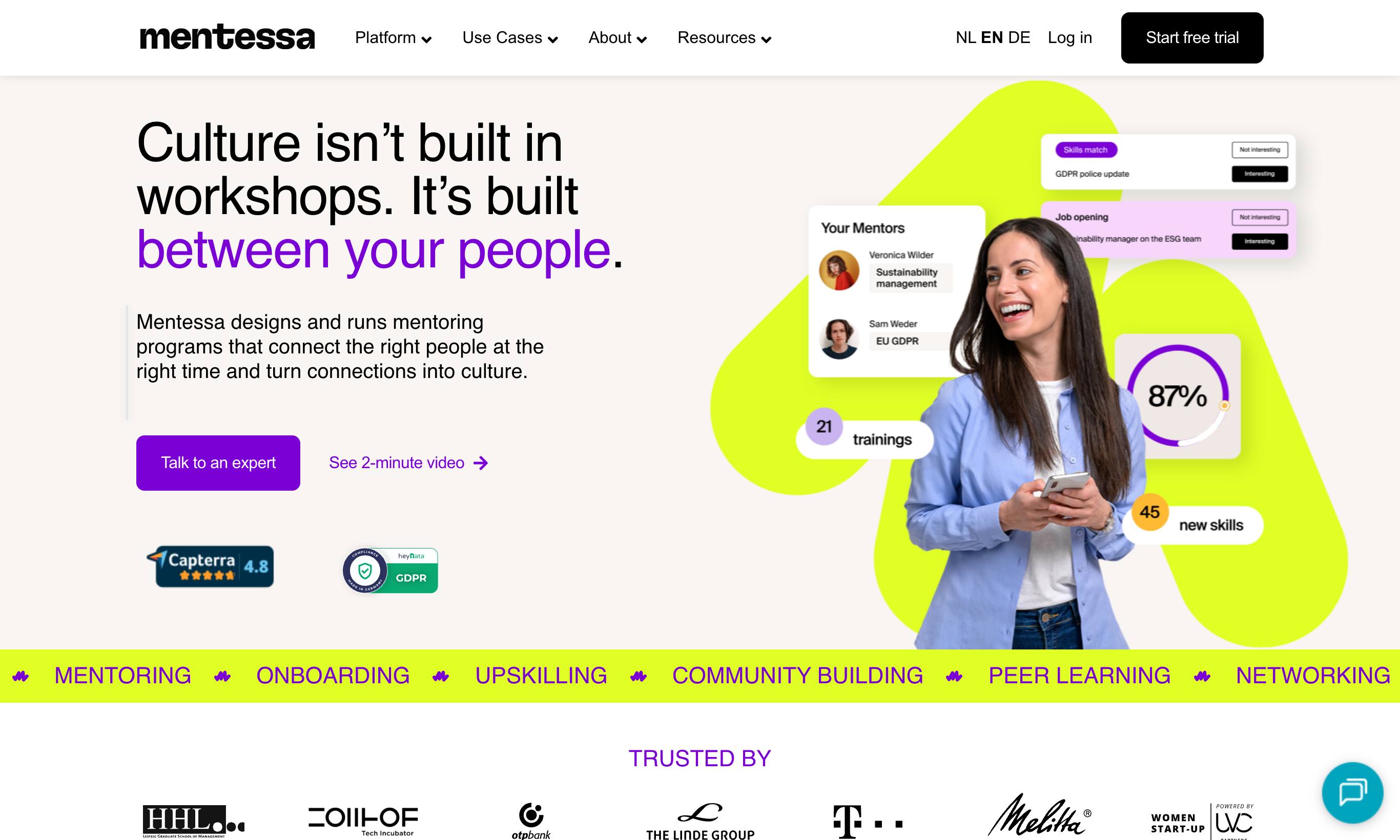
Mentessa is a European platform that helps companies turn their workforce into a skills-based internal community, matching people on what they can teach each other rather than their org chart. It is smaller than the US enterprise names but thoughtful about the community angle, and the free tier makes it approachable for a team that wants to test the idea before committing.
- Best for
- Companies building a skills-based internal mentoring community
- Pricing
- Free tier and paid plans
- Type
- Program software, community-focused
Part 4
Career, design, and skills programs
The Muse
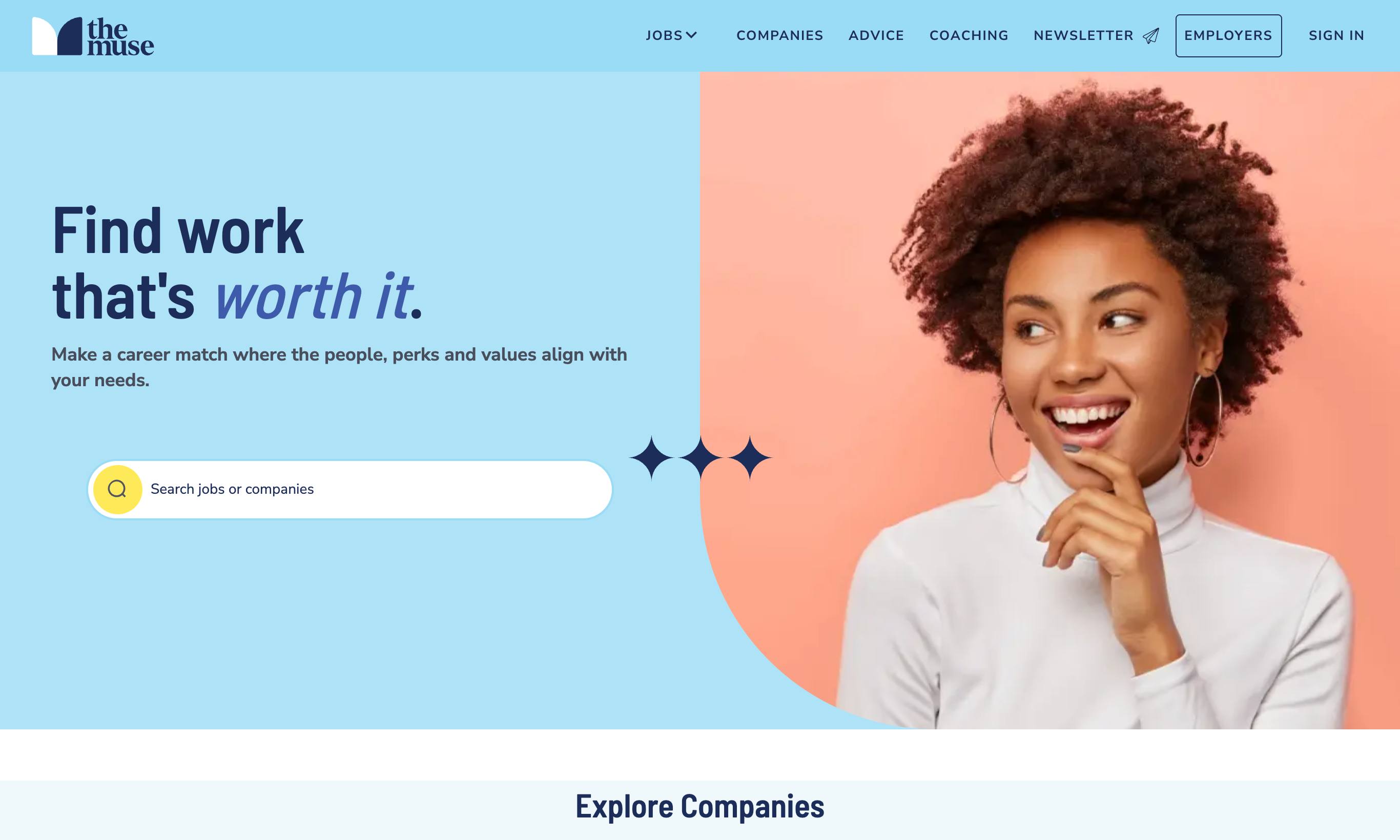
The Muse is mostly a career destination (company profiles, jobs, advice) with a paid coaching layer bolted on. You can book a career coach for a session on a specific need: a resume, an interview, a pivot. It is a fine fit for a discrete career moment, and not the place to look if you want ongoing mentorship from an operator in your field.
- Best for
- A one-off career coaching session
- Pricing
- Per-session coaching, free editorial content
- Type
- Career coaching marketplace
Career Karma
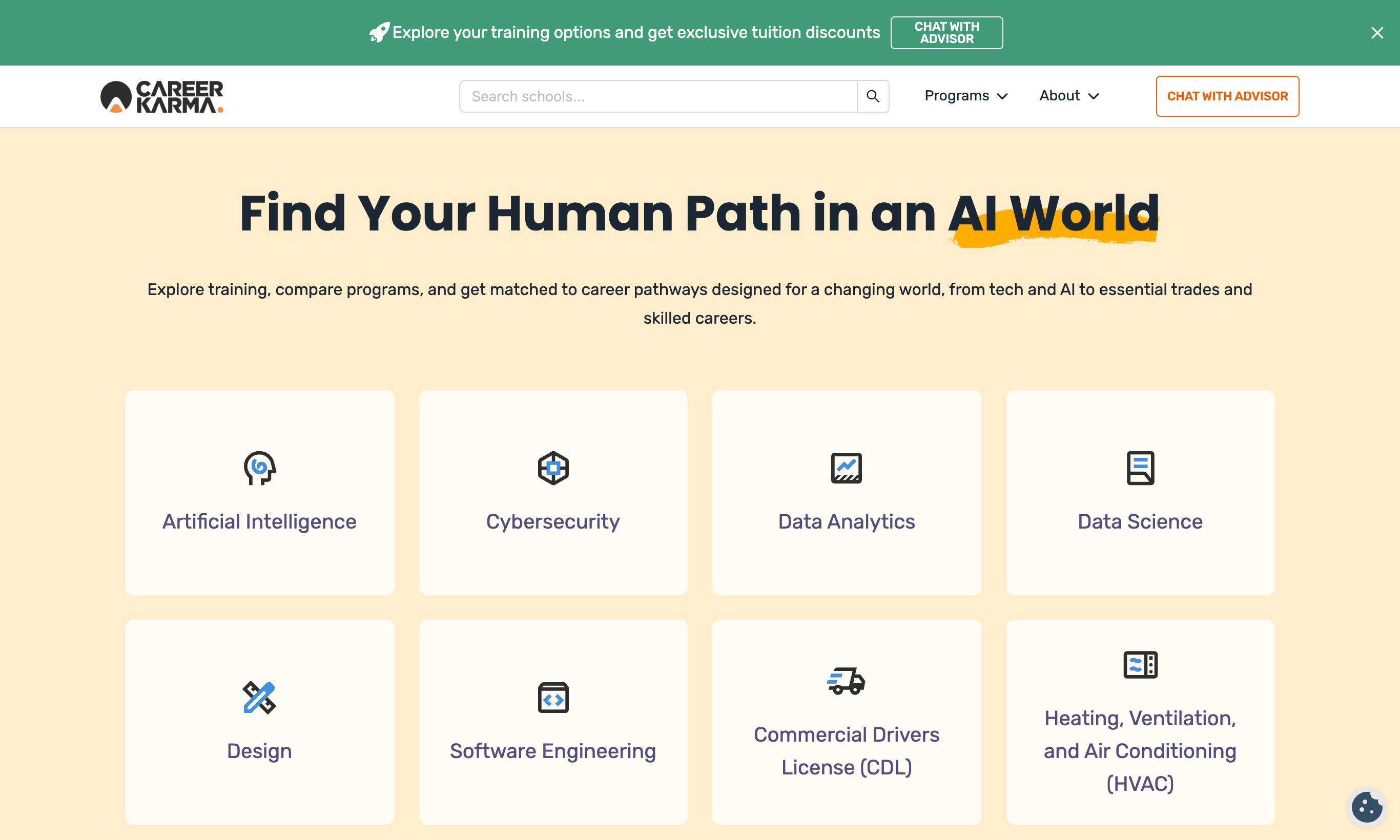
Career Karma is built around one job: helping people break into tech, usually by matching them with the right bootcamp and a community to get through it. The free prep and peer support are the draw, and the business model leans on bootcamp referrals, so treat its recommendations the way you would any referral business. For someone making a deliberate career switch into tech, it is a useful on-ramp.
- Best for
- Career switchers breaking into tech via bootcamps
- Pricing
- Free, monetized through bootcamp referrals
- Type
- Career coaching and matching
Pathrise
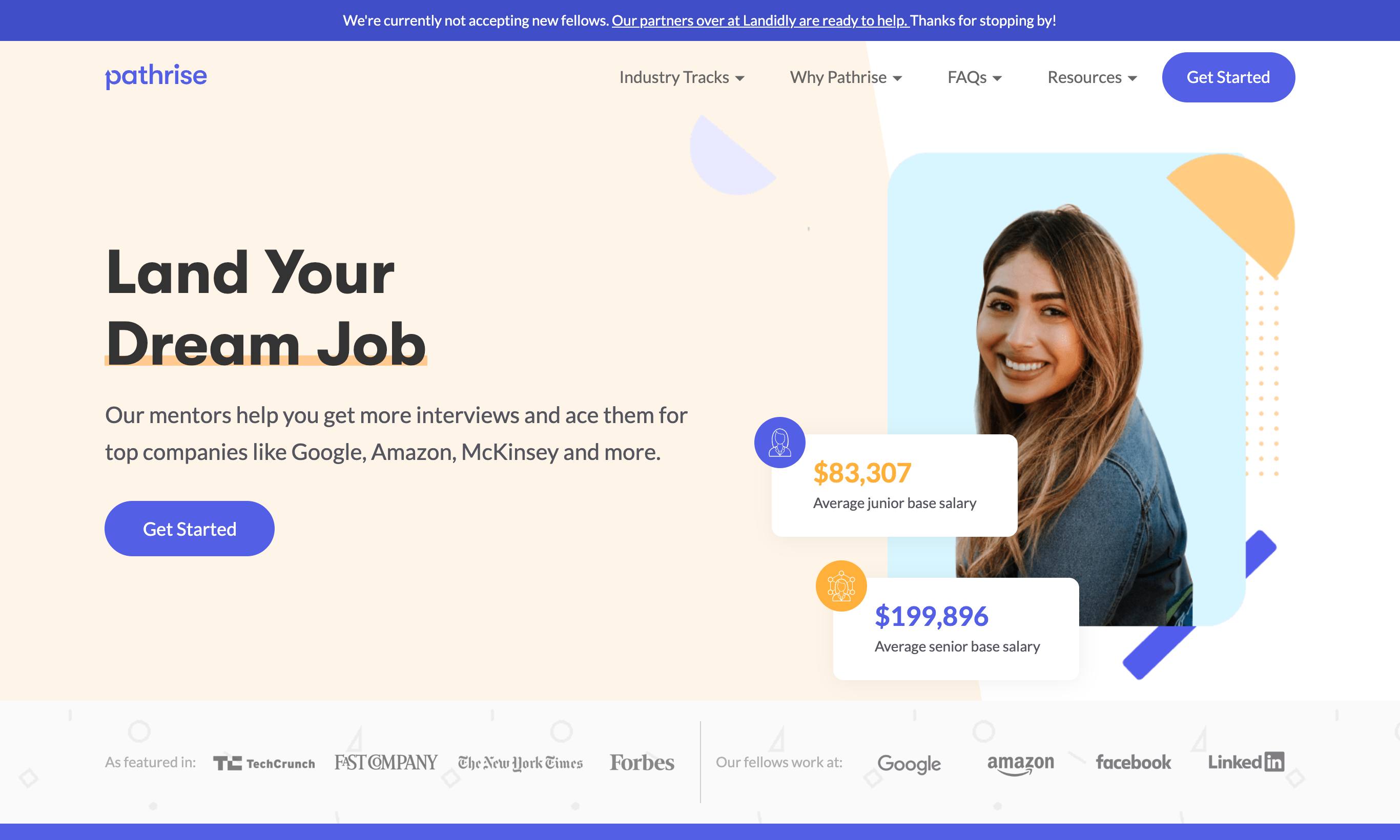
Pathrise is a career accelerator that pairs you with a 1:1 mentor to run a full job search end to end: resume, applications, interviews, and salary negotiation. Its income-share model means you mostly pay once you land a job, which aligns its incentives with yours but locks you into a cut of your first salary. A strong fit for someone in an active, high-stakes job hunt who wants a hand on every step.
- Best for
- An active job search with end-to-end 1:1 mentorship
- Pricing
- Income-share, you pay once hired
- Type
- Career accelerator
Exponent
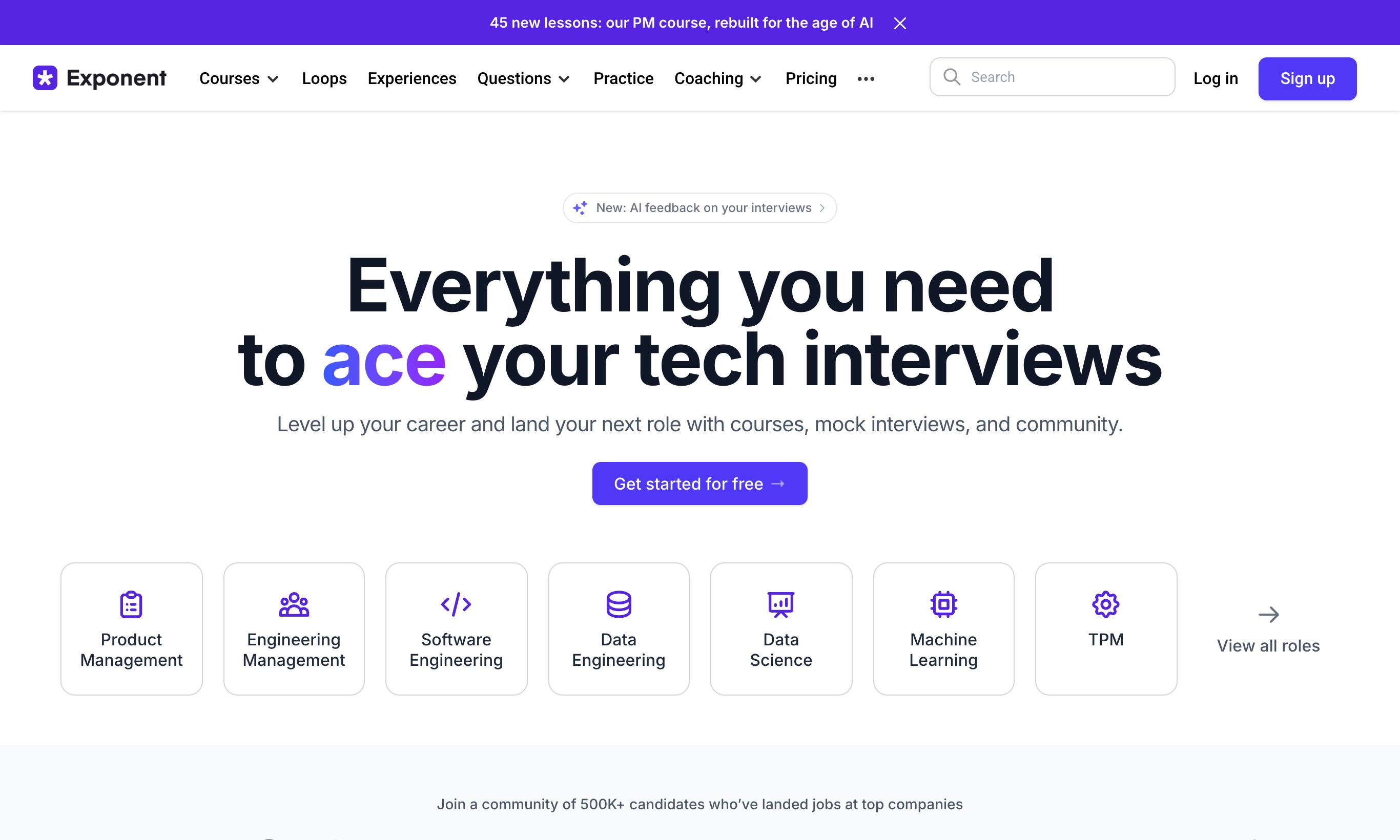
Exponent is built for one job: getting you ready for and through a tech interview, mostly in product management, engineering, and data. Alongside its courses you book 1:1 coaching and mock interviews with people who run the real hiring loops. If you are preparing for a specific role at a specific kind of company, that focus is the value. It is not where you go for open-ended career mentorship.
- Best for
- Interview prep and coaching for PM, engineering, and data roles
- Pricing
- Subscription plus pay-per-coaching
- Type
- Career coaching and interview prep
Acadium
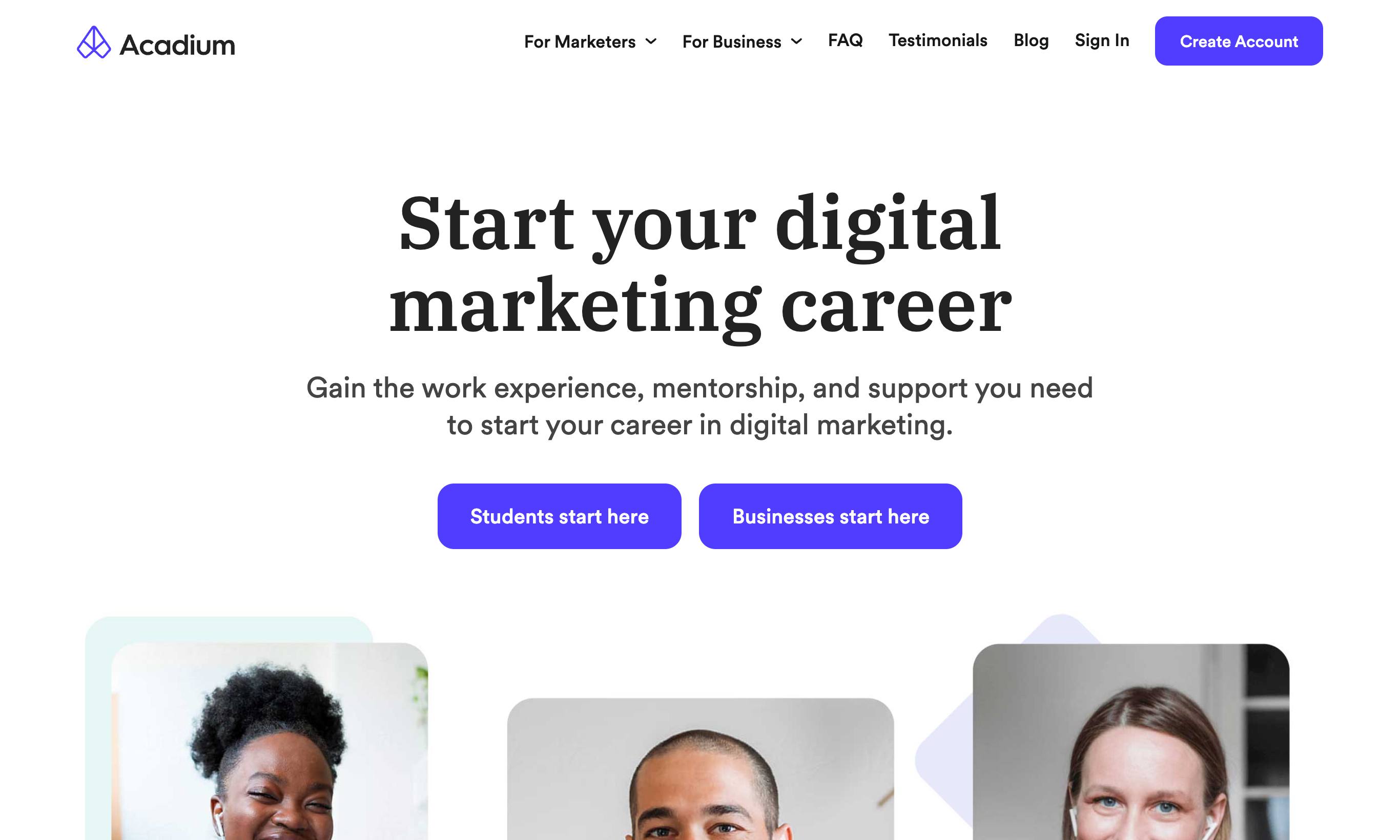
Acadium pairs aspiring marketers with businesses for hands-on apprenticeships, so the mentorship comes through doing real work under someone more experienced. For the apprentice it is a low-cost way to build a portfolio and references, and for the business it is cheap help. The quality of the mentorship depends heavily on the host, which is the trade-off with any apprenticeship model.
- Best for
- Aspiring marketers who learn by doing real work
- Pricing
- Free, with a paid Plus tier
- Type
- Apprenticeship marketplace
DesignLab

DesignLab is a structured UX/UI program where 1:1 mentorship is built into the course. You work through a demanding curriculum with regular sessions from a working designer, plus career support at the end. It is a real investment of money and months, which is the point: it is a career-change program with mentoring inside, not a place to grab a quick call.
- Best for
- A career change into UX/UI with mentorship built in
- Pricing
- Course pricing, varies by program
- Type
- Mentored bootcamp
Where most of these platforms stop
Look across the whole list and a pattern shows up. Most mentoring platforms do one of two things. They assign you a single match (the program software), or they sell you one stranger by the call (most of the marketplaces). Both have the same hidden cost: you have to know who you need before you have talked to anyone.
That is backwards from how it actually works. You rarely know the right mentor until you have spoken to two or three. The first call tells you what you do not know. The second reframes the question. By the third you understand your own problem well enough to get a real answer. Pay-per-call pricing punishes exactly that process, and a single assigned match removes the choice entirely.
What most mentoring platforms give you
- One assigned match, or a stranger you pay by the call
- Pricing that makes you ration the conversations you need most
- A bet on the right person before you have met anyone
- Switching costs every time the problem changes
What unlimited 1:1 access gives you
- Three mentors in a week before you commit to a direction
- One flat membership, so you stop rationing
- Room to find the right person by talking to a few
- A different mentor the moment the problem changes
This is the gap GrowthMentor was built to close, and it is why it runs as a membership instead of a per-call fee. The moment you most need a mentor is the moment you can least afford to bet on picking the right one blind, and per-call pricing charges you hardest right there.
GrowthMentor: talk to as many as it takes
GrowthMentor is on this list because it genuinely is a 1:1 marketplace, and it earns its spot the same way I would judge any of the others. The difference is the membership. You browse 750+ vetted founders and operators, and you book as many calls as you need with any of them, included. Over 60,000 sessions have been booked this way. The under-5% acceptance rate is the part that makes a stranger's read worth taking, and I still read every application myself.
One membership, unlimited 1:1s with any mentor in the network, every one included. Talk to as many as it takes to find the right fit.
Vassilena Valchanova
Which platform to pick · Tue 10:00
Michael Taylor
Positioning a launch · Tue 1:00
Kosta Panagoulias
First growth hire · Wed 9:30
Tina Louise
Go-to-market · Thu 11:00
Daniel Johnson
Pricing the offer · Fri 2:00
So sort by category first. If you are running a program inside a company, pick one of the software tools. If you are a student or a small-business owner watching every dollar, the free options are genuinely good. And if you want to talk to a real operator about your real situation, pick a marketplace, and pick one that lets you talk to enough of them to find the one who has already crossed the thing in front of you.
Frequently asked questions




Mentors who've been the mentee, too
The platform is not the hard part.
Finding the one person who's done it is.
Skip the shortlist. Join GrowthMentor and book a 1:1 with a vetted founder or operator who has already crossed the thing in front of you. One membership, every mentor included.
Talk to a mentorKeep reading
More from the GrowthMentor blog
Mentorship · Feb 17, 2020
The Clarity.fm Alternative That You Can Actually Afford
Foti Panagiotakopoulos
Mentorship · Feb 06, 2026
How Much Does a Business Mentor Cost? A 2026 Guide
Micah McGuire
Mentorship · Jul 25, 2022
Entrepreneur mentorship, minus the fluff. What a mentor does, and where to find one.
Foti Panagiotakopoulos
Mentorship · Jan 09, 2026
Everyone has the tactics now. A digital marketing mentor tells you which ones are yours.
Foti Panagiotakopoulos
Mentorship · Mar 27, 2026
The best expert network companies in 2026. And which one you actually need.
Foti Panagiotakopoulos