TL;DR
- Founders are roughly 50% more likely to face a mental health condition than the general population. It is the job, not a character flaw.
- Therapy is for the clinical weight: anxiety that will not lift, depression, burnout you cannot think your way out of. If that is where you are, see a licensed professional. Nothing here replaces that.
- A lot of what founders carry is not clinical. It is isolation. The decisions you cannot say out loud to your team, your investors, or the person you live with.
- Therapy, coaching, mentorship, and asking an AI at midnight each do something the others cannot. The comparison below is the honest version.
- I built GrowthMentor because I was professionally alone. A mentor is not a therapist. But for the founder-specific loneliness, a person who has already been where you are is often who you need.
I will start with the thing nobody puts on a pitch deck. The hardest part of building a company is rarely the strategy. It is how alone you feel doing it.
I started GrowthMentor in 2018 for a selfish reason. I was head of growth at a hosting company in Athens and I was professionally lonely. At one point I was hiring freelancers off Upwork less for the work and more to have someone to think a decision through with. That is not a normal thing to admit. It is also extremely common.
Since then I have watched founders book tens of thousands of calls on the platform. A good number start as a business question and turn into something else about two minutes in. The pricing question was never really about pricing. It was that they had nobody safe to say the scary version to.
So when people search for therapy for founders, I think they are usually looking for two different things at once. It helps to pull them apart before you spend money on the wrong one.
What founder therapy is
Founder therapy is regular therapy with a clinician who understands the specific pressures of running a company: the financial risk that follows you home, the way your identity fuses with the business, the decisions that land on people who trust you. The clinical tools are the same as any therapy. The context is what changes.
Three approaches come up the most:
- Cognitive behavioral therapy (CBT): works on the thought patterns driving how you feel and act. Useful for the spirals, where every dip in the numbers means the company is dying.
- Acceptance and commitment therapy (ACT): making peace with what you cannot control (the market, the uncertainty) and acting on what you can. Built for ambiguity, which is most of the job.
- Interpersonal therapy (IPT): focused on your relationships, with co-founders, your team, investors, and your partner. The conflicts that wreck companies and marriages from the inside out.
Why so many founders end up here
This is not soft. A study by Dr. Michael Freeman found that founders are 50% more likely to report a mental health condition than the general population. Broken down, founders were:
The Freeman study, broken down
Every bar is founders measured against the general population in Dr. Michael Freeman’s study. The long one is not a typo.
The point is not to pathologize ambition. It is that the conditions of the job (isolation, financial risk that follows you home, no off switch, and a sense of self-worth tied to a number that moves every day) are a near-perfect recipe for it. If you are wired a little differently to begin with, which a lot of founders are, see building a company with ADHD. Knowing the deck is stacked is the first useful thing.





Carrying a decision you can't say out loud?
Book a 1:1 with a founder who has sat exactly where you are. One membership, unlimited calls, every mentor included.
Therapy, coaching, mentorship, or asking an AI?
These get blended together online, usually by someone selling one of them. They do different jobs. Here is the honest breakdown of what each is good for and where it runs out of road.
Therapy vs coaching vs mentorship vs an AI
| Option | Best for | What it can't do | Typical cost |
|---|---|---|---|
| Therapy | Clinical weight: anxiety, depression, trauma, burnout that won't lift | Tell you whether to raise, or what to charge | $100–250 / session |
| Coaching | Performance, habits, accountability toward a goal you set | Treat a clinical condition (it is not licensed care) | $200–500 / session |
| Mentorship | The founder-specific decision, and the isolation around it, from someone who has made it | Replace therapy (mentors are not clinicians) | Included in a membership |
| AI (ChatGPT) | A 2am sounding board: naming the feeling, drafting the hard message | Push back honestly, read you, or carry real stakes | Free to ~$20 / mo |
- Best for
- Clinical weight: anxiety, depression, trauma, burnout that won't lift
- What it can't do
- Tell you whether to raise, or what to charge
- Typical cost
- $100–250 / session
- Best for
- Performance, habits, accountability toward a goal you set
- What it can't do
- Treat a clinical condition (it is not licensed care)
- Typical cost
- $200–500 / session
- Best for
- The founder-specific decision, and the isolation around it, from someone who has made it
- What it can't do
- Replace therapy (mentors are not clinicians)
- Typical cost
- Included in a membership
- Best for
- A 2am sounding board: naming the feeling, drafting the hard message
- What it can't do
- Push back honestly, read you, or carry real stakes
- Typical cost
- Free to ~$20 / mo
I am not going to tell you I have used all four perfectly, or pretend a mentor call has ever fixed something a therapist should have. But I have watched closely which one helps when. The mistake I see most is reaching for the cheapest or most available option for a problem it was never built to solve.
A mentor is not a therapist
Let me be very clear, because the internet is full of people blurring this line to sell you a subscription. If you are dealing with depression, an anxiety disorder, trauma, or burnout that does not lift when you rest, that is clinical, and it deserves a licensed professional. A mentor call is not the answer, and anyone who tells you otherwise is selling, not helping.
GrowthMentor is not therapy and we do not pretend to be. What a good mentor can do is the thing therapy usually cannot: sit with the actual decision in front of you, having made the same one, and tell you plainly what they would do.
Where a mentor fits
Here is the gap I keep seeing. The founder is not unwell. They are alone with a decision. Raise or bootstrap. Part ways with a co-founder. Shut it down or push through one more quarter. There is nobody safe to ask, because everyone around them has a stake in the answer.
A therapist can hold the feeling. They usually cannot tell you whether to take the term sheet, because they have never been on the other side of one. That is the specific thing a mentor who has built and sold a company can do, and it is why people book these calls at hours that should worry their families.
Which door, decided by the weight
What are you carrying?
Clinical weight
A licensed therapist
Depression, anxiety, burnout that will not lift. This is clinical work and it belongs with a clinician.
Alone with a decision
A mentor who has made the call
Raise or bootstrap, part ways, shut down or push through. Someone who has been on the other side of the term sheet, with no stake in your answer.
No wrong door, just different doors. The weight you are carrying decides which one.
It does not have to be heavy, either. If you just want to vent about startup life to someone who gets it, you can browse mentors who are there to listen, not to pitch you. Sometimes saying the thing out loud to a person who has felt it is the whole fix.
Suggested mentors
Not therapists. Founders and coaches who have been through the isolation, the burnout, and the 2am decisions, and will genuinely listen. A 1:1 with any of them is included in membership:
.jpg)


How to find therapy for founders
If you decide therapy is what you need, a few honest pointers.
Online therapy. Founders are busy, and online options lower the barrier to actually starting. There are several reputable platforms now. Look for one that lets you filter for therapists experienced with entrepreneurs or high-stress executives, and read the privacy policy before you sign up, because what you share here is sensitive and not every platform has treated that data with the care it should.
In-person therapy. If you would rather meet face to face, start from the approach that fits your goal (CBT for thought spirals, ACT for uncertainty, IPT for relationships), then search for a local practitioner who works with founders or executives.
Come with a goal. Whichever route you pick, the first session goes better if you can name what you want from it, even roughly. "I want to stop spiraling every time revenue dips" is enough to start.
The bottom line
Therapy, a coach, a mentor, an AI at midnight. Use whatever keeps you upright, and use more than one if you need to. There is no wrong door here. The only real mistake is carrying all of it alone, because asking for help still feels off-brand for a founder.

John has founded and run his own companies. The shut-down-or-push-through call is one he has faced with his own money on the line, not a case study.

Daniel operates as a fractional CMO across AI and B2B SaaS. He has walked founders through raise-or-bootstrap and pivot decisions, and he holds no stake in what you choose.

I have taken a lot of those late calls now, on both sides of them. The part I remember is never the advice. It is the exhaustion in someone's voice easing a notch once they realize the person on the other end has felt it too.
Frequently asked questions



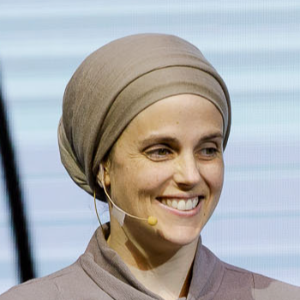
Founders who've been in the same seat
Carrying something you can't say out loud?
Talk it through with someone who's been there.
A mentor is not a therapist. But for the founder-specific loneliness, a 1:1 with someone who has already been where you are is often exactly what helps. Membership is unlimited calls, every mentor included.
Talk to a mentorKeep reading
More from the GrowthMentor blog
Leadership · Jul 23, 2022
Overwhelmed Startup Founder: Coping With Stress and Burnout
Foti Panagiotakopoulos
Leadership · May 17, 2021
Riding the Wave: Dealing with ADHD as a founder
Nathan Sudds
Leadership · Dec 03, 2024
Beating Founder Burnout by Walking the Camino de Santiago Frances, 900km Across Spain
Foti Panagiotakopoulos
Mentorship · Nov 30, 2024
The Difference Between Advice and Mentorship (And Why Most People Give Bad Advice)
Foti Panagiotakopoulos