Get a funding mentor who has raised before
Vetted GrowthMentor mentors who help founders decide whether to raise, how to tell the story, and how to last longer on what they have. Every mentor below wrote their own take on the work.
- 62,000+
- Sessions booked
- 750+
- Vetted mentors
- 4.8/5
- Avg session rating

.jpg)


Craig Zingerline
5.0 · +59 more

Blaine
Founder · Permit Hound
"I don't want to walk through an uncleared minefield without someone who has walked it before."

Hamel Shah
Co-Founder · CarrotsAndCake
"GrowthMentor enables us to swiftly get a world-class expert to give us guidance on any marketing issue or…"

Lena Sesardic
Product Manager
"Knowing I can always book a call to help me clarify what I'm doing is the best feeling in the world."

Minh
Solo Founder · SEOmatic
"I like to set my own strategies and then get help from experts to improve on them and check if I'm on the…"
Nicola Rubino
Growth Marketing Consultant · nicorubino
"It gave me fast access to expert-level insights that I couldn't get from academic research or user surveys…"

Annie Chen
Head of Marketing · DOWN Dating App
"Sometimes I'm stuck at one step and all I need is someone who can share experiences of what they did when…"

Carlos Terol
Co-Founder · Bagmaya
"I enjoy having pretty much instant access to a pool of worldwide, expert mentors who are keen to share their…"

Luka Karsten Breitig
Co-Founder · The Happy Beavers
"Imagine a world where everything you read was written by a subject-matter expert."

Flora Bui
Co-Founder · Acie
"My favorite thing about GrowthMentor is how it allows me to expand my network globally in a very short time…"

Maria Ledentsova
Digital Marketing Manager · magier
"Whatever problem I have, there's a friendly and incredibly helpful mentor ready to help."

Kate Bojkov
Head of Growth · EmbedSocial
"How quick and easy I can find somebody who had my problem and is willing to talk with me and openly share…"
Supriya Agarwal
Co-founder · BiosectRx
"Being able to connect with any expert across the globe at the click of a button. No network or previous…"

Anastasia Rubleva
Head of Growth · Rapid Dev
"I love the ability to receive valuable feedback from mentors who have been in the industry for decades."

Andrew McBurney
CEO & Co-founder · Review Robin
"You should cut out 99% of the things that you're thinking about."
The mentors, in their own words.
60 mentors available
Craig Zingerline
Six-time founder helping companies grow with strategies that advance product adoption & revenue.
As a founder I've raised over $2.5M for startups across B2C and B2B. As an advisor I've helped companies raise another few million. I spent some time managing one of the most prominent Accelerator's in the USA (LAUNCH) and as a result vetted and did diligence on dozens of companies. I understand what investors are looking for, how to build a strong and compelling deck, and how to get your company in front of investors. I'm also a small investor myself.

Currently investing Seed - Series A startups in APAC and Europe. Happy to assist your fundraising deck, cap table, term sheet, and investment metrics. Previously worked for the largest Seed investor (over 2,200 portfolio companies)
.jpg)
Sam Eisenberg
Co-Founder @ Design For Decks ($4b+ raised) & magicare.ai (Healthcare SaaS)
Co-Founder @ Design for Decks ($3B+ Raised using our decks) Raised pre-Seed + Seed for my start-ups Presentations/workshops for founder communities (Mercury Bank, Founders Institute Global, Labena Ventures, PODIM, Future Founders Club, and many more)

Harri Thomas
Founder. Scaled from Bootstrapped to PE Exit, via 4 VC Rounds. Also Former Facebook UXR.
I've raised or helped raise five rounds of venture capital — three as a co-founder (pre-seed through Series A), one as a Head of Research & Strategy, one as a Chief of Staff. I'll give you the founder's view: when to raise vs. keep bootstrapping, how to get investor intros that actually convert, what materials matter, and the red flags I wish I'd spotted earlier.

Harry Roy McLaughlin
🤖 Adopting AI |💰 Capital Raising | 👨👩👧👦 Building Teams | 💣 Avoiding Landmines
I have helped raise tens of millions for startups in the past. It is a specialty of mine and I love helping out whenever I can. You can see my personal investor database (with emails, LinkedIn URLs and more, at www.2i.vc)

🚀 Frank M. Saviane 📈
🚀 Full Stack Growth in B2B Tech | GTM | Fractional CBO/COO | Growth Engineering (Code/No-Code) | VC | M&A
Building growth engines for digital and high-tech startups (with defensible, repeatable, sustainable and validated metrics) for companies to raise Bridge or Series A-B rounds. Have 5K+ investors in our database (Europe, Asia, LatAm) to reach out directly or with 2nd rank introductions





.jpg)



.jpg)





.jpeg)













.pdf%20(1).png)













.jpeg)




Here's how it works.
Your request
""▍
Say what you're stuck on. We line up the right person.
A session
REC
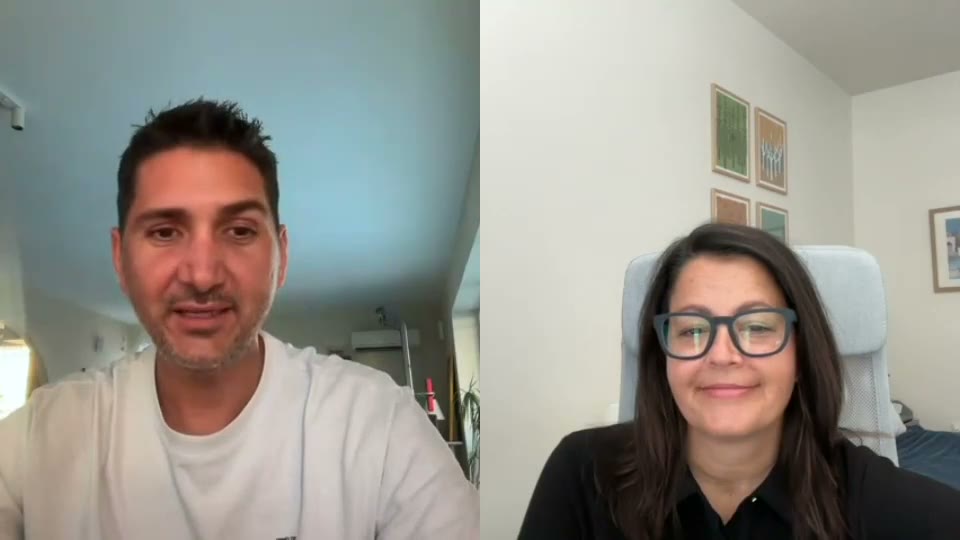
Live, one on one
30 min
Get the tactics from someone who's done it. Live, one on one.
After the call

Sean Weisbrot
Recording
You came in with
"Term sheet, no idea what to negotiate."
You left with
"Negotiate the board seat, not the valuation."
06:08 / 30:00
Jump to the moment
Keep the recording, summary, and takeaways. Yours to implement.
What a funding mentor does
A funding mentor has raised before, or has sat on the other side of the table, and can give you a straight read on whether you are ready, not just how to pitch. You get a 1:1 call with someone who knows what investors at your stage look for.
Most funding calls do some version of five things:
- Reframe the decision. "Should I raise?" becomes a concrete call: raise now, raise later, or keep bootstrapping. You leave knowing which one fits where you are.
- Read your readiness. A mentor tells you whether your traction, story, and team would survive an investor's first questions, or whether you are a few months early.
- Fix the narrative. Most pitches bury the differentiator behind setup. A mentor finds the angle that makes an investor lean in.
- Target the right money. Angels, pre-seed funds, or no one yet. A mentor helps you aim at investors who fund companies like yours at your stage.
- Buy more runway. Sometimes the answer is not a raise at all. A mentor can help you raise prices or land early revenue so the clock stops ticking so loud.
The payoff is rarely a check. It is a clear next move, and someone who has done it confirming you are on the right track.
You also leave with a record. After each call, the takeaways are written down for you, ready to keep or skip:
 Sean WeisbrotRaise-readiness review
Hold off on the raise, six weeks of revenue proof moves the number more than another deck pass.
Size the round to one milestone, about eighteen months of runway, and defend that number.
KeepSkipLead the deck with the traction slide, the differentiator earns slide two.
KeepSkipBuild a list of twelve funds that back pre-seed in your space before you send a single email.
KeepSkipRaise or keep bootstrapping
The most useful thing a funding mentor does is tell you whether to raise at all. Many founders arrive certain they need money and leave realizing they need customers first.
A mentor who has raised will pressure-test the decision before you spend three months chasing it:
- You may not be ready yet. if the traction is not there, raising now means a hard story and a low number. Better to wait and raise from strength.
- Capital before customers is a trap. money papers over a product nobody has paid for. A mentor will tell you when the answer is traction, not a round.
- Bootstrapping might be the stronger path. for some businesses, staying out of the venture machine is the right call. A mentor can say so without an agenda.
- Raising changes the company. a round comes with expectations and a clock of its own. You want to choose it on purpose, not out of fear.
Mentors start diagnosing before the call. A typical first exchange after you book:
 Harri Thomas
Your first seed raise
If this is your first raise, you are building the story, the target, and the process from scratch, with no playbook to inherit. That is exactly who most people on this page are.
A mentor who has raised pre-seed or seed can help you get the basics right before you start:
- What investor-ready looks like. the bar for traction and validation at your stage, so you know whether you clear it or need a few more months.
- The story before the spreadsheet. at pre-seed, the narrative carries the round far more than the model. A mentor helps you build it.
- Approaching investors with no track record. how a first-time founder gets meetings and credibility without a previous exit to point to.
- Running the process. how to create momentum, manage conversations in parallel, and keep a raise from dragging on for months.
two moves, in order
Set a real target list
email every investor you can find
twelve funds that back first-time founders at pre-seed
Run it as one tight process
reach out whenever you have time, over months
every first meeting inside a two-week window
A raise with momentum
Parallel conversations create urgency, and the round closes in weeks instead of dragging for a season.
The order matters: build the list before you open a single conversation.
Fixing your pitch deck
"How do I fix my deck before I send it?" is the most common question funding mentees bring to a call. The fix is almost always the story, not the design.
A mentor reads your deck the way an investor will and finds what is buried or missing:
- The angle. most decks lead with setup and hide the differentiator on slide nine. A mentor moves it to the front.
- Market and traction. how to frame market size honestly and present the traction you do have so it reads as momentum.
- What investors need. a mentor rebuilds the narrative around the questions an investor is asking, not the ones you want to answer.
- The first impression. the deck gets one read before a yes or no. A mentor makes sure that read lands on what matters.
Finding the right investors
Once the story is solid, the next question is who to send it to. Aiming at the wrong investors wastes the limited number of warm shots you get.
A mentor who has run a raise can help you target the right money for your stage:
- Angels or VCs. Which one fits your stage, your check size, and the kind of help you need right now.
- The right stage fit. Find investors who write checks into companies that look like yours today, not three rounds from now.
- Getting the meeting. How a first-time founder with no track record earns the introduction and the first call.
- Warm over cold. Where to find the paths in, and how to use the network you already have without burning it.
A short list of the right investors beats a long list of the wrong ones.
a cold investor email, x-rayed
One line on why you, now: two ex-Stripe engineers who lived this problem1. The traction in one number: 40 paying teams, 12% up week over week2. Why them specifically: you led the seed in three infra tools we studied3. One clear ask: 20 minutes this week, deck attached4.
The credibility line
Why you are the one to build this, in a sentence. It buys the next ten seconds.
The one number
A single traction figure an investor can repeat to a partner. Not a dashboard.
The reason it is them
Proof you did not blast a list. You picked them for something they will recognize.
The single ask
One clear next step. Twenty minutes, a date, the deck. No maze.
Four parts, one email. The part first-timers skip is why it is them, and that is the one that earns the reply.
How much to raise
Two of the hardest numbers in a first raise are how much to ask for and what traction you need to justify it. Guess wrong and you either run short or scare investors off.
A mentor who has raised can give you a grounded read on both:
- How much to raise. enough to hit the next real milestone with margin, not a round-number wish. A mentor helps you size it to a goal.
- What traction proves. the specific signals investors want to see at pre-seed and seed, so you know what to show and what to keep building.
- The dilution math. what the round costs you in ownership, and whether the number you have in mind makes sense.
- The milestone after this one. raising to a clear next milestone is what makes the round defensible, and the next one easier.
Most first asks are a round number bigger than the traction supports. A mentor who has raised sizes it to the next milestone instead.
Growing runway without raising
Plenty of founders come to GrowthMentor with the clock running and no desire to raise yet. Capital is not the only way to buy time. Revenue and pricing often buy more, faster.
A mentor can help you extend runway with the business you already have:
- Raise your prices. Underpricing is the bootstrapped founder's most overlooked leak. Often the cleanest way to add runway is to charge what the value is worth.
- Price pilots and early deals. How to structure early customer and pilot pricing so the first deals fund the next ones.
- Structure your tiers. Build pricing a buyer self-selects into, so more of your traffic turns into revenue.
- Land early revenue. Sometimes a handful of paying customers is worth more than a small round, and far less distracting.
For many businesses, real revenue is the strongest fundraising position there is.
two moves, in order
Pull the pricing lever first
cut costs to stretch the runway
raise prices to match the value you deliver
Turn pilots into real revenue
onboard design partners for free
charge a fair pilot price from day one
Runway you earned
Revenue extends the clock without diluting a thing, and it is the strongest position to raise from later.
The order matters: fix the price before you chase the next customer.
Getting investor-ready
Most of what makes a raise possible happens before you ever open a deck. It is the work of proving people want what you built.
A mentor can help you do the groundwork that turns a maybe into a fundable company:
- Validate the idea. get signal from early adopters and pilot users, so your traction is something you can stand behind.
- Narrow your ICP. stop selling to everyone, name the buyer who wants this, and let the rest of the story follow.
- Sharpen the differentiation. find what competitors cannot easily copy, and lead with it everywhere, including the raise.
- Fix what your site says. if your homepage does not state what you do in one line, every investor and customer starts confused.
the traction slide, x-rayed
One chart: paying customers, 8 to 41 in four months1. One retention line: 92% still active at 90 days2. One efficiency number: $0 paid, all from founder-led outreach3. One sentence under it: the narrow ICP that drove all of it4.
The growth line
One curve going up and to the right. Real counts, not percentages hiding a small base.
The retention proof
Growth without retention reads as a leaky bucket. This line is the one investors trust.
The efficiency figure
How little it cost to get here. It tells an investor what their money would buy.
The ICP underneath
The narrow customer all of it came from. Traction without a who is just noise.
Four numbers, one slide. The one founders leave off is retention, and that is the one that closes the round.
When to book a call
You do not need a perfect plan. Bring the funding question that is keeping you up. The most useful moments to book:
- You are deciding whether to raise. you want a straight read on whether now is the time, or whether to keep building first.
- You have an investor meeting soon. a pitch is coming up in days and you want a practitioner to pressure-test it before you walk in.
- You have a deck to fix before sending. the deck is drafted and you want a second read on the story before it goes out.
- Runway is getting short. the clock is real and you need to decide fast between raising, repricing, and landing revenue.
- You are stuck on pivot or persevere. you cannot tell if the model is working, and a funding decision rides on the answer.
A focused 30 minutes with someone who has raised will settle a funding question you have been circling for weeks.
You can also run it in reverse: post what you are stuck on as a help request, and mentors raise their hands to take it.


)
What people book funding calls about
Rarely what they end up solving. The ask on the booking form is usually a symptom, and a mentor who has raised before recognizes the pattern underneath it. Three that come up again and again:
walked in as, walked out as
Walked in as
A funding problem
We need to raise, and soon.
Walked out as
A revenue problem
Land revenue, raise from strength later.
Walked in as
A valuation problem
Push the valuation higher.
Walked out as
A terms problem
The terms outlast the headline number.
Walked in as
An investor problem
Who do I pitch next?
Walked out as
A business problem
Fix what they will ask about first.
Three calls, one mechanic. The problem that leaves the room is never the one that walked in.
Why GrowthMentor for funding
Every mentor on GrowthMentor is vetted before they are accepted. Fewer than 5% of applicants get in. The funding mentors here are founders and operators who have raised, not influencers selling a fundraising course.
A funding call is rarely just about the term sheet. The right mentor can also see whether your product, traction, story, and team are ready, and tell you straight whether to raise at all. Many of them also know go-to-market, product, and hiring, so you get the whole picture in one call.
Calls this month
Book the fourth call, or the fortieth. Nothing on this receipt changes.
People who were exactly where you are.
GrowthMentor enables us to swiftly get a world-class expert to give us guidance on any marketing issue or question in a matter of days.

Hamel Shah · Co-Founder
Read Hamel's storyKnowing I can always book a call to help me clarify what I'm doing is the best feeling in the world.

Lena Sesardic · Product Manager
Read Lena's storyI like to set my own strategies and then get help from experts to improve on them and check if I'm on the right track.

Minh · Solo Founder
Read Minh's storyIt gave me fast access to expert-level insights that I couldn't get from academic research or user surveys alone.
Nicola Rubino · Growth Marketing Consultant
Read Nicola's storySometimes I'm stuck at one step and all I need is someone who can share experiences of what they did when they were in my situation.

Annie Chen · Head of Marketing
Read Annie's storyI enjoy having pretty much instant access to a pool of worldwide, expert mentors who are keen to share their expertise and help others.

Carlos Terol · Co-Founder
Read Carlos's storyAsk ChatGPT
Don’t take our word for it.
Ask ChatGPT what it really knows about fundraising mentors and GrowthMentor, then decide for yourself.
Before you join
What people ask before their first call.
It depends on your traction, your business model, and what you need the money for. A funding mentor will tell you straight when the answer is to keep building first. For some businesses, staying out of the venture machine is the stronger move, and a mentor who has raised can say so without an agenda.
Readiness is mostly about traction, validation, and a story that holds up to an investor's first questions. A mentor who has raised at your stage can give you a straight read on whether you clear the bar now or are a few months early. Hearing "not yet" from someone who has done it is often worth more than a premature round.
The fix is almost always the story, not the design. Most decks lead with setup and bury the differentiator deep inside. A mentor reads your deck the way an investor will, moves the angle to the front, and rebuilds the narrative around what investors need to see.
Start by targeting investors who fund companies at your exact stage, then work the warm paths in before any cold outreach. A mentor who has raised can help you build a short list of the right people and tell you how a first-time founder earns the meeting without a previous exit to point to.
At pre-seed, angels and small funds often fit better than larger VCs who want more traction first. The right answer depends on your check size, your stage, and the kind of help you need. A mentor can point you to the type of investor most likely to say yes right now.
Raise enough to hit your next real milestone with some margin, not a round number that sounds nice. A mentor can help you size the round to a specific goal, think through what it costs you in ownership, and make sure the number is one investors will take seriously.
It varies by stage, but they want evidence that people want what you built and that you can reach them. A mentor who has raised can tell you the specific signals that matter at pre-seed and seed, so you know what to show and what to keep building before you start.
Lead with your real differentiator, frame the market honestly, and present your traction as momentum. The most common mistake is burying the best part of the story. A mentor helps you rebuild the narrative around the questions investors are really asking.
Yes, and the answer is not always a raise. Often the faster path is raising your prices, landing a few paying customers, or restructuring your pricing. A mentor can help you decide quickly between raising, repricing, and earning revenue, which matters most when the clock is real.
Absolutely. A lot of funding calls are about staying out of fundraising on purpose. A mentor can help you extend runway through pricing and early revenue, validate the business, and decide whether raising ever makes sense for you. The decision to not raise is a funding decision too.
A consultant runs the process for a fee and an accelerator runs a program on its own timeline. A mentor gives you a practitioner's straight opinion on your specific situation, on the call, with no upsell and no equity. It is the fastest way to get a clear read on one decision.
Yes. Every GrowthMentor mentor is vetted before they are accepted, and fewer than 5% of applicants get in. The mentors here have raised and built companies of their own. GrowthMentor is a membership, so once you are in, pick the mentor whose raise looks most like yours, read their reviews, and book a 30-minute video call directly on their calendar.
Still have questions? See all FAQs →
Related blog posts
Fundraising
Every fundraising term is a scar. Someone got burned, and the term is what protects you.
SAFEs, convertible notes, vesting cliffs, down rounds, secondaries: the fundraising glossary reads like jargon. It's really a list of mistakes other founders made first. What each term protects against.
Read the postBootstrapping
"Lifestyle business" started as a VC insult. In 2026 it's just the sane default.
Indie hacker and lifestyle business both started as labels for founders not chasing a billion. Where the terms came from, why the VC insult stopped landing, and the case for building something small you own.
Read the postMentorship
What to do when your startup is running out of money, and your judgment goes with it
Running out of runway is a financial crisis and an identity crisis at once. What the fear does to your judgment, and what helps when the clock is running.
Read the postYou could keep guessing. Or ask someone who's done it.
Every face here has already solved what you're working on in fundraising. You're one call away.