I wrote this in 2018. Then AI spent the next eight years proving it right.
Every scalable, transactional link tactic I argue against below has since drowned in AI-generated spam. It got so bad that HARO, the outreach staple, hit roughly 85% spam and shut down in 2024. Meanwhile the thing this post is really about, building real relationships, turned into the highest-leverage move in SEO: for AI search, an unlinked brand mention now predicts whether ChatGPT and Perplexity cite you about 3x better than a backlink does. The advice here didn’t age. The internet aged into it.
Outreach the way we were taught is dead
There are over 5,000,000 blog posts posted every single day.
And it seems everyone is using the same crappy outreach emails to try and build links towards them.
If you own a site that’s half decent, you probably get these emails – every. single. day.
Example of a baseline outreach
Here’s a prototypical example of your joe blow run-of-the-mill outreach email.
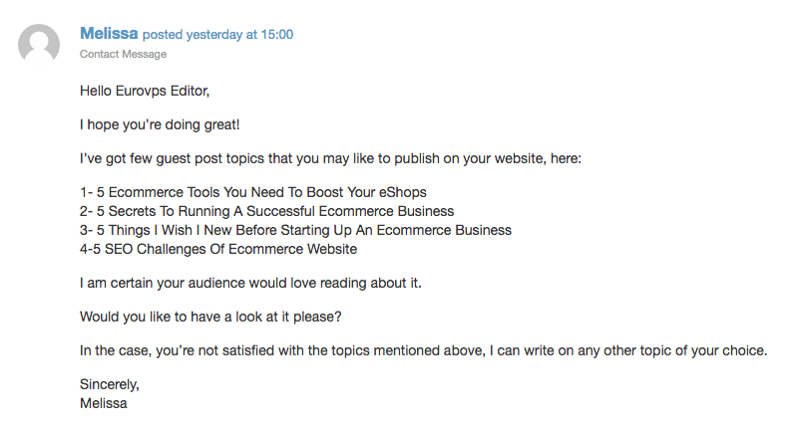
But seriously, would any sane person ever reply to a mail like this in 2026?
But what about quality 1:1 personalized outreach?
Bad news.
The amateur link builders ruined it for you.
Content managers’ inboxes are suffocating under the weight of the swarm of shitty outreach emails.

So even if you did write an AMAZING 1:1 personalized outreach email jam-packed with a Google Drive link to an epic guest post you’ve drafted – chances are your mail will be ignored.
Nobody wants to manage the “[email protected]” email addresses anymore.
There’s just way too much noise in there.
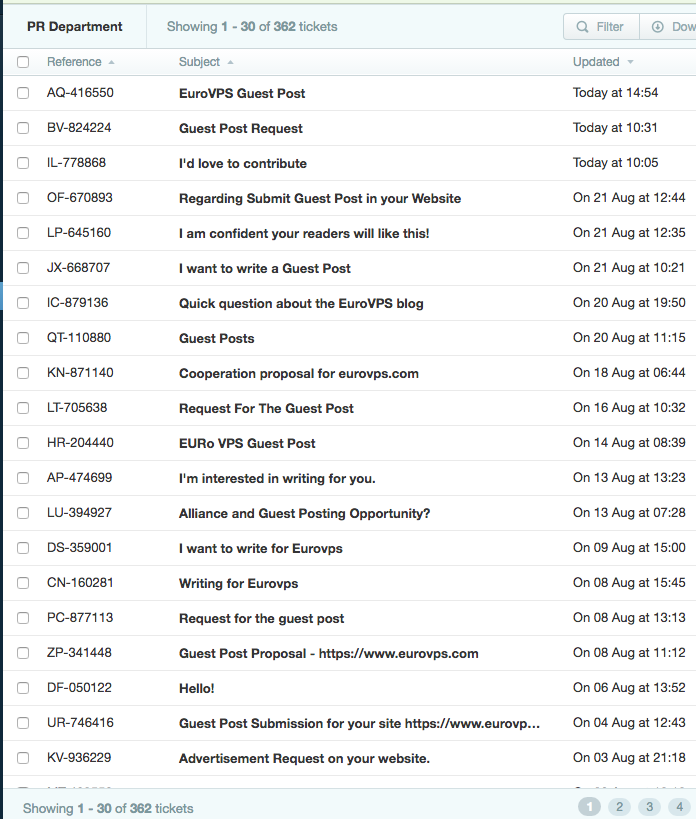
I’m supposed to be managing this email box, but I’ll admit, I haven’t opened even one of these emails.
In fact, I think I’m going to batch-delete them all after I finish writing this post.
The easiest way to build links in 2026 is to build *real* relationships
Now I know what you’re probably thinking.

But trust me alright. It’s not so bad!
How to build relationships (which can get you high-value dofollow backlinks)
The relationship ladder, four steps
Say thanks
Find people you admire and tell them what resonated. Ask for nothing.
Pay it forward
Buy the product, mention them in your posts, send free fixes. Add value first.
Never mention links
The rapport is the asset. Asking for a backlink now spends it all at once.
Propose partnerships
Partners pages, customer stories, guest posts. Things that include a link by default.
The link arrives at step four, as a side effect. Every step before it is the actual work.
Step 1: Find people you admire and say “thanks”
You want to bring your startup to the market with a bang, don’t you?
Well then you’re going to have to invest the time to build up relationships with a network of *real people* who might be able to help you out at some point in the future.
Process:
- Make a list of people that you admire
- Follow them on Twitter or LinkedIn
- Find a specific thing that they wrote/said that really resonated with you
- Find their email address (this isn’t that hard if you’re motivated enough)
- Send them a personalized email and tell them what you think about them, what they’re doing that excites you, etc. and how they’ve helped you grow. (you can replace an email with a LinkedIn connection request, but you’ll have less characters to express yourself with. Email is better for this. Save LinkedIn connection request for later 😉
Rules:
- Don’t be creepy
- Don’t sound overly needy
- Don’t ask for anything
Just like any investment, sometimes you win, sometimes you lose.
You have to be 100% cool with the very likely chance, that they will completely ignore/delete this email and never write back.
The goal is to get them to reply gratuitously with a “thank you” or “glad you’re a fan!” type response.
That “thanks a bunch!” reply you’re fishing for is the seed of an unlinked brand mention, which is the exact signal AI search now weights most heavily. Large language models learn who’s credible from how often real people mention you out in the open, link or no link. A genuine relationship is a mention machine.
Step 2: Pay it forward
After you’ve established contact and sparked a conversation via email (or LinkedIn if you’ve got a strong presence there) it’s time to add some value.
Things you can do:
Buy their product
Let’s say you reached out to a founder of a SaaS company of which you’d love to one day, hopefully, get featured in on their blog.
If the product’s useful to you, I’d suggest signing up to it.
- Use it
- Critique it
- And send a follow-up email with positive feedback a few weeks later.
By doing this you’ve crossed the chasm from the “unknown fanboy/fangirl” club into the realms of “customer success.”
Since you’re now a customer — the onus is on the founder to make sure you’re as successful as possible.
It’s a lot harder to be ignored when you are now also a customer.
Mention them in your blog posts and social media
If you don’t have the money to signup to buy their product/service you can easily pay it forward for free by mentioning them or their company in your blog posts, or in your LinkedIn posts.
- Bonus points if your LinkedIn post gets +1,000 likes and a boat load of comments.
- Bonus points if your blog post is rock-solid and gets noticed by their audience.
After you do this reach out again via email and let them know that they’re top of mind for you and you’re doing whatever you can to give back and recently mentioned them in .
Goal here is again, to get a “thanks a bunch!” message.
Just be creative + authentic + valuable!
Here’s some ideas to give a bit of inspiration:
- If you’re an excellent copywriter and you noticed some blatantly bad web copy on their landing page which is probably hurting their conversion rate, give them some free feedback!
- If you noticed that they’ll be giving a speech at a conference in your city, shoot them a list of recommended restaurants or bars they should check out!
There are unlimited opportunities for adding value, but you have to do it from a good place in your heart.
It’s got to be authentic!
Look at where “paying it forward” actually happens: LinkedIn posts, replies, public shout-outs. Those are the surfaces AI engines lean on hardest. LinkedIn and Reddit are the two most-cited domains across ChatGPT, Perplexity, and Google’s AI Mode, so being useful in public is now a direct line into the AI’s answer.
Step 3: The First Rule of Relationship Link Building. YOU DO NOT TALK ABOUT LINKS

At this stage, you should have some rapport built up.
- You’ve pumped up their ego with Step #1
- You’ve gone ahead and paid it forward with Step #2.
Don’t be an eager beaver.
Everyone knows the value of backlinks and everyone knows it’s on everyone’s mind to some degree.
Instead, think of creative ways that would by default include a backlink anyway.
“You do not talk about links” aged into law. AI-written pitches flooded outreach so completely that HARO hit around 85% spam and collapsed in 2024. The transactional lane is pure noise now, which makes restraint the whole edge.
Step 4: Propose partnerships that by default include a backlink
Now that you’ve built up rapport, you’re in a really good position to ask for things (besides links. See step #3).
You’ll want to suggest things that are bi-directionally valuable but ultimately could end up with a one-way dofollow backlink pointing right to your startup’s website.
Here are some ideas:
- Getting added to their partners page
- A customer story (if you’ve used their services)
- A guest post
- Want more ideas? Talk to a link building mentor and get inspired!
This step grew up and got a name: digital PR. It’s the single most effective link tactic of 2026, rated #1 by roughly half of SEO professionals with an average ROI north of 300%, for one reason: a partnership that earns a real editorial mention builds the backlink and the brand mention AI rewards, in the same move.
But here’s the kicker
If you’ve reached this point, I’ll bet that backlinks won’t even be on your mind anymore.
You’ve got the real links. You’re now networked.
Build *real relationships* with people from a good place in your heart, and they’ll want to help you out. It’s pretty simple actually.
So stop stressing about backlinks!
Real Links > Backlinks.
Link building in the age of AI
Here’s what changed since I first published this, and why it matters more now than it did then. Your buyers have started researching inside ChatGPT, Perplexity, and Google’s AI Overviews before they ever land on your site. Around 60% of US consumers now use generative AI to research products, and Gartner expects traditional search to shrink by roughly a quarter. The links you build don’t just move rankings anymore. They help decide whether your startup shows up inside the answer at all.
And this is the part that makes everything above matter more. AI models don’t read link graphs, they read text. They work out who’s credible from how consistently real sources talk about you. So the unlinked mention you earn by being genuinely useful now outperforms the backlink you’d have begged for. Relationships were always the point. Now they’re the algorithm too.
Two currencies, same relationship work
What you were taught to chase
The dofollow backlink
Moves rankings through the link graph. Still worth having, still the thing everyone begs for.
What AI models actually read
The unlinked brand mention
Models judge who is credible by how consistently real sources talk about you, link or no link.
The relationship work above now pays in two currencies, rankings and AI citations.
The workflow barely changes. Set a brand alert (Google Alerts is free; Ahrefs and Semrush do it too) so you catch every mention, linked or not. When someone names you without a link, a warm “thanks, mind adding a link?” usually works, because you already built the relationship. Everything in this guide still applies. It just pays off in two currencies now: rankings and AI citations.
The hard part was never the tactic. It was having the relationships to begin with. That’s the whole reason a network like GrowthMentor works: the founders and operators you’d want to admire and thank are already here, a call away, on link building and the rest of your growth stack.
Suggested mentors
Founders and operators worth building a real relationship with, all a call away:

Felix Wong
Full-stack marketer, data analyst, and angel investor.

Marcos Bravo C.
Branding, content, and messaging for early startups.

Satwik Govindarajula
Co-founder and CEO of Uptiq. Growth advisor.

Maciej Galkiewicz
Founder and CEO at Ragnarson. Invested in 11 startups.
.jpg)
Sam Eisenberg
Co-founder at Design For Decks. Decks that raised $4b+.
What a month of unlimited calls can look like, with $0 added per session:
Felix Wong
Content and SEO · Tue 10:00

Marcos Bravo
Positioning · Tue 2:00
Satwik Govindarajula
Growth strategy · Wed 11:30

Maciej Galkiewicz
Partnerships · Thu 9:00
.jpg)
Sam Eisenberg
Digital PR · Fri 1:00
60,000+
mentorship sessions booked
Under 5%
of mentor applicants accepted
700+
vetted mentors and operators
The people who make real links happen
Stop chasing backlinks.
Start building the relationships that earn them.
Book a 1:1 call with a vetted founder or operator on GrowthMentor. One membership, unlimited calls, every mentor included.
Find a mentorKeep reading
More from the GrowthMentor blog
Growth Strategy · Jul 10, 2026
How to Get Your First Customers After Launching a Startup
Foti Panagiotakopoulos
Mentorship · Feb 18, 2026
The best founder communities in 2026. And the one room none of them can be.
Foti Panagiotakopoulos
Mentorship · Feb 07, 2024
How to Find a Mentor For Your Startup (Message Templates Included)
Micah McGuire
Content Marketing · May 26, 2026
The top of the funnel fell off. AI ate it. Here's what the funnel looks like now.
Foti Panagiotakopoulos
Product · Aug 14, 2018
Building a Platform to Scratch My Own Itch
Foti Panagiotakopoulos