TL;DR
- Until the end of July we asked every new member how they found us. 945 answered. 456 said Google. 283 named ChatGPT, Claude or Gemini. Three in ten sign-ups came from a conversation with an assistant.
- Your Search Console already holds the prompts. In the 90 days to 13 September, 4,424 of our queries were twelve words or longer, written as questions to an assistant. They earned 42,759 impressions and one click.
- The check takes 20 minutes. Ten prompts, four assistants, five columns. The sources column is the deliverable, because it lists the pages you need to be on.
- Clicks falling while rankings hold is an AI Overview problem, and Search Console can now confirm it. The answer is a different kind of page, plus Bing.
- Attribution tools will give you a sample, never a ledger. The only reliable number is the one you ask every sign-up for.
Until the end of July, every new GrowthMentor member got one last question at the end of onboarding. How did you find out about us?
945 people answered in the ten weeks we ran it. 456 chose Google Search. 230 chose ChatGPT. Another 53 opened the Other box and typed Claude, Gemini, or only "AI". Add them up and 283 of 945 sign-ups, 30%, said they came from a conversation with an assistant. The share was 30% in May, 33% in June and 26% in July.
I pulled the numbers this week for a different reason and sat looking at them for a while. We had spent a year treating AI answers as a traffic threat. The members were telling us it was our second-biggest channel.
GA4 could see part of it, once we built a channel by hand from the referrers. In the 90 days to 9 September that channel brought 4,952 sessions and 307 sign-ups, and 25 of those sign-ups paid. A 0.5% session-to-paid rate, the highest of any channel we have, ahead of organic search. Twelve percent of every paid membership in the window started with an assistant. That channel did not exist in the same report a quarter earlier.
So the question in the title stopped being theoretical for us, and it is probably not theoretical for you either. The good news is that it takes 20 minutes to answer, and most of the material is already sitting in a report you have open.
The prompts are already in your Search Console
Open the Performance report, switch to queries, and filter for anything containing the word "recommend". Then sort what is left by impressions.
Ours looks like this. "What brands do people recommend for growth marketing agencies? In 2026." 669 impressions, average position 6, zero clicks. "Can you recommend a platform for startup mentorship and guidance?" 84 impressions, position 1.1, zero clicks. "I'm looking for mentorship programs that focus on early-stage entrepreneurs. Can you recommend any?" 72 impressions, position 2.7, zero clicks. A few are longer than this paragraph and end with instructions about returning a JSON object with a confidence score.
None of those are people typing into a search box. Google's AI Mode breaks a prompt into sub-questions and, in Google's own words, issues "a multitude of queries simultaneously on your behalf". Google folds those appearances into the normal web report, which is why they show up next to your keywords. Some of the longer ones are AI visibility tools testing prompts for their clients. Either way, the person who typed the original question never sees your listing and never clicks.
In the 90 days to 13 September, 4,424 of our queries were twelve words or longer. Together they earned 42,759 impressions and exactly one click. In March there were 709 such queries in a month. In August there were 2,513.
4,424
queries of twelve words or more hit GrowthMentor's Search Console in 90 days, 42,759 impressions between them, one click. These are the questions assistants asked Google on our buyers' behalf.
That list is worth more than the zero clicks suggest. It is a free transcript of how your buyers phrase the question when they are talking to a machine instead of a search box, and it is the prompt set for the check below.
The 20-minute check
You need a spreadsheet, four browser tabs and the list above. If your Search Console has no prompts yet, write them the way a buyer would say them out loud, situation first.
Keyword thinking
- "startup mentorship platform"
Prompt thinking
- "I'm a first-time founder in the UK, about $8k MRR, and I keep making decisions alone. Can you recommend a mentorship platform where I can actually talk to people who have done this?"
How-to guide
From ten prompts to a mention rate
Twenty minutes, one pass.
Write ten prompts
Take the top ten "recommend" queries from Search Console, or write ten in the buyer's voice. Include the constraint they would state, like budget, country, stage or industry. Nobody asks an assistant for "best CRM". They ask for a CRM for a three-person agency that already uses Notion.
Run each one in four places
ChatGPT with search turned on, in a temporary chat so your own history does not help you. Claude with web search. Perplexity. Google AI Mode. A fresh chat for every prompt, because the second question in a thread is answered in the light of the first.
Log five columns
Mentioned, yes or no. Position, if it gave a list. Competitors named. Sources cited, with the URL. Price quoted, if any. The sources column is the one you will keep coming back to.
Score it
Mentions divided by forty is your mention rate. Ten out of forty means the assistants know you exist and rarely lead with you. Zero means the next section is your whole plan.
| Prompt | ChatGPT | Claude | Perplexity | AI Mode | Sources cited | Price quoted |
|---|---|---|---|---|---|---|
| Recommend a mentorship platform for a UK founder at $8k MRR | Mentioned, third of five | Not mentioned | Mentioned, cited a Reddit thread | Mentioned, cited a comparison post | reddit.com/r/startups, g2.com, a competitor's listicle | $99 (wrong) |
The row is illustrative. Yours will have a different mix of columns filled in, and the mix is the finding.
The number moves. The same prompt, run twice on the same afternoon, can name you once and skip you once. Treat the mention rate as a poll of forty answers, never as a rank. Keep the wording, run it again next month, and compare polls.
Two things fall out of a first pass. The first is how often a competitor appears because of one page that is not theirs, a Reddit thread or a review site or a "best of" post from a blog you have never heard of. The second is what the assistant thinks you cost. When we checked our own answers on 12 September, they quoted seven different prices for a GrowthMentor membership, and the reason was on our side. The pricing page had no structured data, and a retired subdomain still carried a title with "$99/mo" in it.
Rankings held, clicks fell. Which is it?
The second reason people book calls about AI search is a chart. Impressions flat, position flat, clicks down a fifth, and the SEO agency has no explanation beyond "AI Overviews". That is a real pattern and it is checkable.
Ahrefs measured it twice on the same 300,000 keywords. In April 2025, an AI Overview on the results page meant a 34.5% lower click-through rate for the page ranking first. In February 2026 they re-ran it and the gap had grown to 58%, with the position-one click rate on informational keywords falling from 7.6% to 3.9% between December 2023 and December 2025. Pew Research found the same thing from the searcher's side. With an AI summary on the page, people clicked a normal result 8% of the time. Without one, 15%.
overview, or ranking drop?
AI Overview, or a ranking drop? · tap every line that is true
0/52 or fewer
This is a ranking problem. Something changed on the page or in the results, and the fix is the ordinary SEO fix.
3 or more
The rank is fine and the click went to the summary. More of the same content will not get it back. Skip to the five moves.
Search Console now has a Search Generative AI report that shows impressions from AI Overviews and AI Mode on their own, worldwide since 31 August. It shows no clicks and no queries, so the checklist is still how you prove the drop.
The uncomfortable part is what the checklist tells you to stop doing. A how-to post that ranks first and gets a 3.9% click rate is a page that mostly works for the summary. Writing five more of them buys five more summaries. We wrote about that shift in our own funnel in the funnel content post.
Five moves that change the answer
Every one of these has come up on a mentoring call here in the last four months, in more or less this order.
- 1.Set up Bing Webmaster Tools today. OpenAI's help centre says ChatGPT search uses "third-party search providers", and the only provider it has ever named is Bing. If Bing has not crawled your new page, ChatGPT search cannot cite it. Bing Webmaster Tools is free and imports your verified site straight from Search Console, which takes about four minutes.
- 2.Give the sub-questions their own pages. Go back to the Search Console list. Each long query is a sub-question an assistant generated from a buyer's prompt. Most of them have no page on your site that answers them in the first paragraph. Write those pages, one question each, with a plain heading that matches the way the question was asked. "Can you recommend a mentorship platform for early-stage founders" wants a page that says who the platform is for, what it costs, and who it is wrong for, above the fold.
- 3.Get onto the pages that are already cited. Your sources column from the check is a to-do list. If three assistants cite the same Reddit thread, the fastest move is a useful answer in that thread from a personal account. If they cite G2, you need reviews on G2 this quarter. If they cite a competitor's "best of" listicle, ask to be in it. A mention on a page the assistant already trusts does more than another backlink to your homepage.
- 4.Write your price and your category where a machine can read it. Product and Offer structured data on the pricing page, one canonical price, one sentence that says what you are in plain words. Then find every old subdomain, doc page and marketplace listing that still says the 2023 price, and fix or redirect it. Assistants do not pick the newest source. They pick the one that answers the question.
- 5.Ask every sign-up where they came from. Put "ChatGPT", "Claude" and "Perplexity" in the dropdown by name. A link opened from a desktop app carries no referrer, so it arrives in GA4 as direct, and the default channel grouping has no AI category at all. Build a custom channel from the referrers you can see, and let the dropdown catch the rest. Ours is the one number here that no tool could have given us.


Bring your prompt log to someone who has run this for other companies
Book a call with a mentor who does AI search work every week. Bring the spreadsheet and the sources column. Leave with the three pages to write first. Unlimited calls, one membership.
Tools, and when to pay for one
The check above is the manual version of what AI visibility tools sell. They run your prompts every day across several assistants, log who was mentioned and which pages were cited, and chart your share of mentions against competitors. Seven of them are below, cheapest first, with what each one measures and who it fits. Prices are the entry tiers as of September 2026 and this market reprices monthly, so treat them as a starting point and read the vendor page before you buy.
Three things to check on any of them before the trial ends. Does it show the cited pages, because that is the column you act on. Does it let you write your own prompts, because the auto-generated ones tend to be branded and flattering. And does it cover the assistant your buyers name, which for our members is ChatGPT first and Claude second.
Otterly.AI
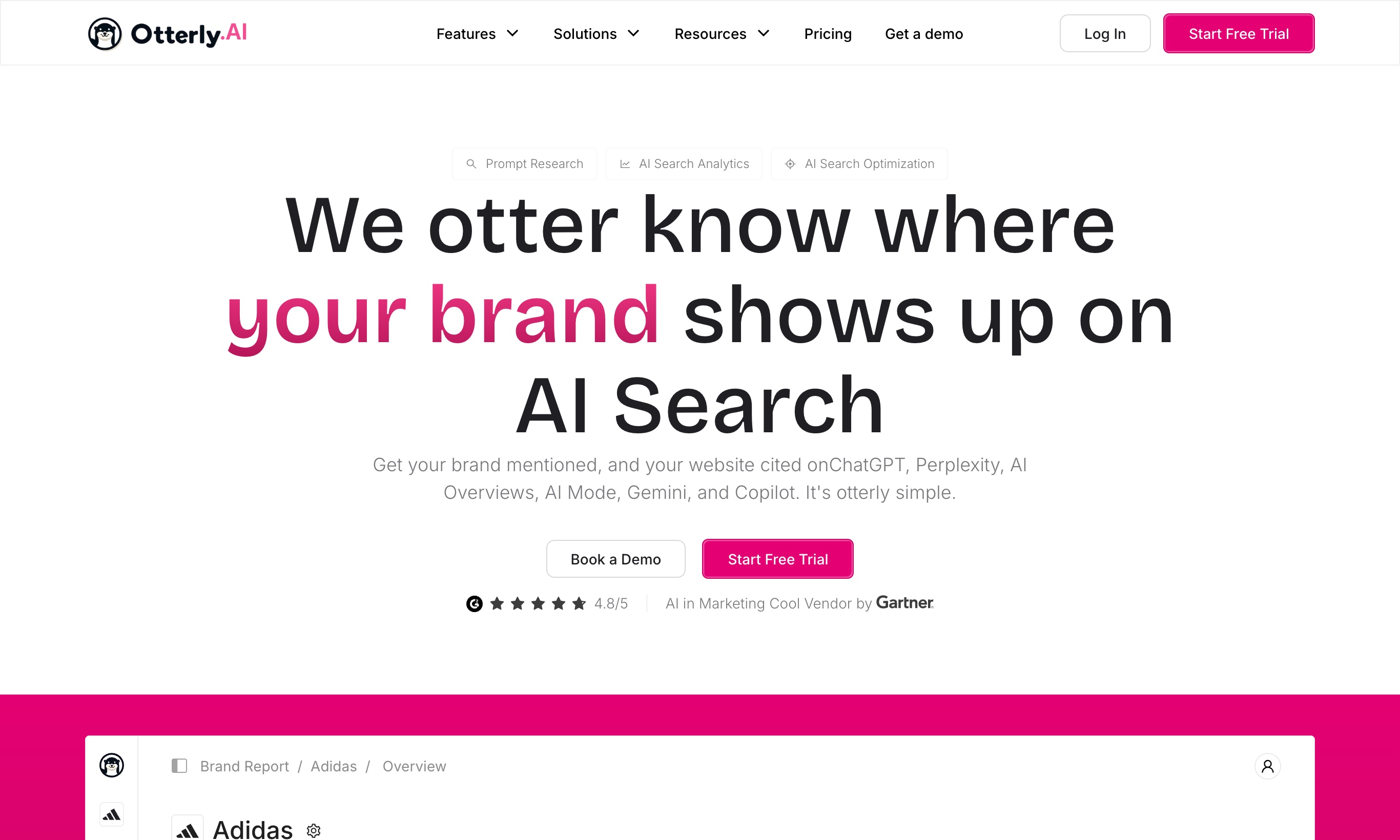
Otterly is the cheapest way to move the manual check onto a daily schedule. You supply the prompts, it runs them every day across ChatGPT, Google AI Overviews, Perplexity and Copilot on the entry tier, and reports mentions, citations, average position and share of voice against the competitors you name. Claude, Gemini and AI Mode are paid add-ons. The Standard tier adds an API, an MCP server and crawler analytics, so you can see which AI bots fetch your pages. Seven-day trial, no card. Founded in Austria in 2024.
- Best for
- A founder or one-person marketing team tracking 15 to 100 prompts
- Pricing
- From $29 a month for 15 prompts and four engines, $189 for 100 prompts with API access
- Type
- Prompt tracker, daily runs, your own prompts
- Engines
- ChatGPT, AI Overviews, Perplexity, Copilot; Claude, Gemini and AI Mode as add-ons
Rankscale
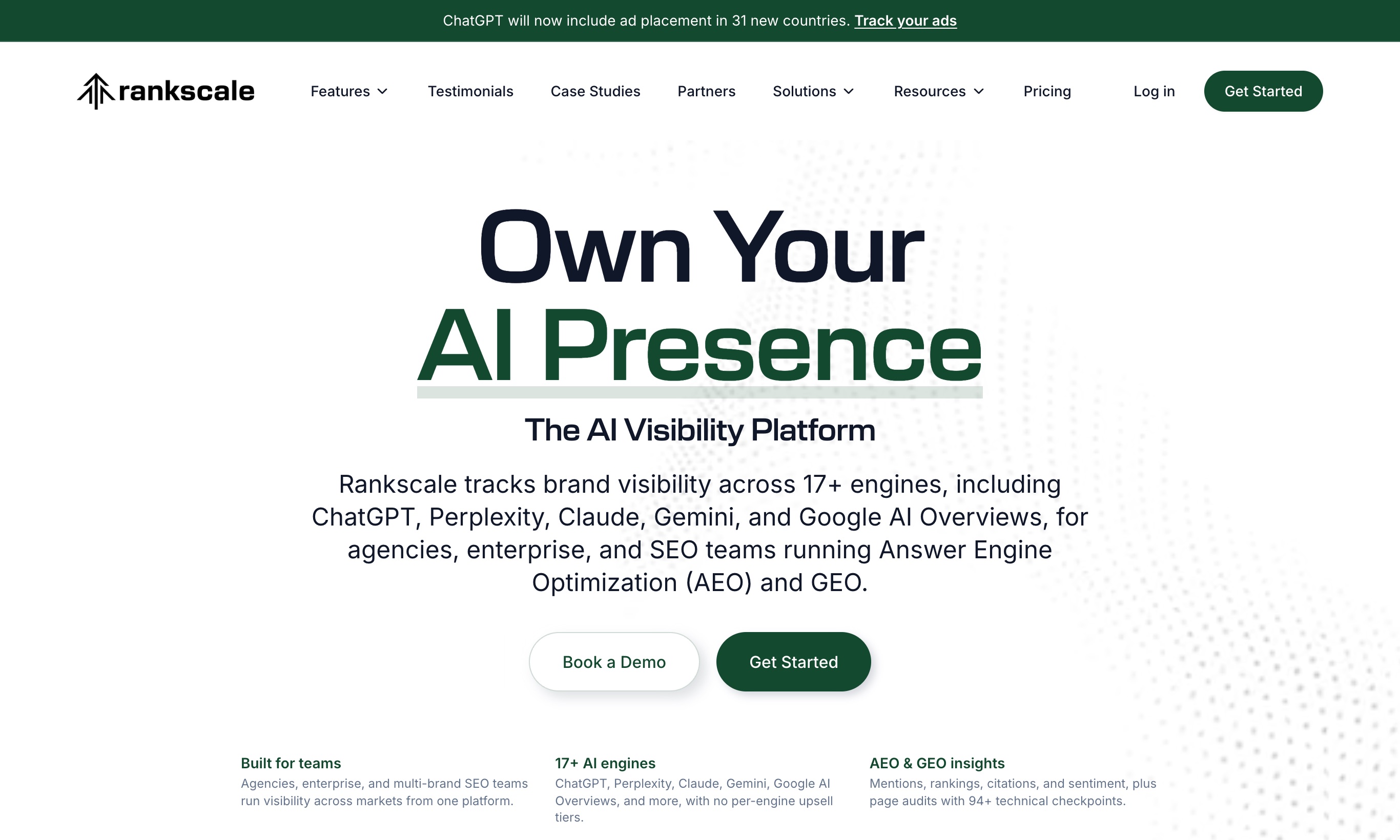
Rankscale covers the widest engine list of the seven, including Claude, DeepSeek, Grok and Mistral, and prices by credits rather than by prompt count, so a small brand can run a few prompts across every engine without paying per model. The reports cover share of voice, sentiment, cited domains and the query fan-out behind an answer, plus a page audit that scores a URL for AI readability. The Essentials tier starts at $20 a month on a top-up model. The Pro tier at $99 includes about 4,800 answers a month, GA4 and Search Console connections, and a seven-day trial. A small Austrian team, founded 2024.
- Best for
- A solo operator who wants Claude and Gemini covered without the add-on pricing
- Pricing
- From $20 a month on credits, $99 a month for the Pro tier with all engines
- Type
- Credit-based prompt tracker with page audits
- Engines
- ChatGPT, Perplexity, Claude, Gemini, AI Overviews, AI Mode, Copilot, Grok, DeepSeek, Mistral
Peec AI
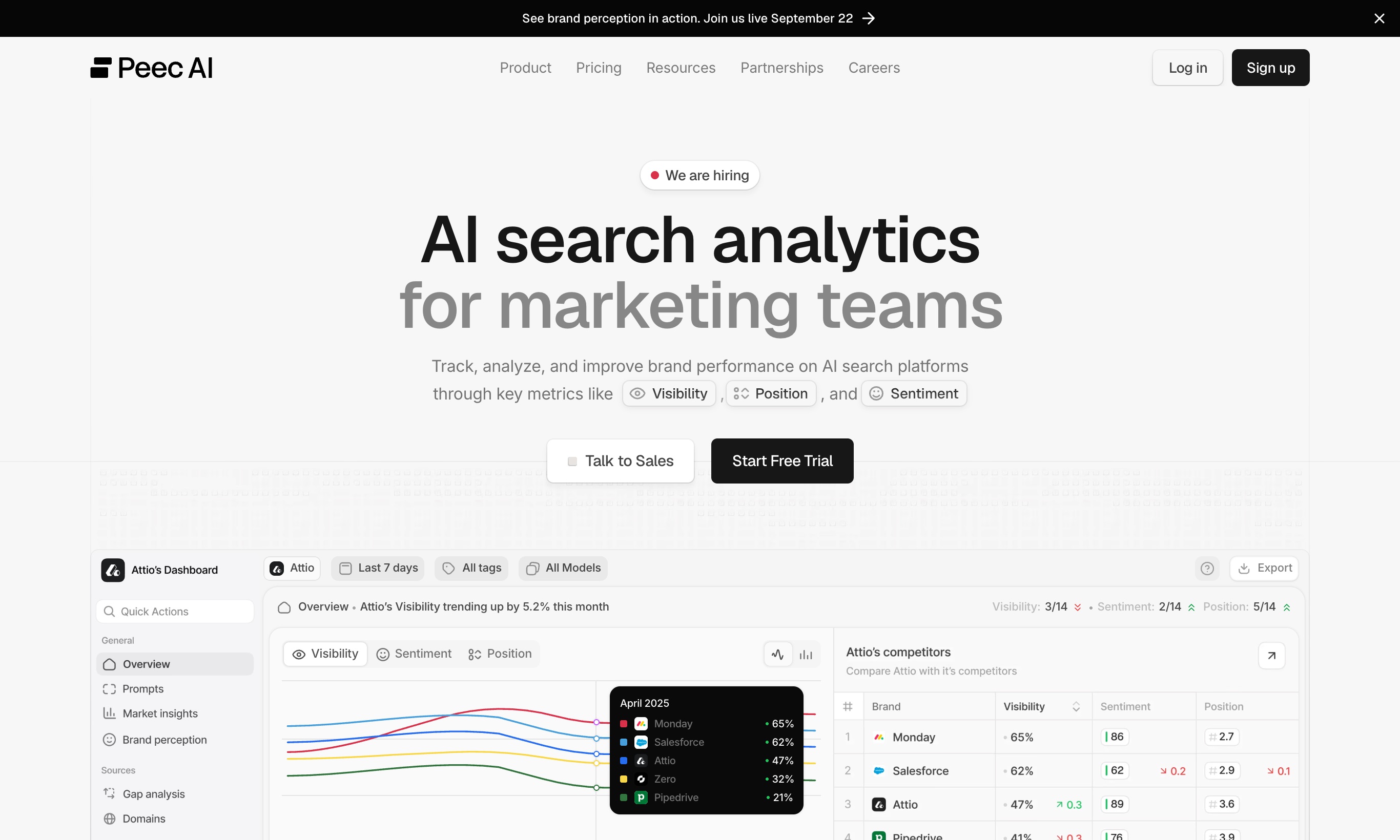
Peec is built for a marketing team that reports on AI search the way it reports on organic. It tracks visibility, position and sentiment daily, ranks you against competitors, and its source view shows which sites the assistants cite for your prompts, which is where G2 and Reddit tend to show up. You pick three engines on the self-serve plans from ChatGPT, AI Mode, AI Overviews, Copilot, Perplexity, Gemini and Grok. Claude is enterprise only. Prompts can be your own or suggested with estimated volumes. Seven-day trial, no card. Berlin, founded February 2025, raised a $21M Series A in November 2025.
- Best for
- A marketing team of two to ten that needs a weekly share-of-voice report
- Pricing
- From about $95 a month for 50 prompts and three engines, $245 for 150 prompts
- Type
- Prompt tracker with competitor and source reporting
- Engines
- Three of ChatGPT, AI Mode, AI Overviews, Copilot, Perplexity, Gemini, Grok; Claude on enterprise
Semrush AI Visibility Toolkit
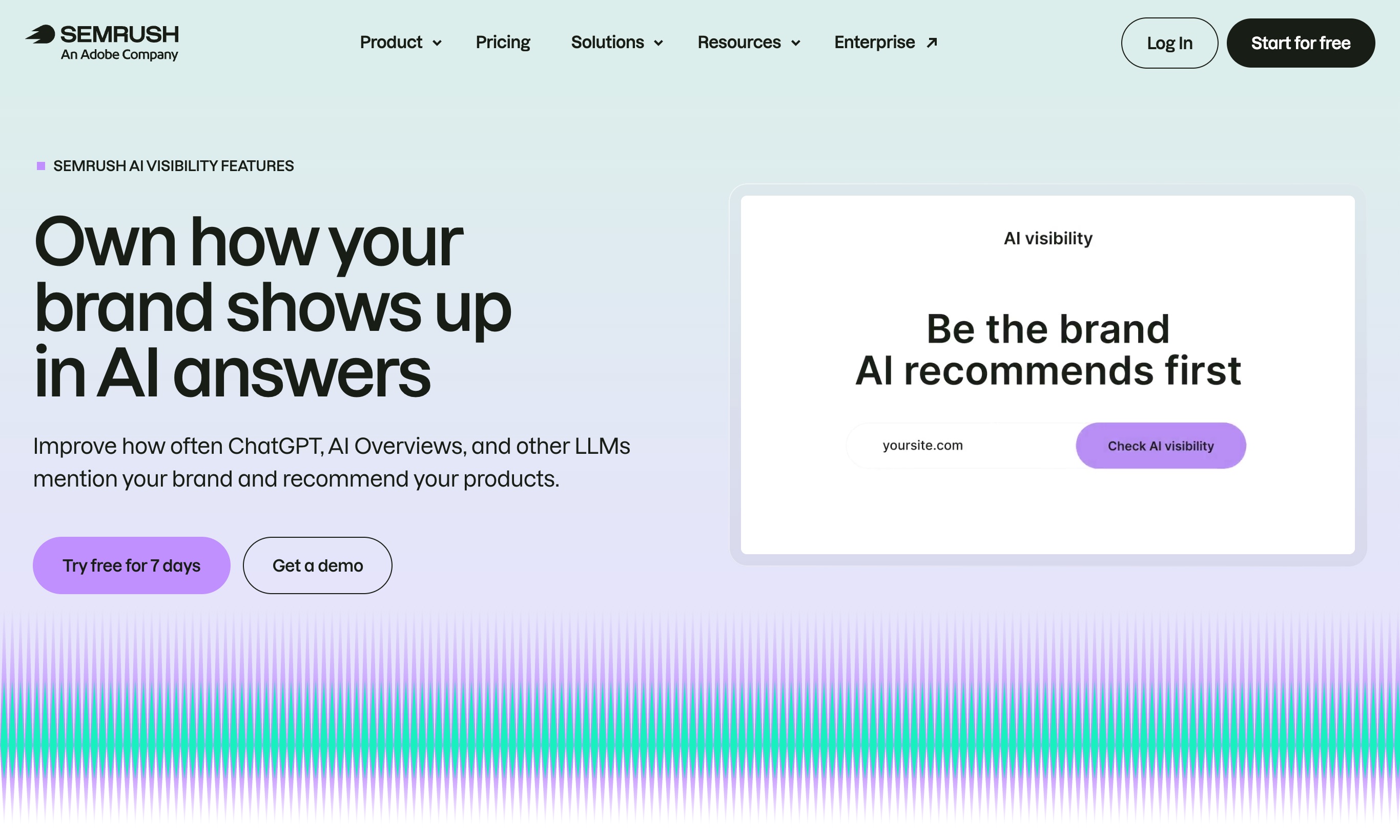
If you already pay for Semrush, this is the tool you try first, because it sits next to the keyword data you use every week. It tracks ChatGPT, AI Overviews, AI Mode, Gemini and Perplexity, reports share of voice, sentiment and topic coverage against competitors, and adds an AI readiness audit that lists which AI crawlers your site blocks. You get 25 custom prompts on the standalone plan plus synthetic prompts generated from your domain, and there is a free one-shot visibility checker on the product page. Seven-day trial. The gap is engine coverage, with no Claude, Copilot or Grok.
- Best for
- An existing Semrush customer, or an SEO team that wants AI visibility beside the rank tracker
- Pricing
- About $99 a month per domain standalone, billed annually, or inside Semrush One from about $199
- Type
- Add-on module to an SEO suite
- Engines
- ChatGPT, AI Overviews, AI Mode, Gemini, Perplexity
Ahrefs Brand Radar
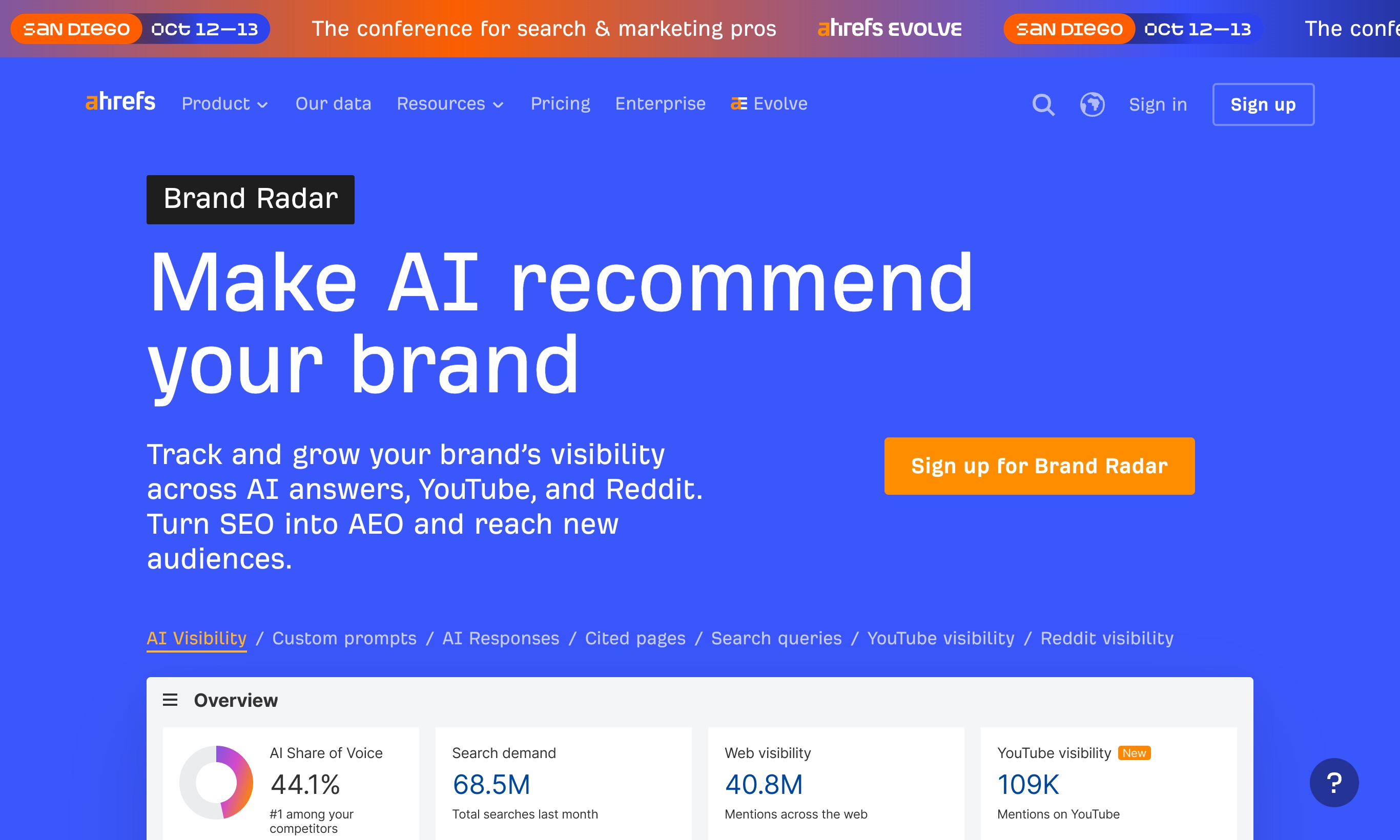
Brand Radar is the Ahrefs answer to the same question, and its distinctive part is the prompt index. Instead of only tracking prompts you write, it expands the Ahrefs keyword database into hundreds of millions of prompts and weights your mentions by estimated prompt volume, so you get an impressions-style number for AI answers. It also lists cited domains and cited pages, tracks AI Overviews, AI Mode, Gemini, Perplexity, ChatGPT, Copilot and Claude, and has a bot analytics view of AI crawler hits on your site. Custom prompts start at about €47 a month on top of an Ahrefs plan, and the full AI Visibility Index add-on is about €179.
- Best for
- An SEO team already on Ahrefs that wants volume-weighted AI visibility next to organic
- Pricing
- Custom prompts from about €47 a month plus an Ahrefs plan, full index add-on about €179
- Type
- Add-on module to an SEO suite, with a prompt volume index
- Engines
- AI Overviews, AI Mode, Gemini, Perplexity, ChatGPT, Copilot, Claude
Profound
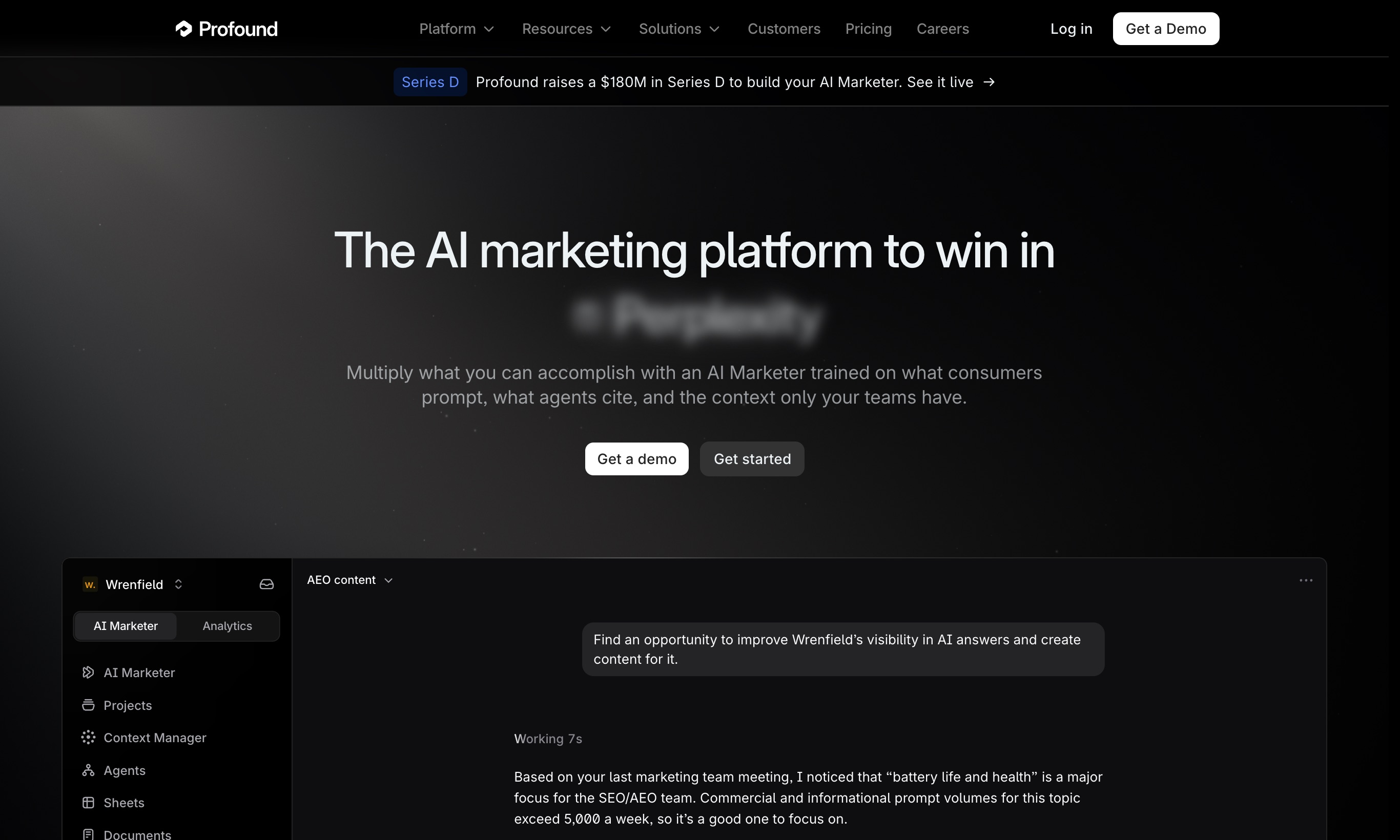
Profound is the enterprise reference point in this category, used by a third of the Fortune 100 by its own count, and raised at a billion-dollar valuation in early 2026. It covers nine engines, shows citations by platform, estimates prompt volumes from real conversation data, and its agent analytics tie AI crawler behaviour to the traffic that follows. It has moved beyond tracking into an AI marketer product that drafts content and outreach against the gaps it finds. The public pricing page shows a free trial of ten prompts on ChatGPT and an enterprise plan with custom pricing. Reviews from August and September 2026 describe self-serve tiers at $99 and $399 a month billed annually, which we could not confirm on the live page.
- Best for
- A brand with a content and PR team, and a budget that assumes a sales call
- Pricing
- Free trial of ten prompts, then custom enterprise pricing; reviews cite self-serve from $99 a month billed annually
- Type
- Enterprise AI visibility platform with prompt volumes and agents
- Engines
- ChatGPT, Perplexity, Claude, Gemini, Grok, Copilot, DeepSeek, AI Overviews, AI Mode
Scrunch
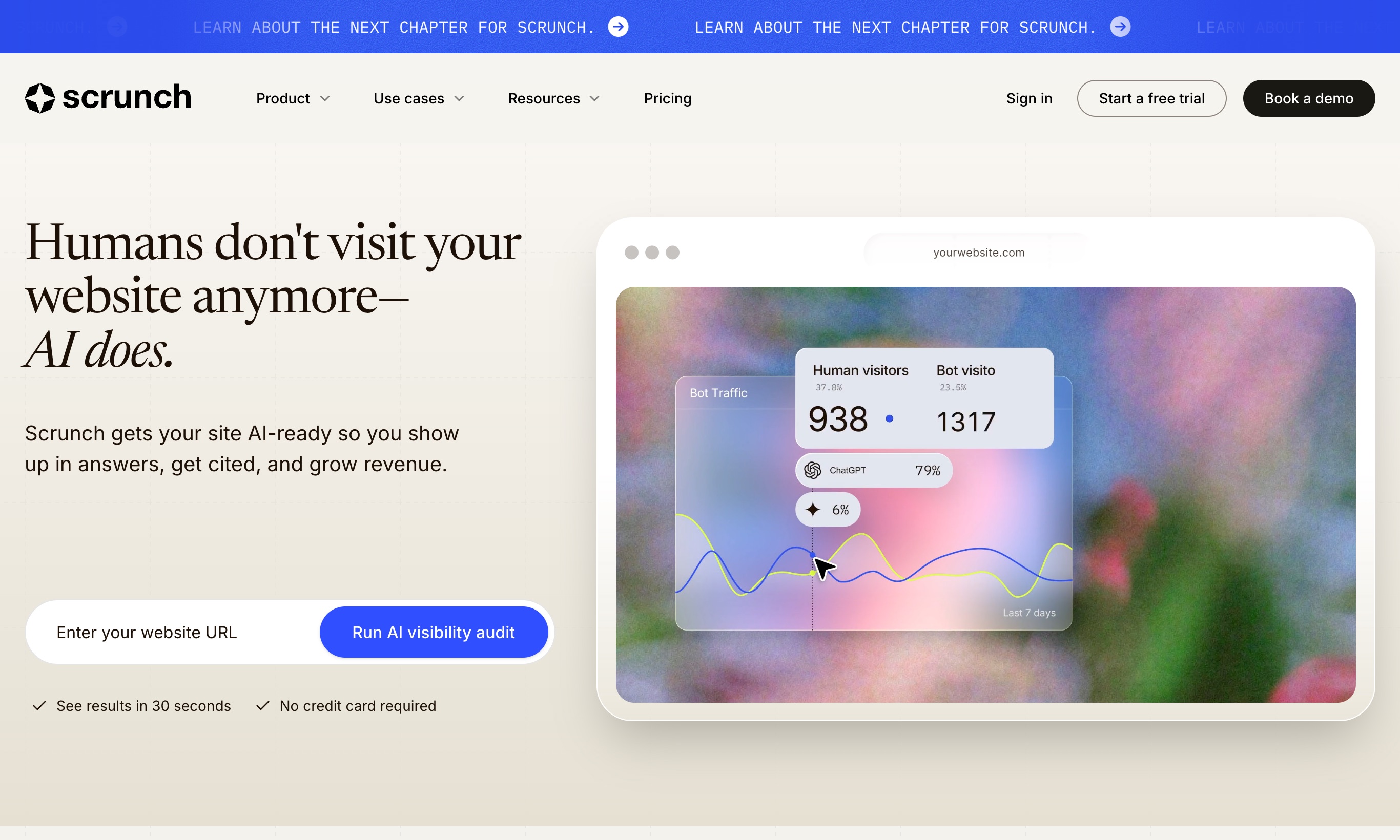
Scrunch starts from the same tracking, share of voice and cited-source mapping across ChatGPT, Claude, Gemini, Perplexity, AI Mode, AI Overviews and Meta, then goes one step further than the others. Its agent experience layer serves an AI-readable version of your pages to the bots that fetch them, and it names the bots it sees, GPTBot, ClaudeBot and PerplexityBot among them, with a GA4 view of the referrals that follow. The Starter plan is $300 a month for 350 of your own prompts plus a thousand generated ones, three seats and three buyer personas. Sitecore announced its acquisition of Scrunch in June 2026, so expect it to drift toward enterprise content stacks.
- Best for
- A mid-market brand or agency that wants to change what the bots read, not only measure it
- Pricing
- From $300 a month, $250 billed annually, for 350 custom prompts and three seats
- Type
- Tracking plus an AI-facing content layer
- Engines
- ChatGPT, Claude, Gemini, Perplexity, AI Mode, AI Overviews, Meta
Three more on the same list. Promptwatch has a free tier and a $95 plan with 50 prompts, crawler log analytics and an MCP server. Athena HQ has a free tier and a $295 plan, tracks eight engines including Claude and Grok, and is the one with ex-Google engineers on the founding team. ZipTie is usage-based from about $43 a month with a 25-prompt trial. We have not run any of the ten long enough to rank them, and this section will be updated when we have.
Pay for one when you have run the manual check twice, a month apart, and the answer moved. At that point you want the trend line and you will not keep doing forty prompts by hand. Before that point the tool gives you a dashboard for a question you have not yet answered once.
Two caveats that the sales pages leave out. The samples are samples. Answers vary by account, location, day and phrasing, so "you appear in 14% of answers" is a poll with a margin, not a rank. And none of them attributes a sign-up. They tell you whether you were mentioned. Your dropdown tells you whether it worked.
Someone who does this every week
The mentors below do AI search work for their own companies and for clients, and three of them describe it in their profiles as the main thing they do now. One of them, Rafayel, co-founded an AI visibility tracking tool, which is worth knowing before you book him for a neutral opinion on tools and a good reason to book him for everything else.
The outside voice
Operators who have moved a brand's mention rate, and will read your sources column with cold eyes:

Dimitris Drakatos
SEO and growth consultant. Leads organic growth at Midnite, previously Wise and Revolut. Works on getting cited by AI. 110+ sessions.

Rafayel Begoyan
Growth advisor and SEO strategist, co-founder of an AI visibility tracking tool. 40+ sessions.

Will Soprano
Product, AEO and SEO. Builds and writes for his own products after startup and Fortune 500 roles. 110+ sessions.

Stuart Brameld
Founder of Growth Method, growth advisor to B2B companies. 280+ sessions.
More of them are on the SEO mentors page and the AI mentors page.
Does ChatGPT recommend you FAQ
The next move takes less than the twenty minutes. Open Search Console, filter queries for "recommend", and read them. Those are the questions assistants asked about your category this month, in your buyers' words. Then run ten of them yourself and write down who got named instead of you.
Keep reading
More from the GrowthMentor blog
Growth Strategy · Apr 18, 2026
Can AI replace your SEO agency? Wrong question. AI came for the clicks, not just the labor.
Foti Panagiotakopoulos
Content Marketing · May 26, 2026
The top of the funnel fell off. AI ate it. Here's what the funnel looks like now.
Foti Panagiotakopoulos
Mentorship · Apr 16, 2026
An AI business coach is patient, cheap, and built to agree with you.
Foti Panagiotakopoulos
AI · Sep 16, 2026
You Built It With Claude Code. Now Nobody Is Buying.
Foti Panagiotakopoulos