I’m building GrowthMentor myself now
Eight months ago, I’d never submitted a pull request on GitHub. Now I’m submitting around three to five a day. A few things I’ve learned along the way, including when to stop building and talk to someone.

In January, while I was on a workation in Argentina with GrowthMentor mentor Matthew Kay, we got talking about my ideas for AI matching. I had plenty I wanted to try, but development was moving more slowly than I wanted.
“Dude, why don’t you just build it yourself with Claude Code?”
“What are you talking about? I’m not a developer.”
“Just try it.”

So I gave it a go, slowly at first and with plenty of peer review along the way. I’d make a change, get feedback and try again, gradually understanding more of what I was doing until I felt confident enough to work independently.
Now I’m GrowthMentor’s lead developer. I used to spend $10,000–$15,000 a month on developers. Today, I do the coding myself, with AI helping me write it.
Being able to sit down and work on the product directly has changed my relationship with the business. When something feels awkward or a member tells me what they need, I can start working through it myself.
I’ve loved that change, but I’m also learning that being able to build more comes with a few problems of its own.
Here’s what I’ve taken from these first eight months.
I started by making changes I could learn from
The first thing I did was hire a 3rd party senior developer to shadow me for a few hours per week who’d flag anything obviously bad, and rebuild the worst of it before I pushed it to my real developers.
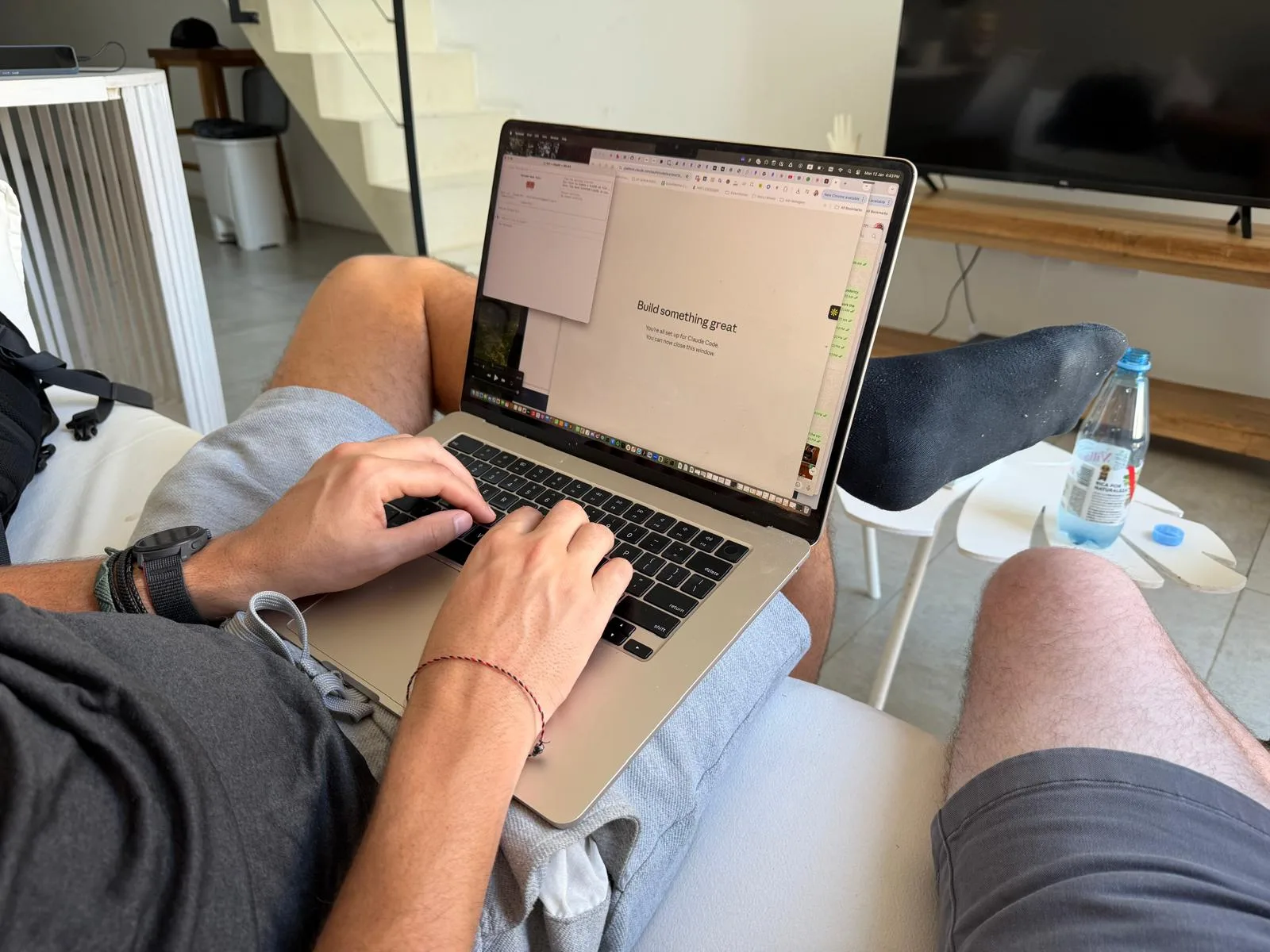
Confidence came from working through actual changes and having other people look at them, rather than waiting until I felt “qualified” to start. AI helped me write the code, while the feedback helped me learn what I was missing and what I needed to study more on a conceptual level. It also helped train my AI, as every review makes the next round better.
If you’re in the position I was in January, start with something in your product that you understand well enough to explain to another person. Give yourself a change you can inspect, try out, and get reviewed. There’s plenty to learn from that before taking on the next thing.
And learn the basics! Databases, edge functions, API calls, auth, row-level security, serializers, controllers, schema, you don’t need to know how to write the code, but you do need to understand what they are so you can tell when the AI is over engineering something.
Building faster can make it harder to choose
When an idea is expensive or difficult to build, you have a reason to pause before starting. As that friction disappears, it gets very tempting to go straight from “I could build this” to building it. I’ve been guilty of that, especially when I’m already absorbed in the product and another idea comes along.
The upside is real. I’m still wrong about most of what I build. I just find out in three days now instead of three months. The downside is that nothing forces me to stop and ask whether the thing was worth three days in the first place.
Recently, I gathered up the ideas I’d had over the last few months and ended up with 53 for mentees and 32 for mentors. Looking at all 85 was overwhelming. I didn’t need help coming up with more ideas, and I didn’t feel like turning the whole list into a public board for everyone else to sort through either.
So I decided to take a breath and ask the community what they actually want. We’re collecting feature requests before choosing what goes on the What’s Next board. I’ll read through them, compare them with what I’ve been thinking about, and bring back a shortlist we can discuss.
I need to use GrowthMentor more myself
There’s an irony in all this that isn’t lost on me.
A conversation with Matthew helped me try something I’d already decided I couldn’t do, and then I got so absorbed in doing it that I needed a reminder to lift my head up and talk to people again.
That’s what GrowthMentor is for!
Having someone to talk things through with, question your assumptions, and help you see what you’ve missed. Building faster hasn’t removed my need for those conversations. If anything, it’s given me more decisions I could use another perspective on.
I intend to use GrowthMentor more myself for exactly that.
I want to talk through what I’m considering while I can still change my mind about it, and make more room for people to challenge the things that seem obvious when I’ve been staring at them on my own.
Matthew, thank you for encouraging me to try something I’d already decided I couldn’t do.
This What’s New log is where I’ll share the results: what’s improved, why it matters, and how to use it.
Foti

 3 months