A first version of an app is now the cheap part. Describe what you want in a prompt box, and a vibe coding tool gives you screens, a database and a live link, often on a free plan.
The trouble starts in month two. Credits run out halfway through a feature, the agent keeps rewriting the same bug, a security researcher finds your database open, or the tool you built on shuts down. Of about 20 lists ranking for this search in September 2026, at least 12 came from a tool vendor or a dev agency. No tool paid to be on this one, and GrowthMentor sells no builder.
Each of the 35 tools below comes with its starting price, whether you can take the code with you, and a sourced line on where it breaks. If you are still weighing AI against a human partner, AI cofounder vs human cofounder covers that question first.
Last checked on October 3, 2026.
TL;DR
- Pick the group before the tool. Prompt-to-app builders get a web app live fastest, mobile builders handle the app stores, visual no-code tools keep an editor you change by hand, coding agents work on a real repository, and backends hold the data.
- Most tools start free and charge by credits, tokens or usage. The cheapest paid plans here run from $8 to $85 a month (September 2026), and the plan price is rarely the whole bill.
- Jump to prompt-to-app builders, mobile app builders, visual no-code builders, AI coding agents or backends.
How to pick a vibe coding tool
Start with what you are building, not with the tool from the last demo you watched. The group settles most of the tradeoffs before you compare prices.
- A web app you can show people this week. Start with a prompt-to-app builder. Hosting and a database usually come included.
- An app in the App Store or Google Play. Use a mobile builder, and budget for Apple's and Google's developer fees.
- An internal tool or client portal you will keep editing. A visual no-code builder gives you an editor, usually without the code.
- A product that has users and needs a real codebase. Move to an AI coding agent, which works on a repository you own.
- A database and login for any of the above. Pick a backend, and set its access rules before launch.
Code export matters more than it looks on day one. If a tool shuts down or doubles its price, the code you can download is the part of the product you still own. Five tools that closed or turned into something else are listed further down.
The 35 tools at a glance (prices checked September 2026)
| Tool | Group | Builds | Starts at | Code export |
|---|---|---|---|---|
| Lovable | Prompt-to-app | Web apps, hosting | Free, then $25 | Yes, GitHub sync |
| Bolt.new | Prompt-to-app | Web apps, hosting | Free, then $25 | Yes, GitHub sync |
| Replit | Prompt-to-app | Web apps, database, hosting | Free, then $20 | Yes, GitHub sync |
| Base44 | Prompt-to-app | Web apps, login, payments | Free, then $16 (yearly) | Builder plan, GitHub sync |
| v0 | Prompt-to-app | Next.js web apps | Free, then $30 a user | Yes, GitHub sync |
| Anything | Prompt-to-app | Web and mobile apps | Free, then $19 | Yes, zip download |
| Emergent | Prompt-to-app | Web and mobile apps | Free, then $20 | Standard plan, GitHub |
| MeDo | Prompt-to-app | Web and mobile apps | Free, then $20 | Pro plan only |
| Floot | Prompt-to-app | Full apps, hosting | Free, then $25 | Paid plans, download |
| Rocket.new | Prompt-to-app | Web and mobile apps | Free, then $25 | Yes, download or GitHub |
| Blink | Prompt-to-app | Web and mobile apps | Free, then $25 | Starter plan, download |
| Leap | Prompt-to-app | Full-stack apps | Free, then $30 | Yes, your GitHub |
| Google AI Studio | Prompt-to-app | Web and Android apps | Usage-based | Yes, GitHub or zip |
| Draftbit | Mobile | React Native apps | Free, then $12 | Standard plan and up |
| Thunkable | Mobile | Native iOS and Android | Free, then $19 | Not published |
| Rork | Mobile | iOS and Android apps | Free, then $20 | Paid plans, GitHub |
| a0.dev | Mobile | Mobile apps | $20 | Yes |
| Vibecode | Mobile | Mobile and web apps | $20 | Yes, download |
| Adalo | Mobile | Web, iOS and Android | Free, then $36 (yearly) | Not published |
| FlutterFlow | Mobile | Flutter apps | Free, then $39 | Basic plan and up |
| Softr | Visual no-code | Portals, internal tools | Free, then $19 (yearly) | No |
| WeWeb | Visual no-code | Web app front ends | Free, then $20 | Paid plans, Vue.js |
| Glide | Visual no-code | Internal business apps | Free, then $25 | Enterprise only |
| Bubble | Visual no-code | Web and mobile apps | Free, then $59 (yearly) | Not published |
| Noloco | Visual no-code | Portals, internal apps | Free, then $65 (yearly) | Not published |
| OpenAI Codex | Coding agent | Coding agent | Free, then $8 | Your repo |
| GitHub Copilot | Coding agent | Coding agent | Free, then $10 | Your repo |
| Claude Code | Coding agent | Coding agent | $17 (yearly) or $20 | Your repo |
| Google Antigravity | Coding agent | Coding agent | Free, then $19.99 | Your repo |
| Cursor | Coding agent | AI code editor | Free, then $20 | Your repo |
| Kiro | Coding agent | Agentic IDE | Free, then $20 | Your repo |
| Devin Desktop | Coding agent | Agentic IDE | Free, then $20 | Your repo |
| Supabase | Backend | Database, login, storage | Free, then $25 | Standard Postgres |
| Convex | Backend | Realtime backend | Free, then $25 a developer | Open source, self-host |
| Xano | Backend | No-code backend, APIs | Free, then $85 (yearly) | Data export only |
- Group
- Prompt-to-app
- Builds
- Web apps, hosting
- Starts at
- Free, then $25
- Code export
- Yes, GitHub sync
- Group
- Prompt-to-app
- Builds
- Web apps, hosting
- Starts at
- Free, then $25
- Code export
- Yes, GitHub sync
- Group
- Prompt-to-app
- Builds
- Web apps, database, hosting
- Starts at
- Free, then $20
- Code export
- Yes, GitHub sync
- Group
- Prompt-to-app
- Builds
- Web apps, login, payments
- Starts at
- Free, then $16 (yearly)
- Code export
- Builder plan, GitHub sync
- Group
- Prompt-to-app
- Builds
- Next.js web apps
- Starts at
- Free, then $30 a user
- Code export
- Yes, GitHub sync
- Group
- Prompt-to-app
- Builds
- Web and mobile apps
- Starts at
- Free, then $19
- Code export
- Yes, zip download
- Group
- Prompt-to-app
- Builds
- Web and mobile apps
- Starts at
- Free, then $20
- Code export
- Standard plan, GitHub
- Group
- Prompt-to-app
- Builds
- Web and mobile apps
- Starts at
- Free, then $20
- Code export
- Pro plan only
- Group
- Prompt-to-app
- Builds
- Full apps, hosting
- Starts at
- Free, then $25
- Code export
- Paid plans, download
- Group
- Prompt-to-app
- Builds
- Web and mobile apps
- Starts at
- Free, then $25
- Code export
- Yes, download or GitHub
- Group
- Prompt-to-app
- Builds
- Web and mobile apps
- Starts at
- Free, then $25
- Code export
- Starter plan, download
- Group
- Prompt-to-app
- Builds
- Full-stack apps
- Starts at
- Free, then $30
- Code export
- Yes, your GitHub
- Group
- Prompt-to-app
- Builds
- Web and Android apps
- Starts at
- Usage-based
- Code export
- Yes, GitHub or zip
- Group
- Mobile
- Builds
- React Native apps
- Starts at
- Free, then $12
- Code export
- Standard plan and up
- Group
- Mobile
- Builds
- Native iOS and Android
- Starts at
- Free, then $19
- Code export
- Not published
- Group
- Mobile
- Builds
- iOS and Android apps
- Starts at
- Free, then $20
- Code export
- Paid plans, GitHub
- Group
- Mobile
- Builds
- Mobile apps
- Starts at
- $20
- Code export
- Yes
- Group
- Mobile
- Builds
- Mobile and web apps
- Starts at
- $20
- Code export
- Yes, download
- Group
- Mobile
- Builds
- Web, iOS and Android
- Starts at
- Free, then $36 (yearly)
- Code export
- Not published
- Group
- Mobile
- Builds
- Flutter apps
- Starts at
- Free, then $39
- Code export
- Basic plan and up
- Group
- Visual no-code
- Builds
- Portals, internal tools
- Starts at
- Free, then $19 (yearly)
- Code export
- No
- Group
- Visual no-code
- Builds
- Web app front ends
- Starts at
- Free, then $20
- Code export
- Paid plans, Vue.js
- Group
- Visual no-code
- Builds
- Internal business apps
- Starts at
- Free, then $25
- Code export
- Enterprise only
- Group
- Visual no-code
- Builds
- Web and mobile apps
- Starts at
- Free, then $59 (yearly)
- Code export
- Not published
- Group
- Visual no-code
- Builds
- Portals, internal apps
- Starts at
- Free, then $65 (yearly)
- Code export
- Not published
- Group
- Coding agent
- Builds
- Coding agent
- Starts at
- Free, then $8
- Code export
- Your repo
- Group
- Coding agent
- Builds
- Coding agent
- Starts at
- Free, then $10
- Code export
- Your repo
- Group
- Coding agent
- Builds
- Coding agent
- Starts at
- $17 (yearly) or $20
- Code export
- Your repo
- Group
- Coding agent
- Builds
- Coding agent
- Starts at
- Free, then $19.99
- Code export
- Your repo
- Group
- Coding agent
- Builds
- AI code editor
- Starts at
- Free, then $20
- Code export
- Your repo
- Group
- Coding agent
- Builds
- Agentic IDE
- Starts at
- Free, then $20
- Code export
- Your repo
- Group
- Coding agent
- Builds
- Agentic IDE
- Starts at
- Free, then $20
- Code export
- Your repo
- Group
- Backend
- Builds
- Database, login, storage
- Starts at
- Free, then $25
- Code export
- Standard Postgres
- Group
- Backend
- Builds
- Realtime backend
- Starts at
- Free, then $25 a developer
- Code export
- Open source, self-host
- Group
- Backend
- Builds
- No-code backend, APIs
- Starts at
- Free, then $85 (yearly)
- Code export
- Data export only
Prompt-to-app builders
These tools take a written description and return a working web app with hosting, and usually a database and login. They fit a founder who wants something clickable before writing a spec.
The break they share is billing. Credits, tokens or messages run out, a complex app uses them faster than a simple one, and the free plan rarely covers a finished product.
Lovable
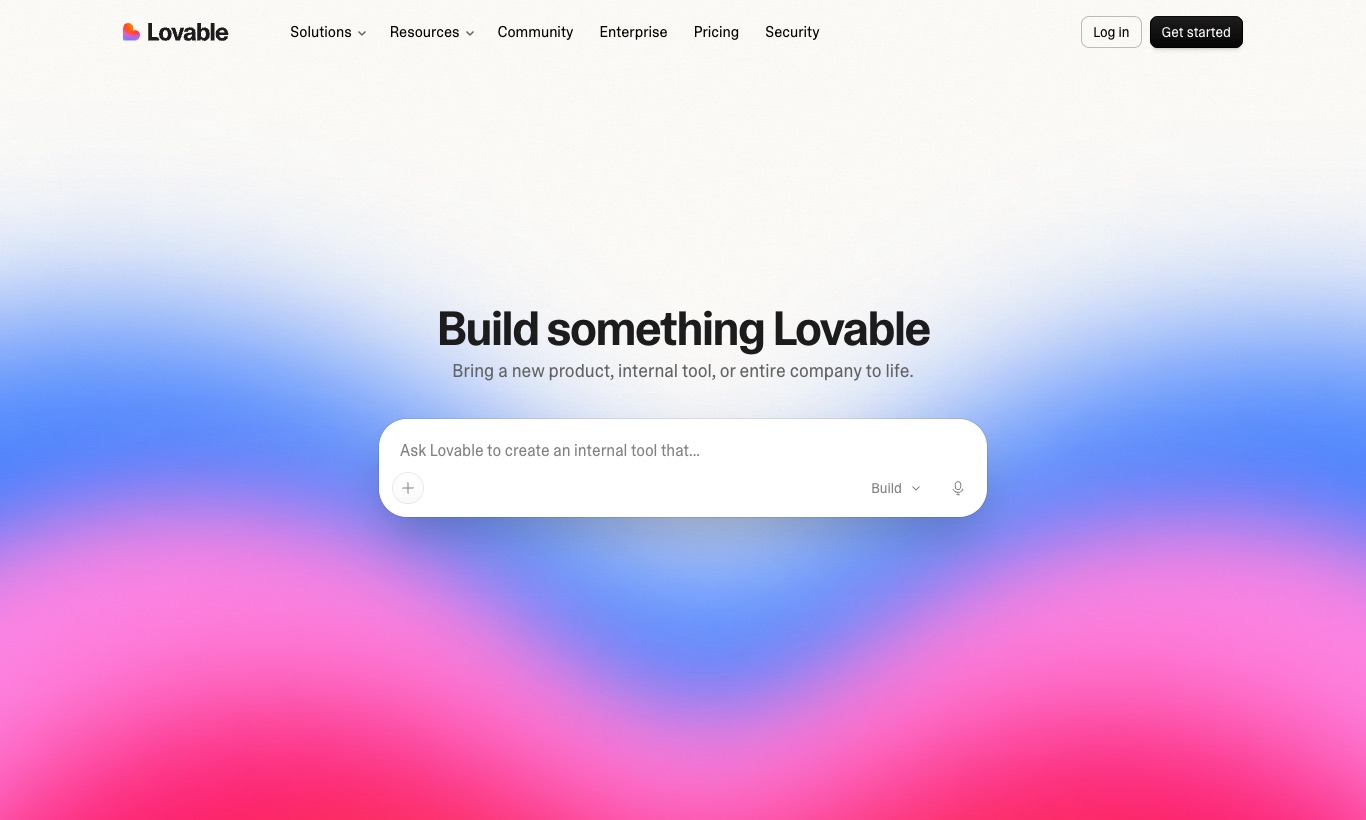
Lovable builds a web app from a chat, hosts it on Lovable Cloud and syncs the code with GitHub when you want it in your own repository. It suits a non-technical founder who wants a first version people can click through this week. Before launch, check who can read your database. The US National Vulnerability Database entry for CVE-2025-48757 describes Lovable-generated sites whose tables were open to outsiders.
- Builds
- Web apps and sites, hosted on Lovable Cloud
- Starts at
- Free plan (5 build credits a day, up to 30 a month). Paid from $25 a month (September 2026)
- Code export
- Yes, two-way GitHub sync, one branch at a time (Lovable docs)
- Where it breaks
- Database access rules. CVE-2025-48757 says an insufficient Row Level Security policy in sites Lovable generated through April 15, 2025 let outsiders read or write their tables. Lovable disputes it, saying each customer is responsible for protecting their app's data.
Bolt.new
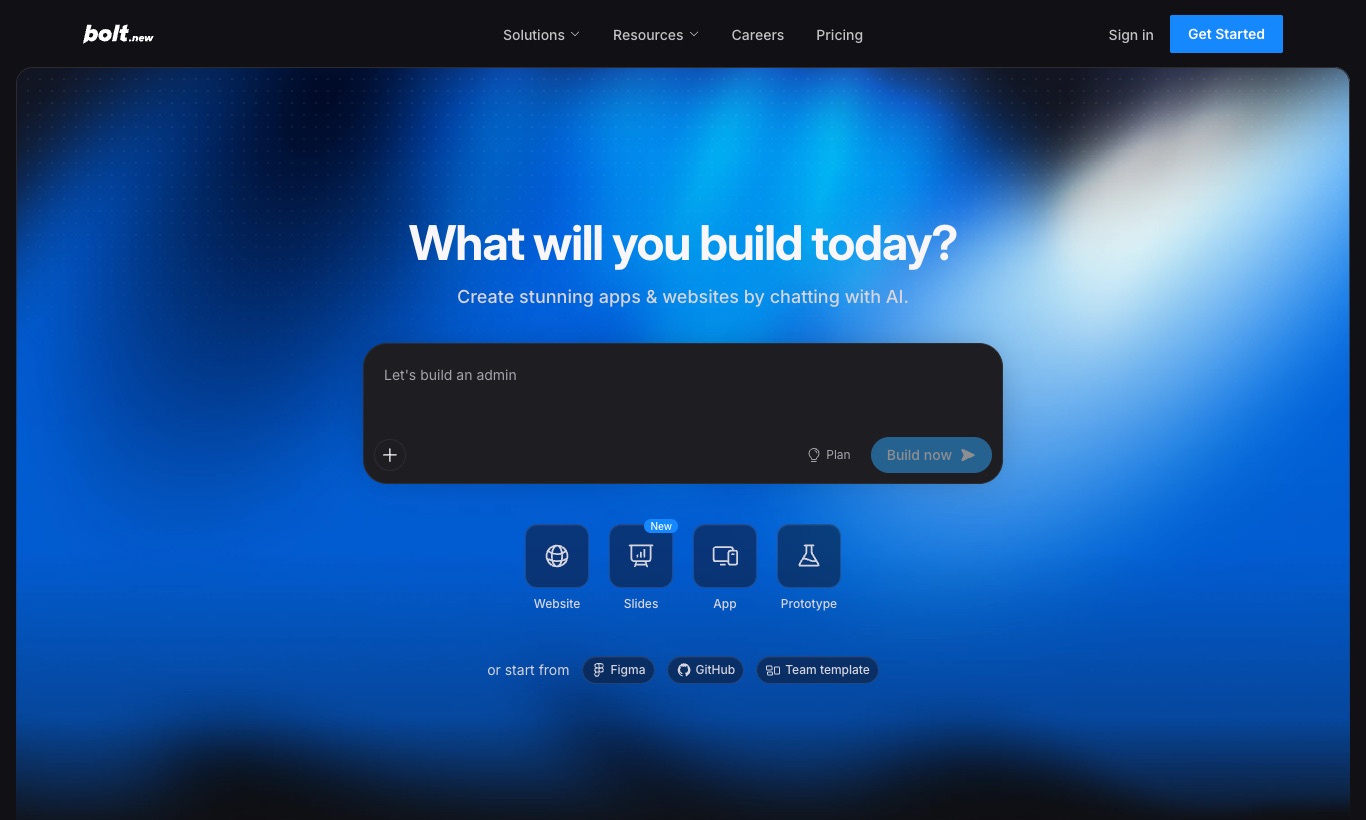
Bolt.new, from StackBlitz, builds web apps in the browser and bills by tokens, the chunks of text the AI reads and writes. It suits founders who like to watch the code being written and want a GitHub backup of every change. A long session on a large project uses tokens fast, so heavy building days hit the free plan's daily cap first.
- Builds
- Web sites and apps, hosting and databases included
- Starts at
- Free plan (300K tokens a day, 1M a month). Paid from $25 a month (September 2026)
- Code export
- Yes, GitHub sync (Bolt docs)
- Where it breaks
- Token billing. The free plan stops at 300K tokens a day, and Pro starts at 10M tokens a month (Bolt pricing page).
Replit
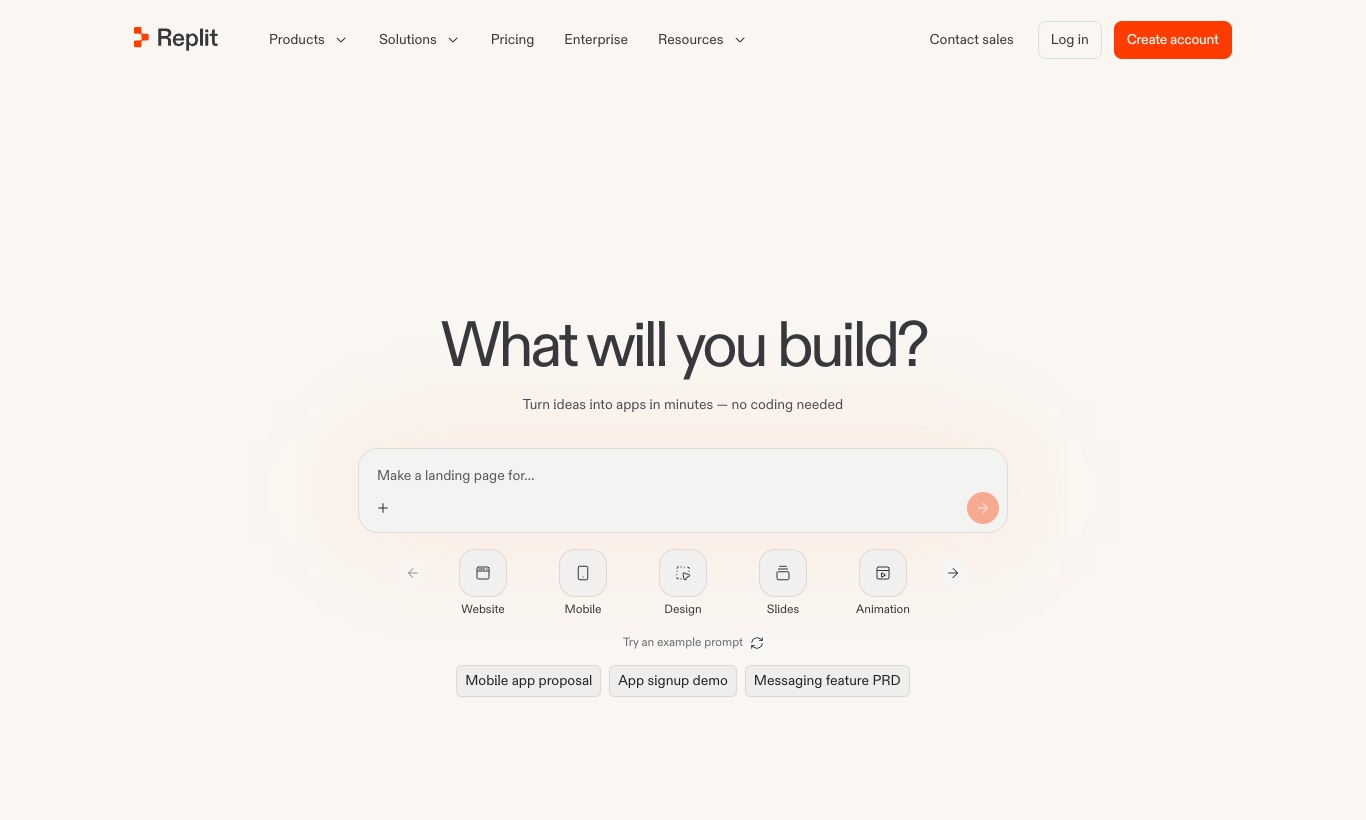
Replit puts an agent, an editor, a database and deployment in one browser tab. It suits a founder who wants one place to build and run the app, with the option to open the code later. In July 2025 its agent deleted a production database during a code freeze in Jason Lemkin's test, and CEO Amjad Masad called it unacceptable and added separate development and production databases (Fortune, July 2025).
- Builds
- Full-stack web apps with database and deployment
- Starts at
- Free plan (up to 30 hours of chat on Free Mode). Paid from $20 a month, $18 billed annually (September 2026)
- Code export
- Yes, Git and GitHub sync (Replit docs)
- Where it breaks
- Production data. In July 2025 Replit's agent deleted a live production database during a code freeze in a public test. Replit then rolled out automatic separation of development and production databases.
Base44
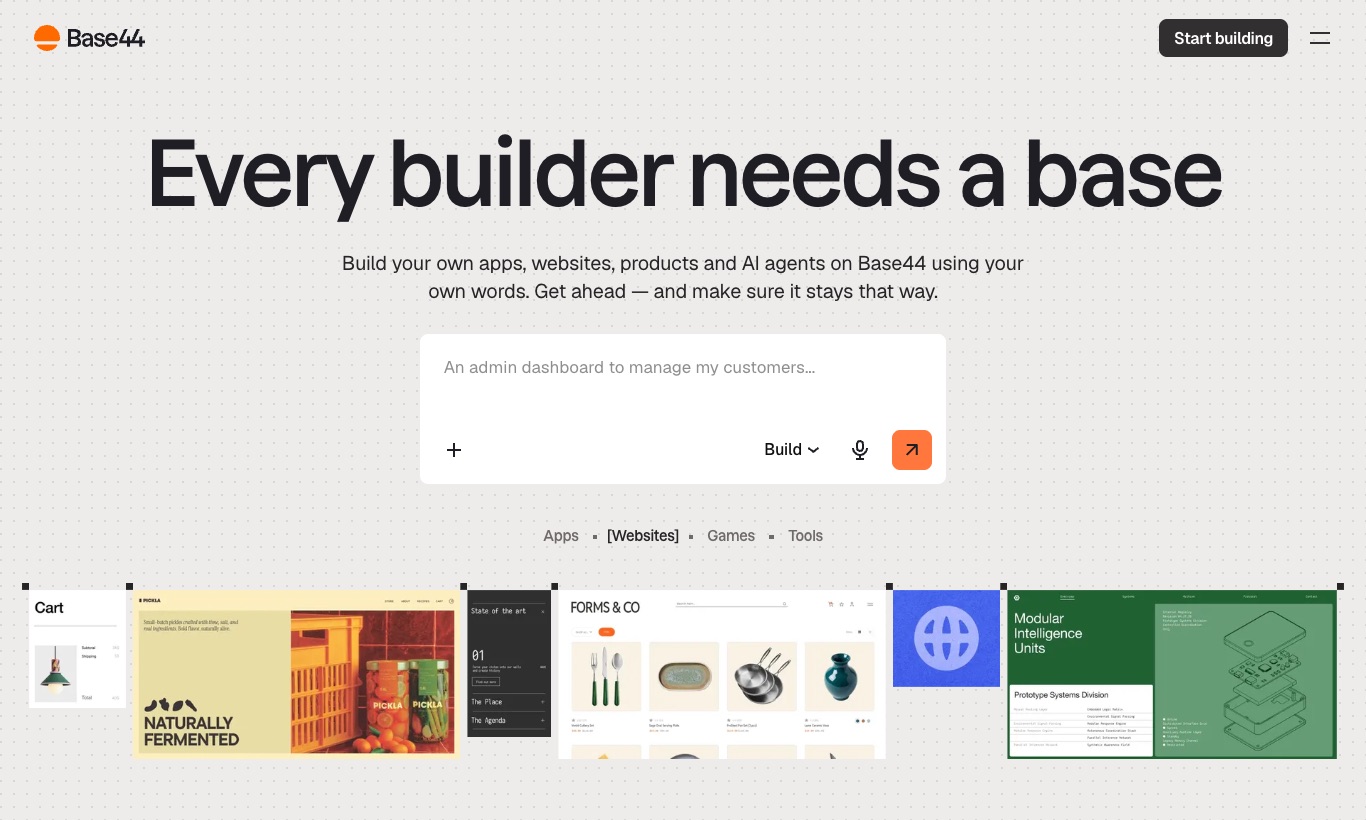
Base44, owned by Wix, builds web apps with the backend, user login and payments already connected. It suits founders who would rather not wire several services together. Wiz reported in July 2025 that a non-secret app ID let anyone register on apps set to private. Wix fixed it within 24 hours and said it found no sign of past abuse.
- Builds
- Web apps with backend, login, payments and hosting
- Starts at
- Free plan (25 message credits a month). Paid from $16 a month billed yearly (September 2026)
- Code export
- Builder plan and up ($40 a month billed yearly), two-way GitHub sync
- Where it breaks
- Login on private apps. In July 2025 Wiz found that anyone could register an account on apps set to private. Wix fixed it in under 24 hours and found no evidence of past abuse.
v0
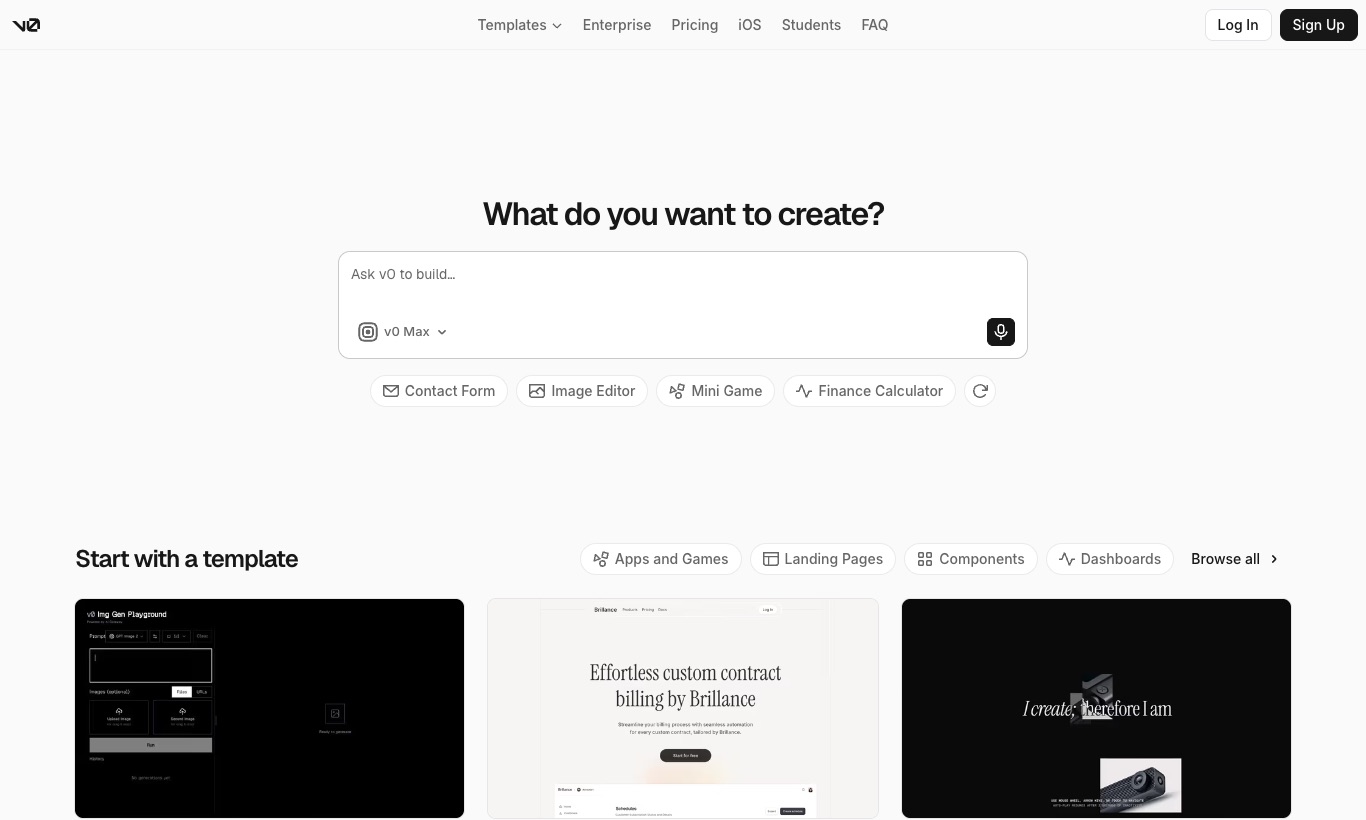
v0 is Vercel's app builder. It writes Next.js code, lets you adjust the layout by hand in Design Mode and deploys to Vercel. It suits founders who care how the interface looks and expect a developer to pick up the code later. Seven messages a day go quickly once you start fixing small details.
- Builds
- Next.js web apps, deployed to Vercel
- Starts at
- Free plan ($5 of monthly credits, 7 messages a day). Paid from $30 a user a month (September 2026)
- Code export
- Yes, GitHub sync
- Where it breaks
- Message cap. The free plan stops at 7 messages a day, and apps deploy to Vercel by default (v0 pricing page).
Anything
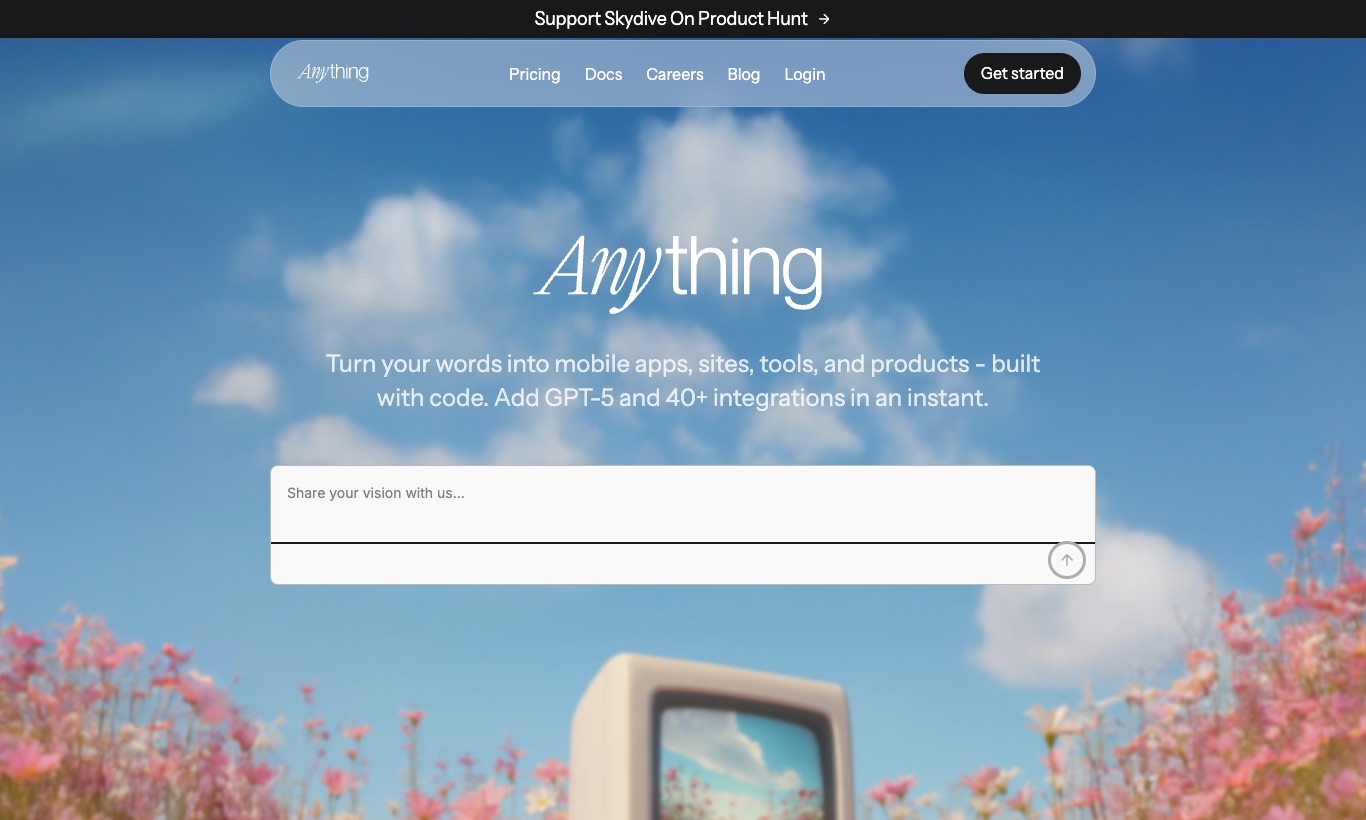
Anything, formerly Create, builds a web app and phone apps from one prompt, with a database, login and Stripe payments. It suits founders who want web and mobile from the same project. The gap between plans is wide, from $19 to $199 a month, so watch your credit use in the first weeks.
- Builds
- Web, iOS and Android apps on one backend
- Starts at
- Free plan (limits not published). Paid from $19 a month (September 2026)
- Code export
- Yes, project download as a zip (Anything docs)
- Where it breaks
- Credit jump. Pro includes 20K credits a month, and the next plan is Max at $199 a month (Anything pricing page).
Emergent
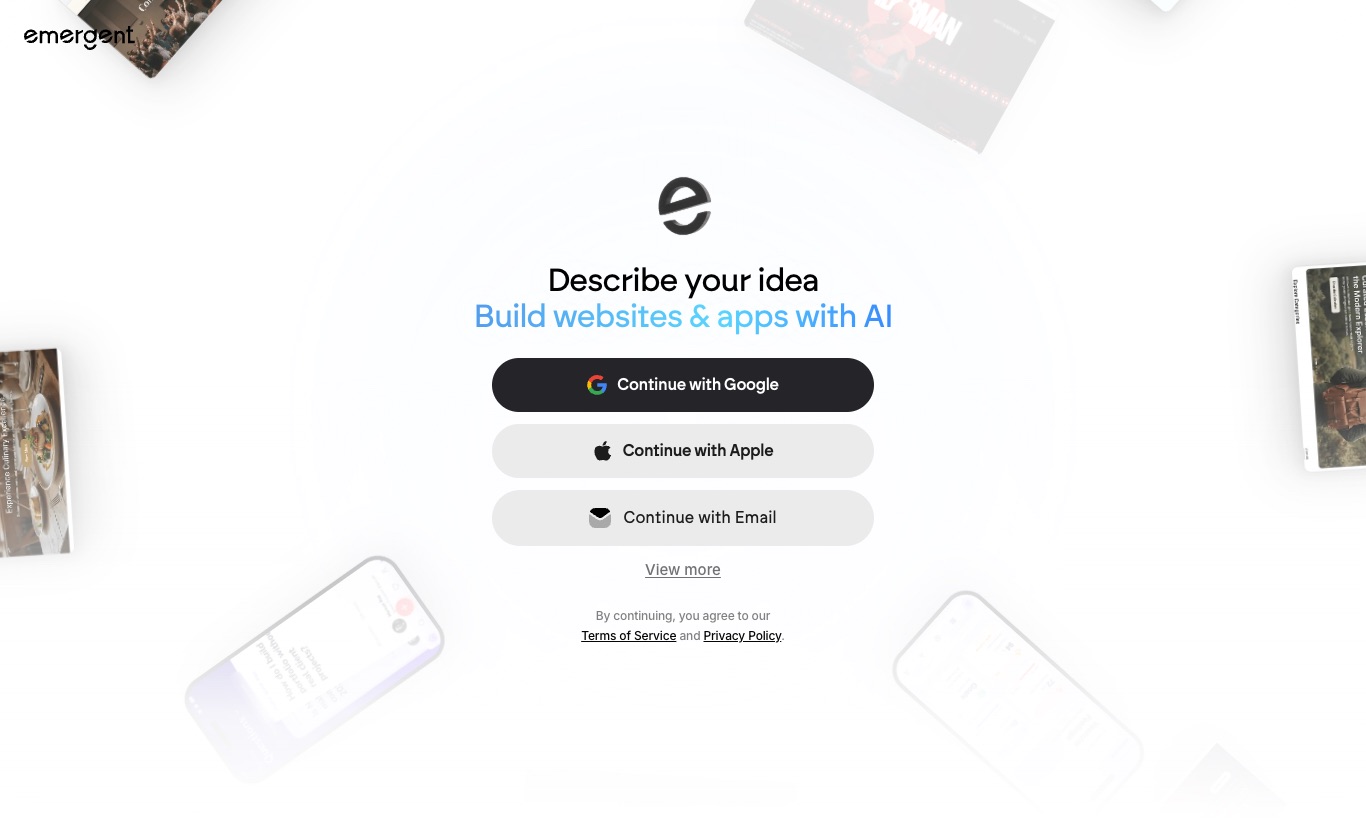
Emergent uses AI agents to design, code and deploy an app from a conversation. It suits founders who want to describe the product and let the agents do the building. Ten free credits cover a test, and the step from the $20 Standard plan to the $200 Pro plan is large.
- Builds
- Web and mobile apps built by AI agents
- Starts at
- Free plan (10 credits a month). Paid from $20 a month, $17 billed annually (September 2026)
- Code export
- Standard plan and up, GitHub integration
- Where it breaks
- Credits. The free plan has 10 credits a month, and the plan after Standard is Pro at $200 a month (Emergent pricing page).
MeDo
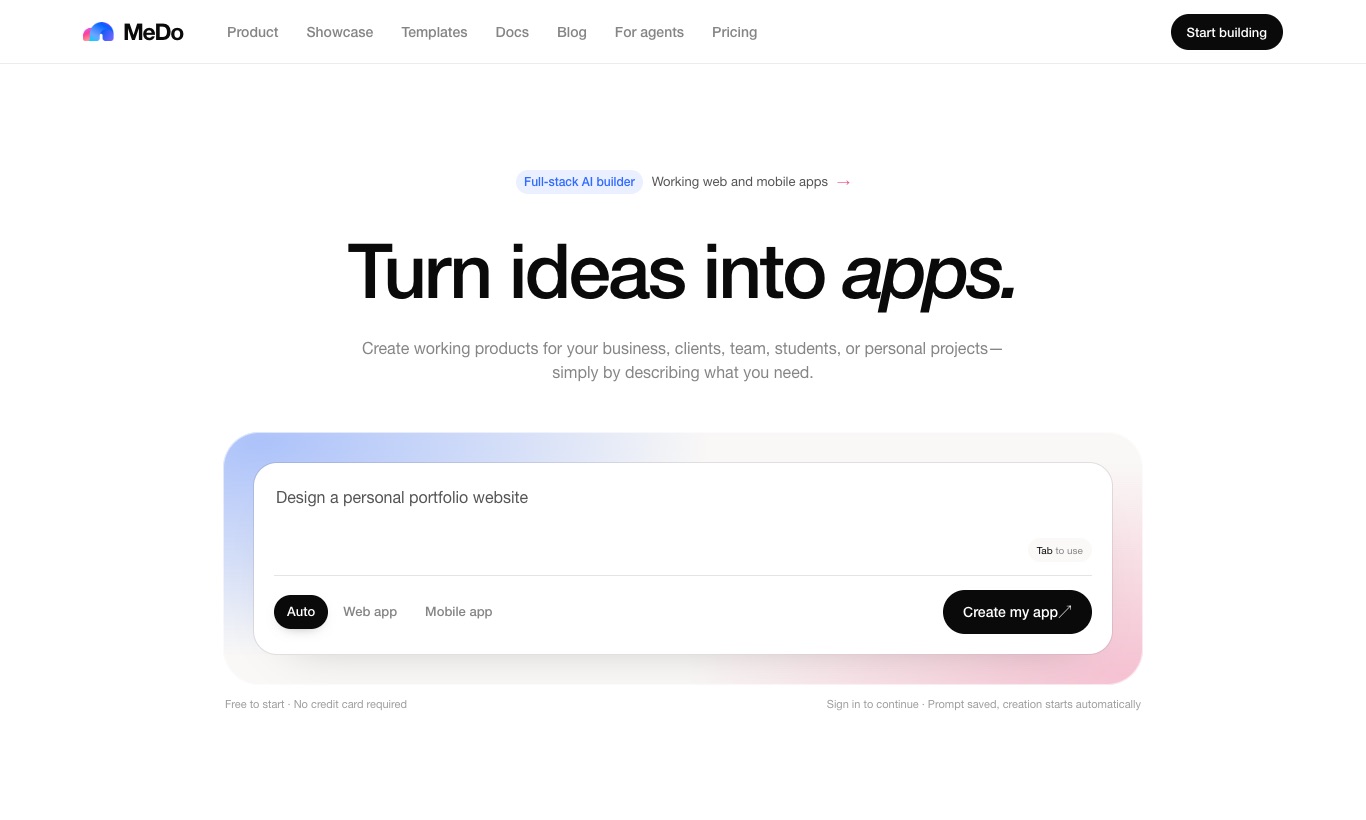
MeDo builds web and mobile apps from a prompt and publishes them to a permanent free MeDo URL. It suits a founder testing an idea with no budget. If you might move the app later, plan for Pro, because source code download starts there.
- Builds
- Web and mobile apps with backend and database
- Starts at
- Free plan (400 credits from monthly login bonuses). Paid from $20 a month (September 2026)
- Code export
- Pro plan only, source code download
- Where it breaks
- Code stays behind on Free. Source code download comes only with Pro (MeDo homepage).
Floot
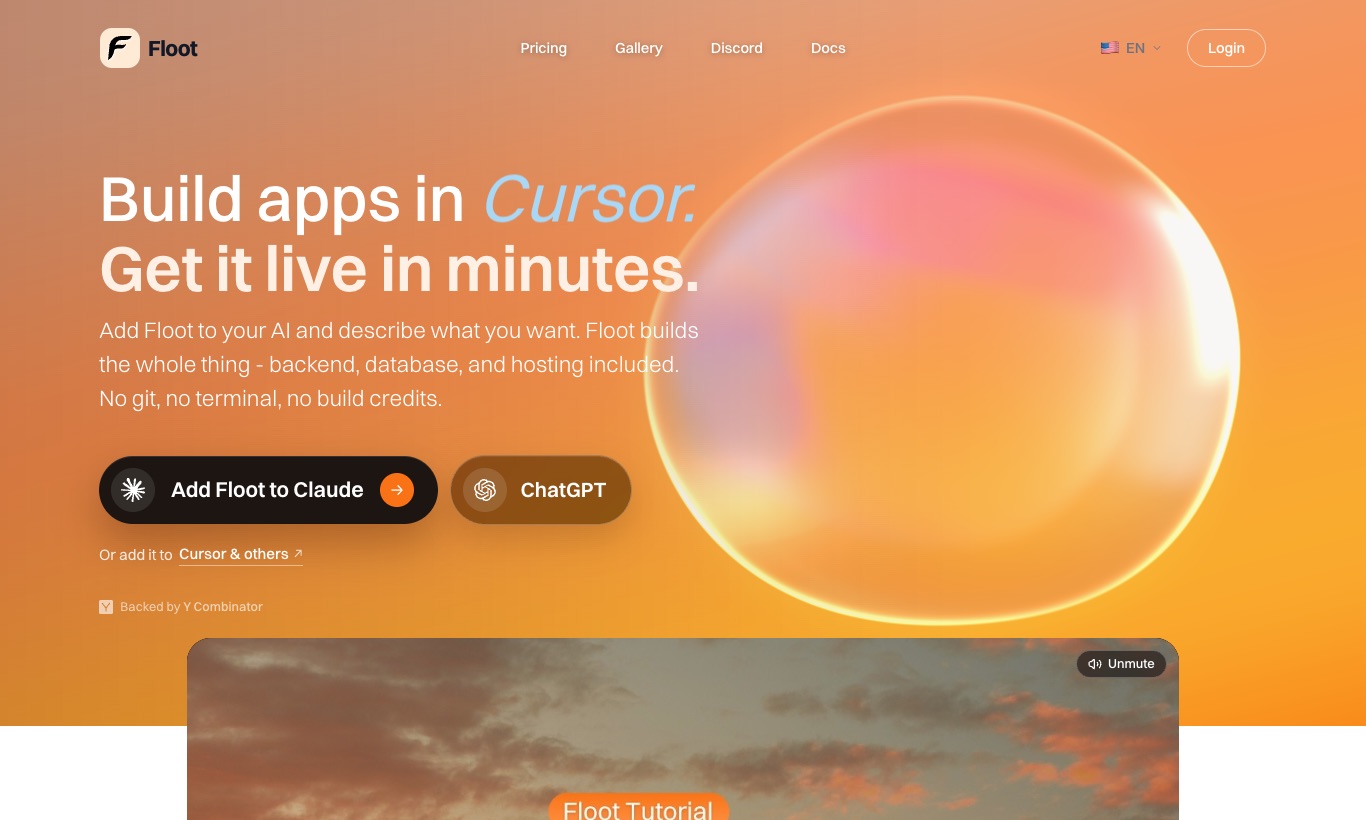
Floot now runs inside Claude and ChatGPT, so you describe the app to your AI assistant and Floot builds and hosts it. Reviews written before that change describe a different product. It suits founders who already work in one of those assistants. Every plan includes mobile builds, 2 a month on Free, but connecting Google Play needs a paid plan.
- Builds
- Full apps with backend, database and hosting, built from Claude or ChatGPT
- Starts at
- Free plan (daily limits plus a weekly pool). Paid from $25 a month (September 2026)
- Code export
- Paid plans, Get Code download (Floot docs)
- Where it breaks
- Store connection. Connecting Google Play needs a paid plan (Floot pricing page).
Rocket.new
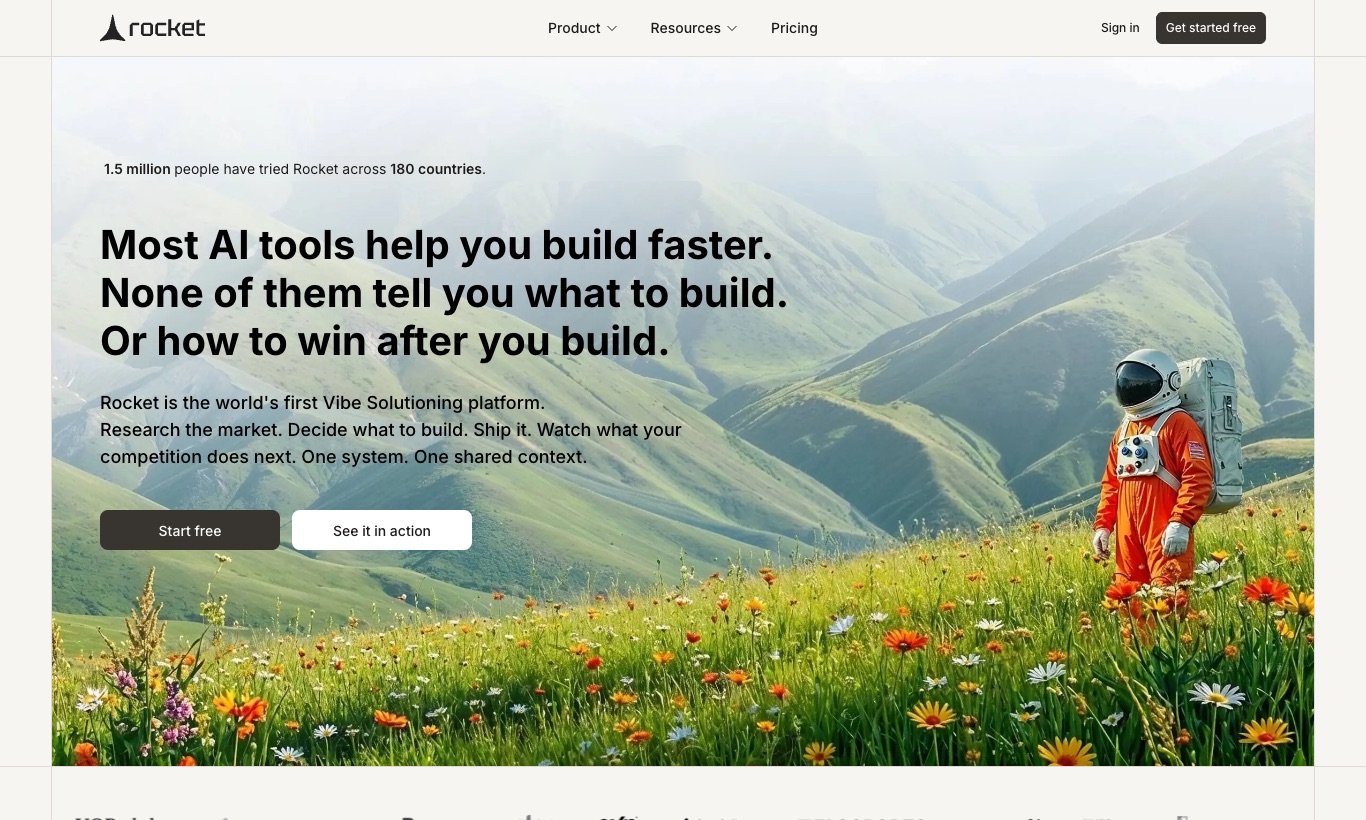
Rocket.new builds websites, web apps and mobile apps and keeps separate staging and production environments. It charges a monthly platform fee plus credits that never expire, with no per-seat fees. It suits a small team that wants a test copy before changes go live. If you plan to edit in GitHub and in Rocket at the same time, check your project type first.
- Builds
- Websites, web apps and mobile apps, with staging and production
- Starts at
- Free plan (20 credits). Paid from $25 a month platform fee plus credits (September 2026)
- Code export
- Yes, code download or push to GitHub
- Where it breaks
- Sync limits. Two-way GitHub code sync works only for Next.js and TypeScript projects (Rocket docs).
Blink
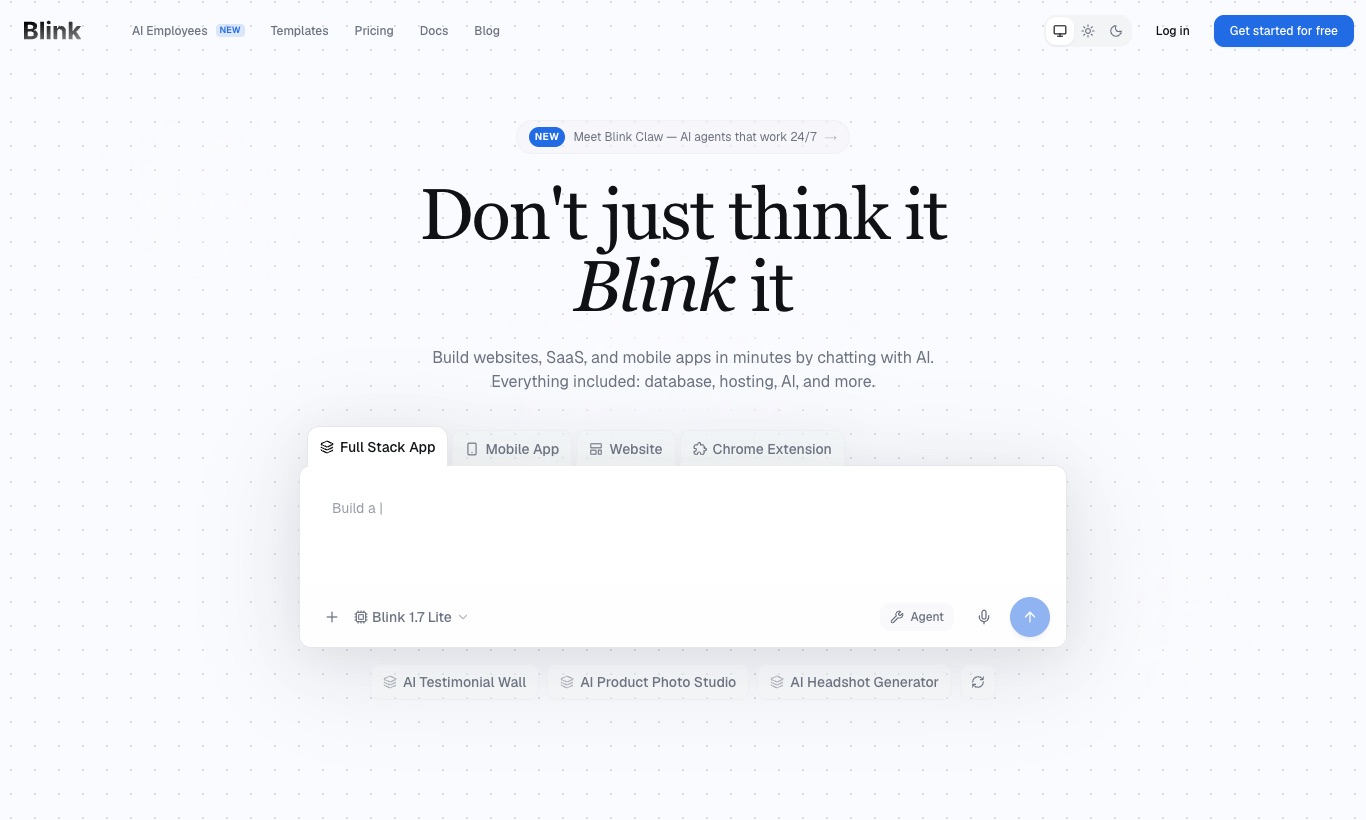
Blink builds web and mobile apps, and the free plan already includes a database, login and a live URL. It suits founders who want to see a working app before paying. App Store and Play Store publishing is listed on the Max plan, so read that line before you plan a mobile launch on Blink.
- Builds
- Web and mobile apps with backend, database and hosting
- Starts at
- Free plan (5 credits a day, up to 30 a month). Paid from $25 a month, $13 billed yearly (September 2026)
- Code export
- Starter plan and up, code download
- Where it breaks
- Build cap. The free plan stops at 30 credits a month, code download starts on Starter, and store publishing is listed on Max, from $200 a month (Blink pricing page).
Leap
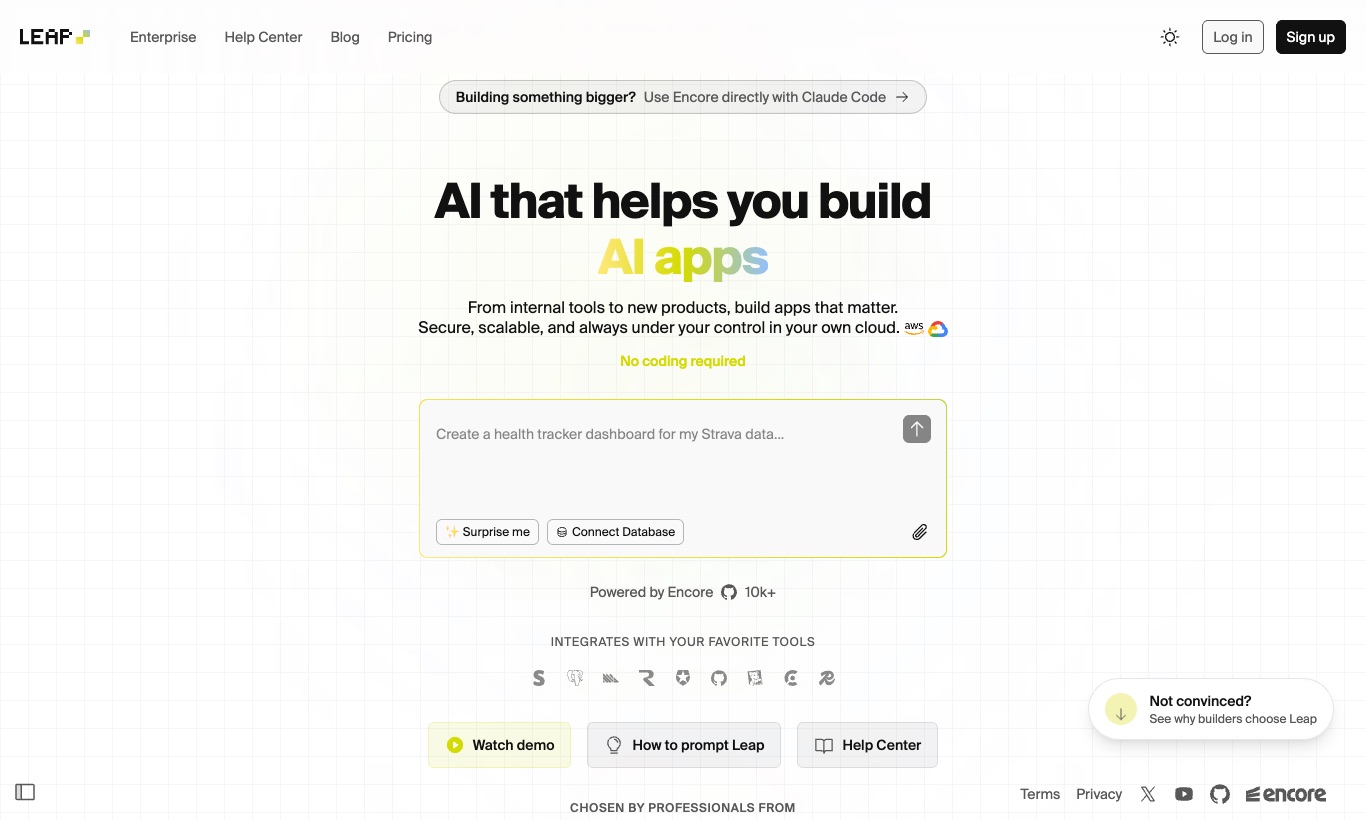
Leap builds apps with a real backend and a PostgreSQL database, and the code sits in your GitHub from the first prompt. It suits a founder who already knows a developer will join. Hosting is the tradeoff, because production runs in your own AWS or GCP account, which someone has to set up and pay for.
- Builds
- Full-stack apps with backend and PostgreSQL
- Starts at
- Free plan (15 credits a month, 5 a day). Paid from $30 a month (September 2026)
- Code export
- Yes, in your GitHub from day one
- Where it breaks
- Your own cloud. Deploying to your AWS or GCP account goes through an Encore Cloud Pro subscription, and you run that cloud account yourself (Leap homepage).
Google AI Studio
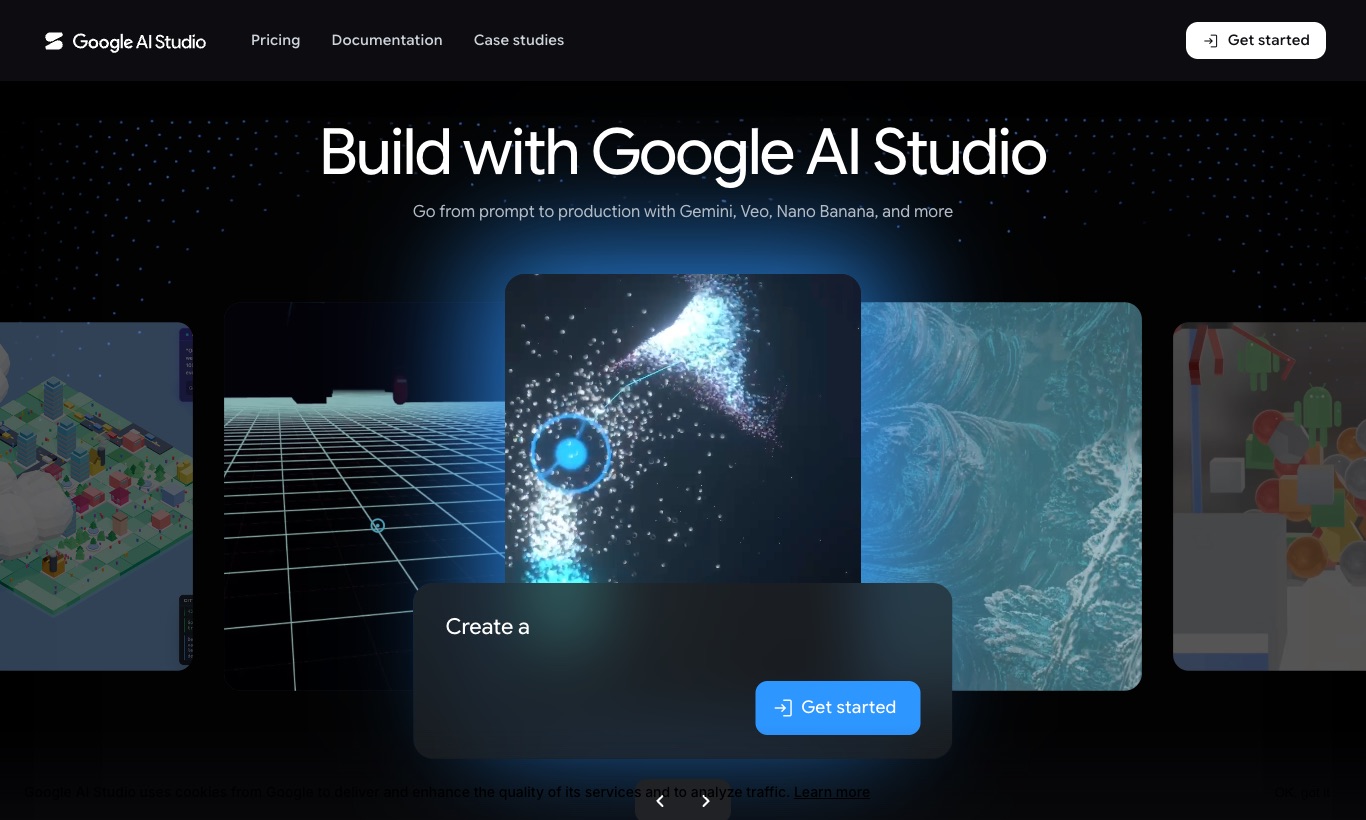
Build mode in Google AI Studio turns a prompt into a web app or a native Android app, with a code view, GitHub sync and deployment to Google Cloud Run. It suits founders who want to try Gemini features, such as image generation, inside an app. There is no iOS option, so an iPhone app needs a different tool.
- Builds
- Web apps and native Android apps from a prompt (Build mode)
- Starts at
- No plans published for Build mode. Paid Gemini models and Cloud Run hosting are billed by usage (Google docs) (September 2026)
- Code export
- Yes, two-way GitHub sync or zip download
- Where it breaks
- No iPhone app. Build mode targets web apps and native Android apps, and the docs list no iOS target.
Your third builder will not fix a v1 nobody asked for.
Before you pay for another tool, book a 30-minute video call with one of 750+ vetted mentors. Ask what to cut, what to test first, and whether this is a tool problem at all.
Mobile app builders
These tools build apps for iPhone and Android and help you get them into the stores. They fit founders whose product lives on a phone.
The shared break is store publishing. Apple charges 99 USD a year for its Developer Program and Google Play charges a US$25 one-time registration fee, on top of any builder plan, and several builders keep publishing on paid plans.
Draftbit
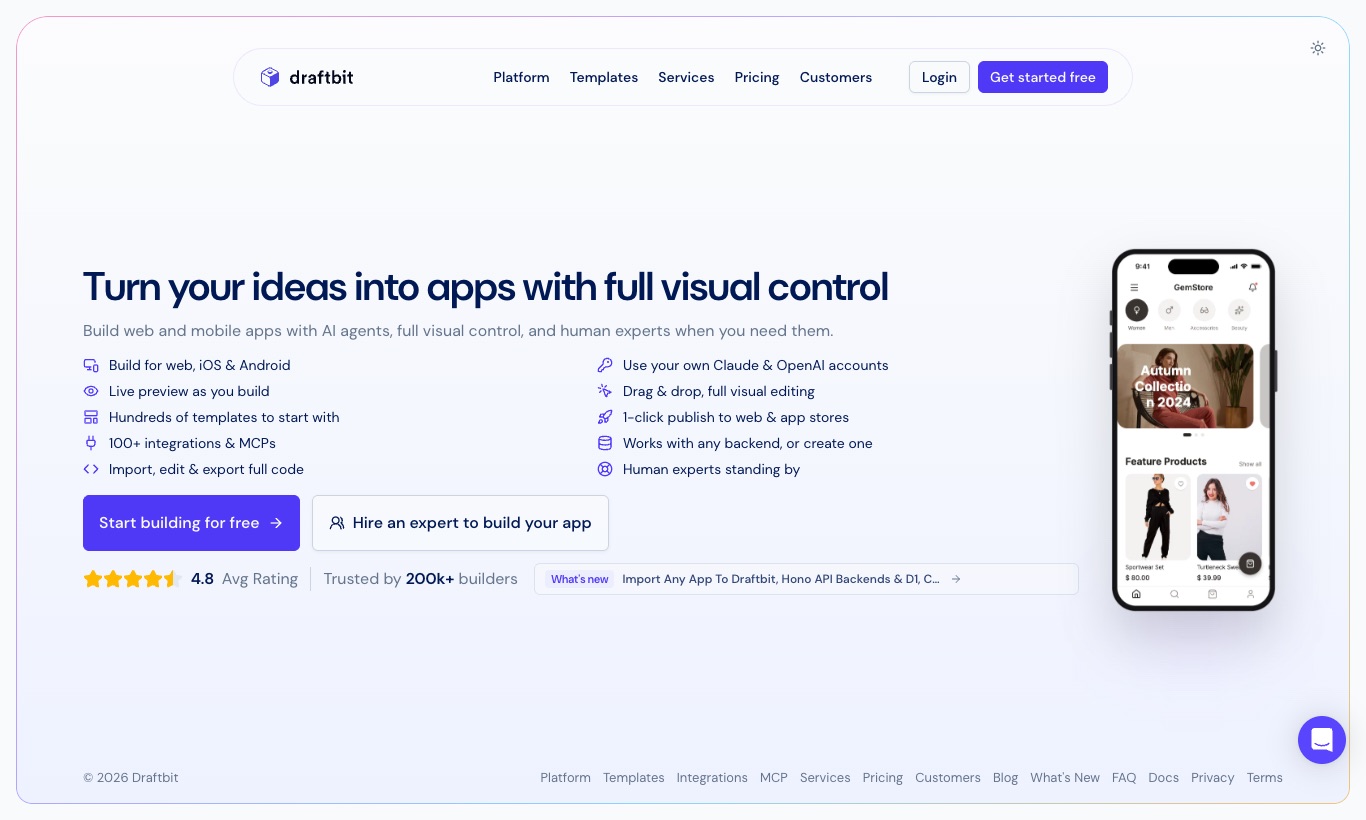
Draftbit builds React Native mobile apps, and you can work with Claude Code or OpenAI Codex inside it. It suits a founder who wants a visual builder now and readable code for a developer later. Code export starts on the $12 Standard plan, and export to GitHub starts on Pro at $24.
- Builds
- React Native mobile apps with AI
- Starts at
- Free plan (1 sandbox running at a time). Paid from $12 a month (September 2026)
- Code export
- Standard plan and up ($12), code export. GitHub export from Pro ($24)
- Where it breaks
- Free plan limits. There is no code export on Free, it runs one sandbox at a time, and extra editor seats on Standard cost $8 a month each (Draftbit pricing page).
Thunkable
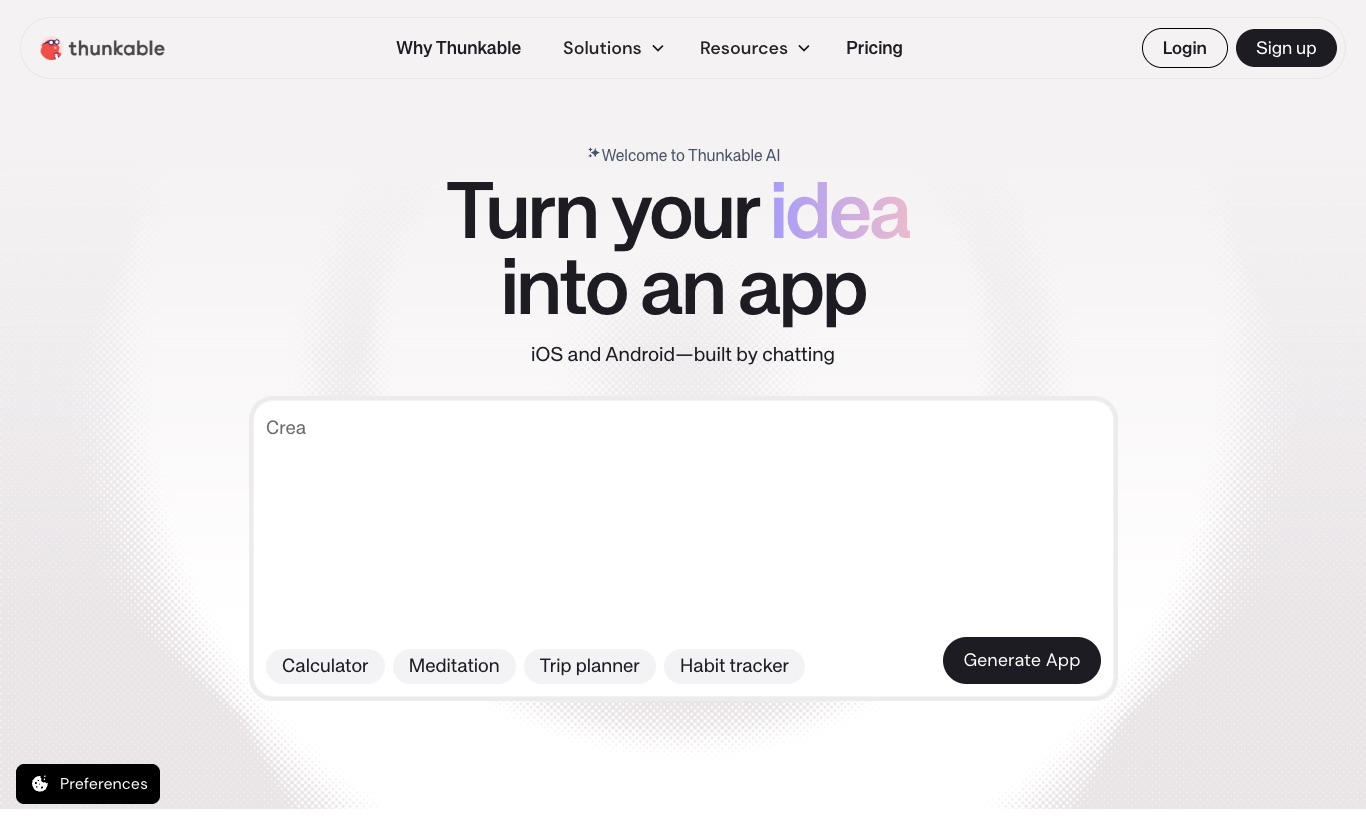
Thunkable builds native iOS and Android apps with drag-and-drop screens and AI, and you test them live on your own phone. It suits a founder building a simple app without code. Anything built on the free plan is public, so an idea you are not ready to show belongs on a paid plan.
- Builds
- Native iOS and Android apps, with live testing on your phone
- Starts at
- Free plan. Paid from $19 a month (September 2026)
- Code export
- Not published
- Where it breaks
- Public projects. Free projects are public, private projects need a paid plan, and Accelerator includes 1 private project (Thunkable pricing page).
Rork
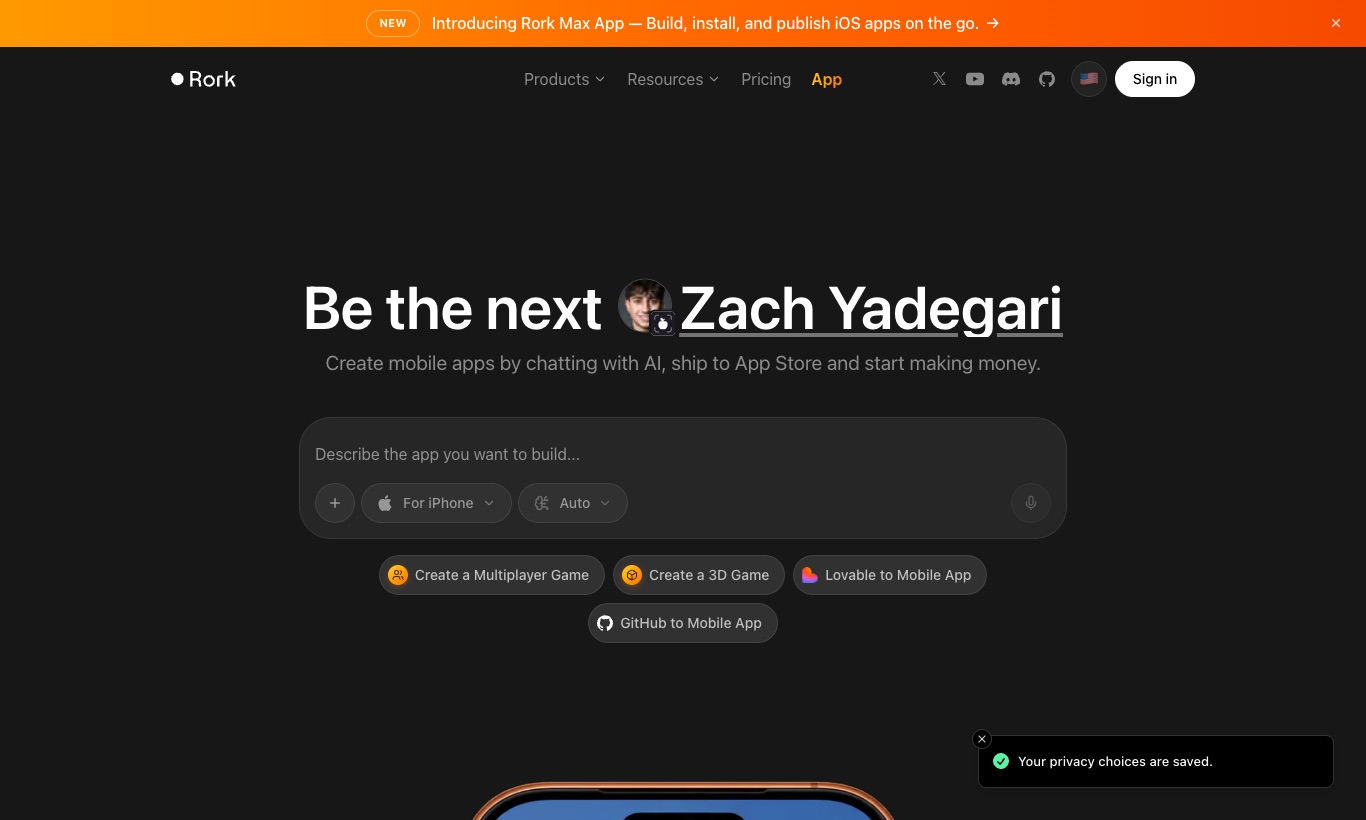
Rork builds phone apps from a prompt. Pro makes cross-platform Expo apps for iOS and Android, Max makes iOS-only apps, and both can sync with GitHub. It suits founders going straight to the App Store. The free plan covers design only, so budget $20 a month from the first build.
- Builds
- iOS and Android apps with Rork Backend
- Starts at
- Free plan (35 design credits a month). Paid from $20 a month (September 2026)
- Code export
- Paid plans, GitHub sync (Rork FAQ)
- Where it breaks
- Design only on Free. The free plan designs the app, and building it needs a paid plan (Rork pricing page).
a0.dev
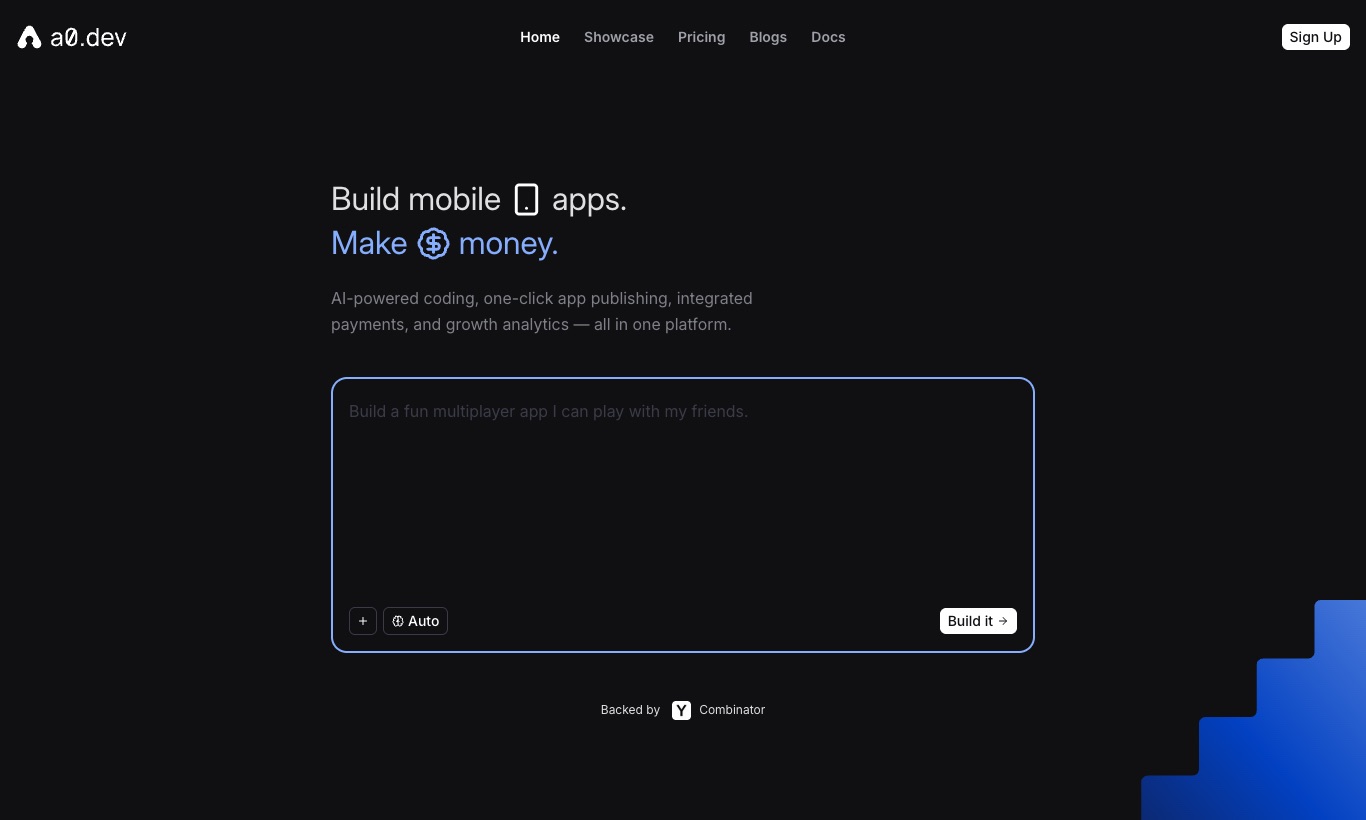
a0.dev builds mobile apps from chat and ships them to the App Store and Google Play. It suits founders who want a phone app and code they can take elsewhere from the first paid month. There is no plan between $20 and $200, so a busy build month can mean a big jump in cost.
- Builds
- Mobile apps for the App Store and Google Play
- Starts at
- Free plan not published. Paid from $20 a month (September 2026)
- Code export
- Yes, on the $20 plan
- Where it breaks
- Credit jump. The $20 plan includes 100 credits a month, and the next plan is $200 (a0.dev pricing page).
Vibecode
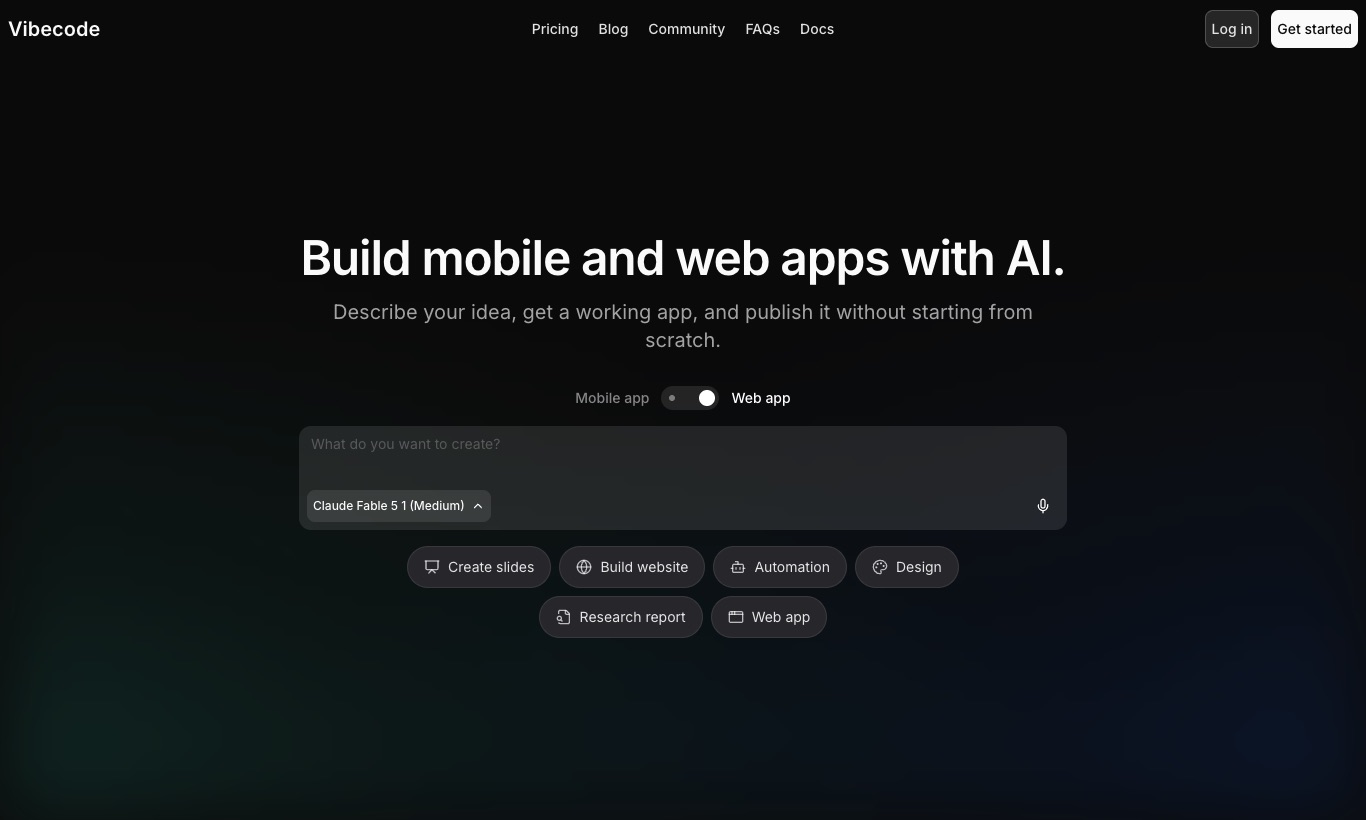
Vibecode lets you build an app from your phone and includes App Store submission on every plan. It passes AI costs straight through, and unused credits roll over. It suits founders who want to see exactly what the AI costs. Vibecode calls its tiers experimental and says they may change, so check the page before you commit.
- Builds
- Mobile and web apps, built from a phone app
- Starts at
- Free plan not published. Paid from $20 a month (September 2026)
- Code export
- Yes, source code download
- Where it breaks
- Pass-through AI cost. Vibecode says $1 in credits equals $1 in AI usage, so heavy prompting turns straight into spend (Vibecode pricing page).
Adalo
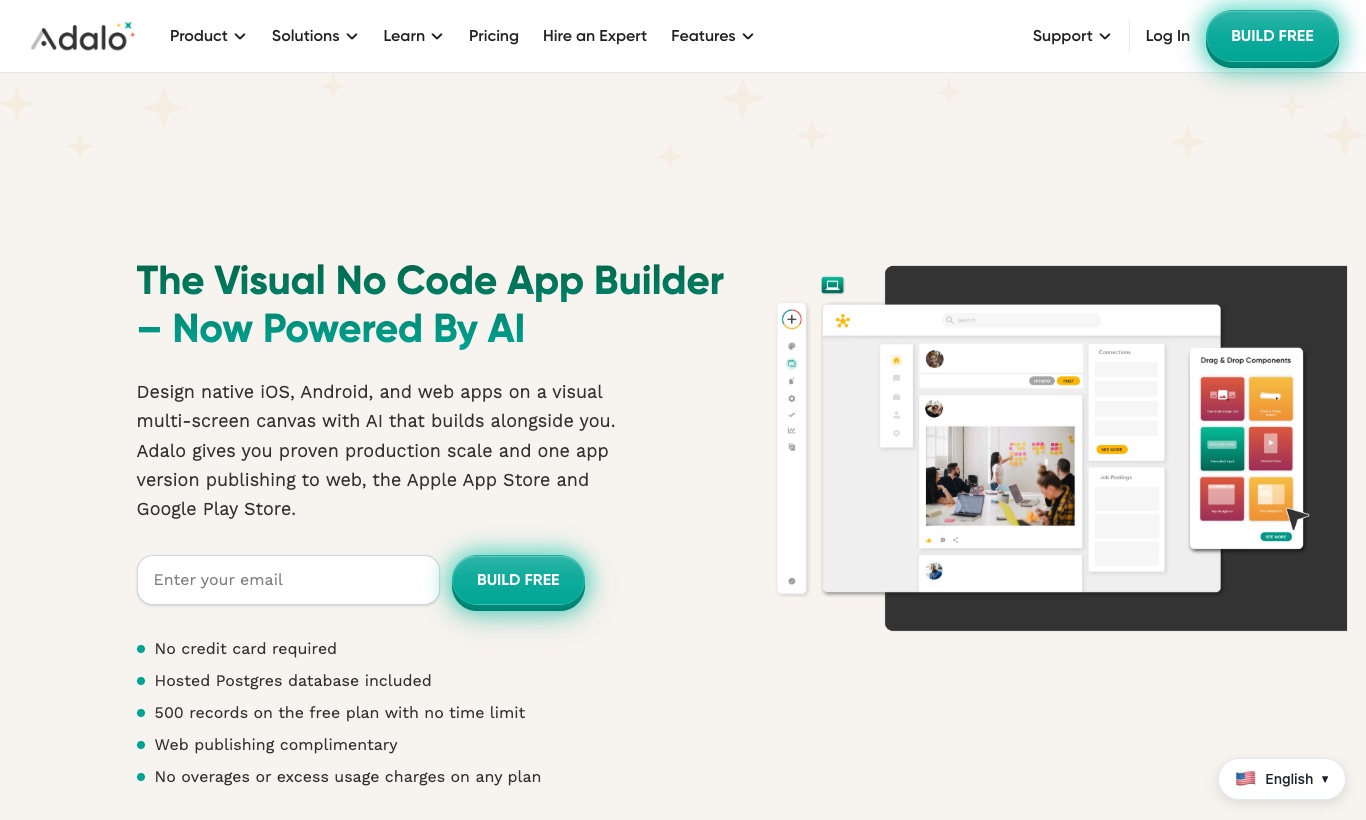
Adalo builds database-driven apps for web, iOS and Android from one visual canvas, with an AI assistant for edits. Its paid plans are flat monthly fees with no usage-based charges. It suits a founder who wants predictable costs. Adalo's pricing page says nothing about exporting code, so plan on the app living on Adalo.
- Builds
- Web apps and native iOS and Android apps
- Starts at
- Free plan (500 records per app). Paid from $36 a month billed annually (September 2026)
- Code export
- Not published
- Where it breaks
- Record cap. The free plan allows 500 records per app, and store publishing starts on Starter (Adalo pricing page).
FlutterFlow
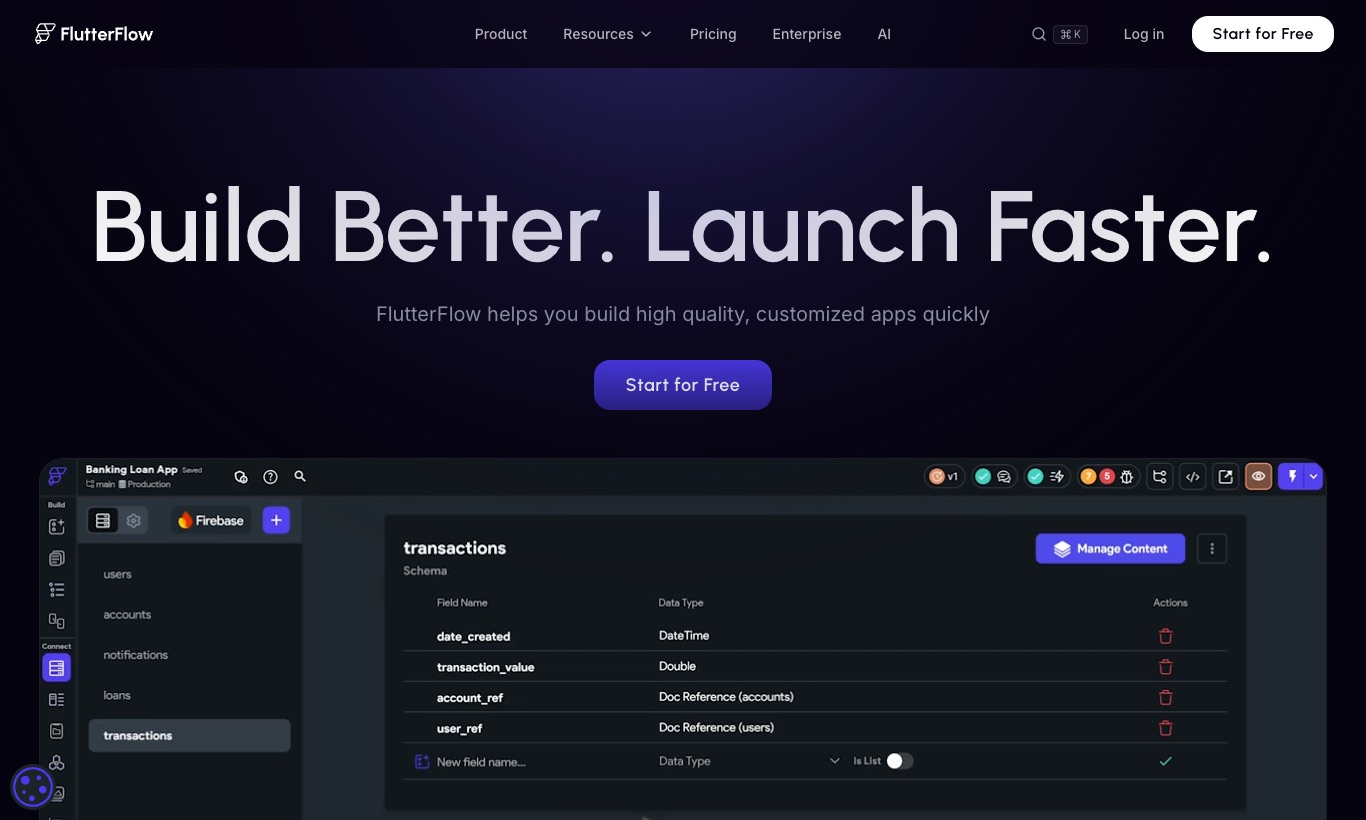
FlutterFlow builds Flutter apps visually, connects to Firebase and Supabase, and lets paid users download the project code or an APK. It suits founders who expect a developer to take over the Flutter code later. You still lay out screens and logic yourself, with AI helping along the way.
- Builds
- Flutter apps for iOS, Android and web
- Starts at
- Free plan (2 projects). Paid from $39 a month (September 2026)
- Code export
- Basic plan and up ($39), source code download
- Where it breaks
- Code behind a paywall. Code download starts on Basic at $39 a month, so free projects stay inside FlutterFlow (FlutterFlow pricing page).
Visual no-code builders with AI
These tools give you a visual editor, with AI to create the first version and help with changes. They fit internal tools, client portals and apps you plan to keep editing yourself.
The shared break is ownership. You keep the editor, often not the code, so leaving usually means rebuilding.
Softr
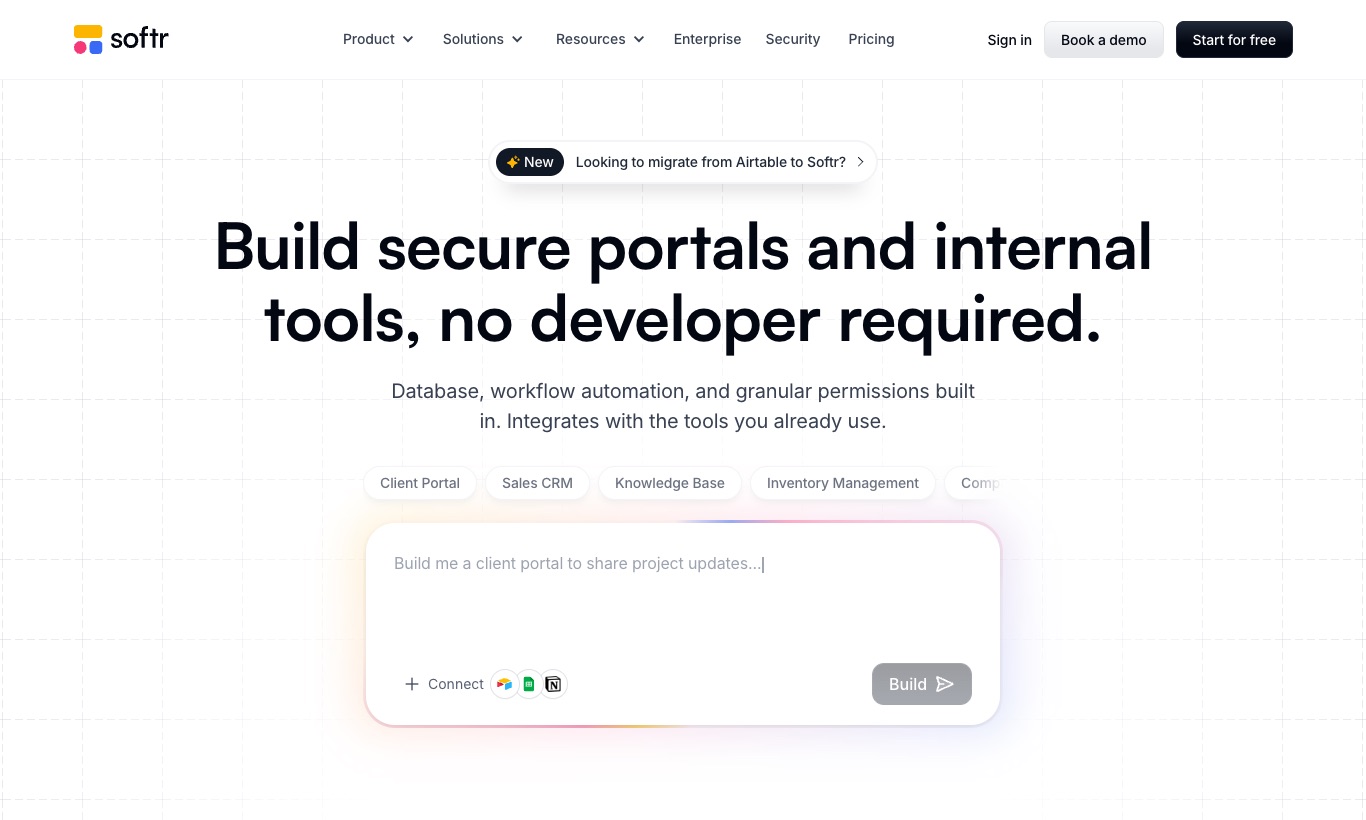
Softr builds portals, internal tools and CRMs on Softr Databases or on data you already keep in tools such as Airtable, Notion or Google Sheets. Its AI Co-Builder creates the first version, and you keep editing visually. It suits an operator who wants a working tool without a codebase to look after. That same choice means there is no code to move if you outgrow it.
- Builds
- Client portals, internal tools and CRMs on your data
- Starts at
- Free plan. Paid from $19 a month billed annually (September 2026)
- Code export
- No
- Where it breaks
- No code to take with you. Softr says it "doesn't hand you code to maintain later" (Softr homepage FAQ).
WeWeb
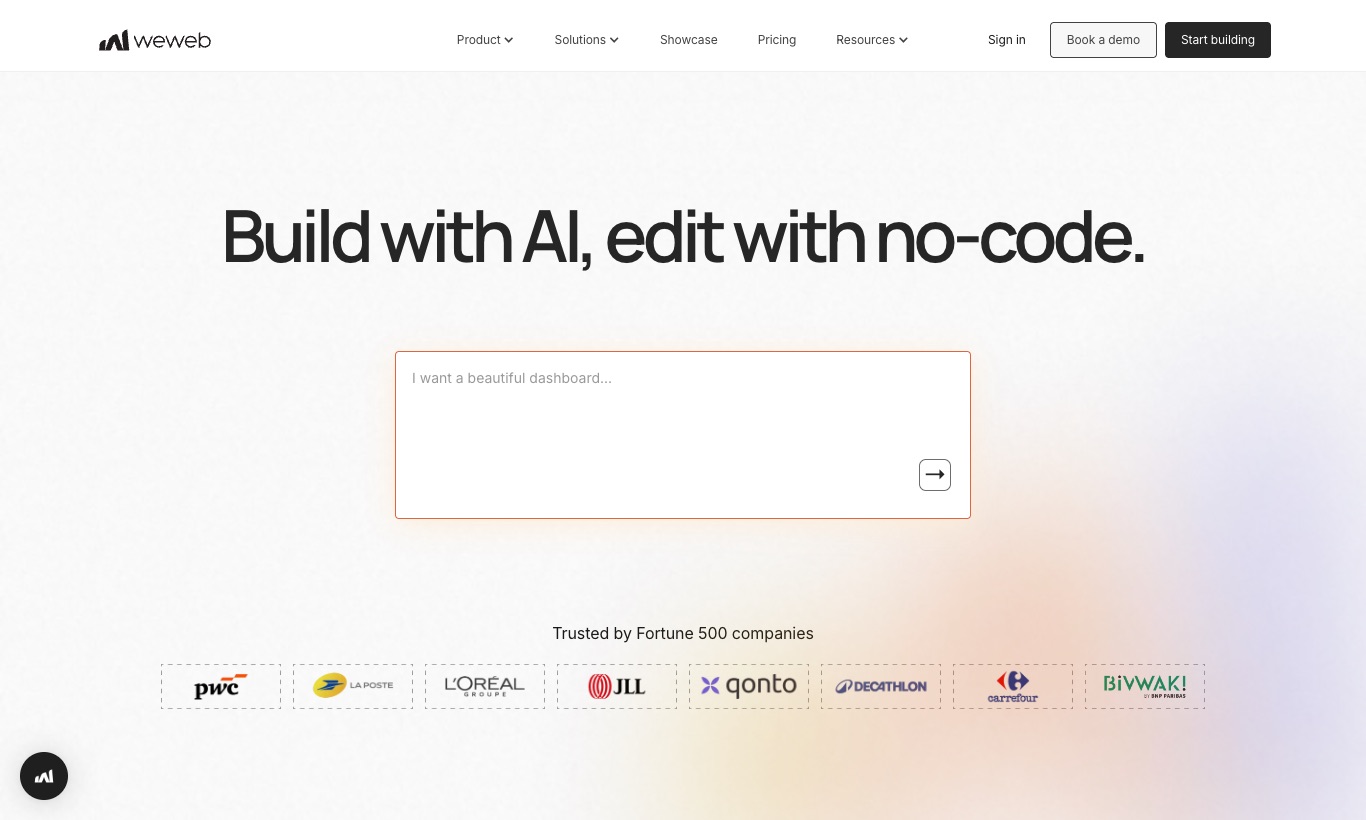
WeWeb is a visual builder with AI for the front end of a web app, and paid plans export the code so you can host it yourself. It suits founders who want to own the interface code and pick their own backend. The data lives in a separate service, such as Xano or Supabase, which is one more tool to set up.
- Builds
- Web app front ends, exportable as a Vue.js app
- Starts at
- Free plan. Paid from $20 a month, hosting from $13 a month per app (September 2026)
- Code export
- Paid plans, export code and self-host
- Where it breaks
- Front end only. You connect a separate backend such as Xano or Supabase (WeWeb homepage).
Glide
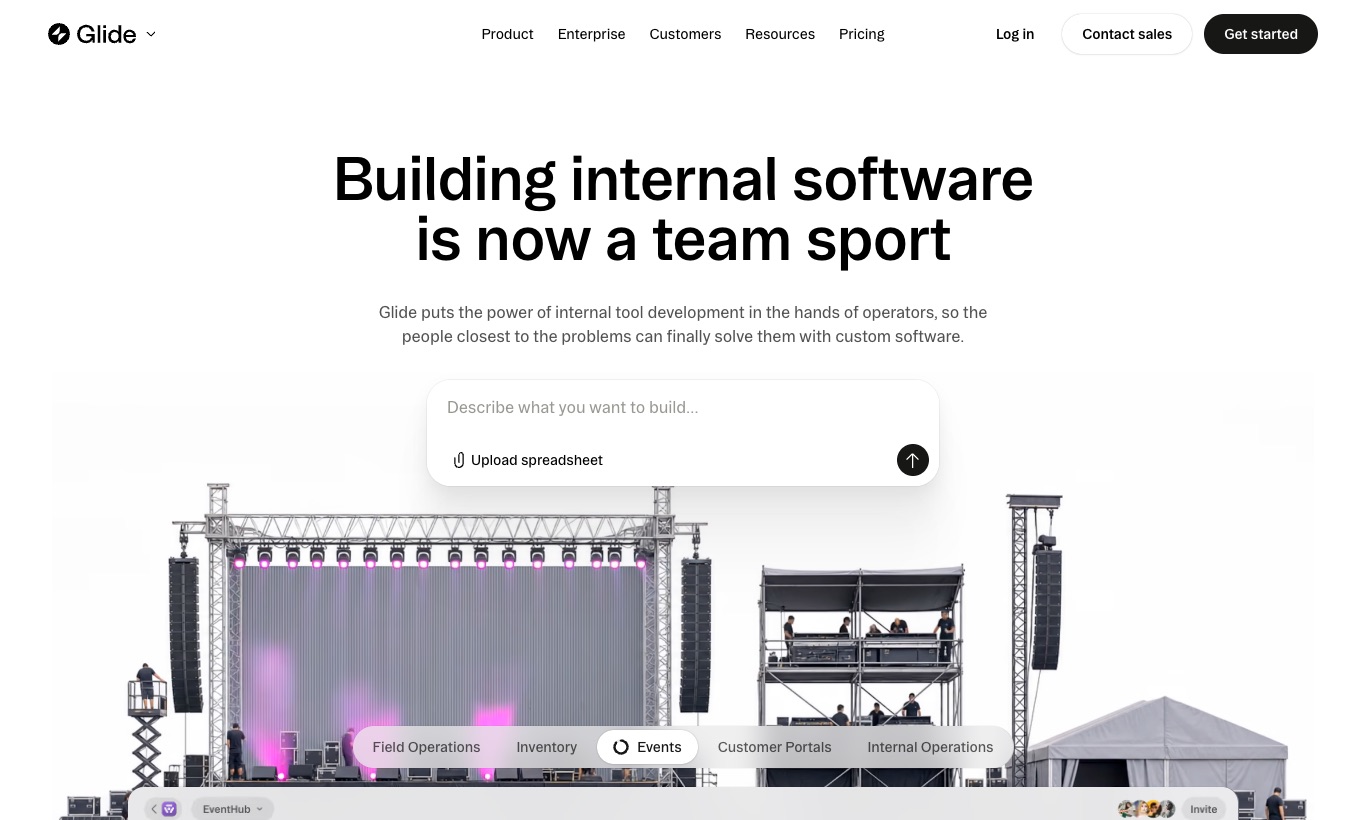
Glide, now called GlideOS, builds internal business apps from a spreadsheet, a prompt or a file. It suits a team that already runs on spreadsheets and wants an app on top of them. Viewing the code and project files is listed only on Enterprise, so plan on Glide staying the app's long-term home.
- Builds
- Business apps from a spreadsheet, a prompt or a file
- Starts at
- Free plan (limited credits). Paid from $25 a month (September 2026)
- Code export
- Enterprise only (view code and project files)
- Where it breaks
- Credits. Basic includes 100 credits a month, and publishing public apps starts on Plus at $50 a month (Glide pricing page).
Bubble
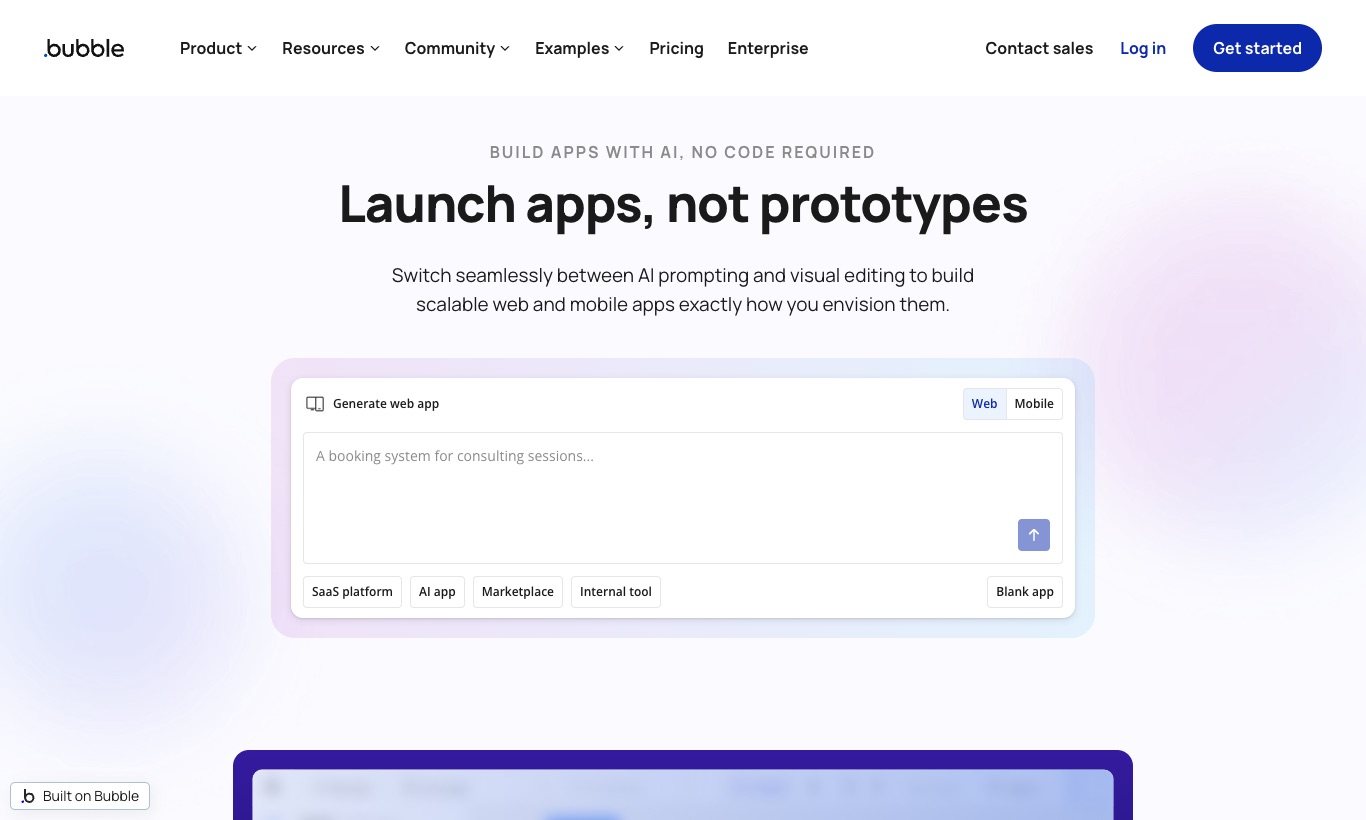
Bubble builds web apps and, on every plan, native mobile apps in a visual editor, with an AI app generator for the first draft. It suits founders who want complex logic without code and full control in the editor. Its bill follows how much work the app does, so more active users mean more workload units.
- Builds
- Web apps and native mobile apps
- Starts at
- Free plan (50K workload units a month). Paid from $59 a month billed annually (September 2026)
- Code export
- Not published
- Where it breaks
- Workload billing. Every plan includes a set number of workload units, and overages apply after that unless you turn them off (Bubble pricing page).
Noloco
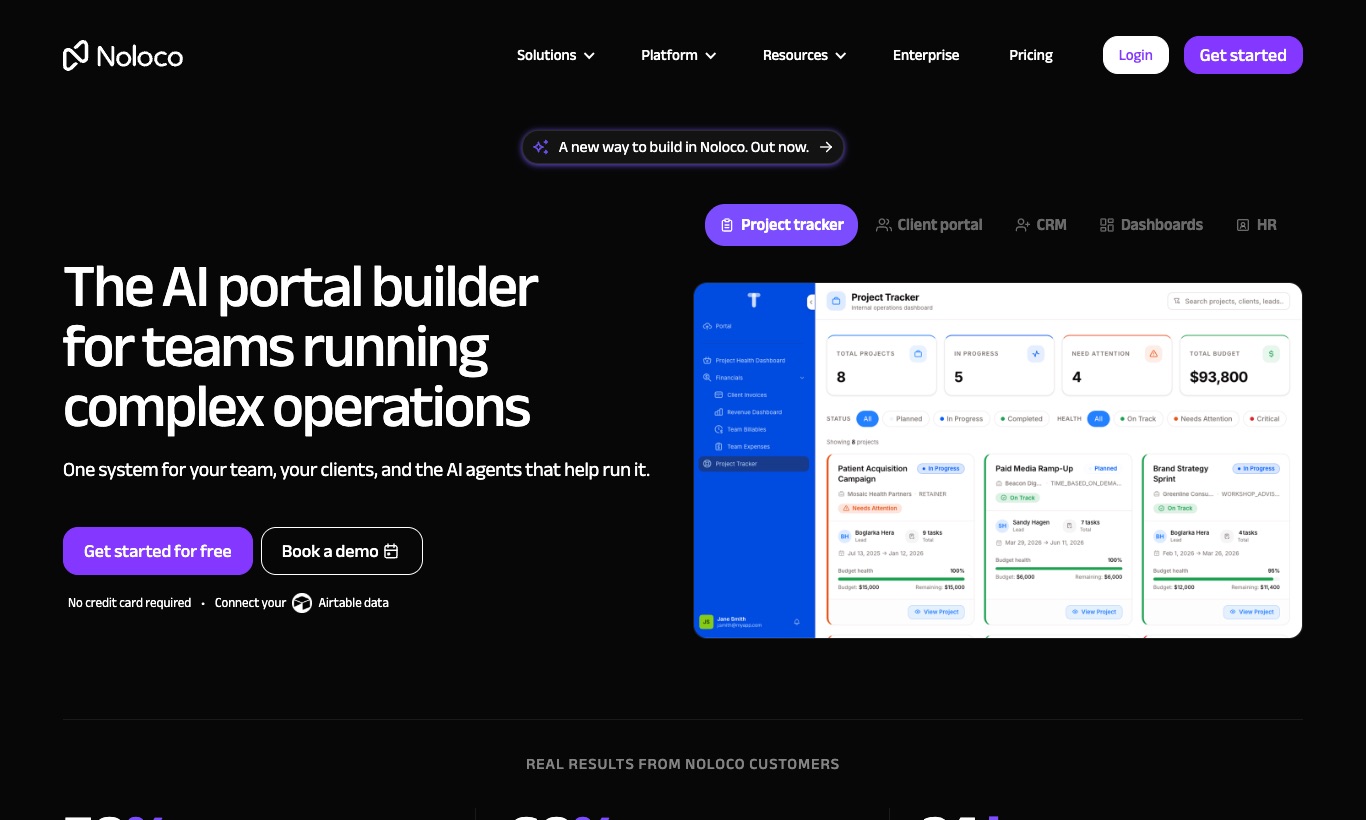
Noloco builds client portals and internal apps for operations work, with AI credits for building and 10 builder seats on the Build plan. It suits a service business that needs a portal on top of data it already has. The price grows with records and seats, so count your rows before you pick a plan.
- Builds
- Portals and internal apps for operations teams
- Starts at
- Free plan (2,000 records). Paid from $65 a month billed annually (September 2026)
- Code export
- Not published
- Where it breaks
- Record limits. Build includes 25,000 records, then $25 per extra 25,000 (Noloco pricing page).
AI coding agents to graduate to
Coding agents work on a real codebase from an editor, a terminal or the cloud. They fit the moment a prototype has become the product and needs version history, tests and a proper repository.
The shared break is everything around the code. These agents write and change code, and hosting and the database stay your job. For habits that keep a non-technical founder out of trouble, read Claude Code rules for non-technical founders.
OpenAI Codex
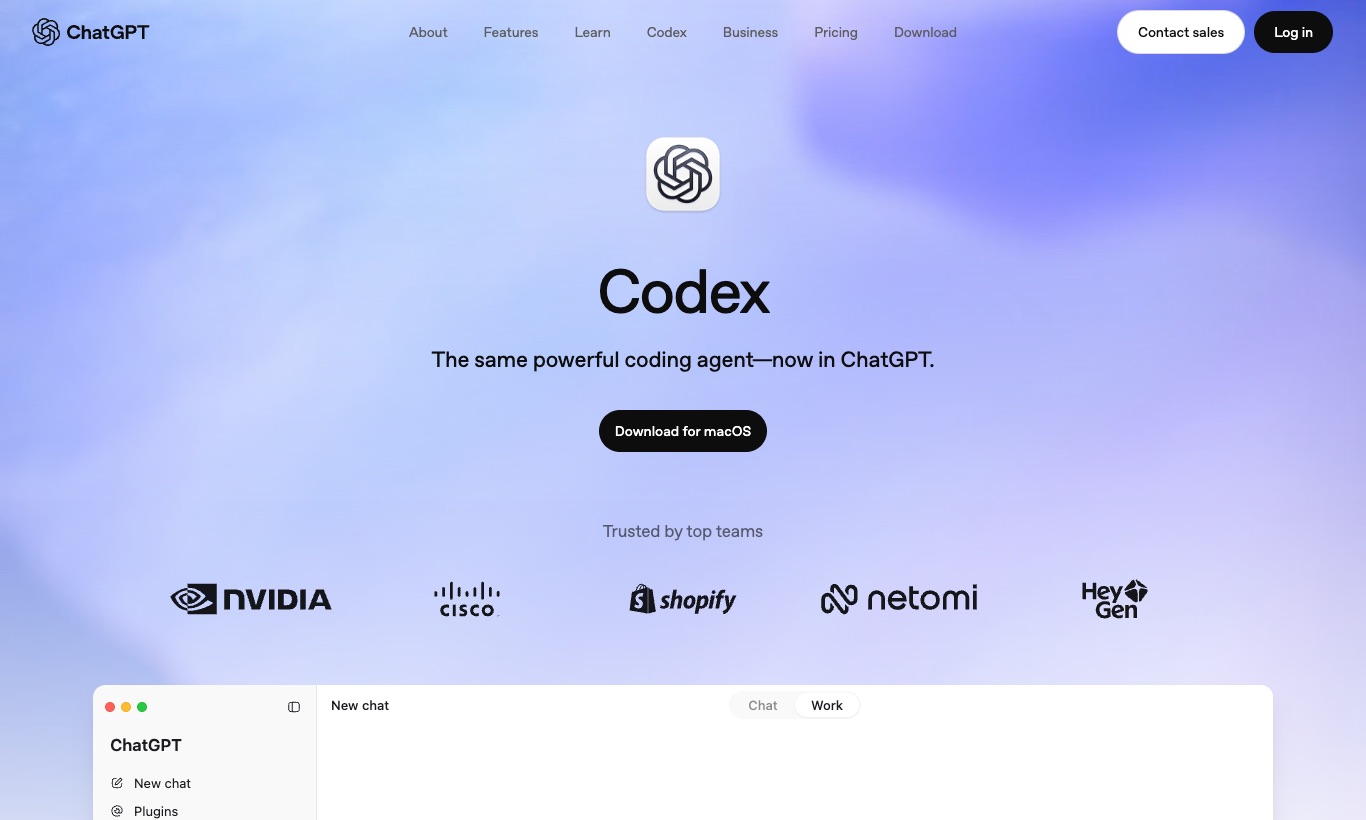
Codex is OpenAI's coding agent. It comes with ChatGPT plans and runs in the Codex app, your editor, the terminal and cloud environments. I build GrowthMentor primarily with Claude Code, and as of September 2026 I also use Codex. I find it very helpful for planning reviews and for code reviews of Claude's work, and I'm starting to build with Codex too, which is also very good.
- Builds
- Code changes from the Codex app, your editor, the terminal and the cloud
- Starts at
- Free plan (to test Codex). Paid from $8 a month with ChatGPT Go, expanded Codex use on Plus at $20 (September 2026)
- Code export
- Your own repository
- Where it breaks
- Shared limits. Codex usage limits are shared with ChatGPT Work and other agentic features (Codex docs).
GitHub Copilot
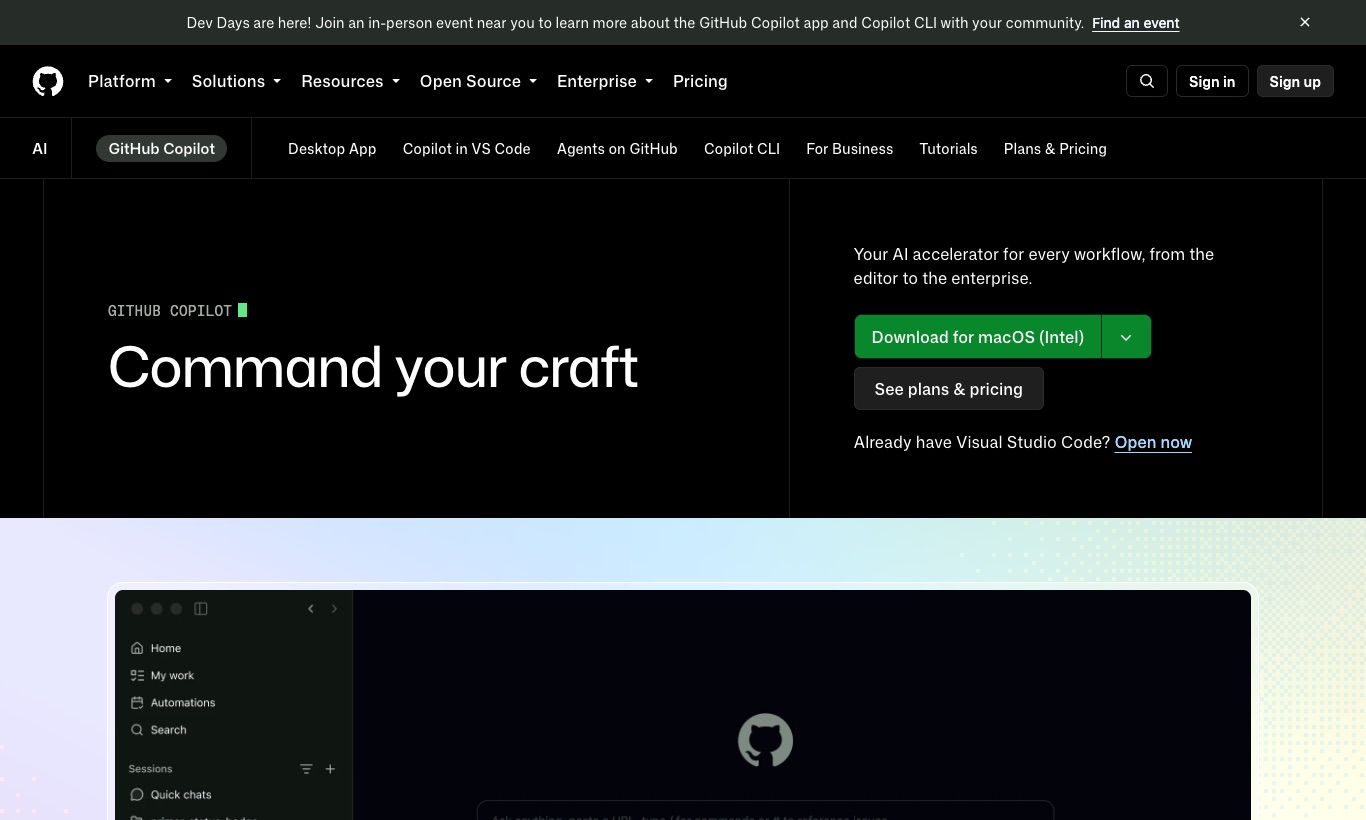
GitHub Copilot works inside GitHub, your editor and the command line, with agent mode, code review and a cloud agent. It suits founders whose code already lives on GitHub. Paid plans run on GitHub AI Credits, with Pro at $10, Pro+ at $39 and Max at $100 a month.
- Builds
- Coding agent in GitHub, your editor and the CLI
- Starts at
- Free plan (limited chat and agent use). Paid from $10 a month (September 2026)
- Code export
- Your own repository
- Where it breaks
- Free plan limits. Free has limited chat and agent use and cannot buy extra GitHub AI Credits (GitHub Copilot plans page).
Claude Code
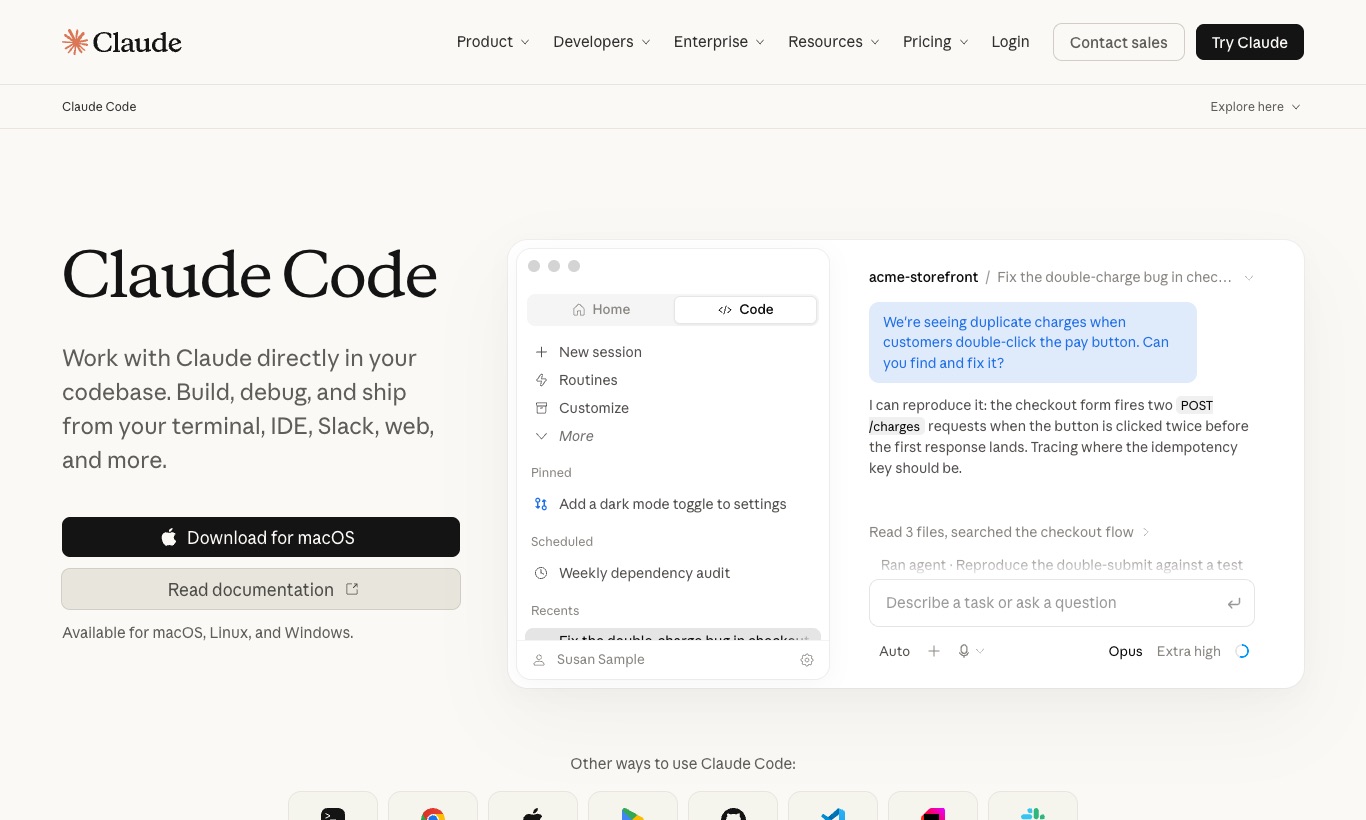
Claude Code is Anthropic's coding agent. It reads your codebase, makes changes and runs commands from the terminal, your editor or the desktop app. I build GrowthMentor primarily with Claude Code. Habits that help a non-technical founder work with it safely are in the Claude Code rules guide.
- Builds
- Code changes from the terminal, your editor and the desktop app
- Starts at
- Not on the free Claude plan. Paid from $17 a month billed annually, $20 monthly, with Claude Pro (September 2026)
- Code export
- Your own repository
- Where it breaks
- Usage limits. Limits apply on every paid plan, and Claude Code is not included on the free plan (Anthropic help center).
Google Antigravity
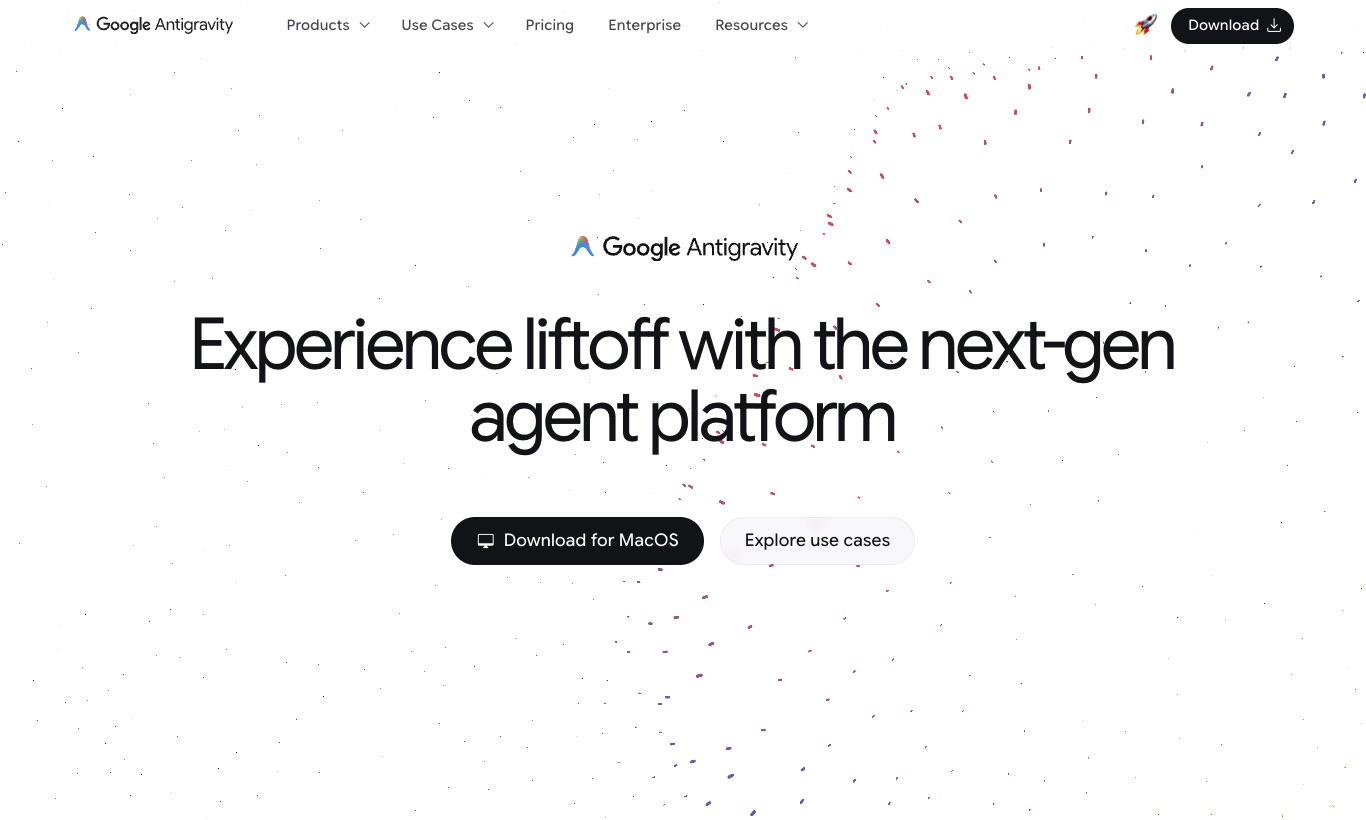
Antigravity is Google's agent-first development platform, with Gemini models as the core agent, plus scheduled tasks and a CLI. It suits founders who already pay for Google AI Pro or want to try an agent without a subscription. How much you can do depends on your Google AI plan.
- Builds
- Agent-first development platform and CLI
- Starts at
- Free plan (basic weekly rate limits). Higher limits with Google AI Pro at $19.99 a month (September 2026)
- Code export
- Your own repository
- Where it breaks
- Weekly limits. The free plan has a weekly rate limit, and Google AI Pro quota refreshes every five hours until a weekly limit is reached (Antigravity docs).
Cursor
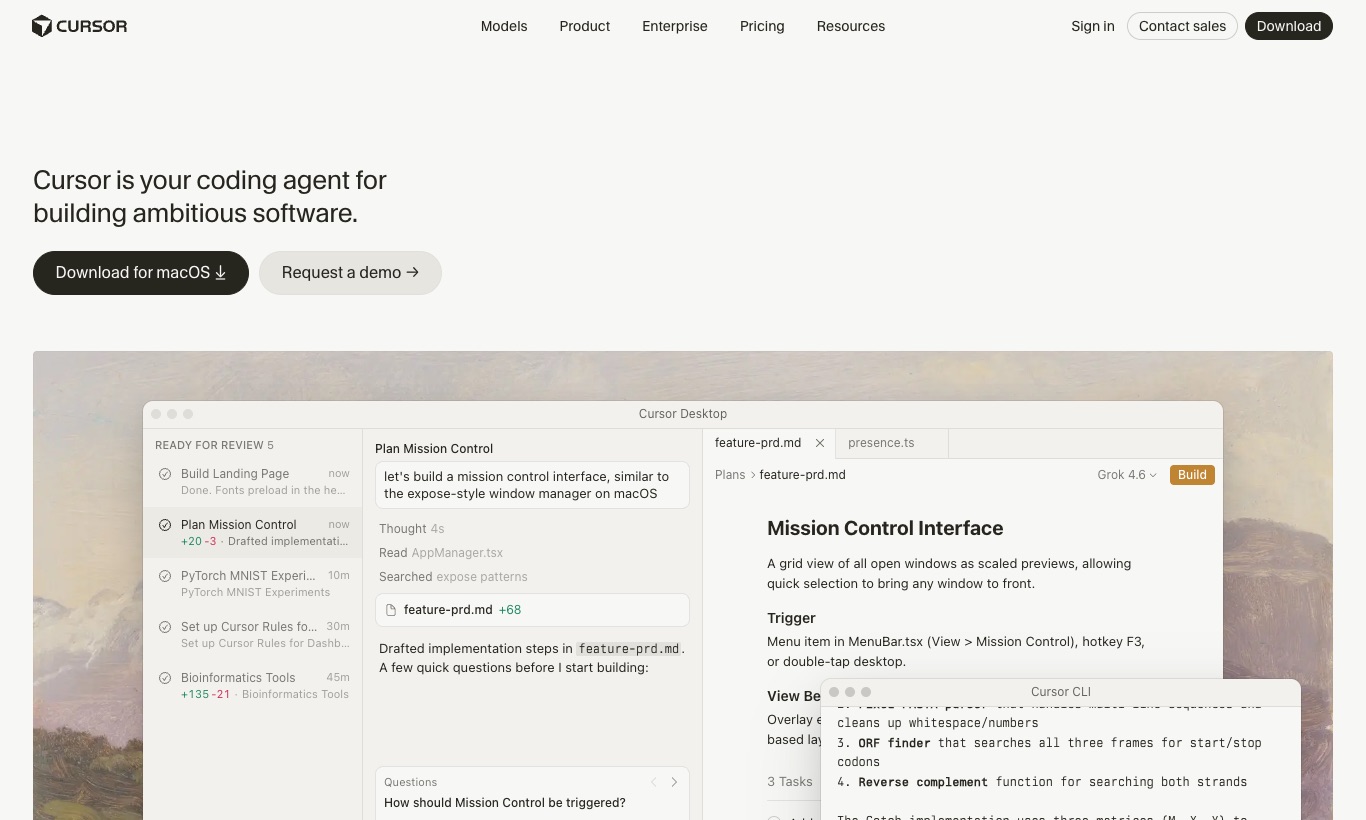
Cursor is a code editor built around AI agents, with cloud agents and frontier models on paid plans. It suits a founder who wants to read and edit the code in a familiar editor while the agent works. Usage beyond the included amount is billed afterwards, so a heavy month can cost more than the plan price.
- Builds
- AI code editor with agents
- Starts at
- Free plan (Hobby, limited agent requests). Paid from $20 a month (September 2026)
- Code export
- Your own repository
- Where it breaks
- Usage billing. Every plan includes a set amount of model usage, and on-demand usage after that is billed in arrears (Cursor pricing page).
Kiro
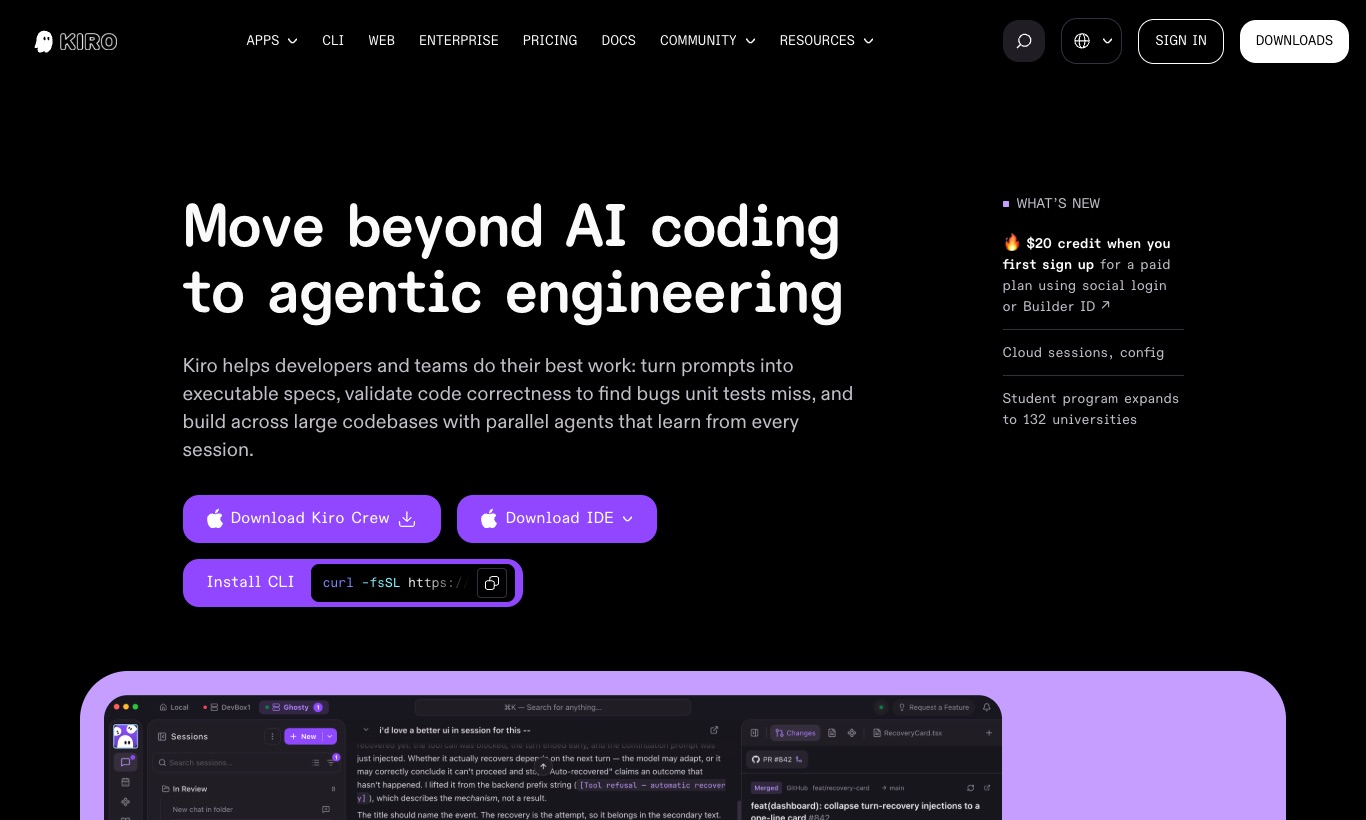
Kiro, from AWS, is an editor that starts from a written spec and plans the work before the agent writes code. It suits founders who like to write down what they want before anything gets built. Pro includes 1,000 credits a month, and plans go up to Power at $200 with 10,000.
- Builds
- Spec-driven agentic IDE
- Starts at
- Free plan (50 credits). Paid from $20 a month (September 2026)
- Code export
- Your own repository
- Where it breaks
- Credits. The free plan is 50 credits, and paid plans buy extra credits at $0.04 each (Kiro pricing page).
Devin Desktop
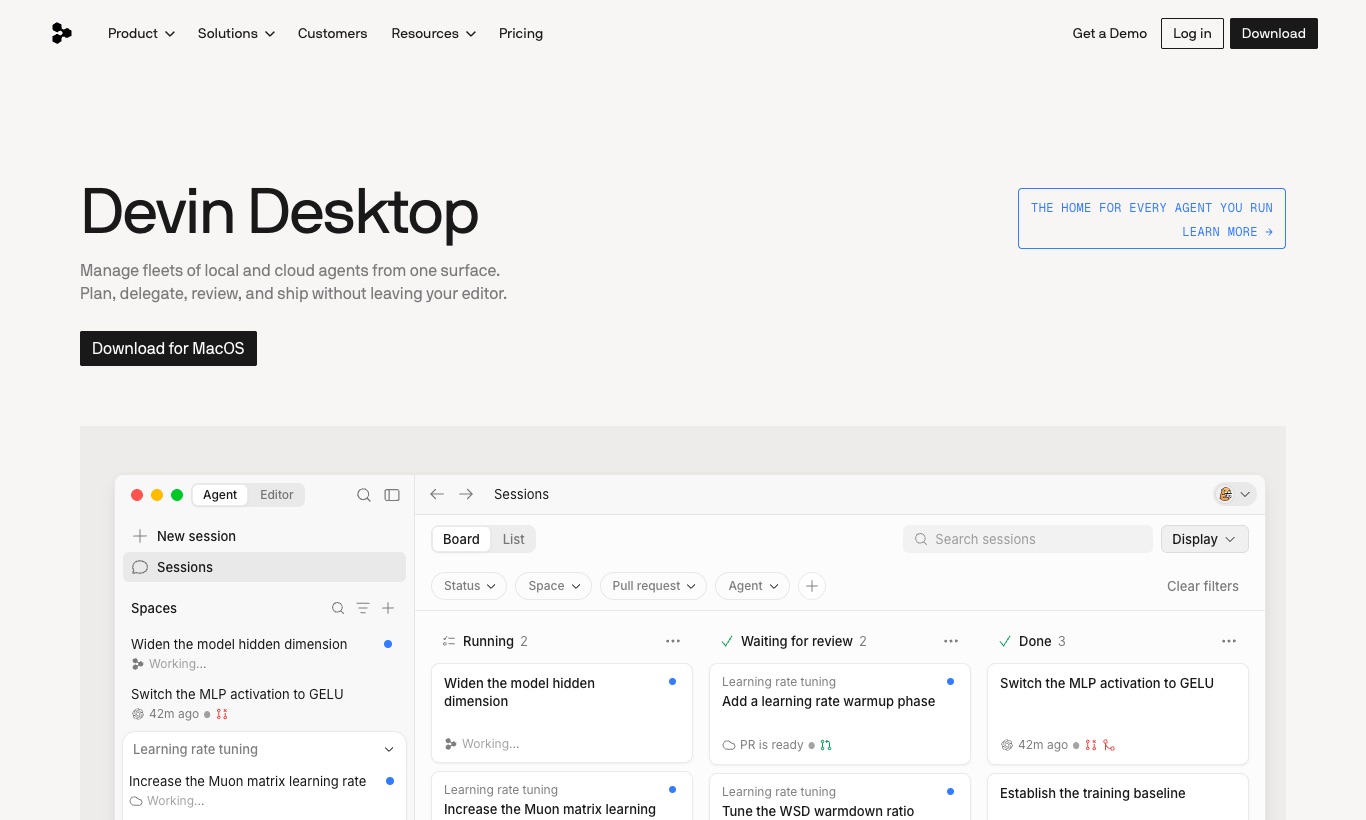
Devin Desktop is the editor that used to be Windsurf. Cognition signed an agreement to acquire Windsurf in July 2025, and windsurf.com now sends visitors to Devin. Pro adds frontier models and Devin Cloud agents. It suits founders who want an editor and a cloud agent from the same company.
- Builds
- Agentic IDE, CLI and cloud agents
- Starts at
- Free plan (light quota). Paid from $20 a month (September 2026)
- Code export
- Your own repository
- Where it breaks
- Renamed. Windsurf became Devin Desktop after Cognition's July 2025 deal, so older guides and tutorials use the old name.
Backends builders plug into
A backend holds your data, user accounts and files. Several builders above connect to one, and a coding agent needs one too.
The shared break is access rules. A table with Row Level Security turned off, or a key exposed in browser code, can let anyone read your users' data.
Supabase
Supabase gives you a Postgres database, login and file storage, and Lovable and several other builders connect to it. It suits founders who want a standard database they can move later. In February 2026 Wiz found a misconfigured Supabase database behind Moltbook that gave read and write access to 1.5 million API tokens and 35,000 email addresses. Turn on Row Level Security for every table before launch.
- Builds
- Postgres database, login and file storage
- Starts at
- Free plan (2 active projects, paused after 1 week of inactivity). Paid from $25 a month (September 2026)
- Code export
- Your data sits in a standard Postgres database
- Where it breaks
- Row Level Security. Tables left open were behind CVE-2025-48757 in Lovable-built sites (disputed by Lovable) and the Moltbook exposure of 1.5 million API tokens and 35,000 email addresses (Wiz, February 2026).
Convex
Convex is a backend where your data logic is written as TypeScript functions and changes reach the app in real time. It suits a founder building with a coding agent, since Convex pitches itself at AI coding. The backend is open source, so you can host it yourself if you leave the paid service.
- Builds
- Realtime backend with TypeScript functions and auth
- Starts at
- Free plan, with pay as you go on Starter. Paid from $25 per developer a month (September 2026)
- Code export
- Yes, the backend is open source and can be self-hosted (Convex open source page)
- Where it breaks
- Storage limits. The free tier includes 0.5 GB of database storage, then $0.22 per extra GB on pay as you go (Convex pricing page).
Xano
Xano builds APIs and a Postgres database visually and connects to front ends such as WeWeb and FlutterFlow. It suits founders who want a backend without writing server code. Because of its rate limit, the free plan is for building, and live traffic needs Essential.
- Builds
- No-code backend, APIs and Postgres database
- Starts at
- Free plan (up to 100K records). Paid from $85 a month billed annually (September 2026)
- Code export
- Data export as CSV or YAML. Self-hosting on Custom plans only
- Where it breaks
- Rate limits. The free plan allows 10 requests every 20 seconds, and paid plans start at $85 a month, the highest entry price on this list (Xano pricing page).
Tools that shut down or changed names
A builder can disappear with your project inside it. These five closed, were sold or turned into a different product, which is why the code export row on every card matters.
- Orchids. The team announced it was joining Figma on July 7, 2026. Projects hosted on Orchids stopped being deployed after July 18, and users had to download them or save them to GitHub.
- Bildr. bildr.com now shows only a thank-you note to its users.
- Windsurf. Cognition agreed to acquire it in July 2025, and windsurf.com now sends visitors to Devin Desktop.
- Memex. memex.tech now redirects to Workshop AI with a rebrand tag in the link.
- Databutton. databutton.com now redirects to Riff, which sells order agents for supply chains.
How these tools were picked
Every tool was checked on its own pricing page and documentation. Prices are in US dollars per month for the cheapest paid plan, with annual billing noted where the page shows it. Prices change often, so check the link before you pay. Last checked on October 3, 2026.
Each "Where it breaks" line is one of two things. Where a public incident exists, the card cites it and says how the company responded, using Fortune, the US National Vulnerability Database and Wiz. Where none exists, the card quotes a limit the tool publishes itself, such as credits, message caps, code export or store publishing.
Landing page builders, communities, agencies and tools that shut down were left out. If all you need is a waitlist page, this guide to validating a startup idea with a landing page covers a cheaper test first. No tool paid to be here, and GrowthMentor does not sell a builder.
When the tool stops being enough
A stalled build tends to come from one of three places, and each needs a different kind of help.
- The code breaks. A security hole, a broken login or lost data is a job for a developer who can read the code. The coding agents above can help that person move faster.
- The app works and nobody pays. Another tool will not change that. You built it with Claude Code, now nobody is buying covers what to do instead.
- You don't know what to build next. Whether to cut features, stay in a prompt-to-app builder or move to a coding agent is a product decision, and a mentor call helps with that one.
GrowthMentor mentors work on the business around your product. On a 30-minute video call you can walk through what you built, what users did with it and what to test next. Fewer than 5% of mentor applicants get in.
Find an AI mentorFrequently asked questions
Keep reading
More from the GrowthMentor blog
AI · Sep 27, 2026
Claude Code Rules for Non-Technical Founders
Foti Panagiotakopoulos
AI · Sep 16, 2026
You Built It With Claude Code. Now Nobody Is Buying.
Foti Panagiotakopoulos
Mentorship · Apr 13, 2026
An AI cofounder can build a company to an $80M exit. Its founder still felt alone at 2am.
Foti Panagiotakopoulos
Startups · Apr 22, 2020
How to validate a startup idea using a pre-launch landing page and less than $500 in PPC spend
Foti Panagiotakopoulos
Startups · Apr 09, 2026
The best place to meet a co-founder isn't a co-founder dating app.
Foti Panagiotakopoulos